Text Solution
Verified by Experts
The correct Answer is:




Topper's Solved these Questions
WAVE OPTICS
MOTION|Exercise EXERCISE - 1 (Objective Problems | JEE Main) Section A - Interference Problems + Wavefronts & Hugens Principle|9 VideosWAVE OPTICS
MOTION|Exercise EXERCISE - 1 (Objective Problems | JEE Main) Section B - YDSE Experiment|8 VideosWAVE MOTION
MOTION|Exercise Exercise - 3 Section - B (Previous Years Problems)|7 VideosWAVES
MOTION|Exercise EXERCISE -4 (Level -II) (previous year JEE Advanced)|10 Videos
Similar Questions
Explore conceptually related problems
MOTION-WAVE OPTICS -EXERCISE - 4 (Level - II) Previous Year | JEE Main
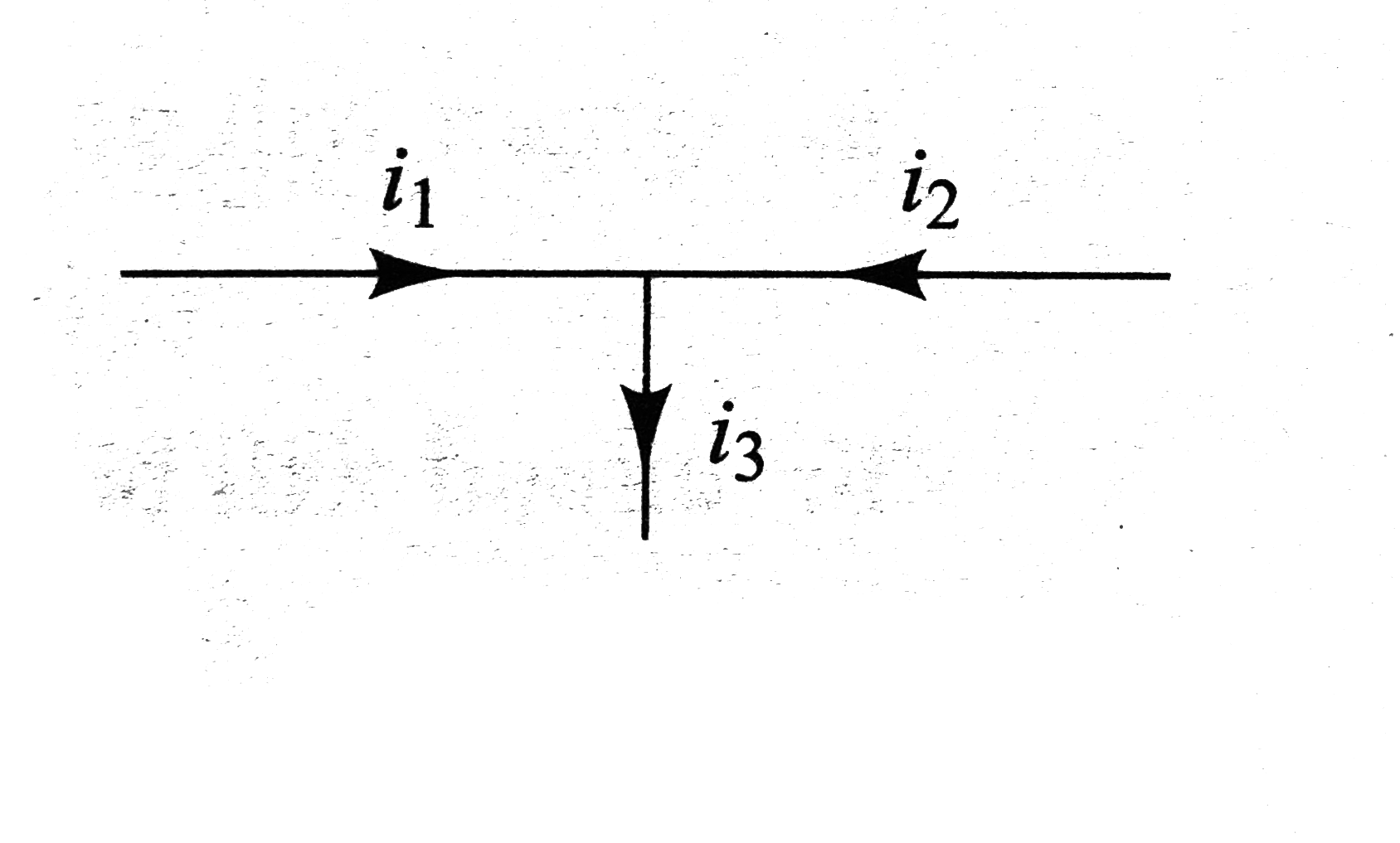
- If i(1)=3 sin omega t and (i2) = 4 cos omega t, then (i3) is
Text Solution
|
- In Young's double slit experiment, the maximum intensity is I(0). What...
Text Solution
|
- AB and CD are two slabs. The medium between the slabs has refractive i...
Text Solution
|
- A biconvex lens of focal length f forms a circular image of radius r o...
Text Solution
|
- Fig. shows a surface XY separating two transparent media, medium 1 and...
Text Solution
|
- Fig. shows a surface XY separating two transparent media, medium 1 and...
Text Solution
|
- Fig. shows a surface XY separating two transparent media, medium 1 and...
Text Solution
|
- In a Young's double slit experiment, the separation between the two sl...
Text Solution
|
- Column I shows four situations of standard Young’s double slit arrange...
Text Solution
|
- A light ray travelling in glass medium is incident of glass- air inter...
Text Solution
|
- Yong's double-slit experiment is carried out by using green, red and b...
Text Solution
|
- In the Young's double slit experiment using a monochromatic light of w...
Text Solution
|
- Using the expression 2d sin theta = lambda, one calculates the values ...
Text Solution
|
- A light source, which emits two wavelength lamda(1)=400nm and lamda(2)...
Text Solution
|
- A Young's double slit interference arrangement with slits S(1) and S(2...
Text Solution
|
- While conduction the Young's double slit experiment, a student replace...
Text Solution
|
- In a Young's double slit experiment, the slit separation d is 0.3 mm a...
Text Solution
|