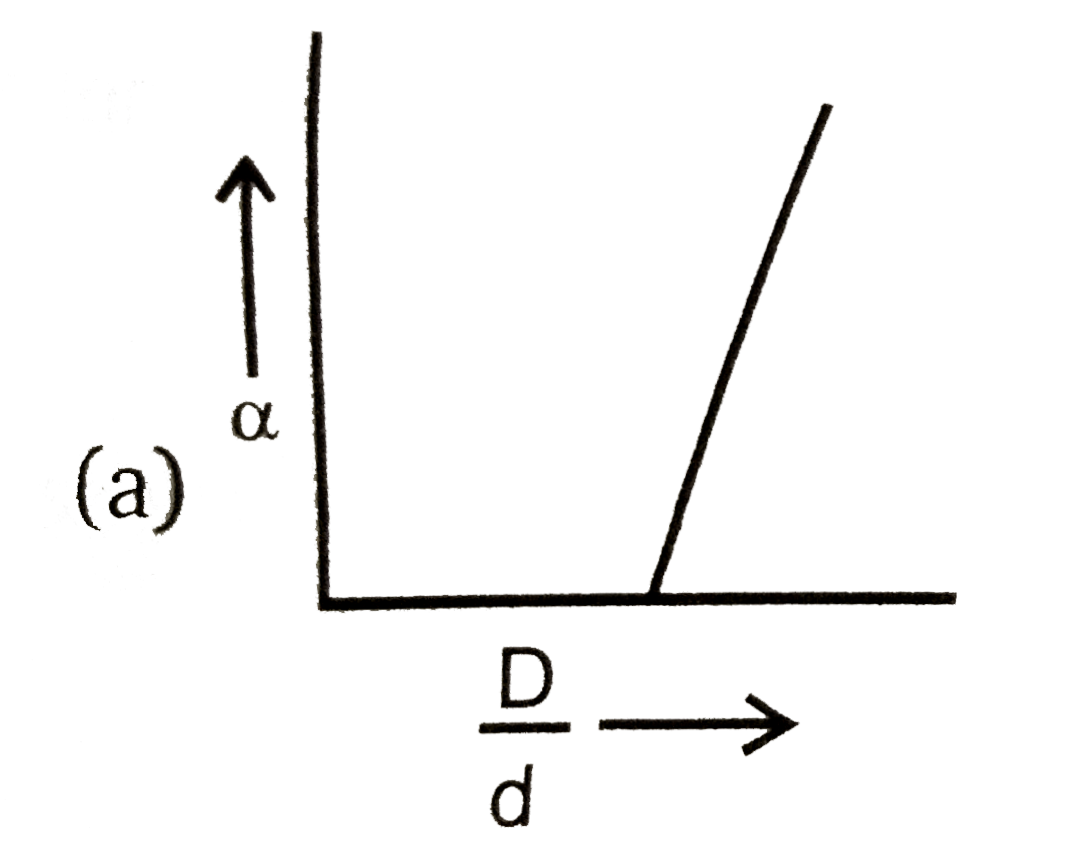
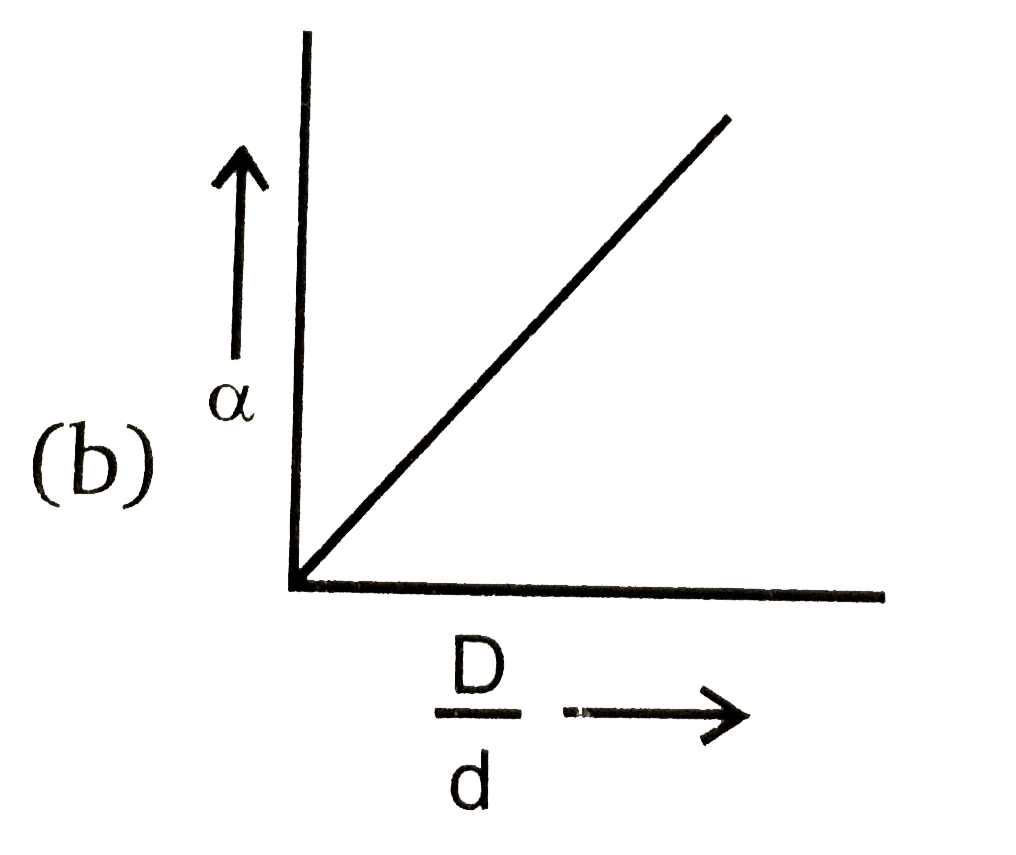
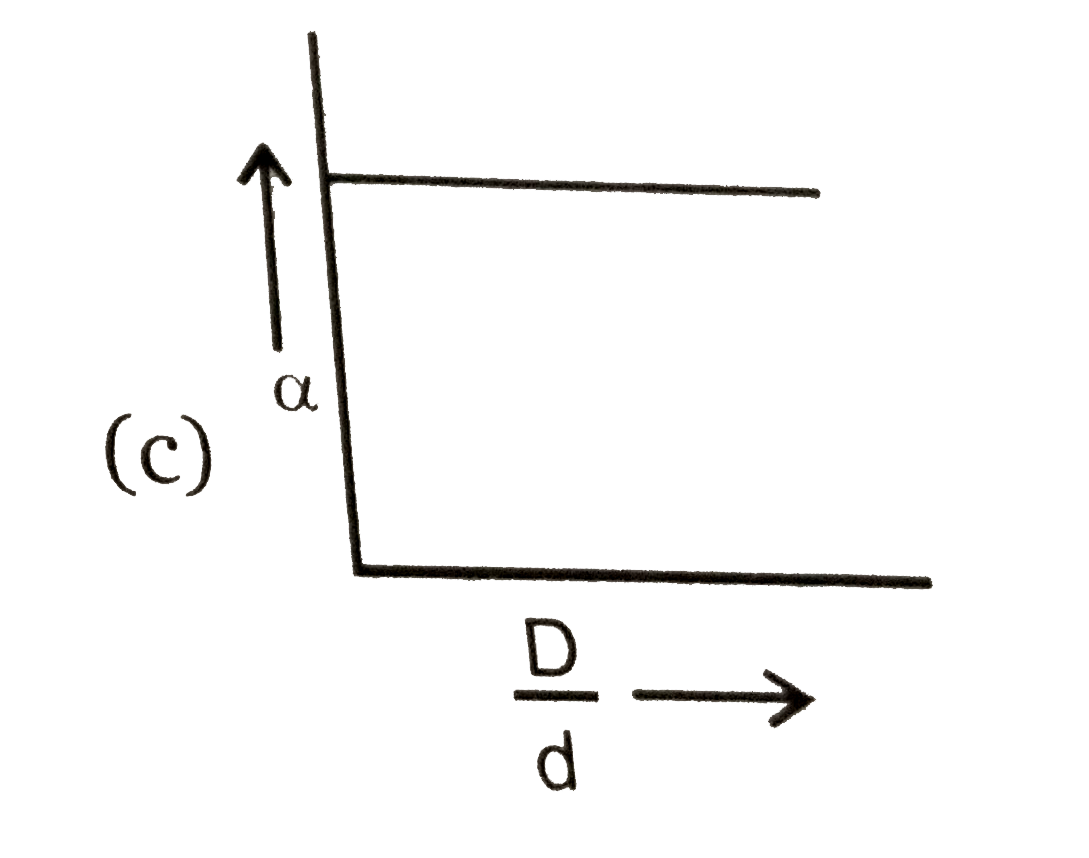
For the dissociation of `PCl_(5)` into `PCl_(3)` and `Cl_(2)` in gaseous phase reaction , if d is the observed vapour density and D the theoretical vapour density with `'alpha'` as degree of dissociation ,variaton of D/d with `'alpha'` is given by ?
A
B
C
D
none of these
Text Solution
Verified by Experts
The correct Answer is:
a
Topper's Solved these Questions
CHEMICAL EQUILIBRIUM
NARENDRA AWASTHI|Exercise Level 1 (Q.93 To Q.122)|1 Videos
CHEMICAL EQUILIBRIUM
NARENDRA AWASTHI|Exercise Level 2|1 Videos
ATOMIC STUCTURE
NARENDRA AWASTHI|Exercise level 2|1 Videos
DILUTE SOLUTION
NARENDRA AWASTHI|Exercise Level 3 - Match The Column|1 Videos
Similar Questions
Explore conceptually related problems
For the reaction : PCl_(5) (g) rarrPCl_(3) (g) +Cl_(2)(g) :
Why does the dissociation of PCl_(5) decreases in the presence of Cl_(2) ?
For the reaction PCl_(5)(g)hArrPCl_(3)(g)+Cl_(2)(g), the forward reaction at constant temperature favorrd by :
At 200^(@)C PCl_(5) dissociates as follows : PCl_(5)(g0hArrPCl_(3)(g)+Cl_(2)(g) It was found that the equilibrium vapours are 62 times as heavy as hydreogen .The degree of dissociation of PCl_(5) at 200^(@)C is nearly :
COCl_(2) gas dissociates according to the equation, COCl_(2)hArrCO(g)+Cl_(2)(g) . When heated to 700 K the density of the gas mixture at 1.16 atm and at equilibrium is 1.16 g//litre The degree of dissociation of COCl_(2) at 700K is :
For the dissociation reaction N_(2)O_($) (g)hArr 2NO_(2)(g) , the degree of dissociation (alpha) interms of K_(p) and total equilibrium pressure P is:
Consider thr reaction where K_(p)=0.497 at 500K PCl_(5)(g)hArrPCl_(3)(g)+Cl_(2)(g) If the htree gasses are mixed in a right container so that the partial pressure of each gas in initially 1 atm ,then which is correct observation ?
Degree of differential equation (d^3y/dx^3) + (dy/dx)^2 = 0 is
The degree of dissociation of Ca(NO_3)_2 in dilute aqueous solution containing 7.0 g of the salt per 100 g of water at 100^@C is 70 percent. If the vapour pressure of water at 100^@C is 760 mm, calculate the vapour pressure of the solution.