
Home
Class 12
CHEMISTRY
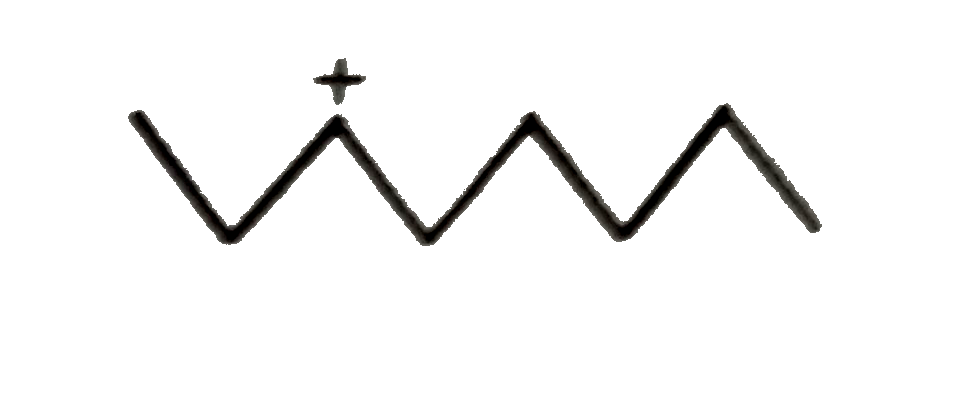
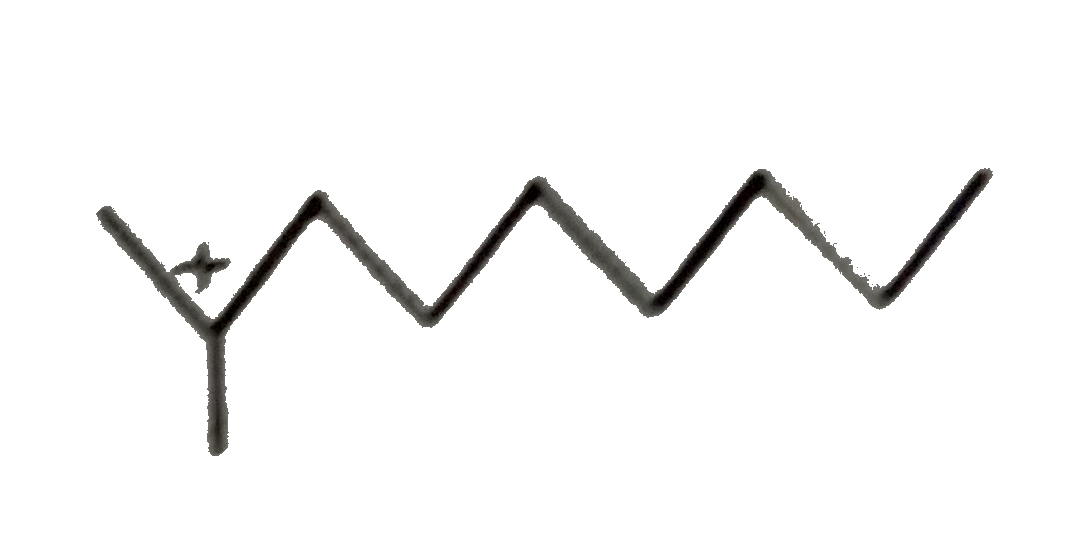
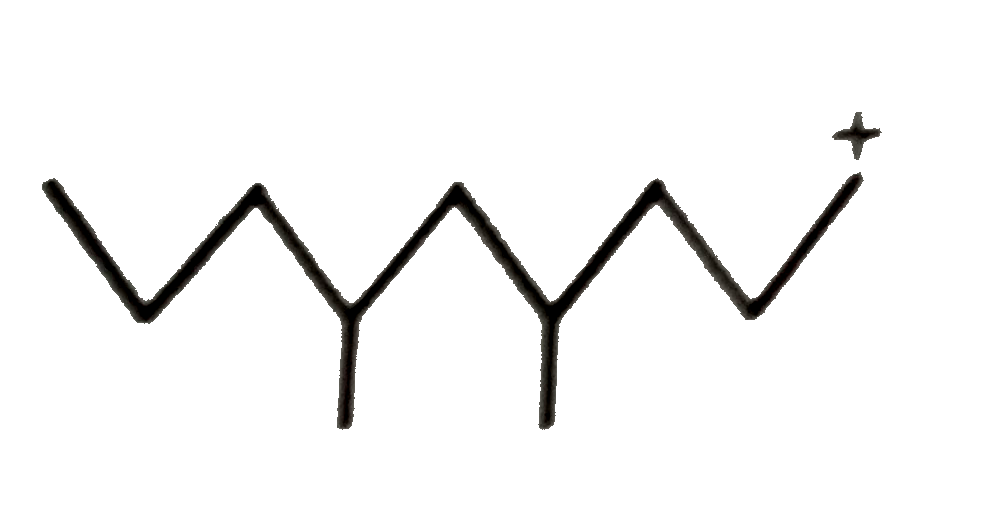
Select the most stable carbocation from ...

Select the most stable carbocation from amongst the following

A

B

C

D

Text Solution

AI Generated Solution

The correct Answer is:

To determine the most stable carbocation from the given options, we need to analyze the degree of each carbocation. Here’s a step-by-step solution: ### Step 1: Understand Carbocation Stability Carbocations are classified based on the number of carbon atoms attached to the positively charged carbon atom: - **Tertiary (3°) Carbocation**: The positively charged carbon is attached to three other carbon atoms. This is the most stable type of carbocation due to hyperconjugation and inductive effects. - **Secondary (2°) Carbocation**: The positively charged carbon is attached to two other carbon atoms. This is less stable than a tertiary carbocation. - **Primary (1°) Carbocation**: The positively charged carbon is attached to only one other carbon atom. This is the least stable type of carbocation. - **Methyl Carbocation**: A carbocation with no carbon atoms attached (only hydrogen). This is extremely unstable. ### Step 2: Analyze the Given Carbocations Now, let's analyze the given carbocations based on the description provided: 1. **Option A**: This is a secondary carbocation (2°) because it is connected to two other carbon atoms. 2. **Option B**: This is a tertiary carbocation (3°) because it is connected to three other carbon atoms. 3. **Option C**: This is a primary carbocation (1°) because it is connected to only one other carbon atom. 4. **Option D**: This is also a secondary carbocation (2°). ### Step 3: Compare the Stability From the analysis: - **Option A**: Secondary (2°) - **Option B**: Tertiary (3°) - **Option C**: Primary (1°) - **Option D**: Secondary (2°) Since tertiary carbocations are the most stable, **Option B** is the most stable carbocation among the given choices. ### Conclusion The most stable carbocation is **Option B**. ---

To determine the most stable carbocation from the given options, we need to analyze the degree of each carbocation. Here’s a step-by-step solution: ### Step 1: Understand Carbocation Stability Carbocations are classified based on the number of carbon atoms attached to the positively charged carbon atom: - **Tertiary (3°) Carbocation**: The positively charged carbon is attached to three other carbon atoms. This is the most stable type of carbocation due to hyperconjugation and inductive effects. - **Secondary (2°) Carbocation**: The positively charged carbon is attached to two other carbon atoms. This is less stable than a tertiary carbocation. - **Primary (1°) Carbocation**: The positively charged carbon is attached to only one other carbon atom. This is the least stable type of carbocation. - **Methyl Carbocation**: A carbocation with no carbon atoms attached (only hydrogen). This is extremely unstable. ...
Promotional Banner

Topper's Solved these Questions

  • BASIC PRINCIPLES OF ORGANIC CHEMISTRY

    DINESH PUBLICATION|Exercise SELECTED STRAIGHT OBJECTIVE TYPE MCQS|64 Videos
  • BASIC PRINCIPLES OF ORGANIC CHEMISTRY

    DINESH PUBLICATION|Exercise LINKED COMPREHENSION TYPE MCQS|10 Videos
  • BASIC PRINCIPLES OF ORGANIC CHEMISTRY

    DINESH PUBLICATION|Exercise Matrix Type Questions|2 Videos
  • ALKALI EARTH METALS

    DINESH PUBLICATION|Exercise Unit test-12|5 Videos
  • BIOMOLECULES

    DINESH PUBLICATION|Exercise MATRIX - MATCH TYPE|8 Videos

Similar Questions

Explore conceptually related problems

Select the most stable carbonium ion from amongst the following

The most stable carbocation amongst the following is

The most stable carbocation is

The most stable carbocation is

The most stable carbocation is

The most stable carbocation is

The most stable carbocation is

The most unstable carbocation, amongst the following, is

DINESH PUBLICATION-BASIC PRINCIPLES OF ORGANIC CHEMISTRY-REVISION QUESTIONS FROM COMPETITIVE EXAMS.
  1. In which of the following homolytic bond fission takes place ?

    Text Solution

    |

  2. Polarization of electrons in acrolein may be written as:

    Text Solution

    |

  3. Select the most stable carbocation from amongst the following

    Text Solution

    |

  4. Which of the following is not a nucleophile ?

    Text Solution

    |

  5. Among the following, the true property about

    Text Solution

    |

  6. Consider the following carbocations (I)C(6)H(5)overset(+)CH(2) , (II...

    Text Solution

    |

  7. Intermediate formed during reaction of RCONH(2) with Br(2) and KOH are...

    Text Solution

    |

  8. Acetaldehyde is the rearragement product of

    Text Solution

    |

  9. In the mechanism of Hoffmann reaction which intermediate rearranges to...

    Text Solution

    |

  10. Which of the following is most stable ?

    Text Solution

    |

  11. The reaction (CH(3))(3)Cbroverset(H(2)O)rarr(CH(3))(3)C-OH is

    Text Solution

    |

  12. The arrangement of (CH(3))(3)C-,(CH(3))(2)CH-, CH(3)CH(2)- when attach...

    Text Solution

    |

  13. Choose the correct option which isomer for the given structure

    Text Solution

    |

  14. Which of the following statements regarding the resonance energy of be...

    Text Solution

    |

  15. The compound having only primary hydrogen atoms is

    Text Solution

    |

  16. Pick out the alkane which differs from the other members of the group

    Text Solution

    |

  17. The most reactive nucleophile among the following is

    Text Solution

    |

  18. Among the following, the aromatic compound is

    Text Solution

    |

  19. Which of the following compound is anti aromatic ?

    Text Solution

    |

  20. The number and type of bonds between two carbon atoms in calcium carbi...

    Text Solution

    |
