
Home
Class 11
CHEMISTRY
Which of the following will have maximum...

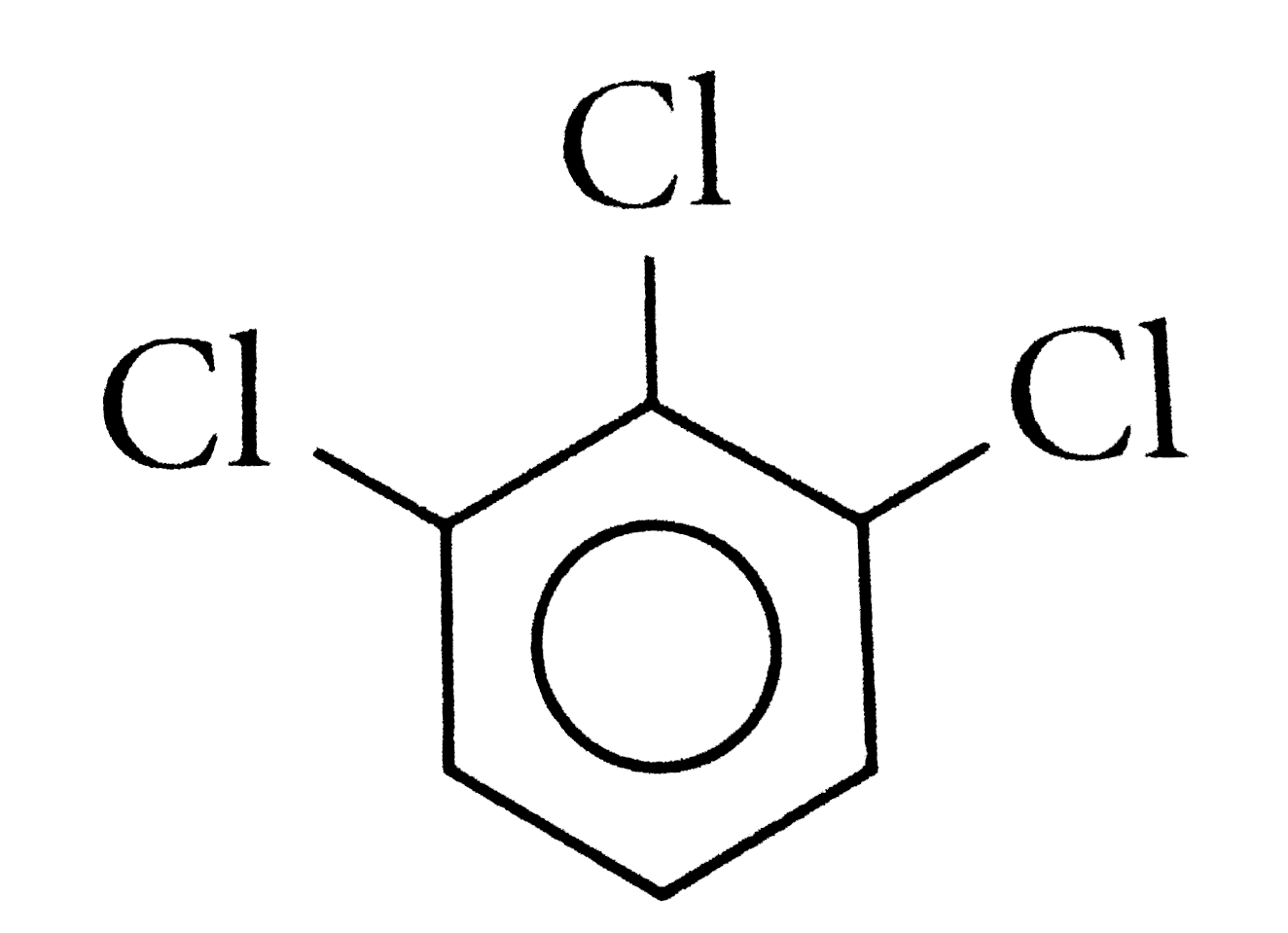
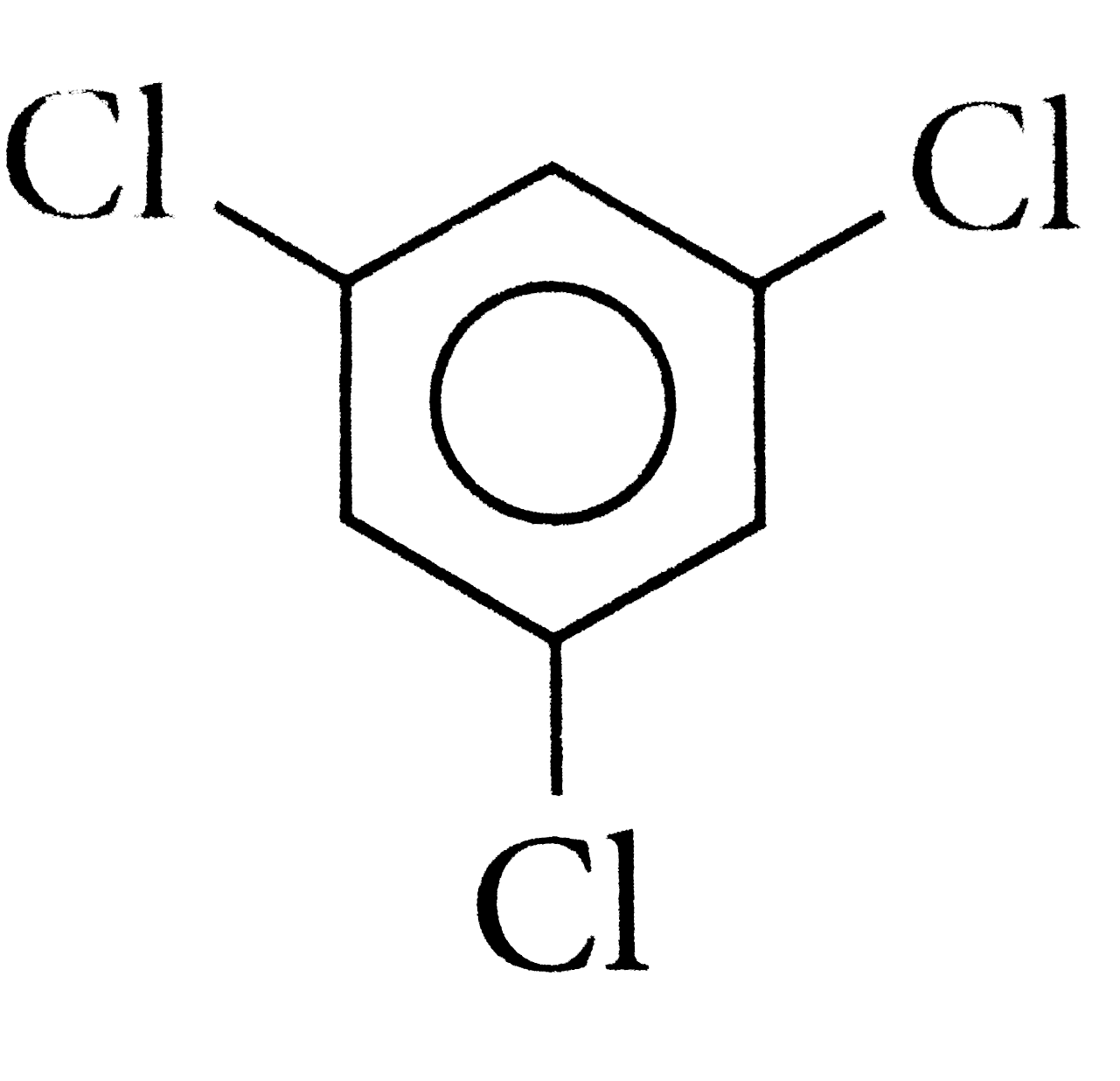
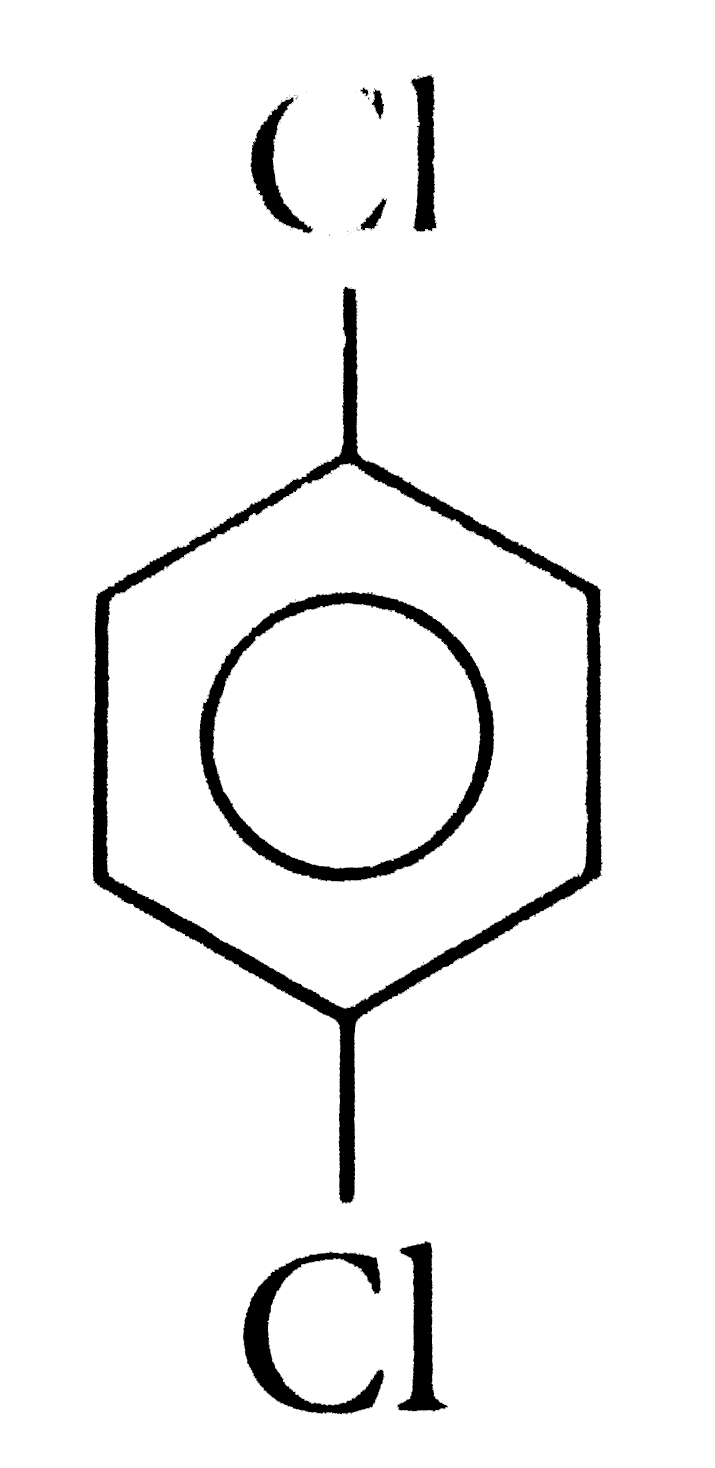
Which of the following will have maximum dipole moment?

A

B

C

D

Text Solution

AI Generated Solution

The correct Answer is:

To determine which of the given options has the maximum dipole moment, we need to analyze the molecular structure and the electronegativity of the atoms involved in each option. Here’s a step-by-step solution: ### Step 1: Understand Dipole Moment The dipole moment (μ) is a measure of the separation of positive and negative charges in a molecule. It is calculated as: \[ \mu = Q \times r \] where \( Q \) is the magnitude of the charge and \( r \) is the distance between the charges. A higher dipole moment indicates a greater polarity in the molecule. ### Step 2: Analyze Each Option Assuming the options are A, B, C, and D, we will analyze them based on their molecular structures and electronegativity differences. 1. **Option A**: This could be a non-polar molecule like benzene (C6H6). Since all carbon atoms have the same electronegativity, there is no charge separation, resulting in a dipole moment of zero. 2. **Option B**: This could be a polar molecule, such as chloromethane (CH3Cl). The electronegativity difference between carbon and chlorine creates a dipole moment directed towards chlorine, resulting in a non-zero dipole moment. 3. **Option C**: This could be another non-polar molecule, such as carbon dioxide (CO2). Although it has polar bonds, the linear shape of the molecule causes the dipoles to cancel each other out, resulting in a net dipole moment of zero. 4. **Option D**: This could be a symmetrical molecule like tetrafluoromethane (CF4). Similar to CO2, the symmetrical shape leads to cancellation of dipoles, resulting in a dipole moment of zero. ### Step 3: Compare Dipole Moments From the analysis: - Options A, C, and D are non-polar and have a dipole moment of zero. - Option B is polar and has a non-zero dipole moment due to the electronegativity difference between carbon and chlorine. ### Conclusion Thus, the option with the maximum dipole moment is **Option B**.
Promotional Banner

Topper's Solved these Questions

  • PRACTICE PAPER 3

    NCERT FINGERTIPS ENGLISH|Exercise Practice Paper 3|46 Videos
  • PRACTICE PAPER 2

    NCERT FINGERTIPS ENGLISH|Exercise Practice Paper 2|44 Videos
  • REDOX REACTIONS

    NCERT FINGERTIPS ENGLISH|Exercise Assertion And Reason|15 Videos

Similar Questions

Explore conceptually related problems

Which of the following will have zero dipole moment?

Which of the following molecules has maximum dipole moment?

Which of the following pairs have same dipole moment

Which has maximum dipole moment?

Which has maximum dipole moment ?

Which of the following will have the highest dipole moment ?

Which of the following molecule has same dipole moment :-

NCERT FINGERTIPS ENGLISH-PRACTICE PAPER 3-Practice Paper 3
  1. Select correct statement for BrF(5).

    Text Solution

    |

  2. Consider a P(y) orbital of an atom and identify correct statement

    Text Solution

    |

  3. Which of the following will have maximum dipole moment?

    Text Solution

    |

  4. Which of the following is not the consequence of H-bonding?

    Text Solution

    |

  5. The two equilibrium AB hArr A^(+) + B^(-) and AB+B^(-)hArrAB(2)^(-) ar...

    Text Solution

    |

  6. Consider the following equilibrium in a closed container, N(2)O(4(g)...

    Text Solution

    |

  7. The degree of dissociation alpha of the reaction" N(2)O(4(g))hArr 2N...

    Text Solution

    |

  8. (I) H(2)O(2)+O(3) to H(2)O+2O(2) (II) H(2)O(2)+Ag(2)O to 2Ag+H(2)O+O...

    Text Solution

    |

  9. Which set of quantum numbers is possible for the last electron of Mg^(...

    Text Solution

    |

  10. Which of the following reactions is said to be entropy driven?

    Text Solution

    |

  11. If 10^(21) molecules are removed from 200 mg of CO(2), the number of m...

    Text Solution

    |

  12. The ions O^(-2),F^(-),Mg^(2+) and Al^(3+) are isoelectronic. Their ion...

    Text Solution

    |

  13. The pH of 0.004 M hydrazine solution is 9.7. its ionisation constant (...

    Text Solution

    |

  14. The vapoour density of a mixture containing NO(2) and N(2)O(4) is 38.3...

    Text Solution

    |

  15. An alkane C(7)H(16) is produced by the reaction of lithium di(3-pentyl...

    Text Solution

    |

  16. The enthalpy of neutralisation of NH(4)OH and CH(3)COOH is -10.5 kcal ...

    Text Solution

    |

  17. When LiNO(3) is heated, it gives oxide, Li(2)O whereas other alkali m...

    Text Solution

    |

  18. Which one of the following statements is not true?

    Text Solution

    |

  19. The solubility product of MgF(2) is 7.4xx10^(-11). Calculate the solub...

    Text Solution

    |

  20. The aqueous solution of potash alum [K(2)SO(4)*Al(2)(SO(4))(3)*24H(2)O...

    Text Solution

    |
