Home
Class 12
CHEMISTRY
Resonance is not possible in...

Resonance is not possible in

A

B

C

D

Text Solution

AI Generated Solution

The correct Answer is:

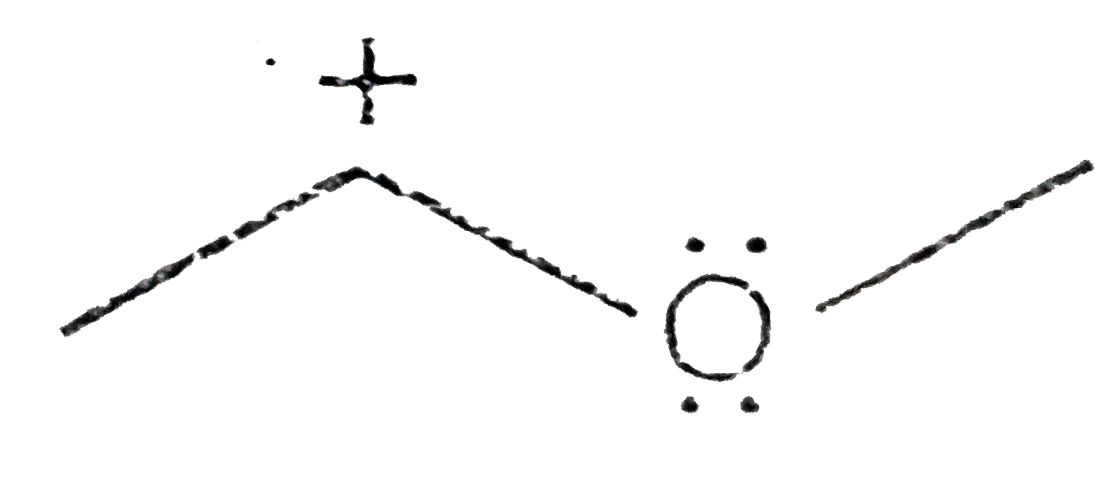
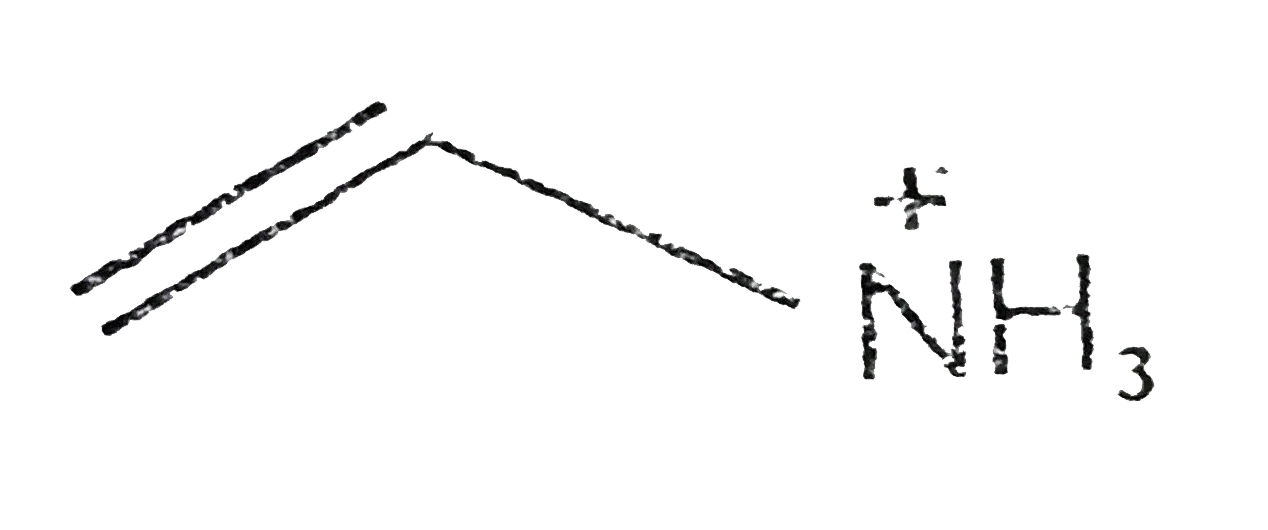
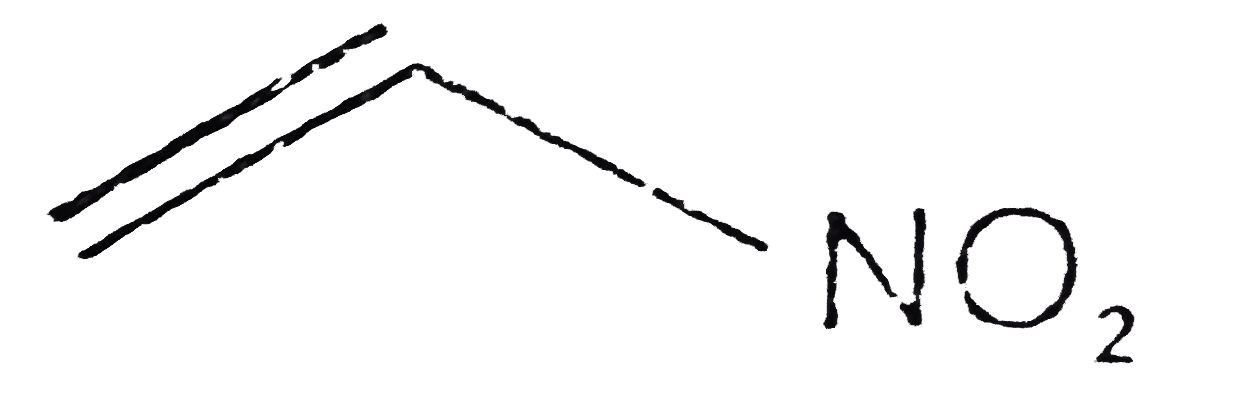
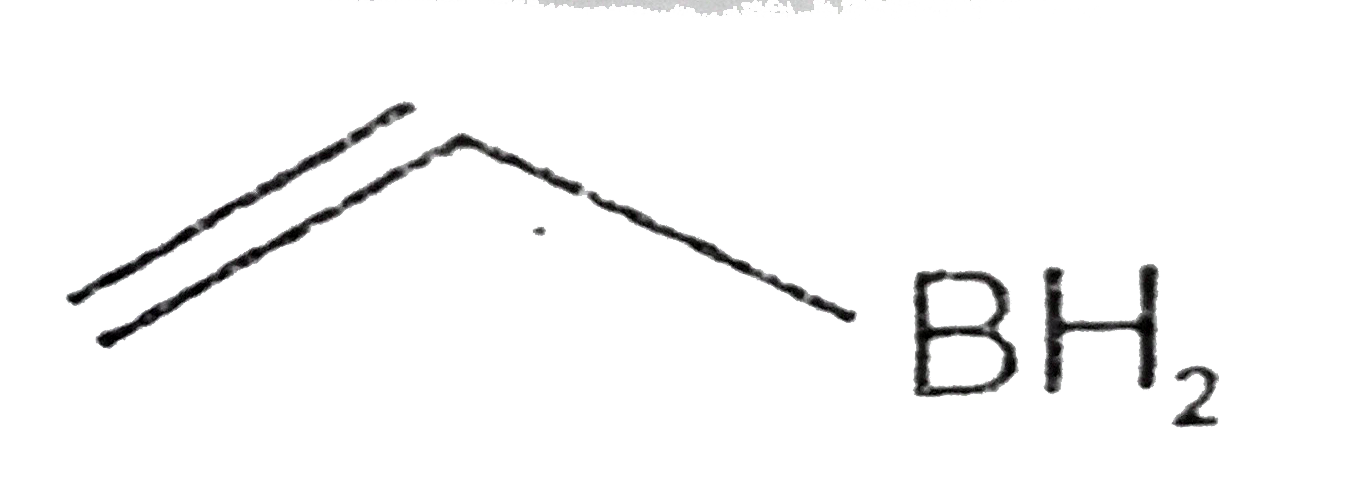
To solve the question "Resonance is not possible in", we will analyze each of the given options to determine whether resonance can occur. ### Step-by-Step Solution: 1. **Understanding Resonance**: - Resonance involves the movement of pi electrons within a molecule. For resonance to occur, there must be: - A lone pair of electrons on one atom. - An adjacent atom with an empty orbital to accept those electrons. - The atoms involved must be in the same plane. 2. **Analyzing Option 1: CH3CH(+)O(CH3)** - In this structure, the oxygen has a lone pair of electrons and is adjacent to a carbon with a positive charge. - The lone pair on oxygen can be donated to form a double bond with the carbon, resulting in resonance. - **Conclusion**: Resonance is possible in this option. 3. **Analyzing Option 2: CH2=CH(+)NH3** - Here, nitrogen has a positive charge and does not have a lone pair of electrons. - Since nitrogen is positively charged and has only two bonds, it cannot participate in resonance because it lacks the necessary lone pair or empty orbital. - **Conclusion**: Resonance is NOT possible in this option. 4. **Analyzing Option 3: CH2=CH-NO2** - In this case, the nitrogen in the nitro group (NO2) has a positive charge, and the oxygen atoms have lone pairs. - The resonance can occur as the lone pairs on the oxygen can interact with the nitrogen, allowing for electron movement and resonance structures to form. - **Conclusion**: Resonance is possible in this option. 5. **Analyzing Option 4: CH2=CH-BH2** - Boron (B) has an empty p-orbital and can accept electrons. The carbon-carbon double bond can interact with boron. - The resonance can occur as the electron density shifts towards boron, allowing for resonance structures. - **Conclusion**: Resonance is possible in this option. ### Final Answer: - The correct answer is **Option 2: CH2=CH(+)NH3**, as resonance is not possible in this structure.
Promotional Banner

Topper's Solved these Questions

  • ORGANIC CHEMISTRY: SOME BASIC PRINCIPLE AND TECHNIQUES

    AAKASH INSTITUTE ENGLISH|Exercise SECTION-C OBJECTIVE TYPE QUESTION (MORE THAN ONE OPTIONS ARE CORRECT)|18 Videos
  • ORGANIC CHEMISTRY: SOME BASIC PRINCIPLE AND TECHNIQUES

    AAKASH INSTITUTE ENGLISH|Exercise SECTION-D LINKED COMPREHENSION TYPE QUESTIONS|7 Videos
  • ORGANIC CHEMISTRY: SOME BASIC PRINCIPLE AND TECHNIQUES

    AAKASH INSTITUTE ENGLISH|Exercise ASSIGNMENT SECTION-A COMPETITION LEVEL QUESTIONS|50 Videos
  • ORGANIC CHEMISTRY : SOME BASIC PRINCIPLES AND TECHNIQUES

    AAKASH INSTITUTE ENGLISH|Exercise Assignment(Section-D)(Assertion - Reason Type Questions)|15 Videos
  • POLYMERS

    AAKASH INSTITUTE ENGLISH|Exercise ASSIGNMENT (SECTION-D)|13 Videos

Similar Questions

Explore conceptually related problems

In which of the following species resonance is possible?

STATEMENT-1 : In Cr_(2)O_(7)^(-2) bond length of all Cr-O bond is equal and STATEMENT-2: Cr_(2)O_(7)^(-2) , resonance is possible.

Resonance is an example of

Statement-1: In CO_(2) molecule resonance is possible. Statement-2: CO is used in purification of Ni. Statement-3: H_(2)CO_(3) is more acidic than H_(2)SiO_(3) .

Resonance involves :

Resonance stabilized cation is:

The maximum number of no bond resonating structure is possible in

The number of resonating structures possible for

An organic compound contains 66% C and 13.3% H . Its vapour density is 37 . The possible number of isomers of resonance is not correct?

Resonance is delocalisation of :

AAKASH INSTITUTE ENGLISH-ORGANIC CHEMISTRY: SOME BASIC PRINCIPLE AND TECHNIQUES-SECTION-B OBJECTIVE TYPE QUESTION (ONE OPTION IS CORRECT)
  1. In the given anion,-ve charge is delocalized on

    Text Solution

    |

  2. The compounds are

    Text Solution

    |

  3. Least stable carbocation among the following is

    Text Solution

    |

  4. Which of the following compound will give blood red colour while doing...

    Text Solution

    |

  5. The most stable free radical is

    Text Solution

    |

  6. Which of the following group will have strongest electron donating mes...

    Text Solution

    |

  7. Among the following the most stable carbocation

    Text Solution

    |

  8. Most acidic species among the following is

    Text Solution

    |

  9. Which of the following double bond in the given molecule is most react...

    Text Solution

    |

  10. Which of the following hydrocarbon is most stable ?

    Text Solution

    |

  11. Resonance is not possible in

    Text Solution

    |

  12. Which of the following compounds will have highest enolic content?

    Text Solution

    |

  13. Among the following The correct order of reactivity of chloride is

    Text Solution

    |

  14. Which of the following represents the correct order of stability of th...

    Text Solution

    |

  15. Which of the following organic molecule can not form hydrogen bond in ...

    Text Solution

    |

  16. Correct stability order of the given free radicals is

    Text Solution

    |

  17. In which of the following, homolytic bond fission takes place :

    Text Solution

    |

  18. Which of the following is correct order of dipole moment of 0, m and p...

    Text Solution

    |

  19. Which of the following compounds will give negative Lassaigne is test ...

    Text Solution

    |

  20. A mixture contains four solid organic compounds containing A, B, C an...

    Text Solution

    |
