Home
Class 12
CHEMISTRY
The reaction of 50% aq KOH on an equimol...

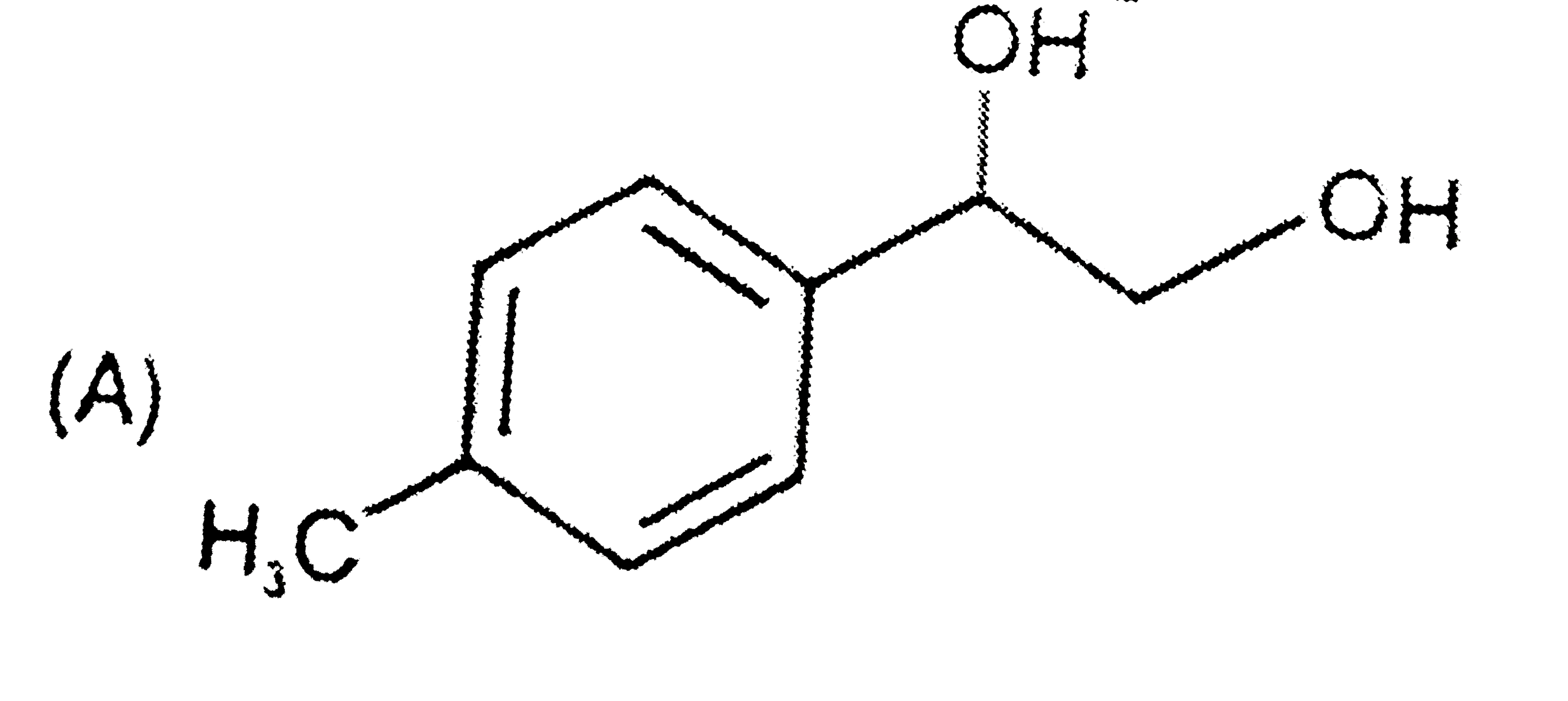
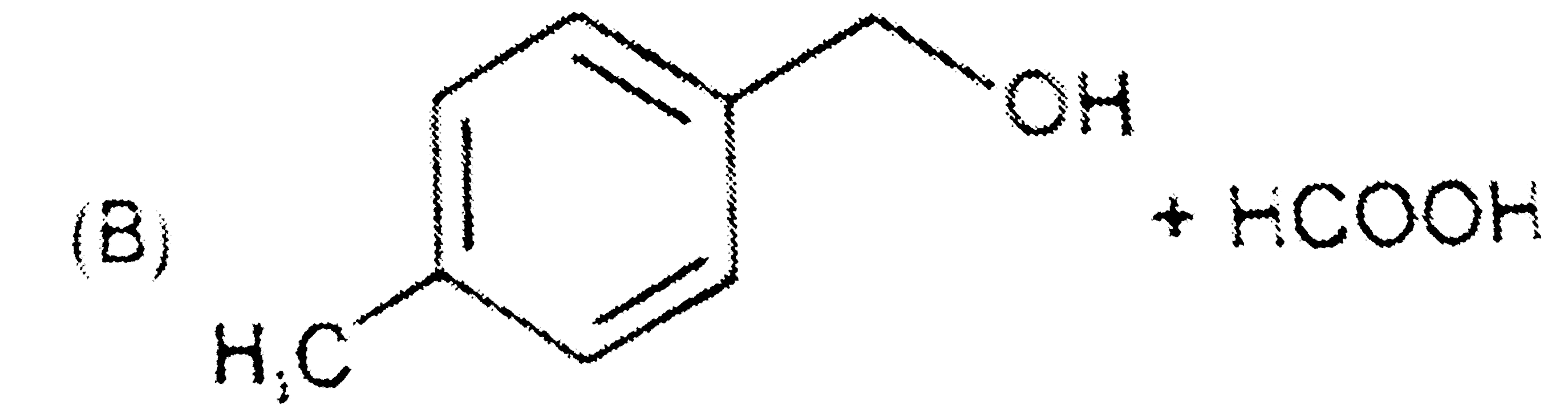
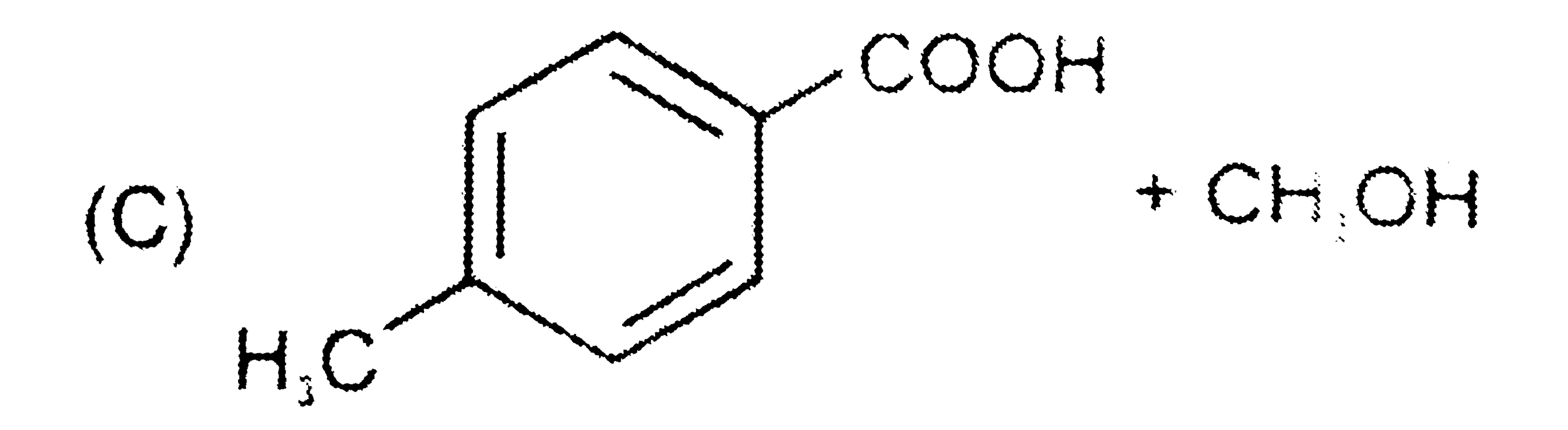
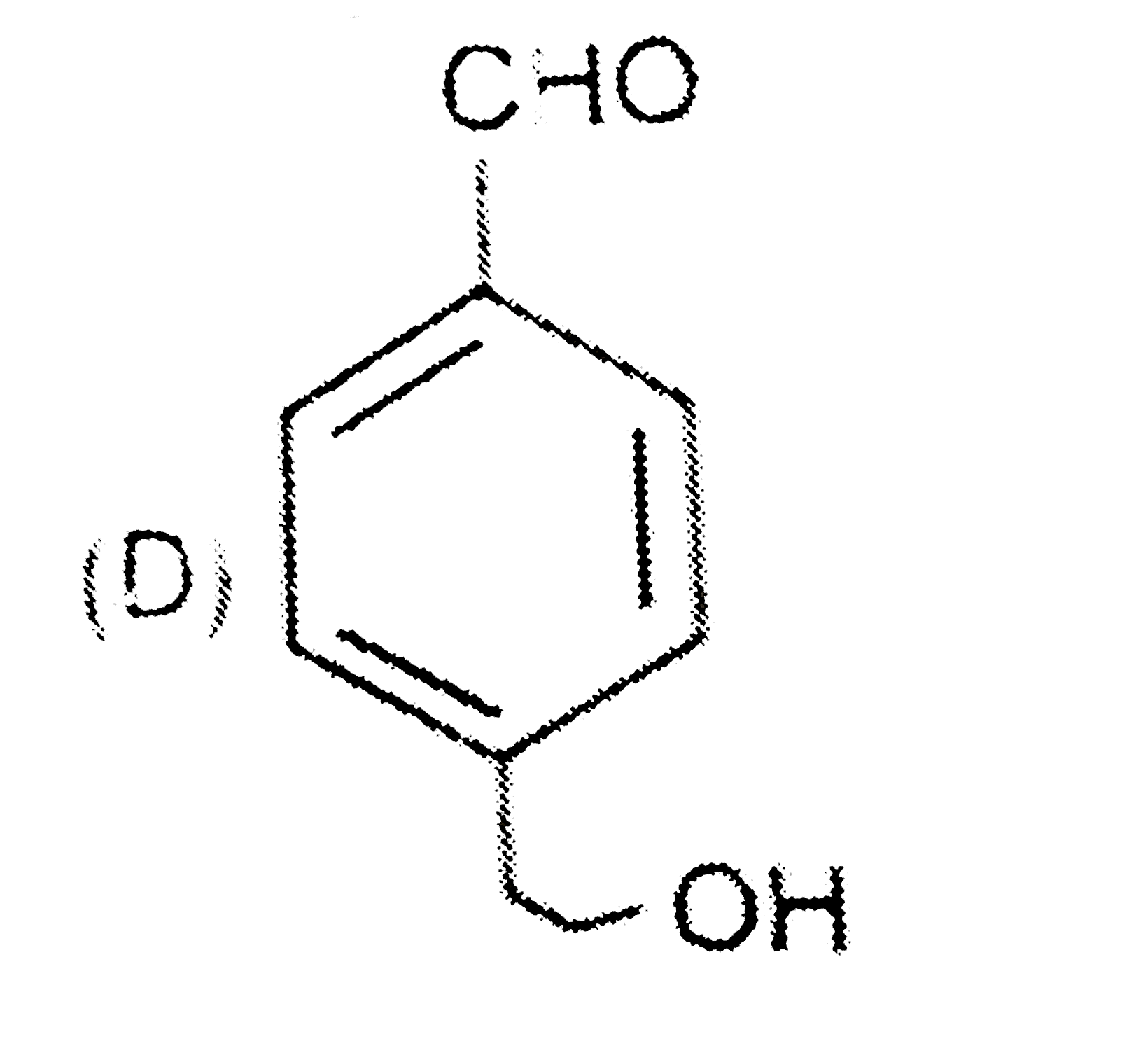
The reaction of 50% aq KOH on an equimolar mixture of 4-methylbenzaldehyde and formaldehyde followed by acidification gives.

A

B

C

D

Text Solution

AI Generated Solution

The correct Answer is:

To solve the problem of the reaction of 50% aqueous KOH on an equimolar mixture of 4-methylbenzaldehyde and formaldehyde followed by acidification, we will follow these steps: ### Step 1: Identify the Reactants The reactants in this reaction are: - 4-methylbenzaldehyde (C6H5CHO with a methyl group at the para position) - Formaldehyde (HCHO) ### Step 2: Understand the Reaction Conditions The reaction takes place in the presence of 50% aqueous KOH. This indicates that the reaction is likely to involve a condensation reaction, specifically an aldol condensation, where aldehydes can react in the presence of a base. ### Step 3: Reaction of 4-Methylbenzaldehyde with Formaldehyde In the presence of KOH, formaldehyde (HCHO) can undergo a reaction to form a hydroxymethyl group. The 4-methylbenzaldehyde can also participate in the reaction. The aldehyde groups will react to form a β-hydroxy aldehyde. 1. **Formaldehyde (HCHO)** can be converted to a hydroxymethyl group (–CH2OH). 2. **4-Methylbenzaldehyde** will remain as it is but will also participate in the aldol reaction. ### Step 4: Formation of the Aldol Product The aldol product formed from the reaction of 4-methylbenzaldehyde and formaldehyde will be a β-hydroxy aldehyde. The structure will look like this: - The product will have a hydroxymethyl group attached to the benzaldehyde structure. ### Step 5: Acidification After the aldol product is formed, the mixture is acidified. Acidification will lead to dehydration of the β-hydroxy aldehyde, resulting in the formation of an α,β-unsaturated aldehyde. ### Step 6: Identify the Final Products The final products after acidification will be: - 4-methylcinnamaldehyde (the dehydrated product of the aldol condensation) - Formic acid (HCOOH) from the oxidation of formaldehyde. ### Final Answer The products formed from the reaction of 50% aqueous KOH on an equimolar mixture of 4-methylbenzaldehyde and formaldehyde followed by acidification are: - 4-methylcinnamaldehyde - Formic acid (HCOOH)
Promotional Banner

Topper's Solved these Questions

  • CARBONYL COMPOUNDS (ALDEHYDES & KETONES ) & CARBOXYLIC ACID

    RESONANCE ENGLISH|Exercise Part -III|31 Videos
  • CARBONYL COMPOUNDS (ALDEHYDES & KETONES ) & CARBOXYLIC ACID

    RESONANCE ENGLISH|Exercise Part -IV|23 Videos
  • CARBONYL COMPOUNDS (ALDEHYDES & KETONES ) & CARBOXYLIC ACID

    RESONANCE ENGLISH|Exercise APSP|1 Videos
  • BIOMOLECULES & POLYMER

    RESONANCE ENGLISH|Exercise ORGANIC CHEMISTRY(Biomolecules & Polymer)|34 Videos
  • CHEMICAL KINETICS

    RESONANCE ENGLISH|Exercise PHYSICAL CHEMITRY (CHEMICAL KNIETICS & RADIOACTIVITY)|49 Videos

Similar Questions

Explore conceptually related problems

A mixture of benzaldehyde and formaldehyde on heating with aqueous NaOH solution gives

A mixture of formaldehyde and benzaldehyde on heating with aqueous NaOH solution gives :

But-2-ene on reaction with alkaline KMnO_(4) at elevated temperature followed by acidification will give :

conductometric titration curve of a equimolar mixture of a HCl and HCN with NaOH(aq) is :

A mixture of 1- chloropropane and 2- chloropropane when treated with alcoholic KOH , it gives

Write balanced chemical equation for the reaction and name the reaction: Benzaldehyde is treated with 50% sodium hydroxide solution.

Give balanced equation for the reaction: Formaldehyde is treated with ammonia.

Which of the following reactants on reaction with conc. NaOH followed by acidification gives following lactone as the main product ?

Which of the following reactants on reaction with conc. NaOH followed by acidification gives following lactone as the product?

RESONANCE ENGLISH-CARBONYL COMPOUNDS (ALDEHYDES & KETONES ) & CARBOXYLIC ACID -Part -II
  1. Cyclohexanone oxime is converted into epsilon-caprolactam by treatemen...

    Text Solution

    |

  2. Curved arrows are used in Organic Chemistry to show the moment of elec...

    Text Solution

    |

  3. The reaction of 50% aq KOH on an equimolar mixture of 4-methylbenzalde...

    Text Solution

    |

  4. Which of the following reaction mechanism doe not involves carbocation...

    Text Solution

    |

  5. The pair of the equimolar compound that would be give a single condens...

    Text Solution

    |

  6. The main product X formed in the following reaction is

    Text Solution

    |

  7. An organic compound ("X") is a disubstituted benzene containing 77.8% ...

    Text Solution

    |

  8. Compound "X" undergoes the following sequences of reactions to form "Y...

    Text Solution

    |

  9. The product ("X") of the following sequences of reactions is

    Text Solution

    |

  10. Three isometic compounds M,N and P (C(5)H(10)O) give the following tes...

    Text Solution

    |

  11. Give the structure of 4-Hydroxy-4-methylpentanal

    Text Solution

    |

  12. Compound "X" in the following reaction is

    Text Solution

    |

  13. Compound "X" in the following reaction is

    Text Solution

    |

  14. Compound 'P' that undergoes the sequence of reactions given below to g...

    Text Solution

    |

  15. The major product of the following reaction is

    Text Solution

    |

  16. The reaction , RCH(2)CH(2)COOH overset("Red P") underset(Br(2)) to R ...

    Text Solution

    |

  17. Formic acid and acetic acid can be distinguished with

    Text Solution

    |

  18. One of the product formed in the electrolysis of sodium salt of succin...

    Text Solution

    |

  19. The compound that gives a lactone on heating is

    Text Solution

    |

  20. The compound that undergoes decarboxylation most readily under mild co...

    Text Solution

    |
