Home
Class 11
CHEMISTRY
Which plot represents for an exothermic ...

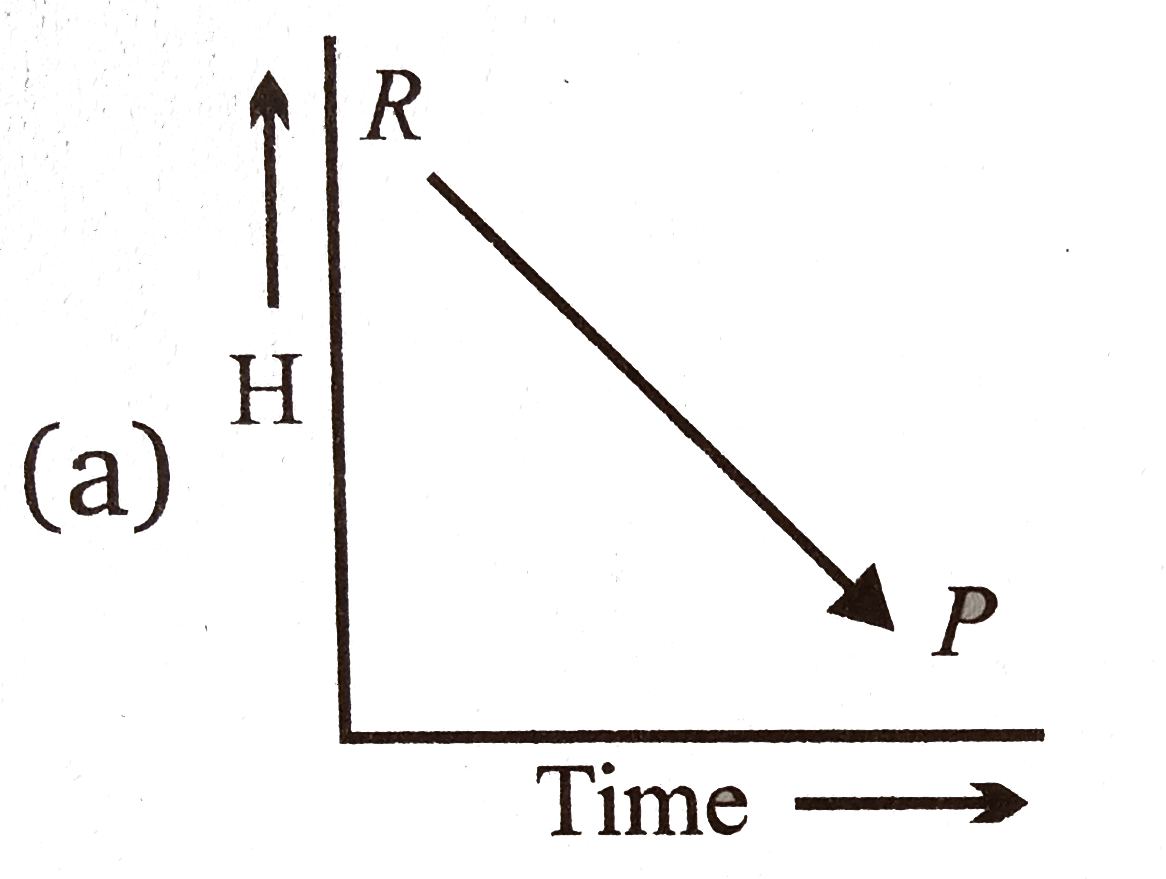
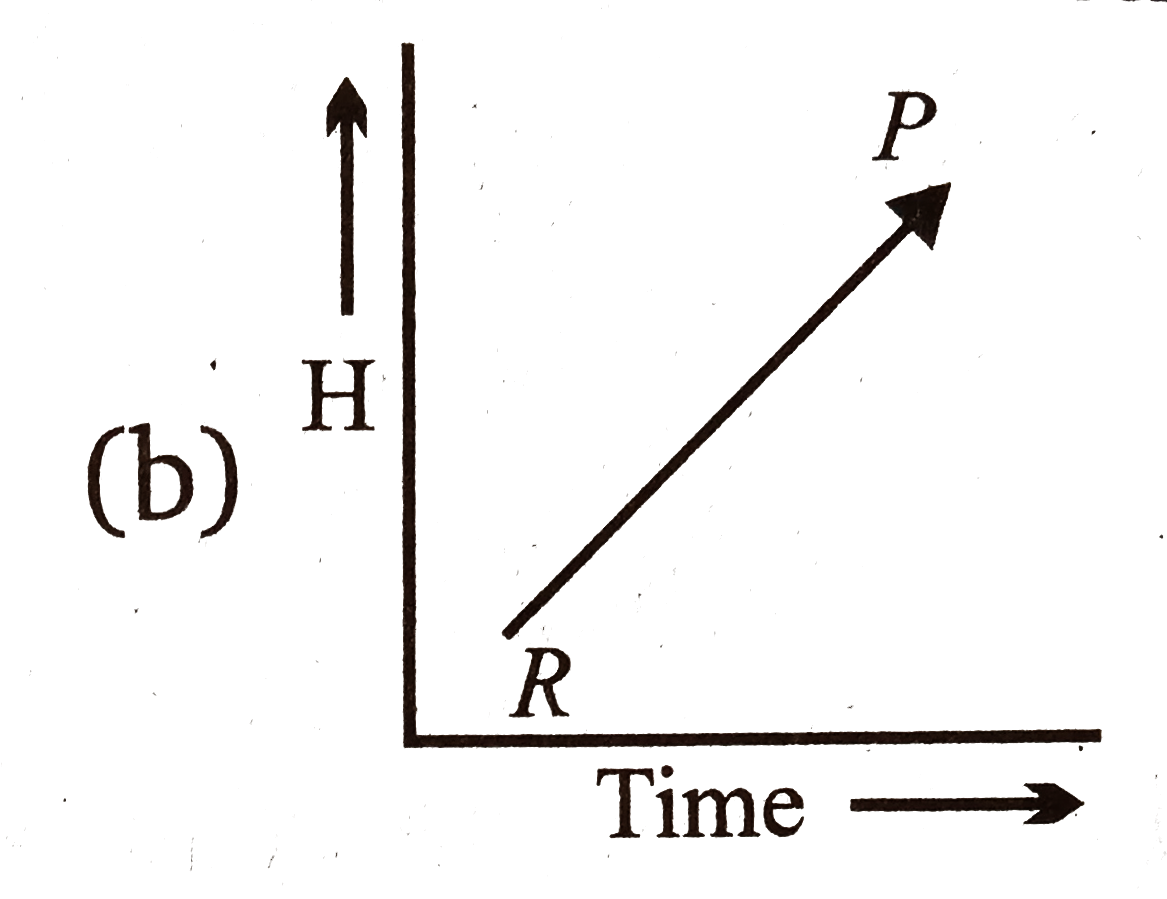
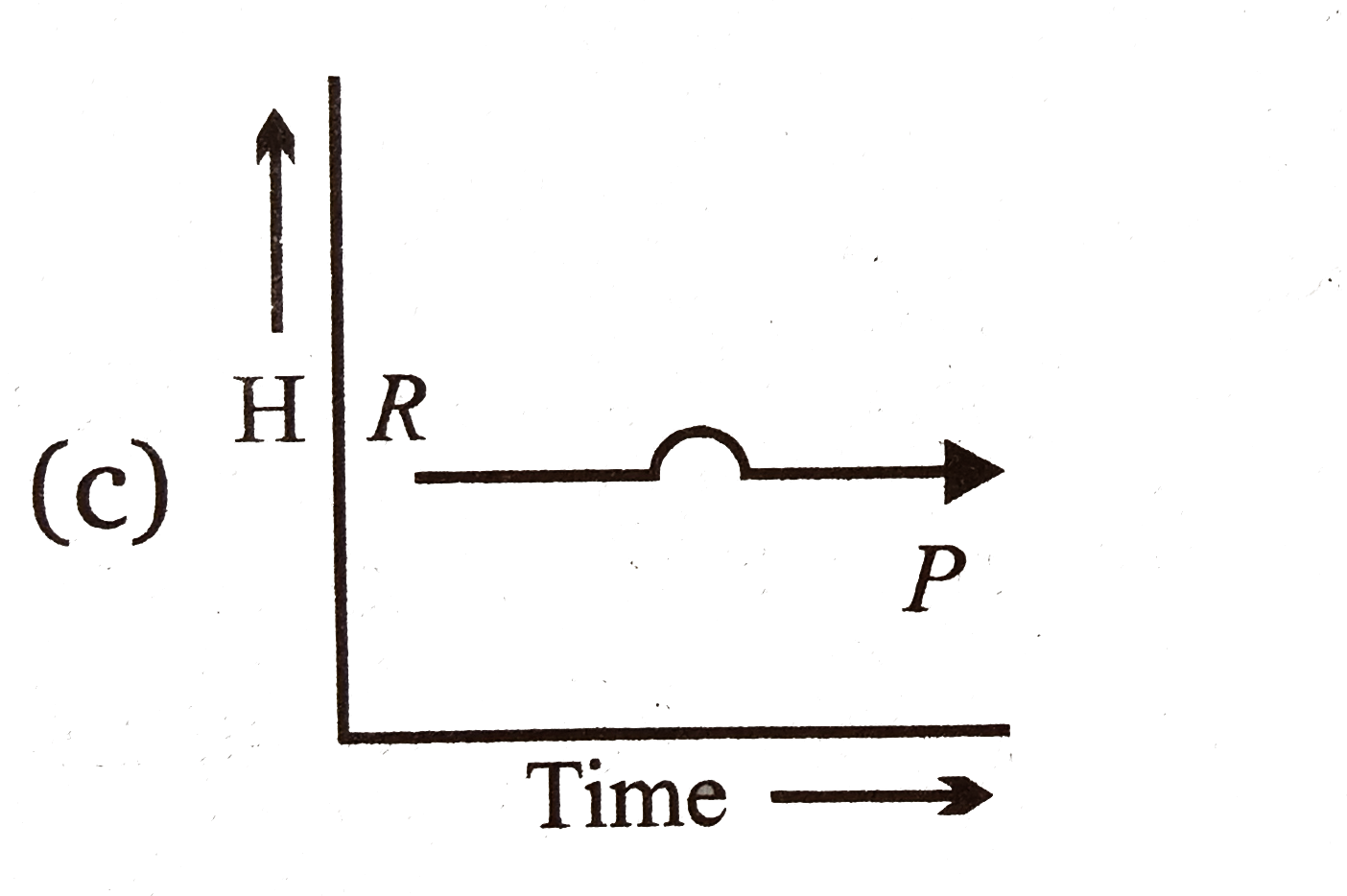
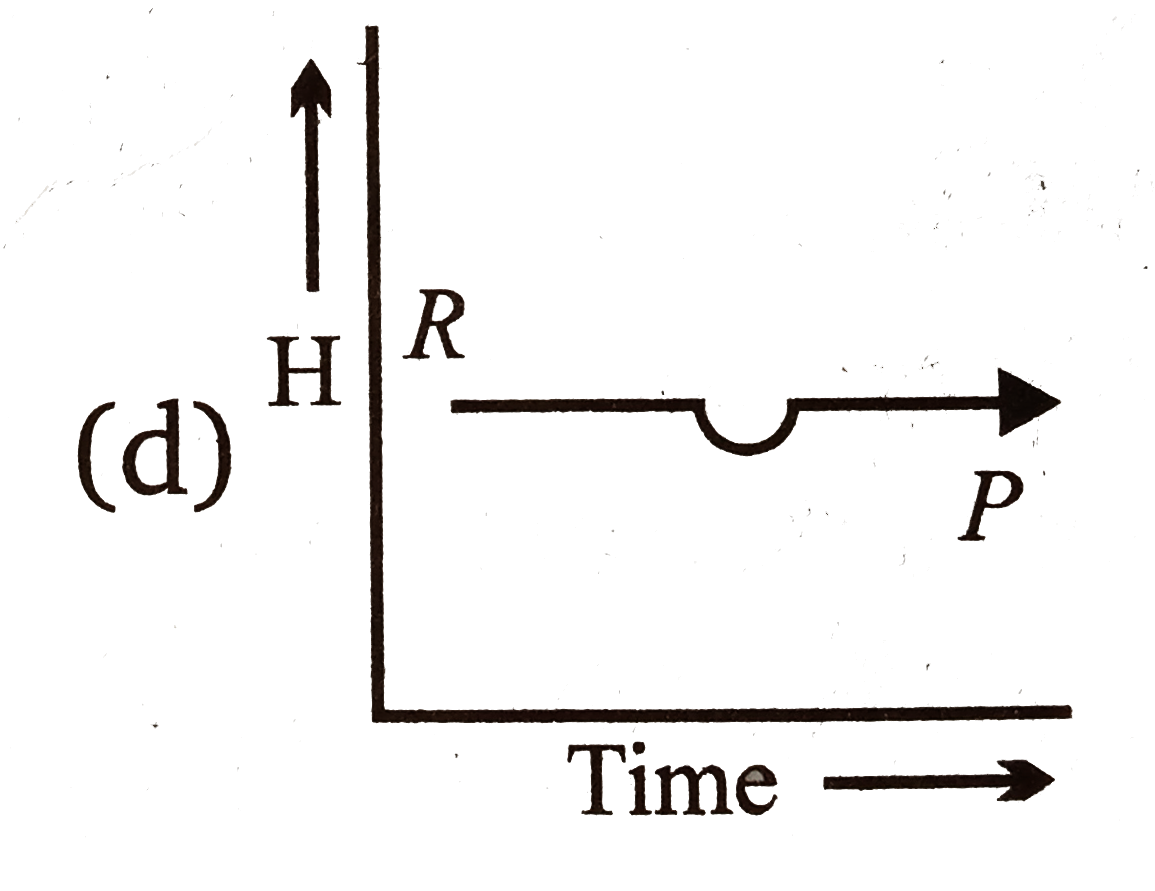
Which plot represents for an exothermic reaction ?

A

B

C

D

Text Solution

AI Generated Solution

The correct Answer is:

To determine which plot represents an exothermic reaction, we need to understand the characteristics of exothermic reactions in terms of energy changes. ### Step-by-Step Solution: 1. **Definition of Exothermic Reaction**: - An exothermic reaction is one in which the products have lower energy than the reactants. This means that energy is released during the reaction. 2. **Understanding Energy Levels**: - In an energy diagram, the vertical axis represents the energy of the reactants and products, while the horizontal axis represents the progress of the reaction (often time). - For an exothermic reaction, the energy level of the products must be lower than that of the reactants. 3. **Energy Change Calculation**: - The change in enthalpy (ΔH) for an exothermic reaction is negative. This can be expressed as: \[ \Delta H = \text{Energy of Products} - \text{Energy of Reactants} < 0 \] - This indicates that the energy of the products is less than the energy of the reactants. 4. **Analyzing the Plots**: - **Plot A**: If the energy of the reactants is higher than that of the products, this plot represents an exothermic reaction. - **Plot B**: If the energy of the reactants is lower than that of the products, this represents an endothermic reaction. - **Plot C**: If the energy levels of reactants and products are the same, this indicates no reaction or a reaction that doesn't involve energy change. - **Plot D**: Similar to Plot C, if the energy levels are the same, it also indicates no net energy change. 5. **Conclusion**: - Among the given options, **Plot A** is the only plot that shows the energy of the products being less than that of the reactants, confirming it as the representation of an exothermic reaction. ### Final Answer: The plot that represents an exothermic reaction is **Plot A**.

To determine which plot represents an exothermic reaction, we need to understand the characteristics of exothermic reactions in terms of energy changes. ### Step-by-Step Solution: 1. **Definition of Exothermic Reaction**: - An exothermic reaction is one in which the products have lower energy than the reactants. This means that energy is released during the reaction. 2. **Understanding Energy Levels**: ...
Promotional Banner

Topper's Solved these Questions

  • THERMOCHEMISTRY

    P BAHADUR|Exercise Exercise 3B objective problems|18 Videos
  • THERMOCHEMISTRY

    P BAHADUR|Exercise Exercise 4 objective Problems|21 Videos
  • THERMOCHEMISTRY

    P BAHADUR|Exercise Exercise 27|1 Videos
  • REDOX REACTIONS

    P BAHADUR|Exercise Exercise(8) Statement:Explanation type problems|19 Videos
  • THERMODYNAMICS

    P BAHADUR|Exercise Exercise|232 Videos

Similar Questions

Explore conceptually related problems

In exothermic reaction

Which plot represent an exothermic reaction ?

Which respresent an exothermic reaction :-

P BAHADUR-THERMOCHEMISTRY-Exercise 3a objective problems
  1. The compound with negative value of heat of formation are called :

    Text Solution

    |

  2. Which reaction is endothermic in nature ?

    Text Solution

    |

  3. Which plot represents for an exothermic reaction ?

    Text Solution

    |

  4. For the reaction ,3O(2)rarr 2O(3),DeltaH=+ve. We can say that :

    Text Solution

    |

  5. The enthalpy changes of formation of the gaseous oxides of nitrogen (N...

    Text Solution

    |

  6. The heats of neutralisation of four acidsA,B,C and D are -13.7,-9.4,-1...

    Text Solution

    |

  7. Which fuel provides the highest calorific values ?

    Text Solution

    |

  8. In a flask, colourless N(2)O(4) is in equilibrium with brown-coloured ...

    Text Solution

    |

  9. The difference between the heats of reaction at constant pressure and ...

    Text Solution

    |

  10. The temperature of a 5mL of strong acid increases by 5^(@) when 5 mL o...

    Text Solution

    |

  11. Heat of combustion of CH(4),C(2)H(4),C(2)H(6) are -890,-1411 and -1560...

    Text Solution

    |

  12. In which case of mixing of a strong acid and a base each of 1N concent...

    Text Solution

    |

  13. The dissociation energy of CH(4) and C(2)H(6) are respectively 360 and...

    Text Solution

    |

  14. Given that , A(s) rarr A(l)DeltaH=x A(l) rarr A(g), DeltaH=y The...

    Text Solution

    |

  15. A person requires 2870kcal of energy to lead normal daily life. If hea...

    Text Solution

    |

  16. If, combustion of 4g of CH(4) liberates 2.5kcal of heat, the heat of c...

    Text Solution

    |

  17. A solution of 500mL of 2M KOH is added to 500mL of 2M HCl and the mixt...

    Text Solution

    |

  18. Under the same conditions, how many mL of 1M KOH and 0.5M H(2)SO(4)sol...

    Text Solution

    |

  19. AB,A(2) and B(2) are diatomic molecules. If the bond enthalpies of A(2...

    Text Solution

    |

  20. DeltaC(p) for change ,N(2(g))+3H(2(g))=2NH(3(g)) is :

    Text Solution

    |
