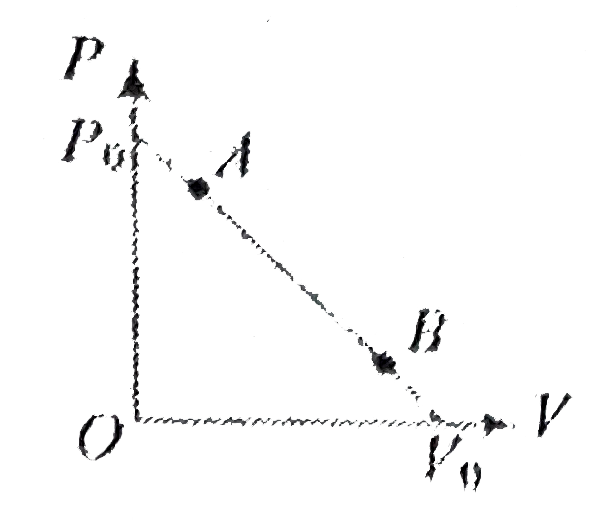
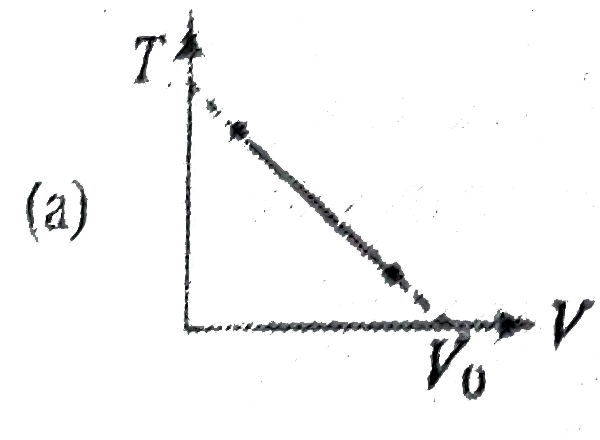
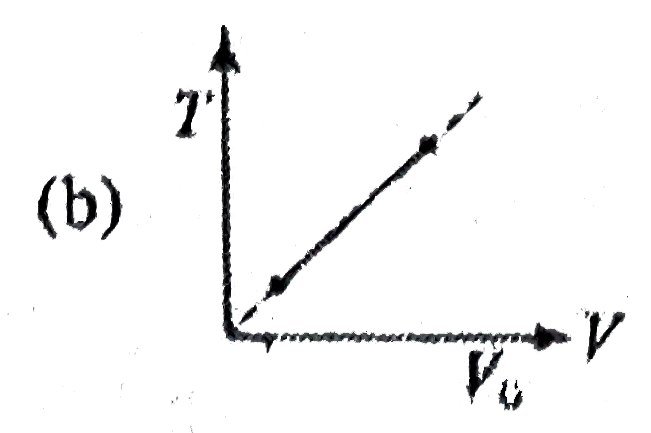
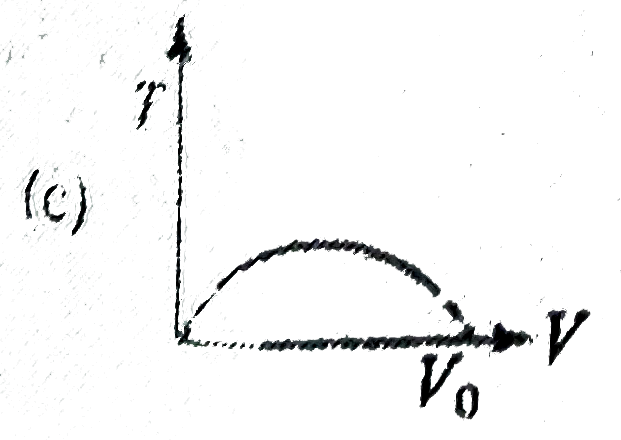
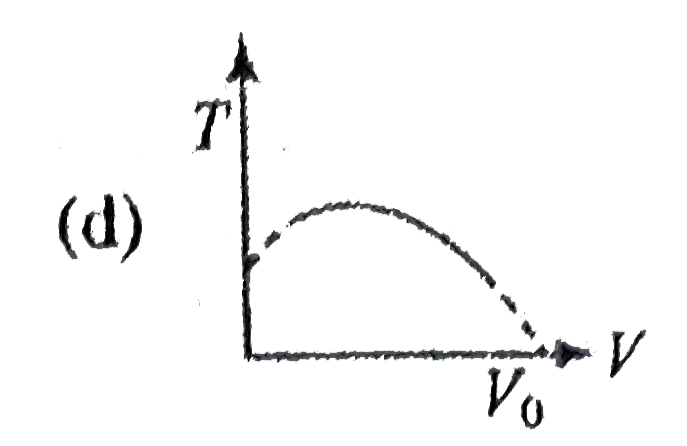
One mole of an ideal monatomic gas undergoes a linear process from A to B , in which is pressure P and its volume V change as shown in figure . The absolute temperature T versus volume V for the given process is
One mole of an ideal monotomic gas undergoes a linear process from A to B in which its pressure p and its volume V change as shown in figure. The maximum temperature of the gas during this process is
A gas undergoes a process in which its pressure P and volume V are related as VP^(n) = constant. The bulk modulus of the gas in the process is:
A gas undergoes a process in which its pressure P and volume V are related as VP = constant. The bulk modulus of gas for this process
An ideal monatomic gas undergoes a cyclic process ABCA as shown in the figure. Graph of pressure versus volume of the cyclic process ABCA is
One mole of a monoatomic gas undergoes a linear process A rarr B in P - v diagram. The volume of the gas when the process turns from an endothermic to an exothermic one is
A monoatomic gas undergoes a process in which the pressure (P) and the volume (V) of the gas are related as PV^(-3)= constant. What will be the molar heat capacity of gas for this process?
For V versus T curves at constant pressure P_1 and P_2 for and ideal gas shown in figure-
The pressure p and volume V of an ideal gas both increase in a process.
n moles of an ideal triatomic linear gas undergoes a process in which the temperature changes with volume as k_(1)V ^ 2 where k_(1) is a constant. Choose incorrect alternative.
n moles of an ideal gas undergo a process in which the temperature changes with volume as T=kv^(2) . The work done by the gas as the temperature changes from T_(0) to 4T_(0) is
CENGAGE PHYSICS ENGLISH-KINETIC THEORY OF GASES-Compression