Home
Class 12
CHEMISTRY
Which of the following is the correct gr...

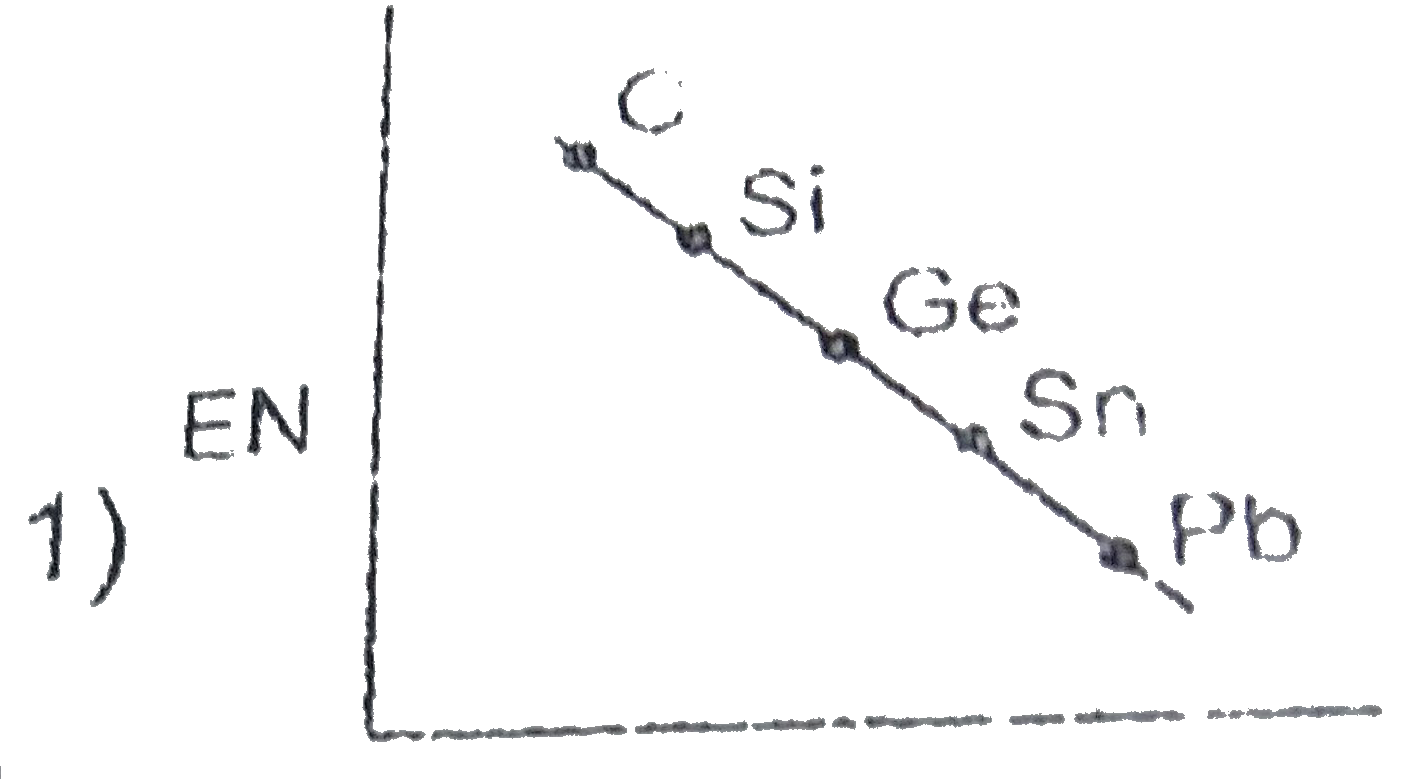
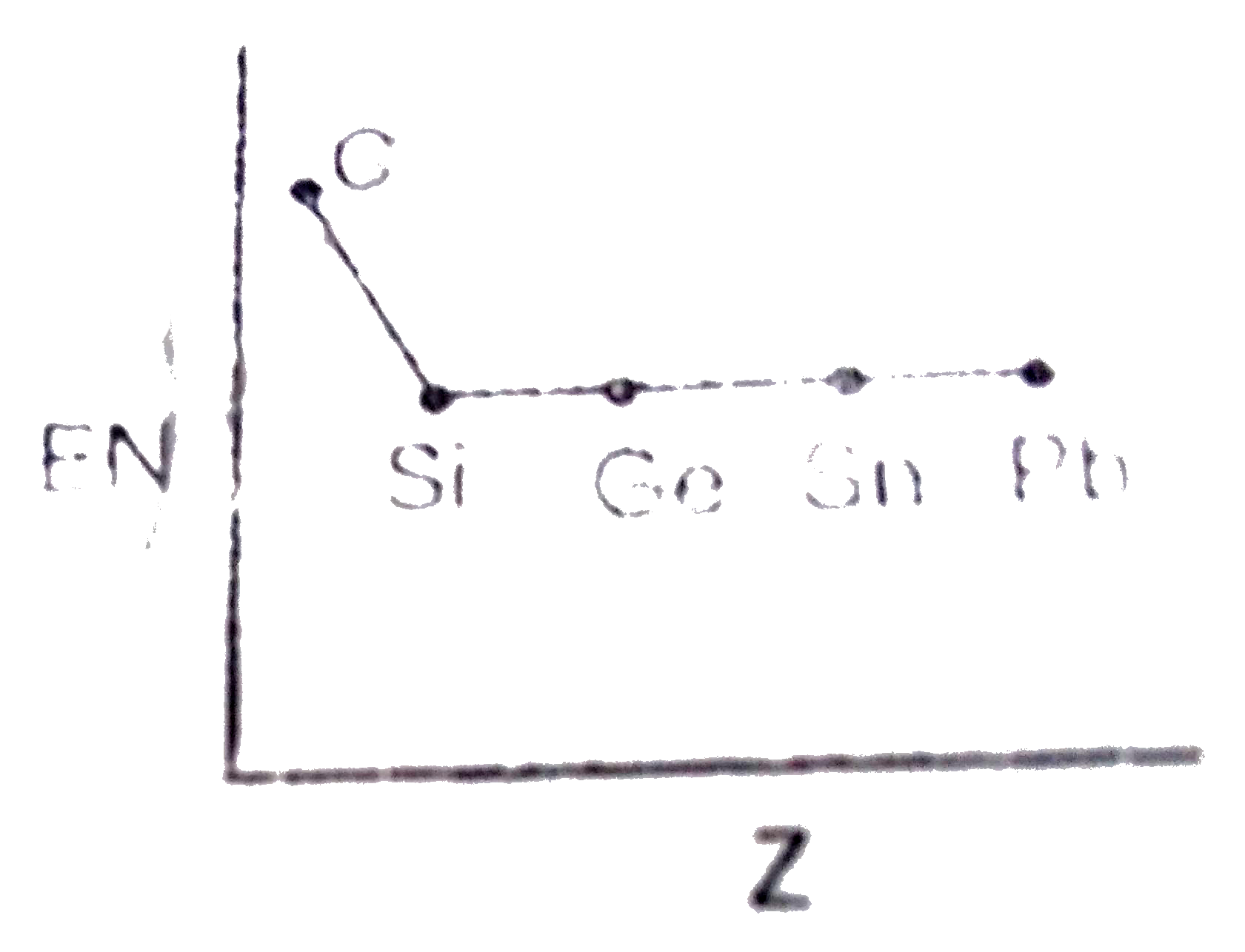
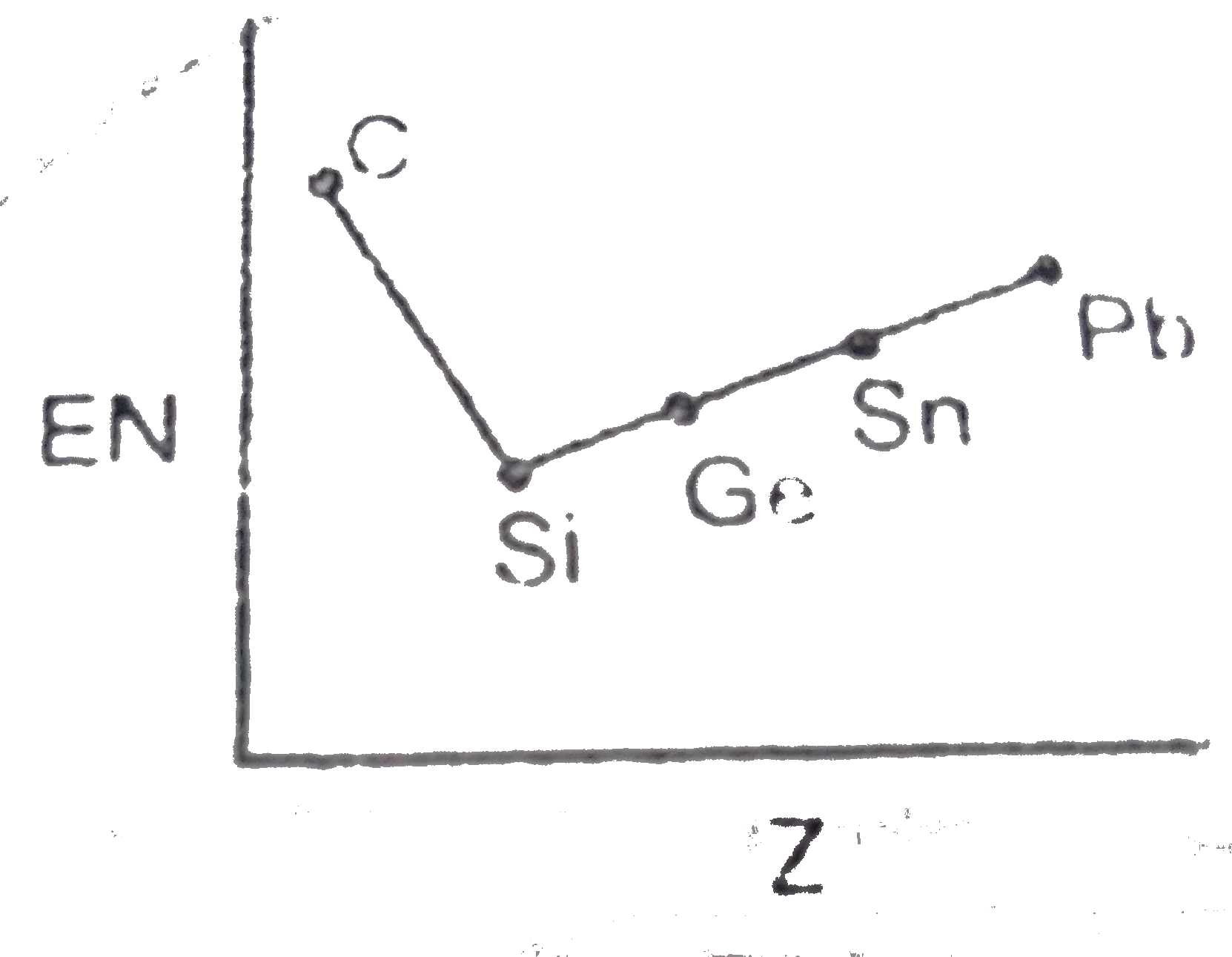
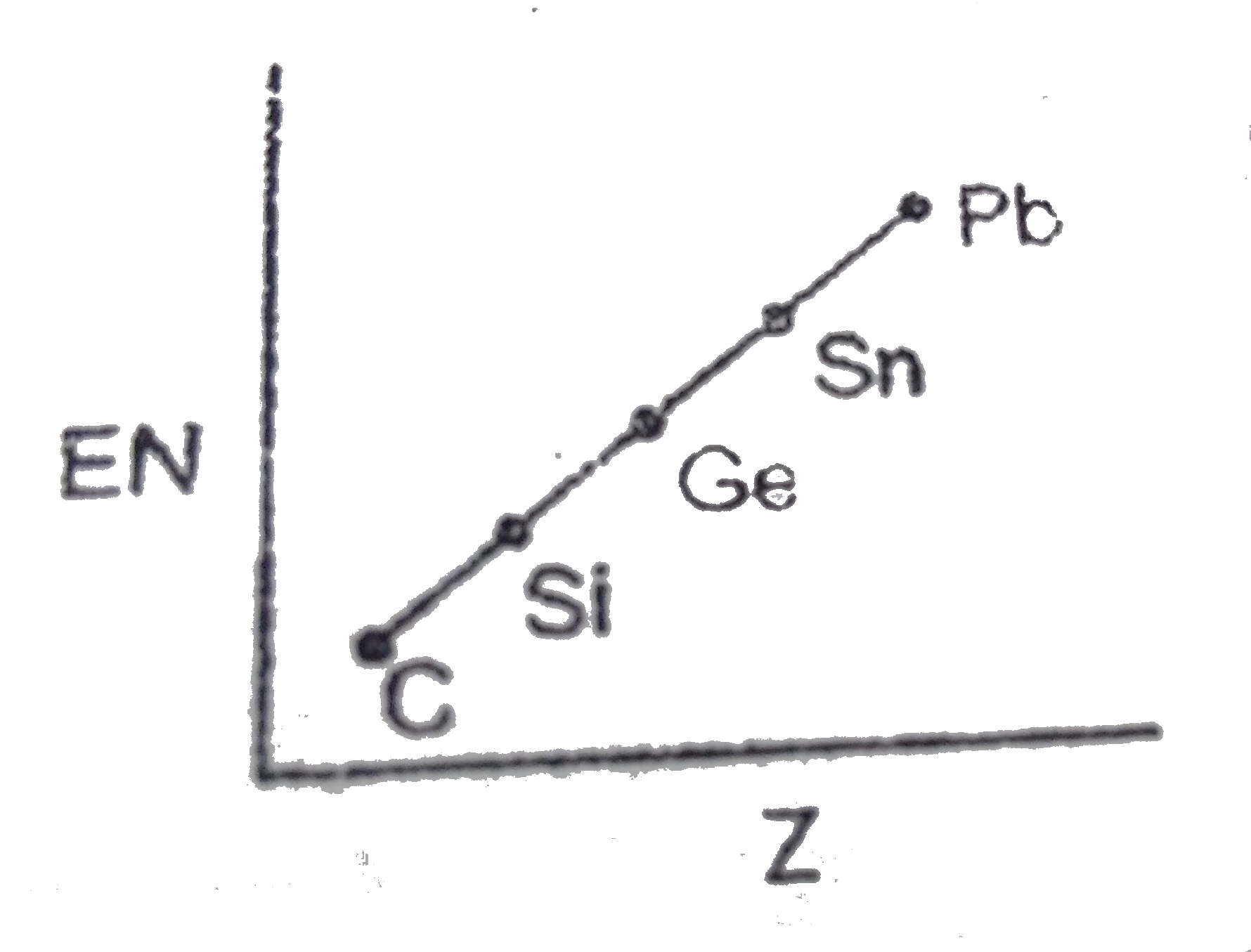
Which of the following is the correct graph for `EN` values of carbon family :

A

B

C

D

Text Solution

AI Generated Solution

The correct Answer is:

To determine the correct graph for the electronegativity (EN) values of the carbon family (Group 14 elements), we need to analyze the trend in electronegativity values as we move down the group. The carbon family consists of the following elements: carbon (C), silicon (Si), germanium (Ge), tin (Sn), and lead (Pb). ### Step-by-Step Solution: 1. **Identify the Elements in the Carbon Family**: - The carbon family includes carbon (C), silicon (Si), germanium (Ge), tin (Sn), and lead (Pb). 2. **List the Electronegativity Values**: - Carbon (C): 2.5 - Silicon (Si): 1.8 - Germanium (Ge): 1.8 - Tin (Sn): 1.8 - Lead (Pb): 1.9 3. **Analyze the Trend**: - As we move down the group from carbon to lead, the electronegativity values generally decrease. - Carbon has the highest electronegativity (2.5), followed by silicon, germanium, and tin, which all have similar values (approximately 1.8). Lead has a slightly higher value than tin at 1.9. 4. **Graph the Values**: - On the x-axis, plot the atomic number (or position in the group: 1 for C, 2 for Si, 3 for Ge, 4 for Sn, 5 for Pb). - On the y-axis, plot the electronegativity values. - The graph should start at 2.5 for carbon, drop to 1.8 for silicon, remain at 1.8 for germanium and tin, and then slightly increase to 1.9 for lead. 5. **Determine the Correct Graph**: - The correct graph should show a decrease from carbon to silicon, a plateau at 1.8 for germanium and tin, and a slight increase for lead. - Therefore, the correct option is the one that reflects this trend accurately. ### Conclusion: The correct graph for the electronegativity values of the carbon family is the one that shows a decrease from carbon to silicon, a plateau for germanium and tin, and a slight increase for lead.

To determine the correct graph for the electronegativity (EN) values of the carbon family (Group 14 elements), we need to analyze the trend in electronegativity values as we move down the group. The carbon family consists of the following elements: carbon (C), silicon (Si), germanium (Ge), tin (Sn), and lead (Pb). ### Step-by-Step Solution: 1. **Identify the Elements in the Carbon Family**: - The carbon family includes carbon (C), silicon (Si), germanium (Ge), tin (Sn), and lead (Pb). 2. **List the Electronegativity Values**: ...
Promotional Banner

Topper's Solved these Questions

  • P-BLOCK ELEMENT (BORON AND CARBON FAMILY)

    RESONANCE ENGLISH|Exercise SECTION-1|7 Videos
  • P-BLOCK ELEMENT (BORON AND CARBON FAMILY)

    RESONANCE ENGLISH|Exercise SECTION-2|5 Videos
  • P-BLOCK ELEMENT (BORON AND CARBON FAMILY)

    RESONANCE ENGLISH|Exercise Exercise-3 Part-II : JEE (MAIN) / AIEE PROBLEMS (PREVIOUS YEARS)|12 Videos
  • P BLOCK ELEMENTS

    RESONANCE ENGLISH|Exercise PART -II|23 Videos
  • P-BLOCK ELEMENTS (HALOGEN & NOBLE GASES)

    RESONANCE ENGLISH|Exercise APSP PART-3|22 Videos

Similar Questions

Explore conceptually related problems

Which of the following is correct graph for the reaction?

Which of the following is a carbonate ore?

Which is correct graph :

Which of the following is correct regarding tricuspid value

Which of the following is correct for a carbon family?

Which of the following is not a carbonate ore?

Which of the following is not a carbonate ore?

Which is/are correct graph ?

Which of the following is correct for V-I graph of a good conductor?

Knowledge Check

  • Which of the following represents the correct graph for S_(N^2) reaction ?

    A
    B
    C
    D
  • Which of the following is not a carbonate ore?

    A
    Dolomite
    B
    Calamine
    C
    Siderite
    D
    Zincite
  • Which of the following is correct for V-I graph of a good conductor?

    A
    B
    C
    D
  • RESONANCE ENGLISH-P-BLOCK ELEMENT (BORON AND CARBON FAMILY)-Advanced Level Problems Part-I : PRACTICE TEST-1 (IIT-JEE (MAIN Pattern))
    1. Which of the following is the correct graph for EN values of carbon fa...

      Text Solution

      |

    2. Select the incorrect statement :

      Text Solution

      |

    3. Which of the following statement about Si is correct.

      Text Solution

      |

    4. Identify correct statement.

      Text Solution

      |

    5. 4BCl(3)+ 3LiAIH(4) to A+ 3AlCl(3)+3 LiCl When A reacts with NaOH it...

      Text Solution

      |

    6. When heating white lead then find out released gas (A) and (B) under...

      Text Solution

      |

    7. Amorphous boron is extracted from borax by the following steps : "Bo...

      Text Solution

      |

    8. The role of addition of Me(3)SiCl during the hydrolysis followed by co...

      Text Solution

      |

    9. Given type of silicones are called [P] -O-oversetoverset(R)(|)unders...

      Text Solution

      |

    10. Which of the following is not a property of silicones ?

      Text Solution

      |

    11. Tourmalene is a class of cyclosilicates with general formula. (Ca, K...

      Text Solution

      |

    12. The silicate anion in the mineral kinoite is a chain of three SiO(4) t...

      Text Solution

      |

    13. The dehydration of malonic acid CH(2) (COOH)(2) with P(4)O(10) and hea...

      Text Solution

      |

    14. Borax on heating with cobalt oxide forms a blue bead of

      Text Solution

      |

    15. The dissolution of Al(OH)(3) by a solution of NaOH results in the form...

      Text Solution

      |

    16. Select the incorrect statement about the boron.

      Text Solution

      |

    17. Aqueous solution containing 1 mol of borax raects with 2 mol of acids....

      Text Solution

      |

    18. Water transpoted through Lead pipes becomes poisonous due to the forma...

      Text Solution

      |

    19. When a mixture of air and steam is passed over red hot coke, the outgo...

      Text Solution

      |

    20. In BF(3), the B-F bond length is 1.30 A, when BF(3) is allowed to be t...

      Text Solution

      |
