Home
Class 11
CHEMISTRY
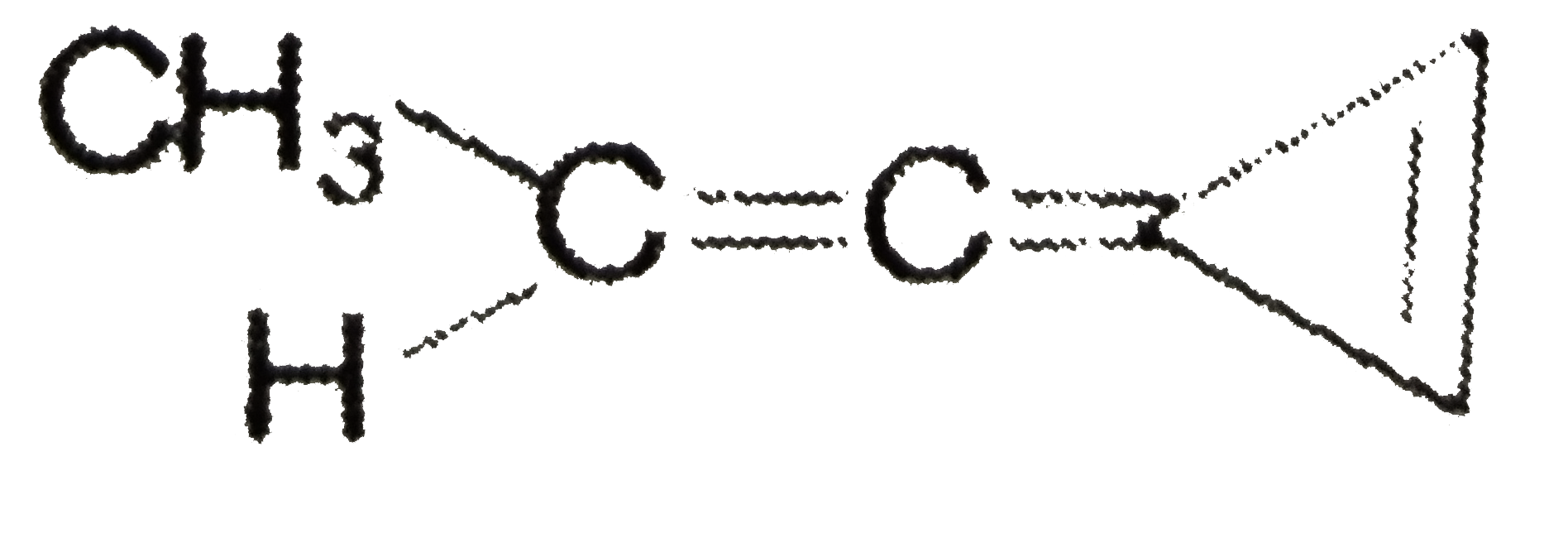
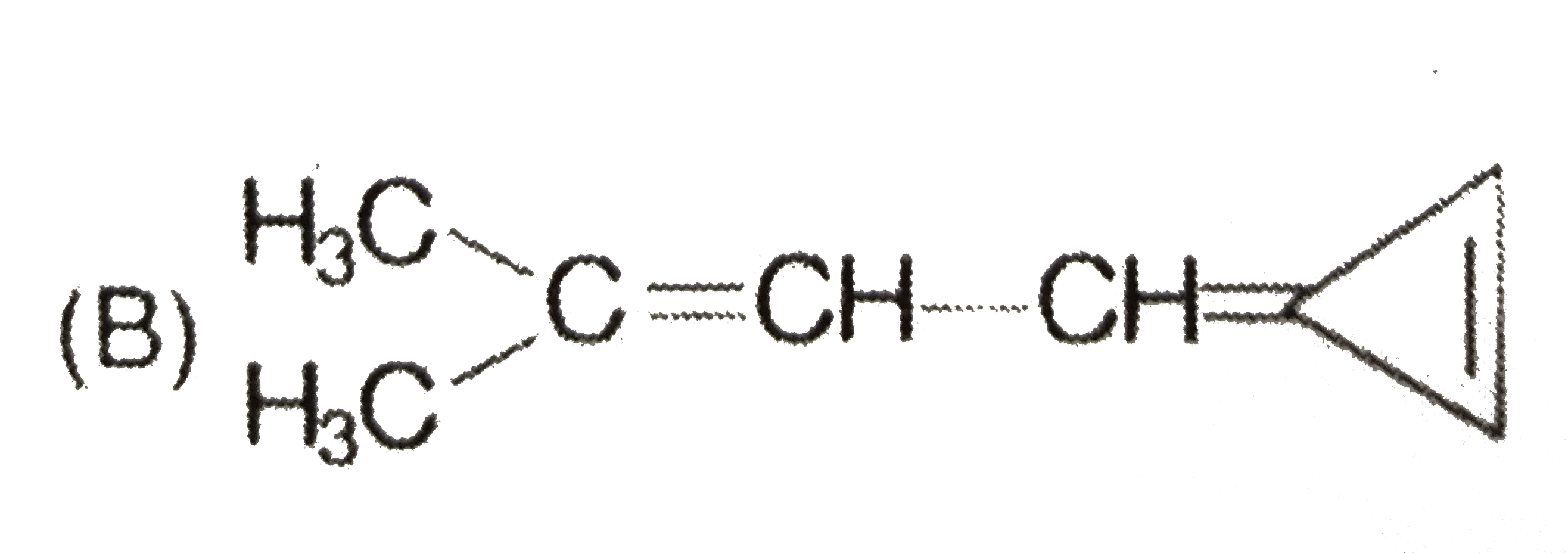
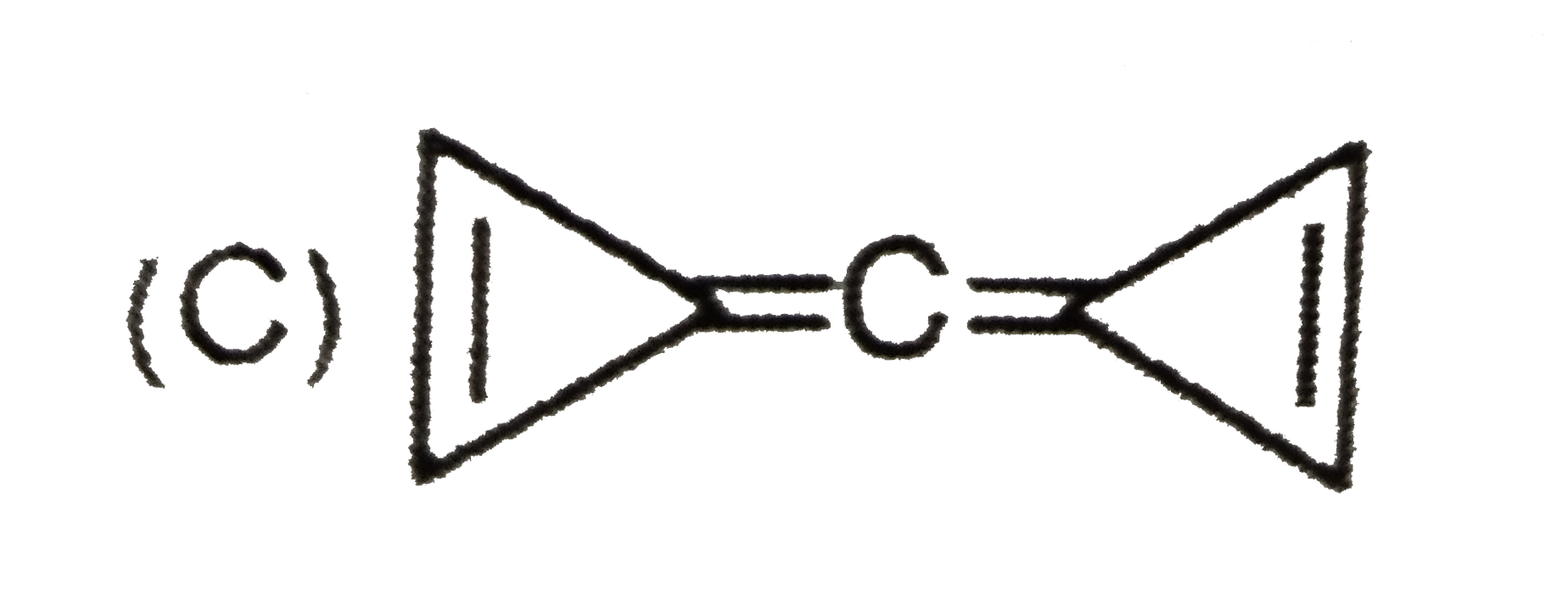
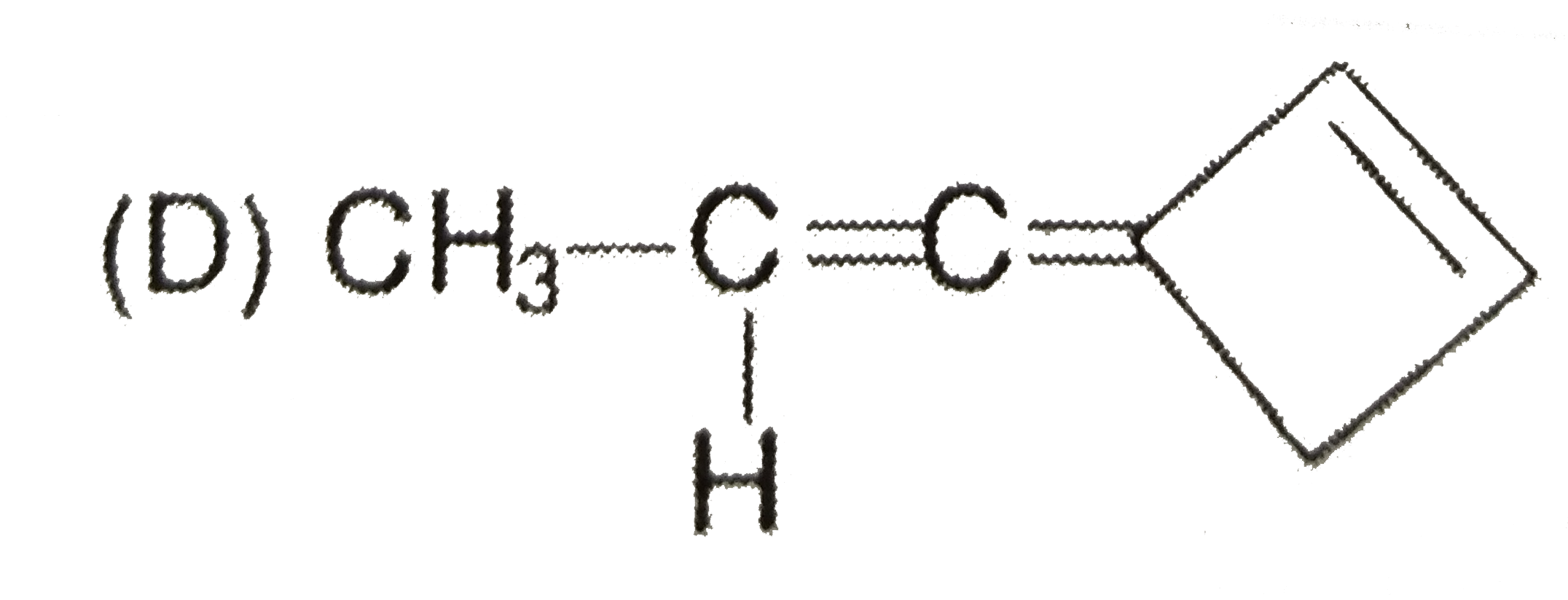
(X) overset(O(3)//Zn)underset(H(2)O)toCO...

`(X) overset(O_(3)//Zn)underset(H_(2)O)toCO_(2)+CH_(3)-underset(O)underset(||)(C)-H+OHC -underset(O)underset(||)(C)-CHO`
X is

A

B

C

D

Text Solution

AI Generated Solution

The correct Answer is:

To solve the problem, we need to identify the compound \( X \) that, when treated with ozone (O3) followed by zinc (Zn) and water (H2O), yields carbon dioxide (CO2), a ketone, and an aldehyde. ### Step-by-Step Solution: 1. **Understanding Ozonolysis**: - Ozonolysis is a reaction where alkenes or alkynes react with ozone to form carbonyl compounds (aldehydes or ketones) and can also produce carbon dioxide depending on the structure of the starting material. - The reaction proceeds through the formation of an ozonide intermediate, which is then reduced by Zn and H2O. 2. **Analyzing the Products**: - The products mentioned are CO2, a ketone (CH3C(=O)H), and an aldehyde (CHO). - This suggests that the starting compound \( X \) must have a structure that can yield these products upon ozonolysis. 3. **Identifying Possible Structures**: - We need to consider structures that contain double bonds (alkenes) that can break and yield the products specified. - The presence of both a ketone and an aldehyde suggests that \( X \) must have a carbon chain that can be cleaved to produce these functional groups. 4. **Evaluating the Options**: - **Option A**: If we consider a structure like CH3-CH=CH-CHO, ozonolysis would yield CH3C(=O)H (a ketone) and CO2, along with an aldehyde. - **Option B**: A structure like CH3-CH=CH2 would not yield both products as required. - **Option C**: A cyclic structure might not yield CO2 effectively. - **Option D**: A structure with additional groups that do not match the product requirements. 5. **Conclusion**: - After evaluating the options, **Option A** is the only structure that, upon ozonolysis, produces CO2, a ketone, and an aldehyde as required. ### Final Answer: Thus, the compound \( X \) is **Option A**.

To solve the problem, we need to identify the compound \( X \) that, when treated with ozone (O3) followed by zinc (Zn) and water (H2O), yields carbon dioxide (CO2), a ketone, and an aldehyde. ### Step-by-Step Solution: 1. **Understanding Ozonolysis**: - Ozonolysis is a reaction where alkenes or alkynes react with ozone to form carbonyl compounds (aldehydes or ketones) and can also produce carbon dioxide depending on the structure of the starting material. - The reaction proceeds through the formation of an ozonide intermediate, which is then reduced by Zn and H2O. ...
Promotional Banner

Topper's Solved these Questions

  • STRUCTURAL IDENTIFICATION & PRACTICAL ORGANIC CHEMISTRY

    RESONANCE ENGLISH|Exercise Additional theory|4 Videos
  • STRUCTURAL IDENTIFICATION & PRACTICAL ORGANIC CHEMISTRY

    RESONANCE ENGLISH|Exercise Additional Exercise|15 Videos
  • STRUCTURAL IDENTIFICATION & PRACTICAL ORGANIC CHEMISTRY

    RESONANCE ENGLISH|Exercise APSP|30 Videos
  • SOLID STATE

    RESONANCE ENGLISH|Exercise Part- IV|21 Videos
  • THERMODYNAMIC & THERMOCHEMISTRY

    RESONANCE ENGLISH|Exercise INORGANIC CHEMISTRY(P-Block Elements)|26 Videos

Similar Questions

Explore conceptually related problems

The correct name of CH_(3)CH_(2)-underset(O)underset(||)(C)-underset(CN)underset(|)(C)H-CHO is

CH_(3)C-=C CH_(3) underset((ii) H_(2)O""//Zn)overset((i) X) to CH_(3)-underset(O)underset(||)C-underset(O)underset(||)C-CH_(3) . In the above reaction , X is :

Arrange the following in order of their reactivity towards CH_(3)MgBr ? (I) H_(3)C-underset(O)underset(||)(C)-H (II) C Cl_(3)-underset(O)underset(||)(C)-H (III) H_(3)C-underset(O)underset(||)(C)-CH_(3) (IV) Ph-underset(O)underset(||)(C)-CH_(3)

IUPAC name of CH_(3)-underset(CH_(3))underset(|)C=CH-underset(O)underset(||)C-CH_(3) is

Write IUPAC names of the following compounds: i. CH_(3)-underset(CH_(3))underset(|)(CH)-underset(OH)underset(|)(CH)-overset(CH_(3))overset(|)underset(CH_(3))underset(|)(C)-CH_(3) ii. H_(3)C-underset(OH)underset(|)CH-CH_(2)-underset(OH)underset(|)CH-underset(C_(2)H_(5))underset(|)CH-CH_(2)-CH_(3) iii. CH_(3)-underset(OH)underset(|)CH-underset(OH)underset(|)CH-CH_(3) iv. HO-CH_(2)-underset(OH)underset(|)CH-CH_(2)-OH v. vi. vii. viii. ix. CH_(3)-O-CH_(2)-underset(CH_(3))underset(|)CH_CH_(3) x. C_(6)H_(5)-O-C_(2)H_(5) xi. C_(6)H_(5)-O-C_(7)H_(15)(n---) xii. CH_(3)-CH_(2)-O-underset(CH_(3))underset(|)CH-CH_(2)-CH_(3)

CH_(3)-underset(Cl)underset(|)(C )H-underset(I)underset(|)(C )H-CH_(3) CH_(3)-underset(CH_(3))underset(|)(C)H-(CH_(2))_(4)-underset(CH_(3))underset(|)(C )H-underset(Br)underset(|)(C )H-CH_(2)CH_(3)

Correct decreasing stability order of following carbanions : ""^(Ө)underset(" "I)(CH_(2))-CHO" "CH_(3)-underset(O)underset(||)C-""^(Ө)CH-underset(II" ")underset(O)underset(||)C-CH_(3)" "H-underset(III)underset(O)underset(||)-overset(Ө)(CH)-underset(O)underset(||)C-H" "OHC-underset(IV)underset(CHO)underset(|)overset(Ө)C-CHO

RESONANCE ENGLISH-STRUCTURAL IDENTIFICATION & PRACTICAL ORGANIC CHEMISTRY-Part-III
  1. Farnesence is a compound found in the waxy coating of apples. On hydro...

    Text Solution

    |

  2. A compound P(C(5)H(6)) gives positive Bayer test and on hydrogentation...

    Text Solution

    |

  3. X' compound (C(4)H(8)O) decolorises bromine water react with I(2) & Na...

    Text Solution

    |

  4. Compounds I and II can be distinguished by using reagent. {:("(I)",,...

    Text Solution

    |

  5. Which of the following test will not be given by (Squaric acid)

    Text Solution

    |

  6. Which of the following compounds after complete hydrogenation will for...

    Text Solution

    |

  7. A organic compound having molecular formula C(3)H(4), react with sodiu...

    Text Solution

    |

  8. Compound P Liberates H(2) gas with Na metal. P gives the precipitate w...

    Text Solution

    |

  9. True statements is/are

    Text Solution

    |

  10. C(6)H(15)O(6)(P) underset(Zn, H(2)O)overset(O(3))rarrC(4)H(8)O(4)(Q) u...

    Text Solution

    |

  11. In how many reactions CO(2) gas is released out after reaction with Na...

    Text Solution

    |

  12. How many alkenes, alkynes and alkadienes can be hydrogenated to form I...

    Text Solution

    |

  13. How many acyclic structural isomeric carbonyl compound having molecula...

    Text Solution

    |

  14. Structural of Ascorbic acid is represented as follows How many of...

    Text Solution

    |

  15. Observe the following compounds

    Text Solution

    |

  16. n' number of alkenes yields 2,2,3,4,4- pentamethyl-pentane on catalyti...

    Text Solution

    |

  17. Aldehyde and ketones may be prepared by reductive cleavage of carbon-c...

    Text Solution

    |

  18. (X) overset(O(3)//Zn)underset(H(2)O)toCO(2)+CH(3)-underset(O)underset(...

    Text Solution

    |

  19. which of the following products is not formed in above reaction : prod...

    Text Solution

    |

  20. Match the column :

    Text Solution

    |
