Home
Class 11
PHYSICS
A turnips sits before a thin coverging l...

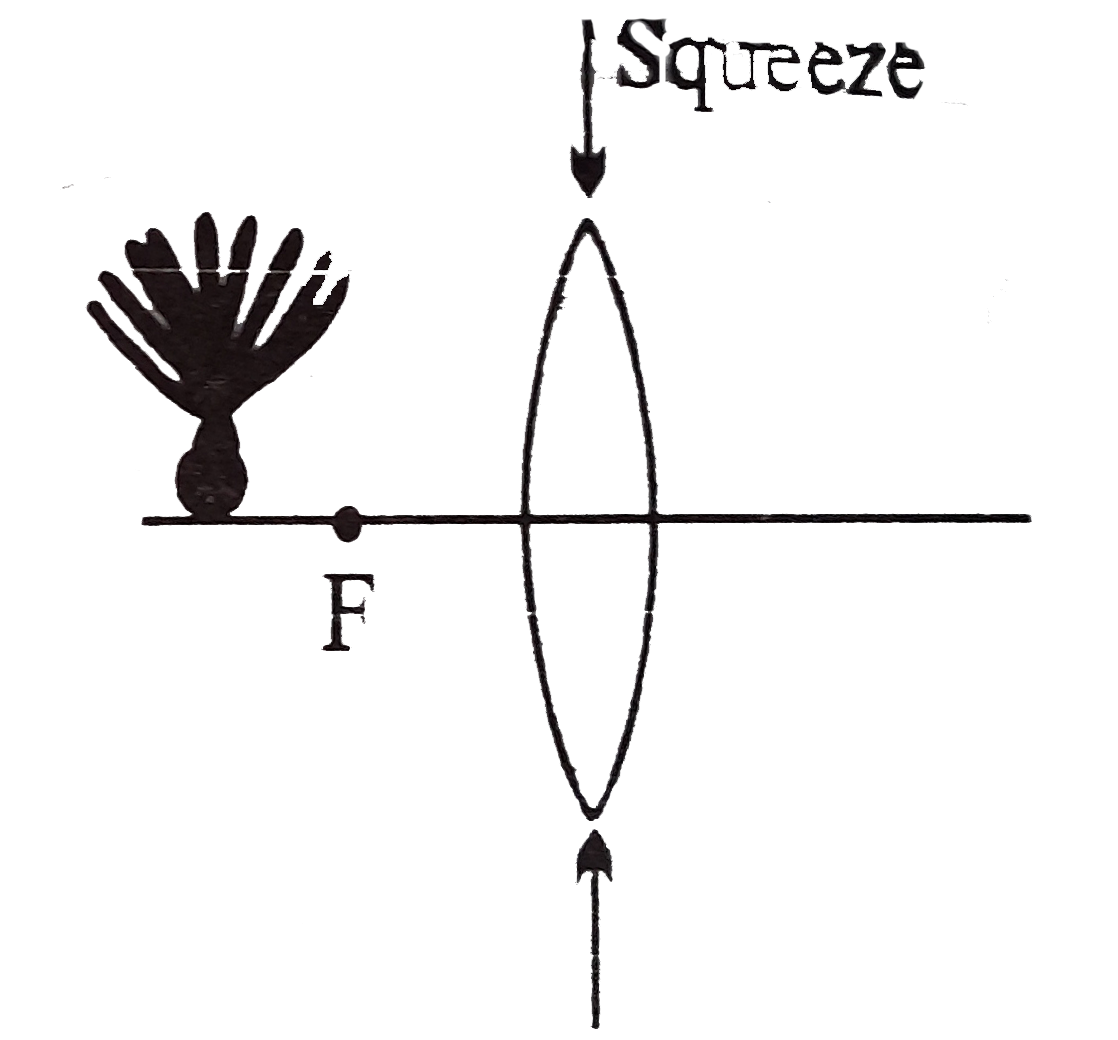
A turnips sits before a thin coverging lens,outside the focal point of the lens.Teh lens is filled with a transparent gel so that it is flexible by,by squeezing its ends towards its center [as indicated in figure(a)],you can change the curvature of its front and rear sides

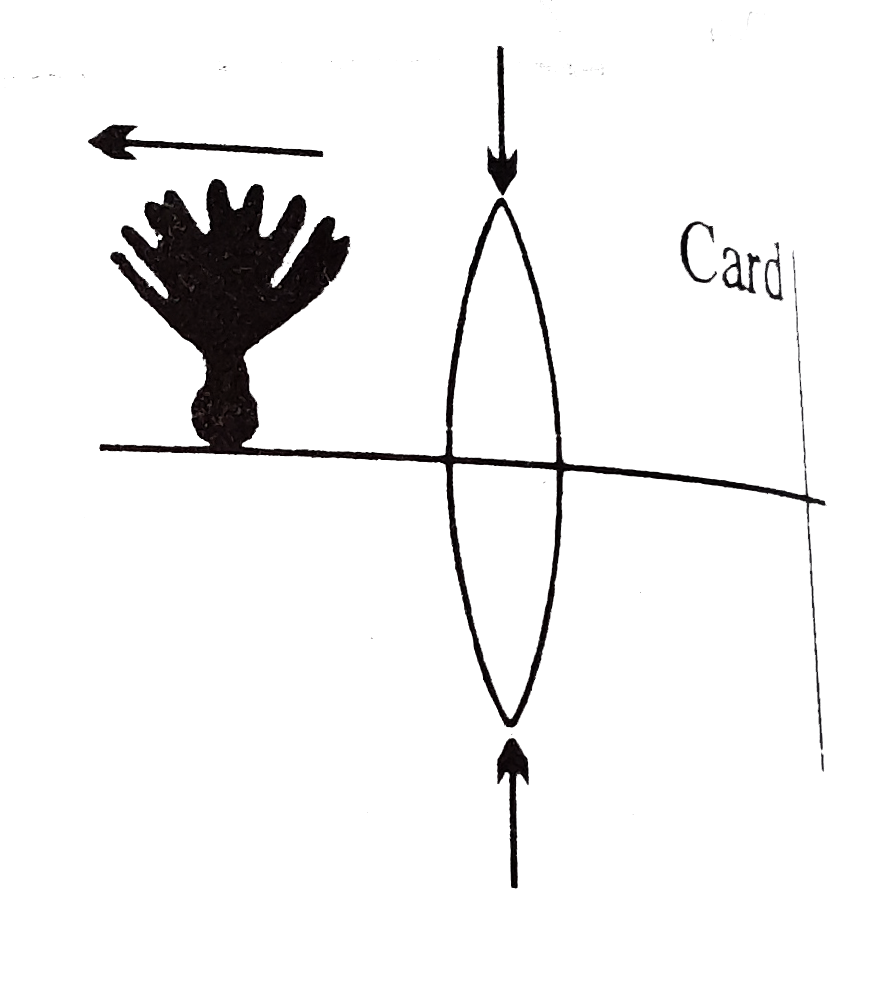
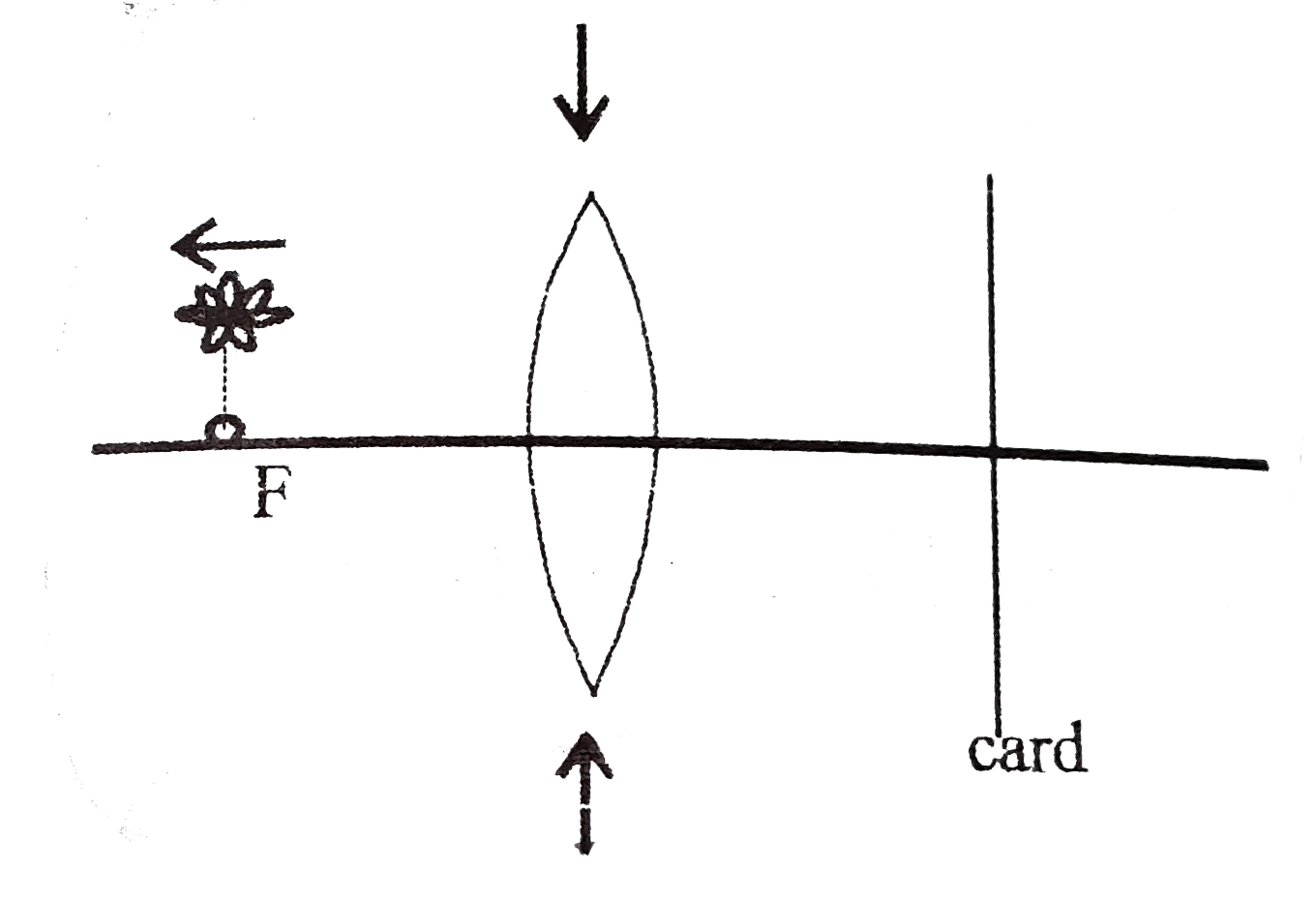
Suppsoe that the image must be formed on a card which is at a certain distance behind the lens [figure(b)],while you move the turnip away form the lens,then you should

A

decreases the squeeze of the lens

B

increases the squeeze of the lens

C

keep the card and lens as it is.

D

move the card away form the lens

Text Solution

Verified by Experts

The correct Answer is:
A


As turnipes move away image will also move towards lens.So to form image on card again focal length of lens of be decreases.Therefore squeeze of lens to be decrease.
Promotional Banner

Similar Questions

Explore conceptually related problems

A turnips sits before a thin coverging lens,outside the focal point of the lens.Teh lens is filled with a transparent gel so that it is flexible by,by squeezing its ends towards its center [as indicated in figure(a)],you can change the curvature of its front and rear sides When you squeeze the lens,the lateral height of image.

A lens is called a thin lens if its overall thickness is

A layered lens is made of materials indicated by shades in the figure. The number of images formed is

Define focal length of a lens and give its relation with power of the lens.

A thin lens has focal length of, -25 cm. What is the power of the lens and what is its nature?

Show that the focal length of a thin lens is not changed when the lens is rotated so that the left and the right surfaces are interchanged.

The distance between an object and its real image formed by a lens is D. If the magnification is m , the focal length of the lens is

An object placed 10 cm in front of a lens has an image 20 cm behind the lens. What is the power of the lens ( in dioptres ) ?

An object is placed 1m in front of the curved surface of a plano-convex lens whose plane surface is silvered. A real image is formed in front of the lens at a distance of 120cm. Then, the focal length of the lens is

