


Home
Class 12
CHEMISTRY
1,2-diols are oxidised to ketones or ald...

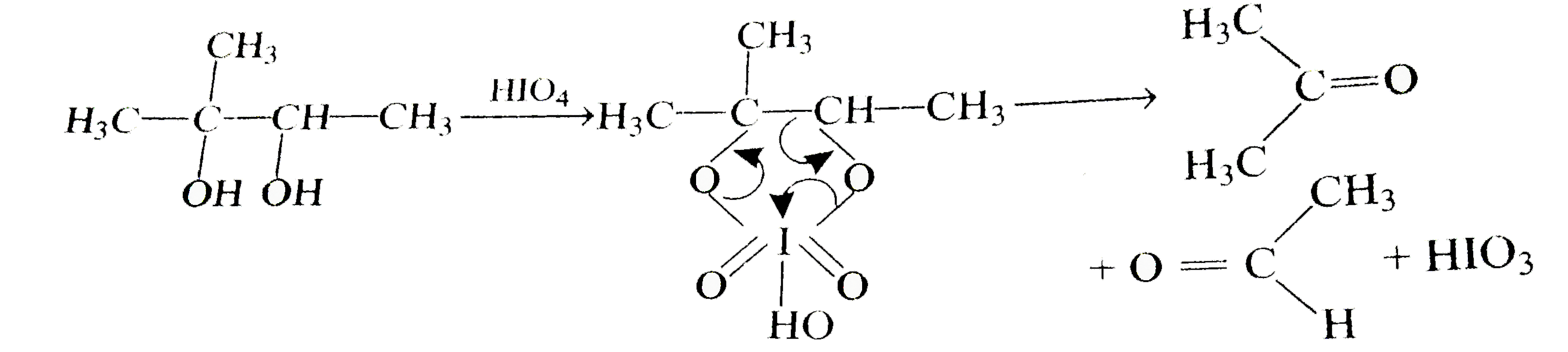
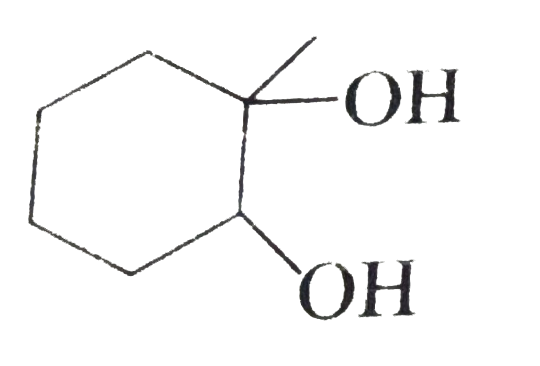
1,2-diols are oxidised to ketones or aldehydes by periodic acid `HIO_(4)`. Periodic acid reacts with dipol to form a cyclic intermeditate. The reaction takes places because iodine is in a highly positive oxidation state, so it readily accepts electrons. When the intermeidate breaks down, the bond between the two carbon bonded to the OH group break.


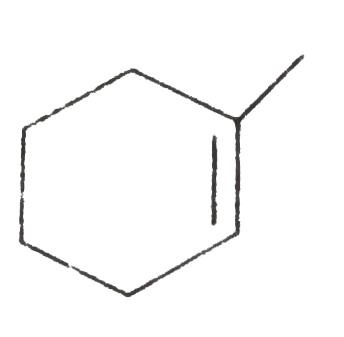
Identify D.

A

B

C

D

Text Solution

Verified by Experts

The correct Answer is:

D
Promotional Banner

Topper's Solved these Questions

  • ALCOHOLS AND ETHERS

    HIMANSHU PANDEY|Exercise Match The Column|8 Videos
  • ALCOHOLS AND ETHERS

    HIMANSHU PANDEY|Exercise Integer Answer Type Problems|10 Videos
  • ALCOHOLS AND ETHERS

    HIMANSHU PANDEY|Exercise More Than One Correct (Q.26 To Q.50)|25 Videos
  • AMINES

    HIMANSHU PANDEY|Exercise Subjective Type Problems|5 Videos

Similar Questions

Explore conceptually related problems

1,2-diols are oxidised to ketones or aldehydes by periodic acid HIO_(4) . Periodic acid reacts with dipol to form a cyclic intermeditate. The reaction takes places because iodine is in a highly positive oxidation state, so it readily accepts electrons. When the intermeidate breaks down, the bond between the two carbon bonded to the OH group break. Which of the following compounds will not react with HIO_(4) ?

1,2-diols are oxidised to ketones or aldehydes by periodic acid HIO_(4) . Periodic acid reacts with dipol to form a cyclic intermeditate. The reaction takes places because iodine is in a highly positive oxidation state, so it readily accepts electrons. When the intermeidate breaks down, the bond between the two carbon bonded to the OH group break. Which of the following will not form by above reaction?

A reaction characteristic of vicinal diols is their oxidative cleavage on treatment with periodic acid (HIO_(4)) . The carbon-carbon bond of the vicinal diol uinit is broken and two carbonyl groups result. Periodic acid is reduced to iodic acid (HIO_(3)) Cyclic diols react to give dicarbonyl compounds. The reactions are faster when the hydroxyl gorups are cid than when they are trans but both stereoisomers are oxidised by periodic acid. Periodic acid cleavage of vicinal diols is often used for analytic purposes as an aid in structure determination. By identifying the carbonyl compounds produced, The constitution of the diol may be deduced. Which of the following compounds (s) is / are obtained when the following compound is oxidixed by HIO_(4) ?

A reaction characteristic of vicinal diols is their oxidative cleavage on treatment with periodic acid (HIO_(4)) . The carbon-carbon bond of the vicinal diol uinit is broken and two carbonyl groups result. Periodic acid is reduced to iodic acid (HIO_(3)) Cyclic diols react to give dicarbonyl compounds. The reactions are faster when the hydroxyl gorups are cid than when they are trans but both stereoisomers are oxidised by periodic acid. Periodic acid cleavage of vicinal diols is often used for analytic purposes as an aid in structure determination. By identifying the carbonyl compounds produced, The constitution of the diol may be deduced. When arabinose is oxidised by HIO+_(4) , then formaldehyde and formic acid are obtained. Number of molecules of formic acid and formaldehyde obtained respecitively are :

It we see the reaction of methane with halogen, the rate determining step for chlorination is, endothermic reaction of the chlorine atom with methane to form methyl radical and a molecule of HCl. So free radical is the intermediate of the reaction. Formation of free radical depends upon the energy required to break a bond between a hydrogen atom and a carbon atom. Chlorination of propane and Bromination of propane. when compared it is found that bromination is more selective than chlorination. The probability factor for 3^(@),2^(@),1^(@)H atom is 5.0:3.8:1.0 at 25^(@)C for chlorination. Isobutane when reacts with chlorine in presence of ultra violet radiations yield 2 products primary hydrogen substituted and 3^(@) hydrogen substituted Find their % in product mixture

A reaction characteristic of vicinal diols is their oxidative cleavage on treatment with periodic acid (HIO_(4)) . The carbon-carbon bond of the vicinal diol uinit is broken and two carbonyl groups result. Periodic acid is reduced to iodic acid (HIO_(3)) Cyclic diols react to give dicarbonyl compounds. The reactions are faster when the hydroxyl gorups are cid than when they are trans but both stereoisomers are oxidised by periodic acid. Periodic acid cleavage of vicinal diols is often used for analytic purposes as an aid in structure determination. By identifying the carbonyl compounds produced, The constitution of the diol may be deduced. Which of the following diols will be oxidised by HIO_(4) ?

A reaction characteristic of vicinal diols is their oxidative cleavage on treatment with periodic acid (HIO_(4)) . The carbon-carbon bond of the vicinal diol uinit is broken and two carbonyl groups result. Periodic acid is reduced to iodic acid (HIO_(3)) Cyclic diols react to give dicarbonyl compounds. The reactions are faster when the hydroxyl gorups are cid than when they are trans but both stereoisomers are oxidised by periodic acid. Periodic acid cleavage of vicinal diols is often used for analytic purposes as an aid in structure determination. By identifying the carbonyl compounds produced, The constitution of the diol may be deduced. Which of the following products is/are obtained when glycerol is treated with HIO_(4) ?

A reaction characteristic of vicinal diols is their oxidative cleavage on treatment with periodic acid (HIO_(4)) . The carbon-carbon bond of the vicinal diol uinit is broken and two carbonyl groups result. Periodic acid is reduced to iodic acid (HIO_(3)) Cyclic diols react to give dicarbonyl compounds. The reactions are faster when the hydroxyl gorups are cid than when they are trans but both stereoisomers are oxidised by periodic acid. Periodic acid cleavage of vicinal diols is often used for analytic purposes as an aid in structure determination. By identifying the carbonyl compounds produced, The constitution of the diol may be deduced. The compound 'X' in above reaction is :

Borane is an electron deficient compound. It has only six valence eletons, so the boron atom lacks an octet. Acquiring an octet is the driving force for the unusual bonding structure found in boron compounds. As an electron deficient compound, BH_(3) is a strong electrophile, capable of adding to a double bond. This hydroboration of double bond is though to oC Cur in one step, with the boron atom adding to the less highly substituted end of the double bond. In transition state, the boron atom withdraws electrons from the pi bond and the carbon at theother end of the double bond acquires a partial positive charge. This positive charge is more stable on the more highly subsituted carbon atom. The second step is the oxidation of boron atom, removing it from carbon and replacing it with hydroxyl group by using H_(2)O_(2)//OH^(bar(..)) . The simultaneous addition of boron and hydrogen to the double bond leads to a syn addition. Oxidation of the trialkyl borane replaces boron with a hydroxyl group in the same stereochemical position. Thus, hydroboration of alkenen is an example of steropecific reaction, in which different steroisomers of starting compounds react to give different steroisomers of the product. CH_(3)-underset(CH_(3))underset(|)overset(CH_(3))overset(|)C-CH=CH_(2) underset((ii)H_(2)O_(2)//OH^(bar(..)))overset((i)BH_(3)//THF)rarrZ . Z is :

HIMANSHU PANDEY-ALCOHOLS AND ETHERS-Linked Comprehension Type
  1. Althought epoxides do not contain a good leaving group, they contains ...

    Text Solution

    |

  2. Althought epoxides do not contain a good leaving group, they contains ...

    Text Solution

    |

  3. 1,2-diols are oxidised to ketones or aldehydes by periodic acid HIO(4)...

    Text Solution

    |

  4. 1,2-diols are oxidised to ketones or aldehydes by periodic acid HIO(4)...

    Text Solution

    |

  5. 1,2-diols are oxidised to ketones or aldehydes by periodic acid HIO(4)...

    Text Solution

    |

  6. Carbon oxygen double bond are easily reduced by NaBH(4) or LiAlH(4). T...

    Text Solution

    |

  7. Carbon oxygen double bond are easily reduced by NaBH(4) or LiAlH(4). T...

    Text Solution

    |

  8. Carbon oxygen double bond are easily reduced by NaBH(4) or LiAlH(4). T...

    Text Solution

    |

  9. An organic compound (A) on treatment with CHCl(3) and KOH gives (Y) an...

    Text Solution

    |

  10. An organic compound (A) on treatment with CHCl(3) and KOH gives (Y) an...

    Text Solution

    |

  11. An organic compound (A) on treatment with CHCl(3) and KOH gives (Y) an...

    Text Solution

    |

  12. A tertiary alcohol (H) upon acid-catalysed dehydration gives a product...

    Text Solution

    |

  13. A tertiary alcohol (H) upon acid-catalysed dehydration gives a product...

    Text Solution

    |

  14. A tertiary alcohol (H) upon acid-catalysed dehydration gives a product...

    Text Solution

    |

  15. Alcohols are converted to tosylates by treatment with p-toluence sulfo...

    Text Solution

    |

  16. Alcohols are converted to tosylates by treatment with p-toluence sulfo...

    Text Solution

    |

  17. Alcohols are converted to tosylates by treatment with p-toluence sulfo...

    Text Solution

    |

  18. Acid catalysed conversation of 1,2-diol or vicinal, into carbonyl comp...

    Text Solution

    |

  19. Acid catalysed conversation of 1,2-diol or vicinal, into carbonyl comp...

    Text Solution

    |

  20. Acid catalysed conversation of 1,2-diol or vicinal, into carbonyl comp...

    Text Solution

    |
