Home
Class 12
PHYSICS
The refractive index of a prism is mu. F...

The refractive index of a prism is `mu`. Find the maximum angle of the prism for which a ray incident on it will be transmitted through other face without total internal reflection.

Text Solution

Verified by Experts

The correct Answer is:
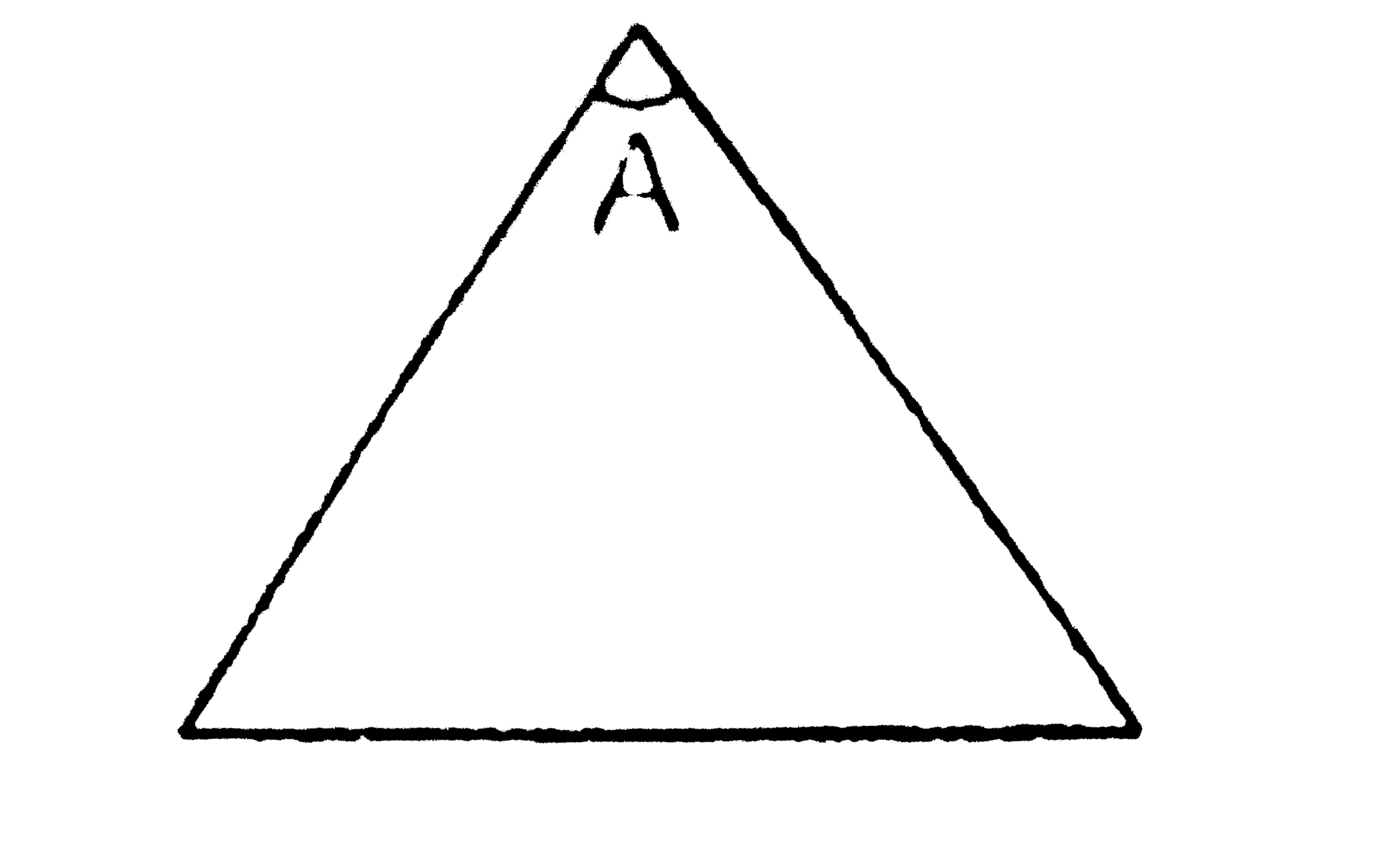
`2 sin^(-1) ((1)/(mu))

We have `A = r_(1) + r_(2)`
`r_(1) le harr` We have `A = r_(1) + r_(2)`
`r_(1) le l_(C)i`
`r_(2) le l_(C)` (for no. `T.I.R`)
`r_(1) + r_(2) le 2l_(C)`
`A le 2l_(C) rArr A le sin^(-1) (1//mu)`
Promotional Banner

Topper's Solved these Questions

  • GEOMATRICAL OPTICS

    RESONANCE|Exercise Exercise-2|63 Videos
  • GEOMATRICAL OPTICS

    RESONANCE|Exercise Exercise-3|79 Videos
  • GEOMATRICAL OPTICS

    RESONANCE|Exercise Problem|33 Videos
  • EXPERIMENTAL PHYSICS

    RESONANCE|Exercise PART -II|10 Videos
  • GRAVITATION

    RESONANCE|Exercise HIGH LEVEL PROBLEMS|16 Videos

Similar Questions

Explore conceptually related problems

Refractive index of a prism is sqrt(7//3) and the angle of prism is 60^(@) . The minimum angle of incidence of a ray that will be transmitted through the prism is

Monochromatic light is incident on a glass prism of angle A. If the refractive index of the material of the prism is mu , a ray, incident at an angle theta , on the face AB would get transmitted through the face AC of the prism provided:

Light is incident normally on face AB of a prism as shown in Figure. A liquid of refractive index mu is placed on face AC of the prism. The prism is made of glass of refractive indes 3//2 . Find the limits of mu for which total internal reflection takes place on the face AC.

ACB is right-angled prism with other angles as 60^(@) and 30^(@) . Refractive index of the prism is 1.5. AB has thin layer of liquid on it as shown. Light falls normally on the face Ac. For total internal reflection, maximum refractive index of the liquid is

(a) If the refracting angle of a prism is 60^@ and the minimum deviation is 30^@ , then find the angle of incidence. (b) A ray of light passes through an equilateral prism such that the angle of emergence is equal to the angle of incidence and each is equal to 3//4^(th) of the angle of prism. Find the angle of deviation. (c) The refracting of a prism is A and the refractive index of the material of the prism is cotA//2 . Find the angle of deviation. (d) The angle of a prism is 60^@ . What is the angle of incidence for minimum deviation? The refractive index of the material of the prism is sqrt2 .

An equilateral glass prism of refractive index 1.5 is immersed in water. Find the angle of deviation produced when a ray of light is incident at 42^(@) on one face of the prism. (Refractive index of water = 1.33)

A light rays is incident on a prism of prism angle A and refractive index mu . Show that the smallest value of the angle of incidence for which the reflected ray does not suffer total internal reflection at the second face, i.e. just comes out of it, is given by i=sin^-1[(mu^2-1)^(1//2)sinA-cosA] .

State the conditions under which total internal reflection occurs. One face of a prism with a refracting angle of 30^(@) is coated with silver. A ray incident on another face at an angle of 45^(@) is refracted and reflected from the silver coated face and retraces its path. Find the refractive index of the material of the prism.

The refractive index of the material of a prism of refracting angle 74^@ is 1.66 for a certain monochromatic ray. What should be the minimumangle of incidence of this ray on the prism so that no total internal reflection takes place as they come out of the prism.

The path of a ray of light passing through an equilateral glass prism ABC is shown in figure. The ray of light is incident on face BC at the critical angle for just total internal reflection. The total internal reflection. The total angle of deviation after the refraction at face AC is 108^@ . Calculate the refractive index of the glass.

RESONANCE-GEOMATRICAL OPTICS -Exercise-1
  1. The refracting angle of a glass prism is 30^@. A ray is incident onto ...

    Text Solution

    |

  2. Find the angle of devaition suffered by the light ray shown in figu...

    Text Solution

    |

  3. The refractive index of a prism is mu. Find the maximum angle of the ...

    Text Solution

    |

  4. An extended object of size 2cm is placed at a distance of 10cm in air...

    Text Solution

    |

  5. A point object lies inside a transpatent solid sphere of radius 20cm ...

    Text Solution

    |

  6. An object is placed 10cm away form a glass piecwe (n = 1.5) of length...

    Text Solution

    |

  7. There is small air bubble inside a glass sphere (mu = 1.5) of radius ...

    Text Solution

    |

  8. A smell object Q of length Q of length 1mm leis along the principle ...

    Text Solution

    |

  9. A narror parallel beam of light is incident paraxially on a solid tr...

    Text Solution

    |

  10. A quarter cylinder of radius R and refractive index 1.5 is placed on a...

    Text Solution

    |

  11. Lenses are constructed by a material of refractive index 2. The magni...

    Text Solution

    |

  12. Find the focal length of lens shown in the figure. Solve for three c...

    Text Solution

    |

  13. Given an optical axis MN and the positons of a real object AB and it...

    Text Solution

    |

  14. A thin lens made of a material of refractive indexmu2 has a medium of ...

    Text Solution

    |

  15. Two glasses with refractive indices of 1.5 & 1.7 are used to make tow...

    Text Solution

    |

  16. An object of height 1cm is set at angles to the optical axis of a dou...

    Text Solution

    |

  17. A lens placed between a candle and a fixed screen forms a real tr...

    Text Solution

    |

  18. A pin of length 1cm lies along the principle axis of a converging len...

    Text Solution

    |

  19. The radius of the sun is 0.75xx10^(8)m and its distance from the eart...

    Text Solution

    |

  20. A 2.5 dipote lens forms a virtual image which is 4 times the obje...

    Text Solution

    |

