

Home
Class 11
CHEMISTRY
A single electron orbits around a statio...

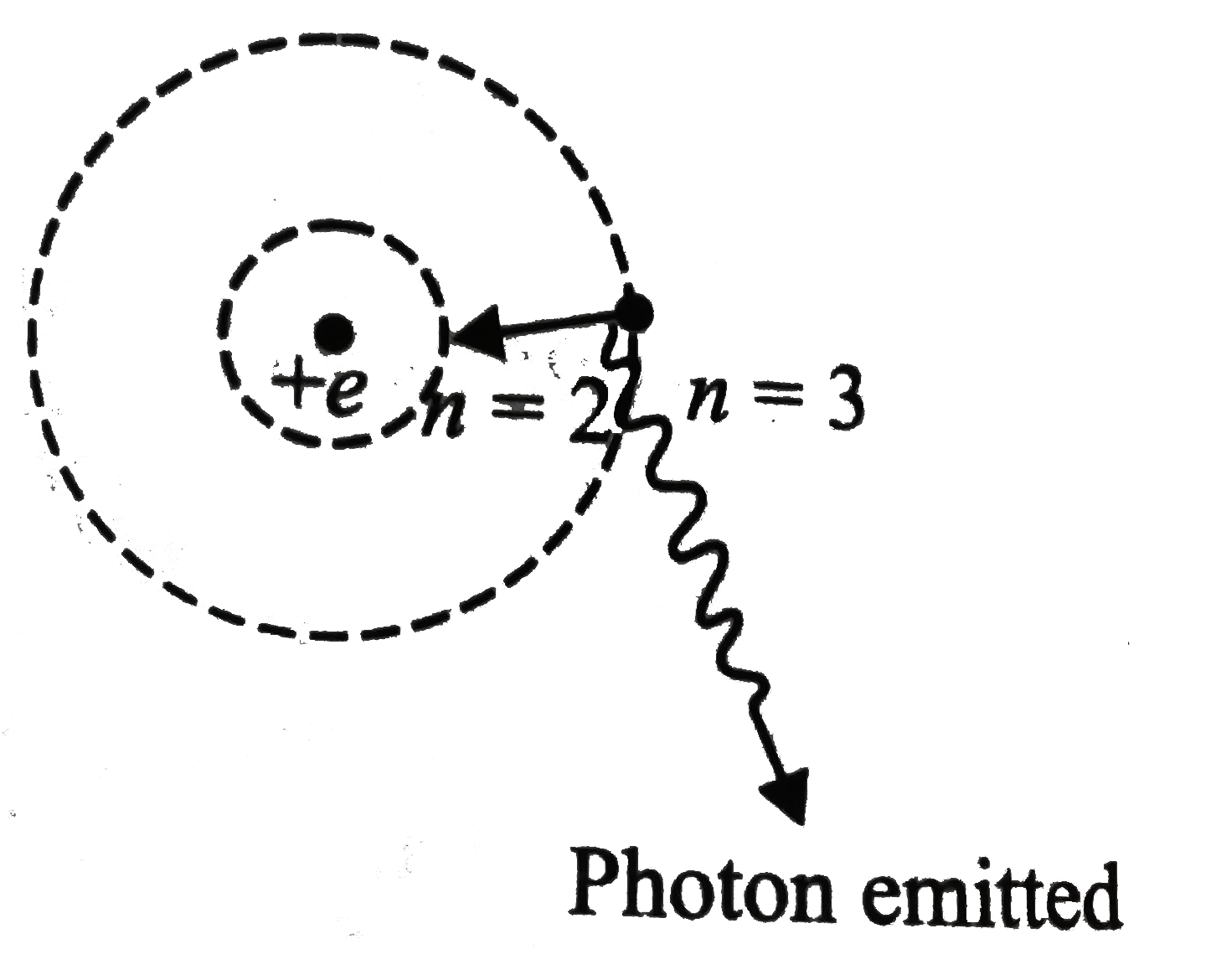
A single electron orbits around a stationary nucless of charge `+ Ze` where `Z` is a constant and e is the magnitude of electronic charge ,if respuires 47.2 e
is excite the electron from the second bohr orbit to the third bohr orbit
a. Find the value of Z
b. Find the energy required to the electron from `n = 3" to" n = 4`
c. Find the wavelength of radiation to remove the electron from the second bohr orbit to infinity
d. Find the kinetic energy potential energy and angular momentum of the electron in the first orbit
Find the ionination energy of above electron system in electronvalt.

Promotional Banner

Similar Questions

Explore conceptually related problems

A single electron orbits around a stationary nucleus of charge +Ze , where Z is a constant and e is the electronic charge. It requires 47.2 eV to excited the electron from the second Bohr orbit to the third Bohr orbit. Find (i) the value of Z, (ii) the energy required to excite the electron from the third to the fourth Bohr orbit and (iii) the wavelength of the electromagnetic radiation radiation to remove the electron from the first Bohr orbit to infinity.

A single electron orbits around a stationary nucleus of charge +Ze , where Z is a constant and e is the electronic charge. It requires 47.2 eV to excited the electron from the second Bohr orbit to the third Bohr orbit. Find (i) the value of Z, (ii) the energy required to excite the electron from the third to the fourth Bohr orbit and (iii) the wavelength of the electromagnetic radiation radiation to remove the electron from the first Bohr orbit to infinity.

A single electron orbit around a stationary nucleus of charge + Ze where Z is a constant and e is the magnitude of the electronic charge. It requires 47.2 eV to excite the electron from the second bohr orbit to the third bohr orbit. Find (i) The value of Z (ii) The energy required by nucleus to excite the electron from the third to the fourth bohr orbit (iii) The wavelength of the electronmagnetic radiation required to remove the electron from the first bohr orbit to inlinity (iv) The energy potential energy potential energy and the angular momentum of the electron in the first bohr orbit (v) The radius of the first bohr orbit (The ionization energy of hydrogen atom = 13.6 eV bohr radius = 5.3 xx 10^(-11) matre velocity of light = 3 xx 10^(8) m//sec planks 's constant = 6.6 xx 10^(-34) jules - sec )

A single electron orbikt around a stationary nucleus of charge + Ze when Z is a constant and e is the magnitube of the electronic charge if 47.2 eV excite the electron from the second bohr orbit to the third bohhr orbit final (i) The volue of Z (ii) Tyhe energy requiredto nucleus the electron from the third to the fourth bohr orbit (iii) The wavelength of the electronmagnetic radiation required to remove the electron from the first bohr orbit to inlinity (iv) The energy potential energy potential energy and the angular momentum of the electron in the first bohr orbit (v) The radius of the first bohr orbit (The ionization energy of hydrogen atom = 13.6 eV bohr radius = 5.3 xx 10^(-11) matre velocity of light = 3 xx 10^(8) m//sec planks 's constant = 6.6 xx 10^(-34) jules - sec )

A single electron orbits a stationary nucleus of charge + Ze , where Z is a constant and e is the magnitude of electronic charge . It requires 47.2 eV to excite electron from second Bohr orbit to third Bhor orbit . Find a the value of Z b the energy required to excite the electron from the third to the fourth Bohr orbit. c. the wavelength of electromagnetic rediation required to remove the electron from the first Bohr orbit to infinity. d Find the KE,PE , and angular momentum of electron in the first Bohr orbit. e. the redius of the first Bohr orbit [The ionization energy of hydrogen atom = 13.6 eV Bohr radius = 5.3 xx 10^(_11) m , "velocity of light" = 3 xx 10^(-8)jm s ^(-1) , Planck's constant = 6.6 xx 10^(-34)j - s]

An electron is placed in an orbit about a nucleus of charge +Ze. It requires 47.2 eV energy to excite an electron from second Bohr orbit to third Bohr orbit. What is the value of Z?

An energy of 68eV is required to excite a hydrogen like atom from its second Bohr orbit to the third. The nuclear charge is Ze. Find the value of Z, the kinetic energy of the electron in the first Bohr orbit and the wavelength of the radiation required to eject the electrons from the first Bohr orbit to infinity.