A
B
C
D
Text Solution
Verified by Experts
The correct Answer is:
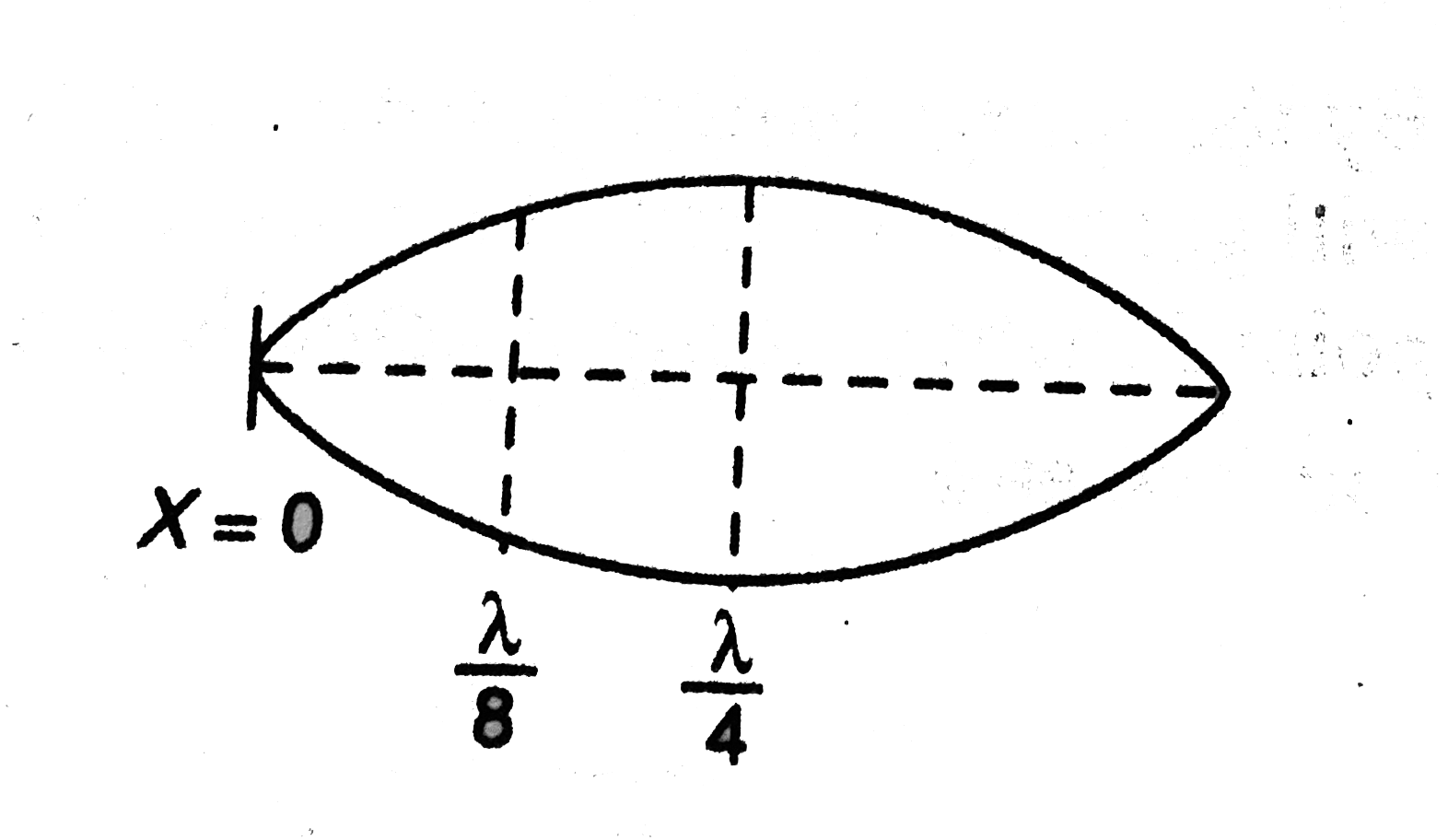



Topper's Solved these Questions
SUPERPOSITION OF WAVES
DC PANDEY|Exercise Level 1 Objective|11 VideosSUPERPOSITION OF WAVES
DC PANDEY|Exercise Objective Questions|1 VideosSUPERPOSITION OF WAVES
DC PANDEY|Exercise Exercise 18.4|3 VideosSOUND WAVES
DC PANDEY|Exercise Exercise 19.7|4 VideosTHERMOMETRY THERMAL EXPANSION AND KINETIC THEORY OF GASES
DC PANDEY|Exercise Medical entrance gallary|30 Videos
Similar Questions
Explore conceptually related problems
DC PANDEY-SUPERPOSITION OF WAVES-Level 1 Assertion And Reason
- Assertion: Two waves y1 = A sin (omegat - kx) and y2 = A cos(omegat-kx...
Text Solution
|
- Assertion: Stationary waves are so called because particles are at res...
Text Solution
|
- Assertion: When a wave travels from a denser medium to rarer medium, t...
Text Solution
|
- Assertion: A wire is stretched and then fixed at two ends. It oscillat...
Text Solution
|
- Assertion: If we see the oscillations of a stretched wire at higher ov...
Text Solution
|
- Assertion: Standing waves are formed when amplitudes of two constituen...
Text Solution
|
- Asserton: In a standing wave x=0 is a node. Then, total mechanical ene...
Text Solution
|
- Assertion: Ratio of maximum intensity and minimum intensity in interfe...
Text Solution
|
- Assertion: Three waves of equal amplitudes interfere at a point. Phase...
Text Solution
|
- Assertion: For two sources to be coherent phase difference between two...
Text Solution
|