Home
Class 12
PHYSICS
Two identical positive charges are place...

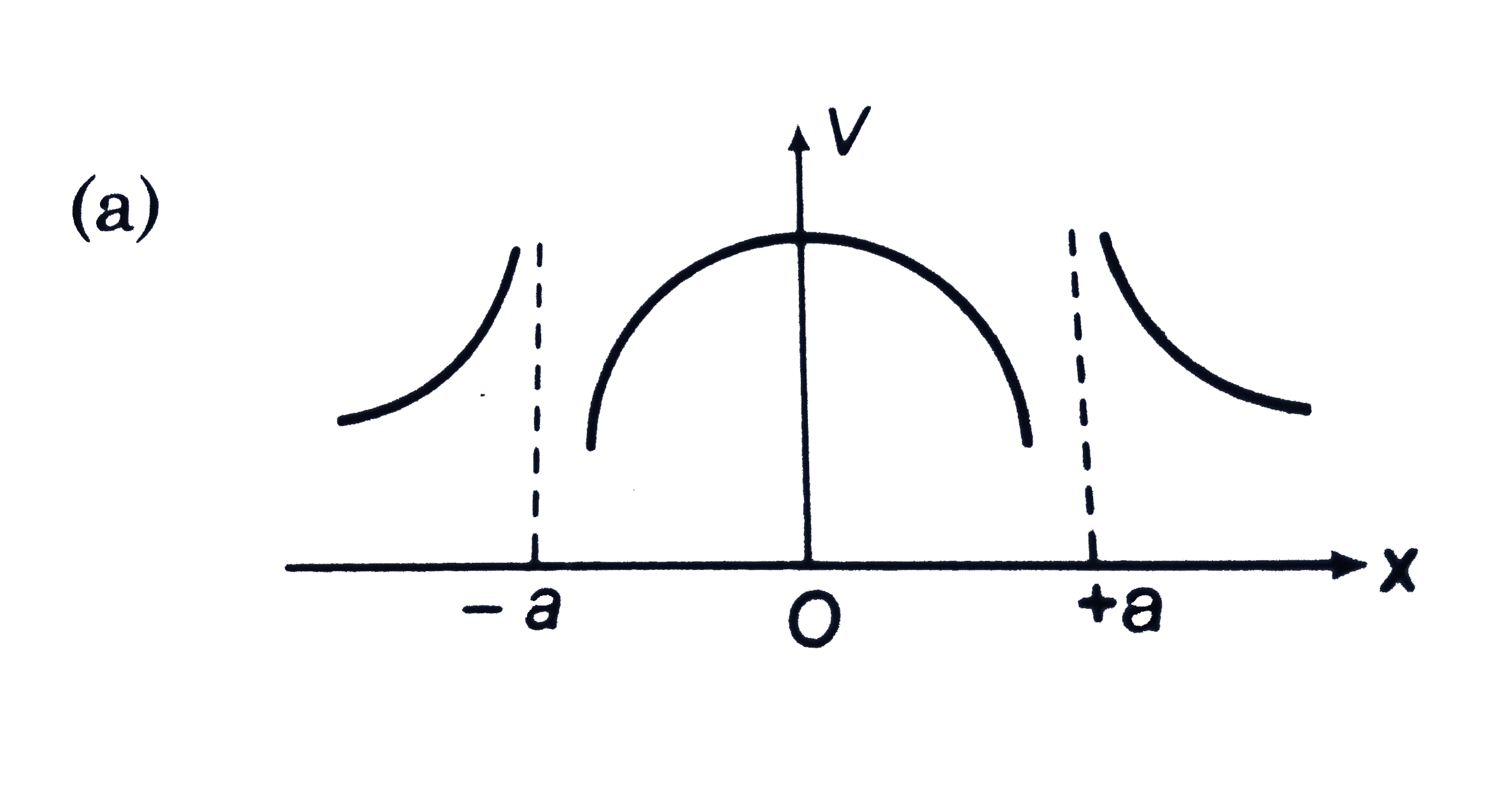
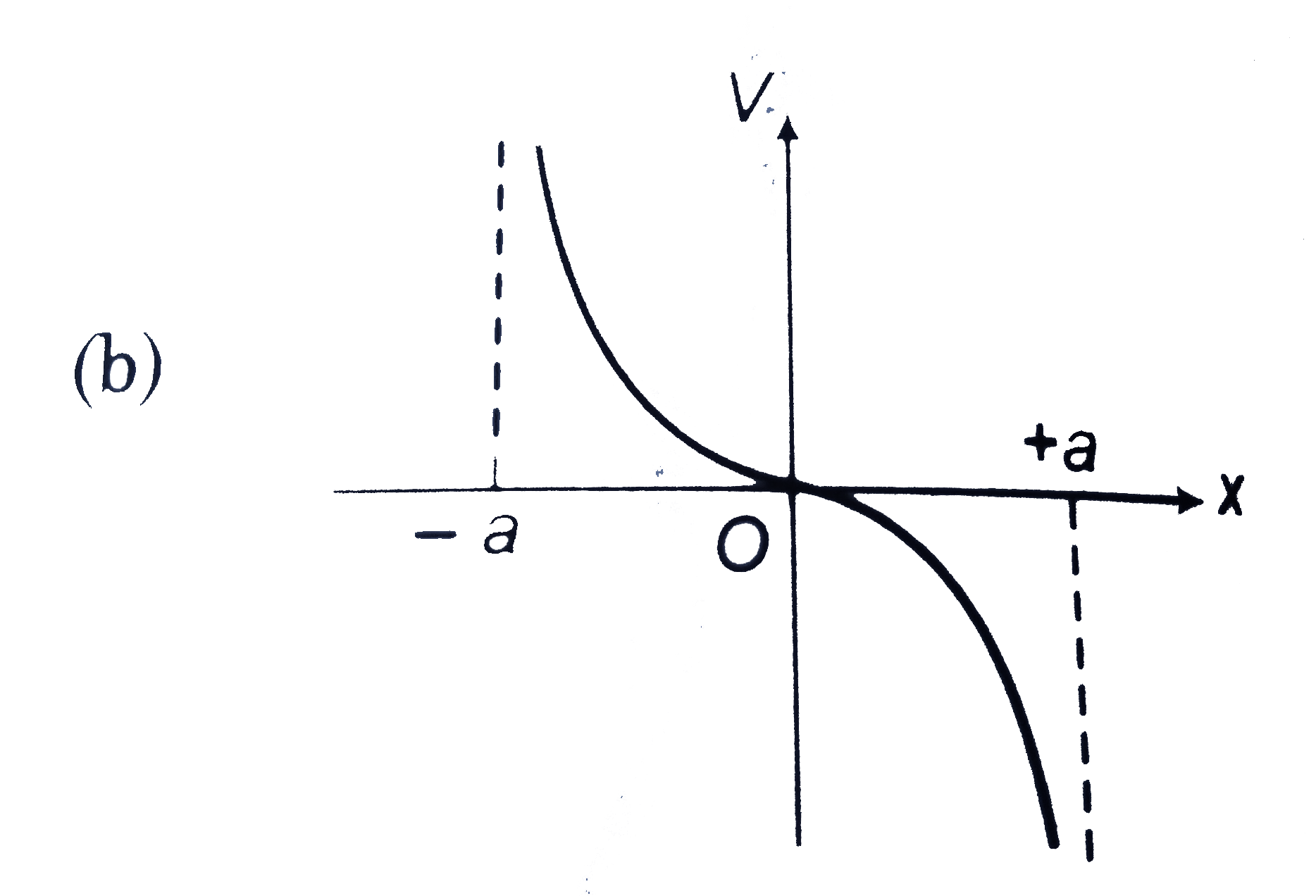
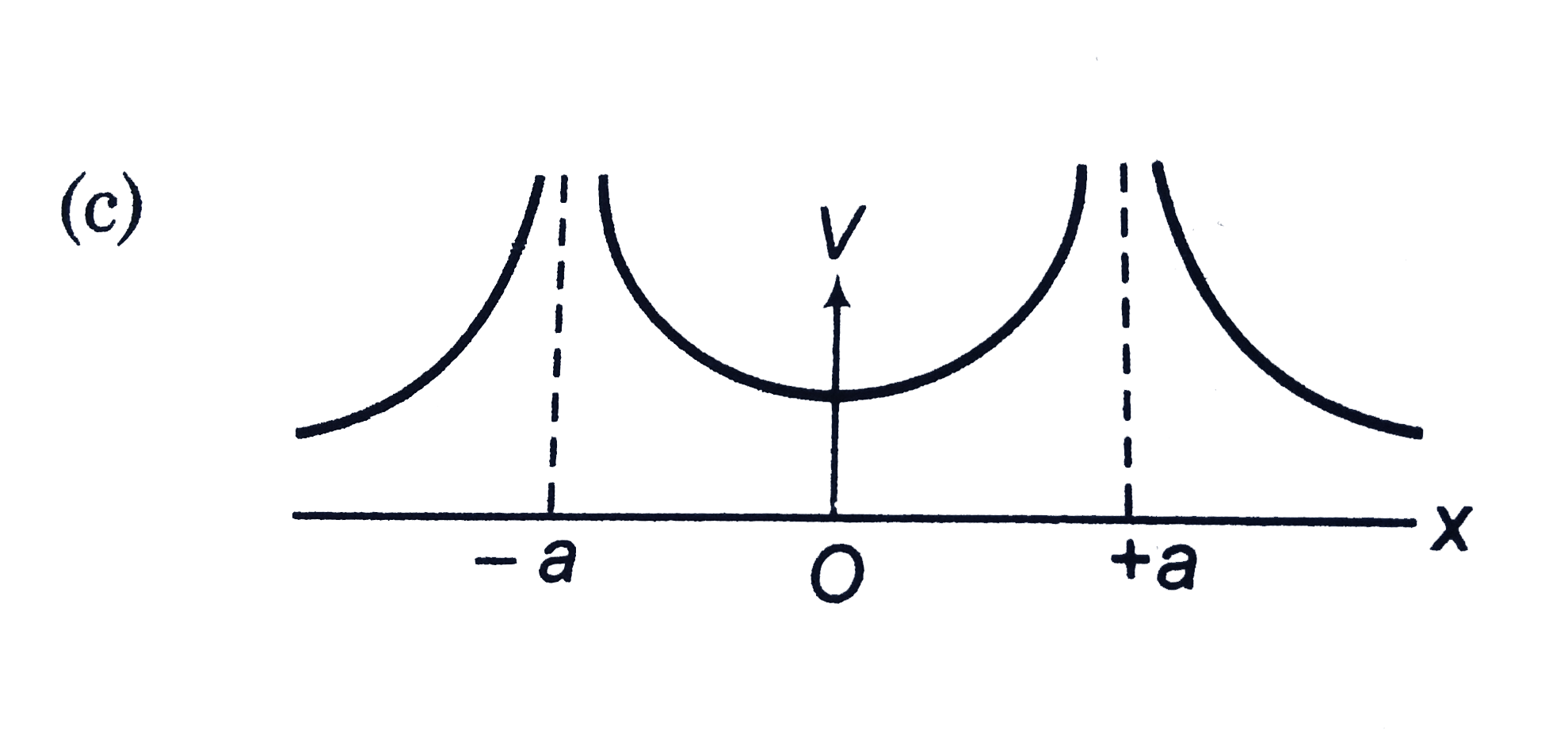
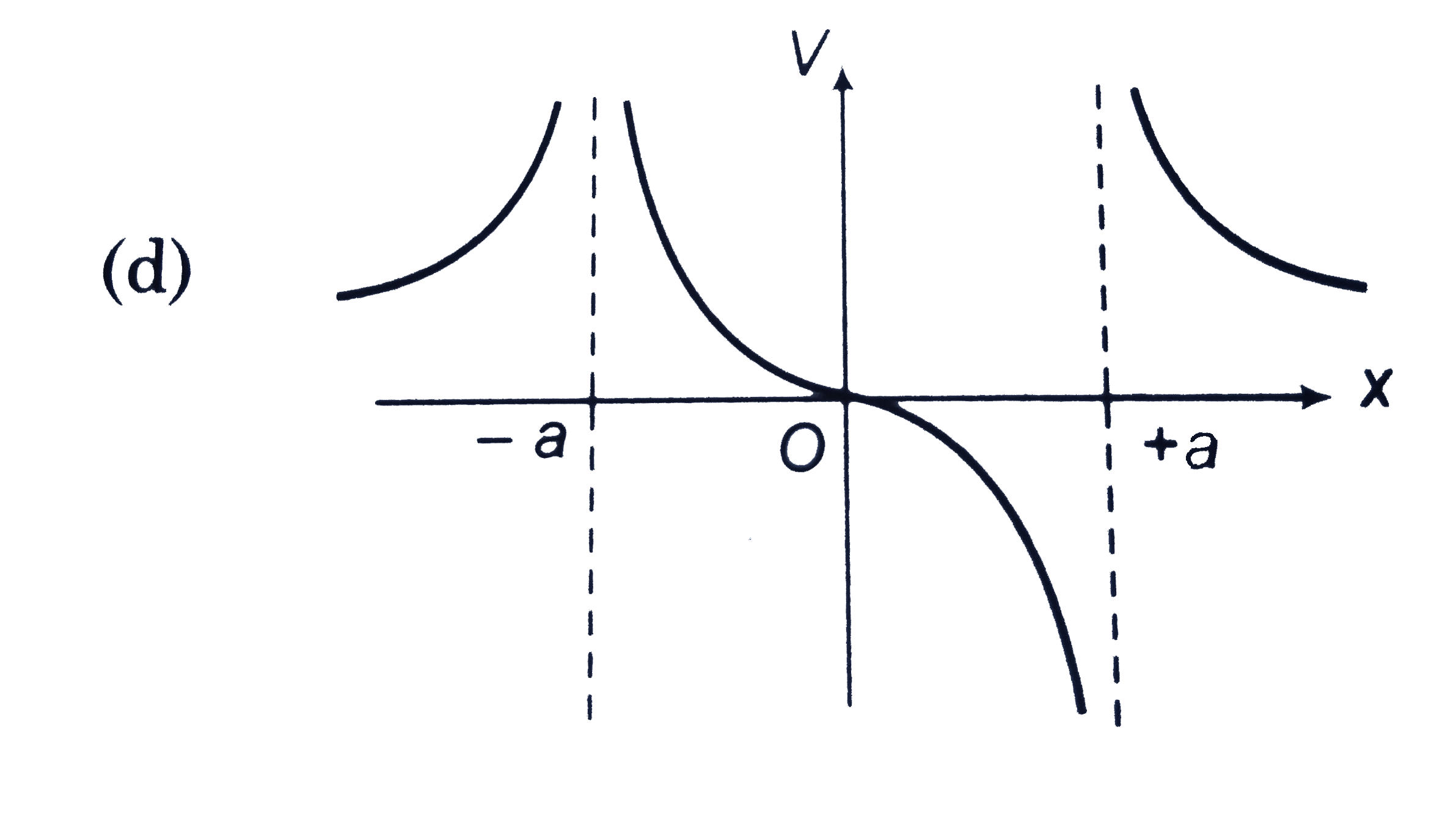
Two identical positive charges are placed at `x=-a` and `x=a`. The correct variation of potential V along the x-axis is given by

A

B

C

D

Text Solution

Verified by Experts

The correct Answer is:

C

On both sides of the positive charge `V=+prop` just over the charge
Promotional Banner

Topper's Solved these Questions

  • ELECTROSTATICS

    DC PANDEY|Exercise Exercise 24.1|4 Videos
  • ELECTROSTATICS

    DC PANDEY|Exercise Exercise 24.2|9 Videos
  • ELECTROSTATICS

    DC PANDEY|Exercise Example Type 8|3 Videos
  • ELECTROSTATIC POTENTIAL AND CAPACITORS

    DC PANDEY|Exercise (C) Chapter exercises|50 Videos
  • GRAVITATION

    DC PANDEY|Exercise All Questions|120 Videos

Similar Questions

Explore conceptually related problems

Two identical positive charges are kept as shown in Fig < 0 x a The variation of electric field intensity E along x-axis is given by (The electric field intensity towards positive x-axis is taken as positive)

Two point charge +-q are placed on the axis at x= -a and x= +-a , as shown in fig. (i) Plot the variation of E along the x-axis. (ii) Plot the variation of E along the y-axis.

Two identical positive charges Q each are placed on the x axis at point (-a,0) and (a,0) A point charge of magnitude q is placed at the origin. For small displacement along x axis, the charge q executes simple harmonic motion if it is poitive and its time period is T_(1) . if the charge q is negative, it perform oscillations when displaced along y axis. in this case the time period of small oscillations is T_(2). find (T_(1))/(T_(2))

A particle free to move along x-axis is acted upon by a force F=-ax+bx^(2) whrte a and b are positive constants. For ximplies0 , the correct variation of potential energy function U(x) is best represented by.

Two point charges (Q each are placed at (0,y) and (0-y) A point charge q of the sme polarity can move along the x-axis. Then

Two identical positive charges are fixed on the y-axis, at equal distances from the origin O. A particle with a negative charges starts on the x-axis at a large distance from O. moves along the x-axis passes through O, and moves far away from O on the other side. Its acceleration a is taken as positive along its direction of motion. Plot acceleration a of the particle against its x-coordinate.

Two equal point charges are fixed at x=-a and x=+a on the x-axis. Another point charge Q is placed at the origin. The change in the electrical potential energy of Q, when it is displaced by a small distance x along the x-axis, is approximately proportional to

Two fixed charges -2 Q and Q are locatted at the points with coordinates ( -3 a, 0) and (+3 a, 0) prespectively in the X- Y plane . The expression for the potential V (x) at a general point on the x-axis is given by .

Two identical spherical balls, each of mass m, are placed as shown in figure. Plot the variation of g(gravitation intensity) along the x-axis due to both the masses.

DC PANDEY-ELECTROSTATICS-Level 2 Single Correct
  1. A small ball of masss m and charge +q tied with a string of length l, ...

    Text Solution

    |

  2. For charges A,B,C and D are plasced at the four corners of a squre of ...

    Text Solution

    |

  3. Two identical positive charges are placed at x=-a and x=a. The correct...

    Text Solution

    |

  4. Two identical charges are placed at the two corners of an equilateral ...

    Text Solution

    |

  5. A charged particle q is shot from a large distance towards another cha...

    Text Solution

    |

  6. Two identical charged spheres are suspended by strings of equal length...

    Text Solution

    |

  7. The electrostatic potential due to the charge configuration at point P...

    Text Solution

    |

  8. The figure show four situations in which charged particles are at equa...

    Text Solution

    |

  9. An isolated conduction sphere sphere whose radius R=1 m has a charge q...

    Text Solution

    |

  10. Two conducting concentric, hollow spheres A and B have radii a and b r...

    Text Solution

    |

  11. In a uniform electric field, the potential is 10V at the origin of co...

    Text Solution

    |

  12. There are two uncharged identicasl metallic spheres 1 and 2 of radius ...

    Text Solution

    |

  13. Figure shown a closed surface which intersects a conducting sphere. If...

    Text Solution

    |

  14. Two concentric coducting thin spherical shells A and B having radii rA...

    Text Solution

    |

  15. The electric potential at a point (x,y) in the x-y plane is given by V...

    Text Solution

    |

  16. Two concentric shells have radii R and 2R charges qA and qB and potent...

    Text Solution

    |

  17. A particle of mass 2 kg chrge 1 mC is projected vertially with veloci...

    Text Solution

    |

  18. At a distance of 5 cm and 10 cm outward from the surface of a uniforml...

    Text Solution

    |

  19. Three charged particle sare in equilibrium under their electrostatic f...

    Text Solution

    |

  20. Charges Q1 and Q2 lie inside and outside, respectively, of a closed su...

    Text Solution

    |
