

Home
Class 12
PHYSICS
An LC circuit contains a 20 mH inductor ...

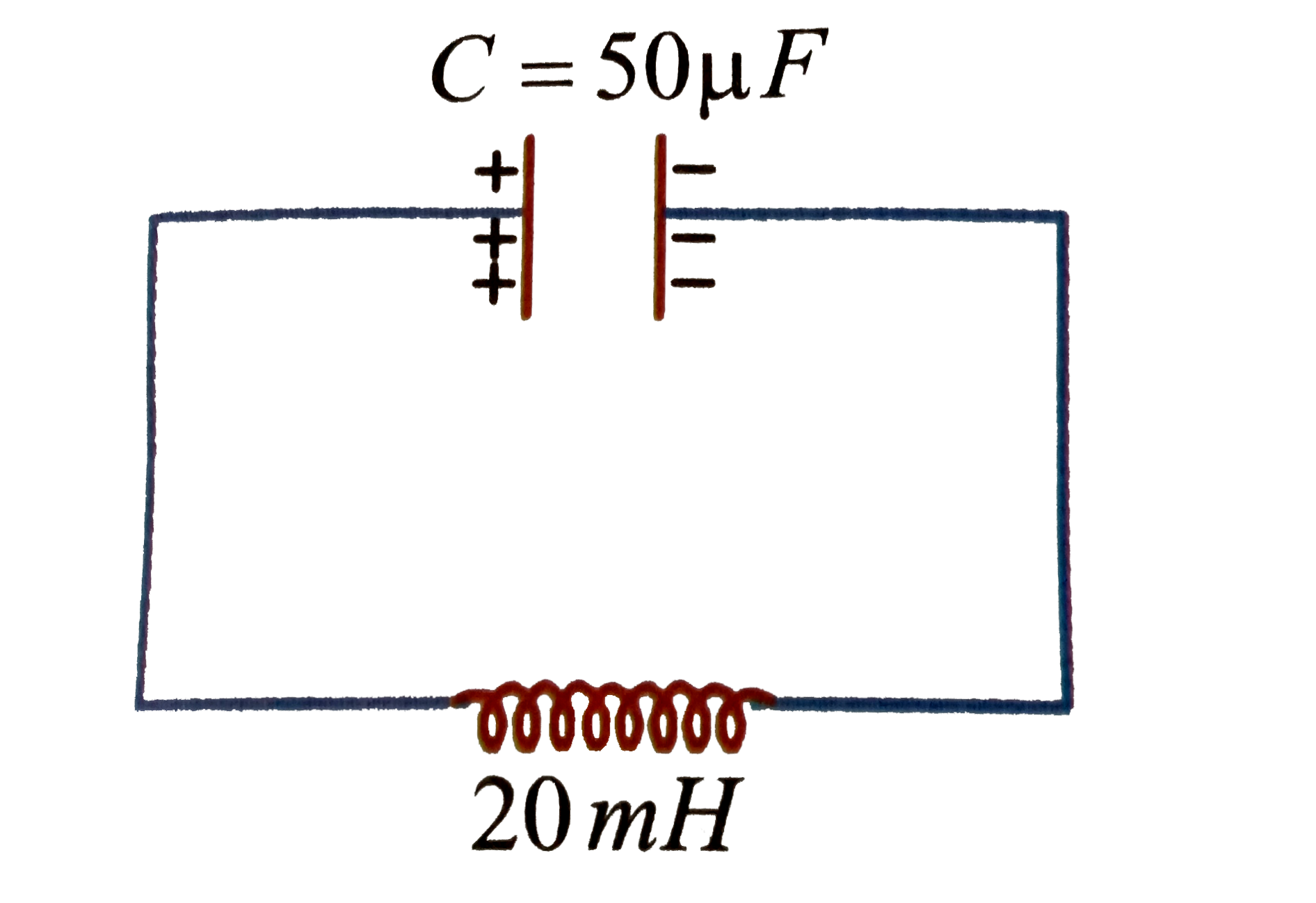
An `LC` circuit contains a `20 mH` inductor asn a `50 mu F` capacitor with initial change of `10 mC`. The resistance of the circuit is negligible. Let the instant the circuit is closed be `t = 0`.

Promotional Banner

Similar Questions

Explore conceptually related problems

An LC circuit contains a 20 mH inductor and a 50 mu F capacitor with an initial charge of 10 mC. The resistance of the circuit is negligible. Let the instant the circuit is closed be t = 0. (a) What is the total energy stored initially ? Is it conserved during the oscillalions? (b) What is the natural frequency of the circuit? (c ) At what time is the energy stored? (i) Completely electrical ? (ii) Completely magnetic ? (d) At what time is the total energy shared equally between the inductor and the capacitor ? (e) If a resistor is inserted in the circuit, how much energy is eventually dissipated as heat ?

An LC circuit contains a 20 mH inductor and a 50 mu F capacitor with an initial charge of 10 mC. The resistance of the circuit is negligible. Let the instant the circuit is closed be t = 0. (a) What is the total energy stored initially ? Is it conserved during the oscillalions? (b) What is the natural frequency of the circuit? (c ) At what time is the energy stored? (i) Completely electrical ? (ii) Completely magnetic ? (d) At what time is the total energy shared equally between the inductor and the capacitor ? (e) If a resistor is inserted in the circuit, how much energy is eventually dissipated as heat ?

An LC circuit contains a 20 mH inductor and a 50 muF capacitor with an initial charge of 10 mC. The resistance of the circuit is negligible. Let the instant the circuit is closed be t = 0. What is the total energy stored initially? Is it conserved during LC oscillations?

An LC circuit contains a 20 mH inductor and a 50 muF capacitor with an initial charge of 10 mC. The resistance of the circuit is negligible. Let the instant the circuit is closed be t = 0. At what times is the total energy shared equally between the inductor and the capacitor?

An LC circuit contains a 20 mH inductor and a 50 muF capacitor with an initial charge of 10 mC. The resistance of the circuit is negligible. Let the instant the circuit is closed be t = 0. What is the total energy stored initially? What is the natural frequency of the circuit?

An LC circuit contains a 20 mH inductor and a 50 muF capacitor with an initial charge of 10 mC. The resistance of the circuit is negligible. Let the instant the circuit is closed be t = 0. At what time is the energy stored completely magnetic (i.e., stored in the inductor)?

An LC circuit contains a 20 mH inductor and a 50 muF capacitor with an initial charge of 10 mC. The resistance of the circuit is negligible. Let the instant the circuit is closed be t = 0. If a resistor is inserted in the circuit, how much energy is eventually dissipated as heat?

An LC circuit contains a 20 mH inductor and a 50 muF capacitor with an initial charge of 10 mC. The resistance of the circuit is negligible. Let the instant the circuit is closed be t = 0. At what time is the energy stored completely electrical (i.e., stored in the capacitor)?