

Home
Class 11
PHYSICS
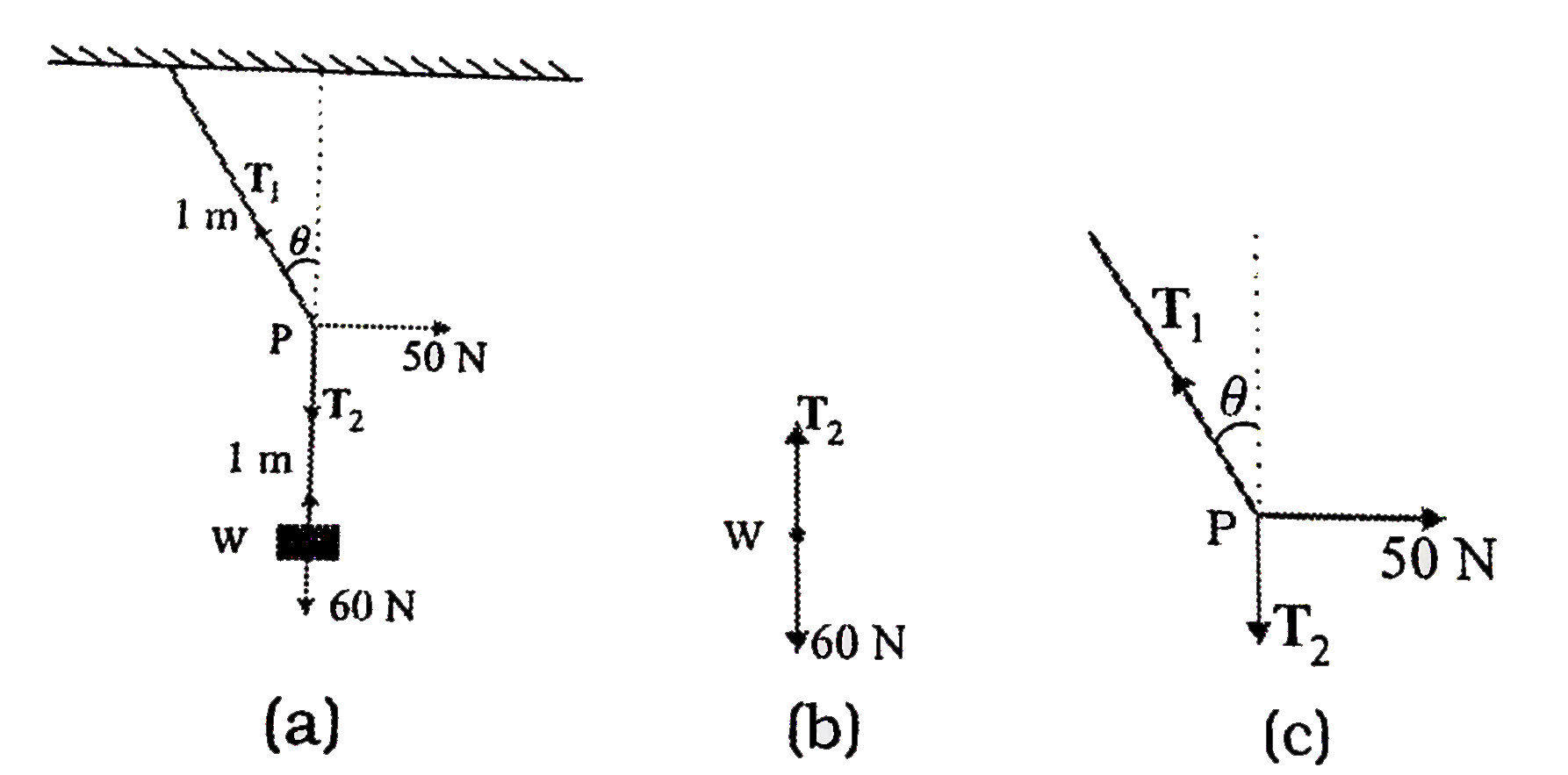
See Fig 5.8 .A mass of 6 kg is suspended...

See Fig 5.8 .A mass of 6 kg is suspended by a rope of length 2m from the ceiling . A force of 50 N in the horizontal direction is applied at the mid-point P of the rope, as shown. What is the angle the rope makes with the vertical in equilibrium ? (Take g = 10 m `s^(-2)`). Neglect the mass of the rope.

Promotional Banner

Similar Questions

Explore conceptually related problems

A mass of 6 kg is suspended by a rope of length 2 m from the ceiling. A force of 50 N in the horizontal direction is applied at the midpoint P of the rope, as shown. What is the angle the rope makes with the vertical in equilibrium ? (Take g = 10 ms-2). Neglect the mass of the rope.

A mass of 6 kg is suspended by a rope of length 2 m from the ceilling A force of 50 N in the horizontal direction is applied at the mid - point P of the rope as shown . What is the angle the rope makes with the vertical in equilibrium ? (Take = 10 ms^(-2) ) . Neglect mass of the rope .

A mass of 6 kg is suspended by a rope of length 2 m from the ceilling A force of 50 N in the horizontal direction is applied at the mid - point P of the rope as shown . What is the angle the rope makes with the vertical in equilibrium ? (Take = 10 ms^(-2) ) . Neglect mass of the rope .

A mass of 6 kg is supended by a rope of length 2 m from the ceiling. A force of 50 N in the horizontal direction is applied at the midpoint P of the rope a shown. What is the angle, the rope makes with the vertical in equilibrium? Take g= 10ms^(-2) .Neglect the mass of the rope.

A mass of 20 kg is suspended by a rope of length 2 m from a ceiling. A force of 173.2 N in the horizontal direction is applied at the midpoint of the rope as shown in Fig. What is the angle the rope makes with the horizontal in equilibrium ? Take g = 10 ms^(-2) . Neglect mass of the rope.