Home
Class 11
PHYSICS
Which of the following x-t graphs does n...

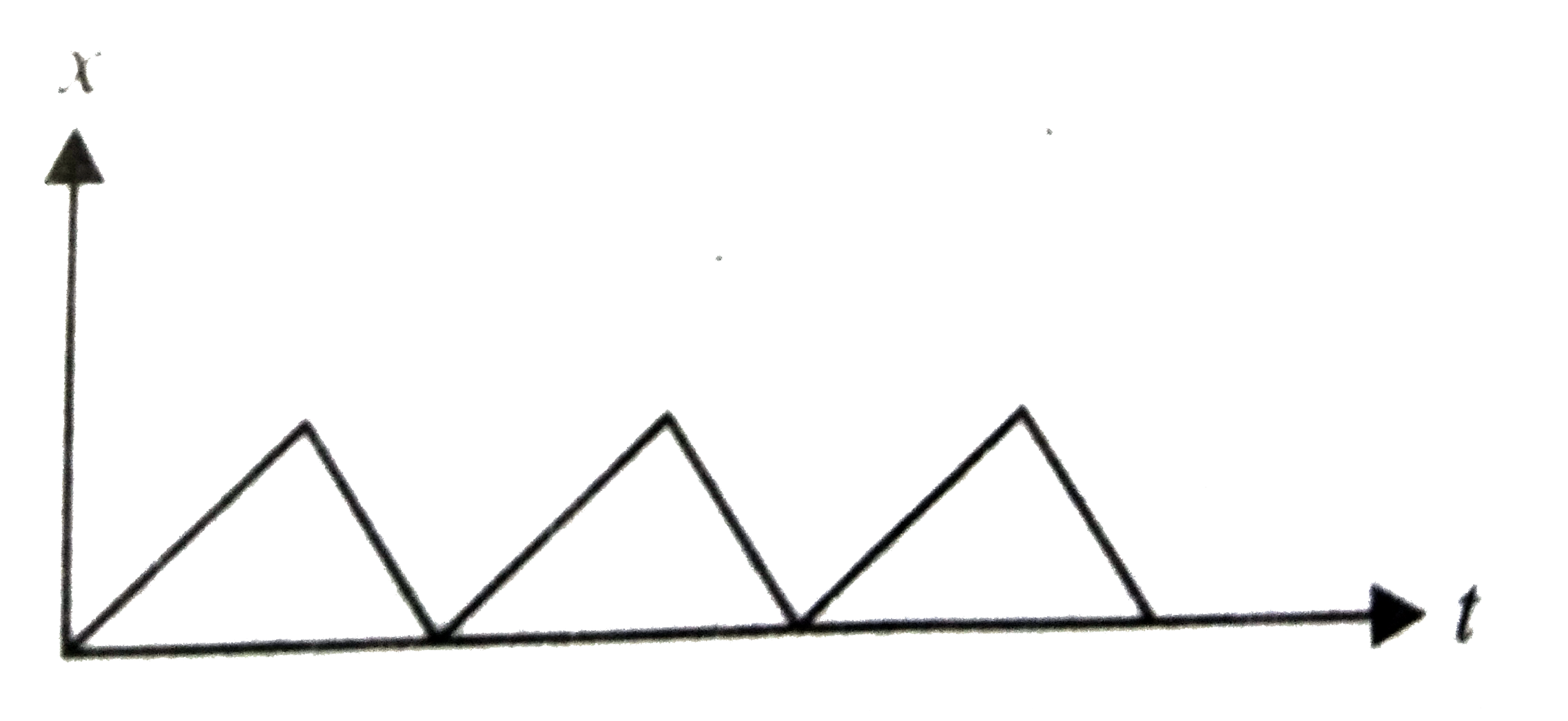
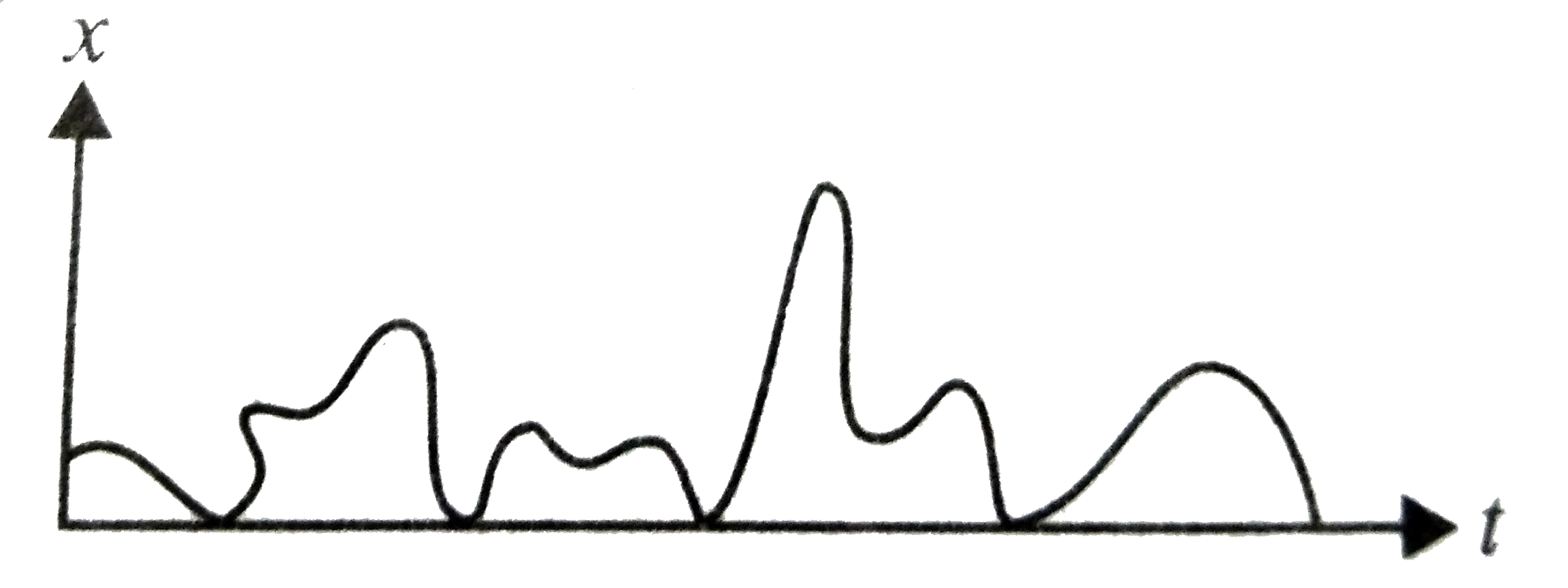
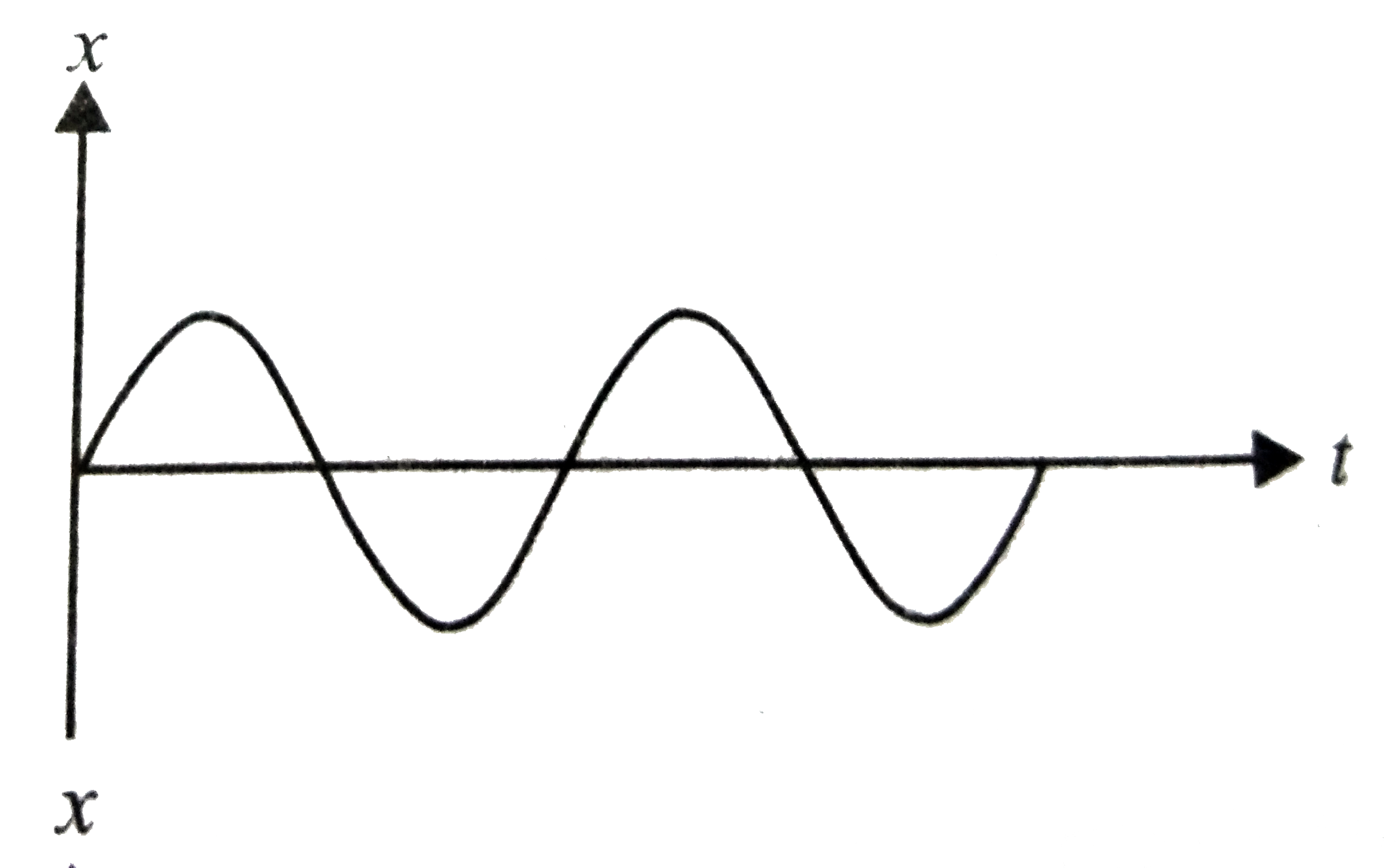
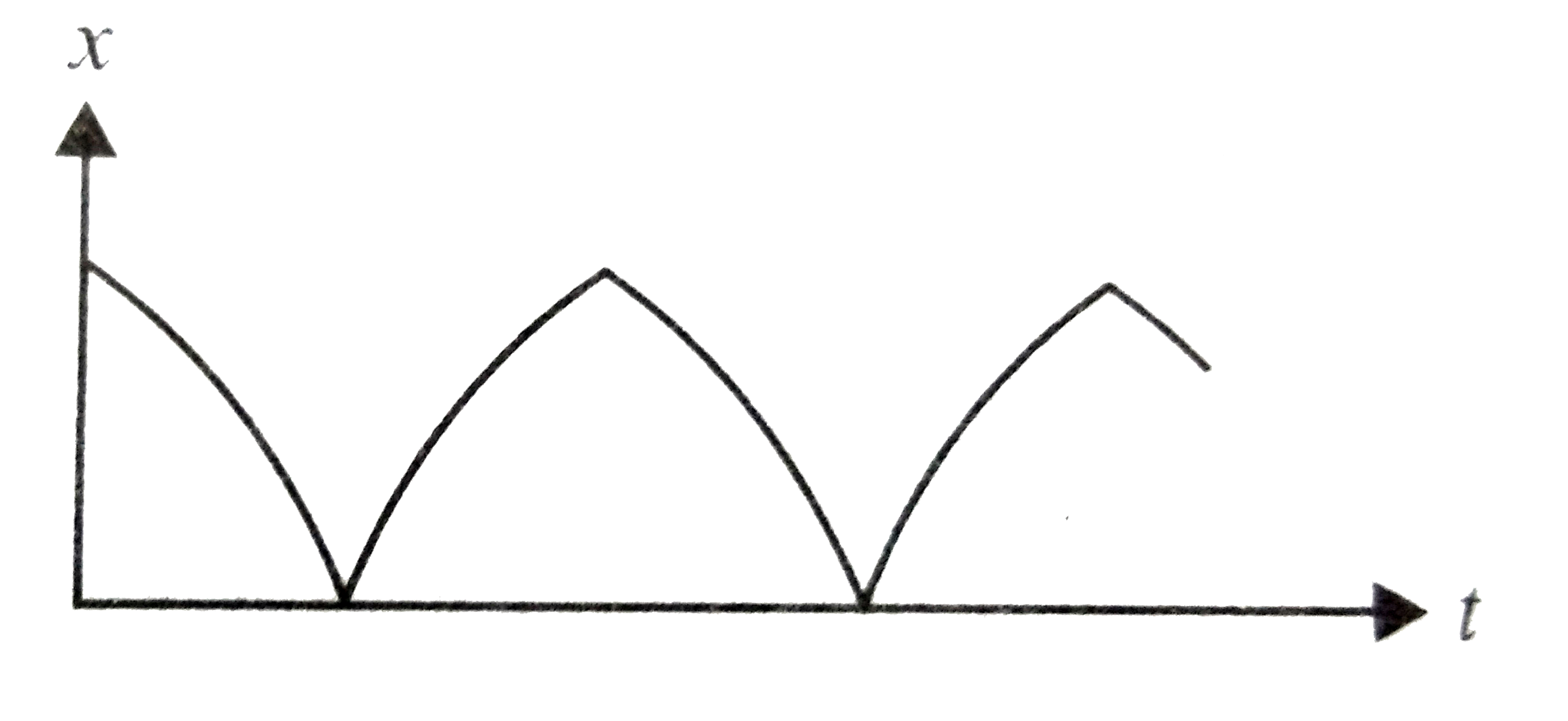
Which of the following x-t graphs does not represent periodic motion?

A

B

C

D

Text Solution

AI Generated Solution

The correct Answer is:

To determine which of the given x-t graphs does not represent periodic motion, we need to understand the characteristics of periodic motion. Periodic motion is defined as motion that repeats itself at regular intervals, known as the time period (T). ### Step-by-Step Solution: 1. **Understanding Periodic Motion**: - Periodic motion is characterized by a repeating cycle. This means that after a certain time period (T), the object returns to its original position and state. - Examples include the motion of a pendulum or a mass on a spring, where the motion is predictable and repeats at regular intervals. 2. **Analyzing the Graphs**: - We need to look closely at each graph provided in the options to see if they exhibit the characteristics of periodic motion. - A graph that represents periodic motion will show a consistent pattern that repeats over time. 3. **Identifying Non-Periodic Motion**: - If a graph shows a motion that does not repeat itself, or if the time intervals between similar positions are not consistent, then it does not represent periodic motion. - For example, a graph that shows a zigzag pattern or random fluctuations without returning to the same position at regular intervals would indicate non-periodic motion. 4. **Conclusion**: - After analyzing the graphs, we find that one of the options (let's say Option 2) shows a zigzag pattern that does not repeat itself consistently. This indicates that the motion is not periodic, as there is no fixed time period or repeating path. 5. **Final Answer**: - Therefore, the graph that does not represent periodic motion is **Option 2**.

To determine which of the given x-t graphs does not represent periodic motion, we need to understand the characteristics of periodic motion. Periodic motion is defined as motion that repeats itself at regular intervals, known as the time period (T). ### Step-by-Step Solution: 1. **Understanding Periodic Motion**: - Periodic motion is characterized by a repeating cycle. This means that after a certain time period (T), the object returns to its original position and state. - Examples include the motion of a pendulum or a mass on a spring, where the motion is predictable and repeats at regular intervals. ...
Promotional Banner

Topper's Solved these Questions

  • OSCILLATIONS

    NCERT FINGERTIPS|Exercise Simple Harmonic Motion|17 Videos
  • OSCILLATIONS

    NCERT FINGERTIPS|Exercise MCQs|2 Videos
  • MOTION IN A STRAIGHT LINE

    NCERT FINGERTIPS|Exercise Assertion And Reason|15 Videos
  • PHYSICAL WORLD

    NCERT FINGERTIPS|Exercise Assertion And Reason|10 Videos

Similar Questions

Explore conceptually related problems

Which of the following velocity-time graphs does not represent motion in one dimension?

Which of the following pairs of graphs does not represent the motion of he same particle in the same interval (curves are parabollic) :-

A particle is projected vertically upwards with a velocity v. It returns to the ground in time T. Which of the following graphs correctly represents the motion.

Which of the following graphs cannot represent one dimensional motion of a particle?

A particle is thrown vertically upwards with a velocity v . It returns to the ground in time T. which of the following graphs correctly represents the motion ?

Which of the following graphs best represents the motion of a raindrop?

Which of the following velocity-time graphs represent uniform motion

NCERT FINGERTIPS-OSCILLATIONS -Assertion And Reason
  1. Which of the following x-t graphs does not represent periodic motion?

    Text Solution

    |

  2. Assertion: The motion of the earth around the sun is perriodic but not...

    Text Solution

    |

  3. Assertion: A combination of two simple harmonic motions with a arbitra...

    Text Solution

    |

  4. Assertion: The motion of a simple pendulum is simple harmonic for all ...

    Text Solution

    |

  5. Assertion: Simple harmonic motion is the projection of uniform circula...

    Text Solution

    |

  6. Assertion: The graph of total energy of a particle in SHM with respect...

    Text Solution

    |

  7. Assertion: If the amplitude of a simple harmonic oscillator is doubled...

    Text Solution

    |

  8. Assertion: Every periodic motion is not simple harmonic motion. Reas...

    Text Solution

    |

  9. Assertion: A block of small m attached to a stiff spring will have lar...

    Text Solution

    |

  10. Assertion: In damped oscillation, the energy of the system is dissipat...

    Text Solution

    |

  11. Assertion: In forced oscillations, th steady state motion of the parti...

    Text Solution

    |

  12. Assertion: An earthquake will not cause uniform damage to all building...

    Text Solution

    |

  13. Assertion: A child in a garden swing periodically presses his feet aga...

    Text Solution

    |

  14. Assertion: The skill in swinging to greater heights lies in the synchr...

    Text Solution

    |

  15. Assertion: In the ideal case of zero damping, the amplitude of simpl h...

    Text Solution

    |

  16. Assertion : The amplitude of oscillation can never be infinite. lt br...

    Text Solution

    |
