

Home
Class 11
PHYSICS
If the velocity v of particle moving alo...

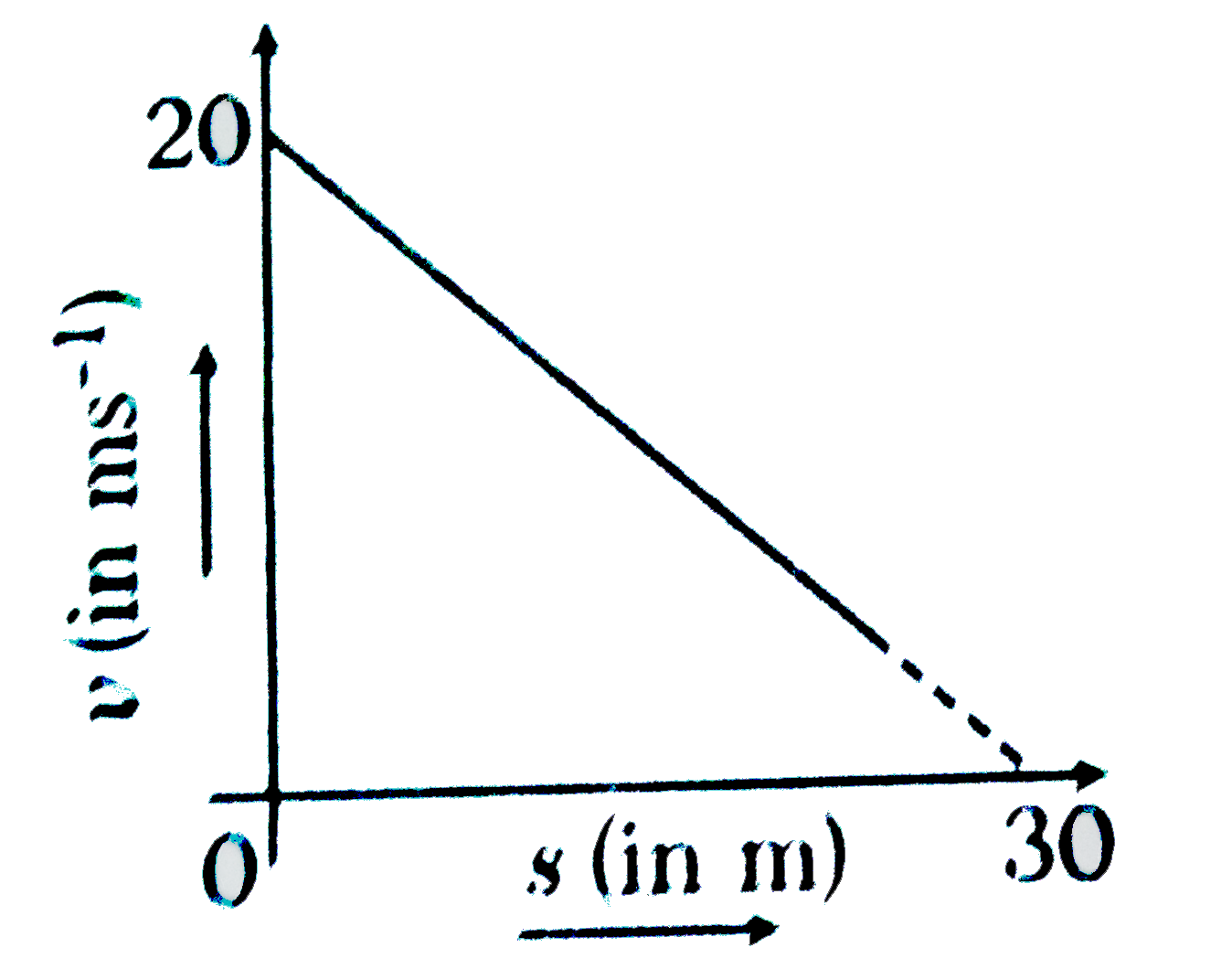
If the velocity v of particle moving along a straight line decreases linearly with its displacement s from `20 ms^(-1)` to a value approaching zero at s = 30 m, then acceleration of the particle at v=10m is

Promotional Banner

Similar Questions

Explore conceptually related problems

If the velocity v of particle moving along a straight line decreases linearly with its displacement s from 20 ms^(-1) to a value approaching zero at s = 30 m, then acceleration of the particle at v=10ms^(-1) is

If the velocity v of particle moving along a straight line decreases linearly with its displacement s from 20 ms^(-1) to a value approaching zero at s = 30 m, then acceleration of the particle at v=10ms^(-1) is

If the velocity v of a particle moving along a straight line decreases linearly with its displacement from 20 m//s to a value approaching zero at s = 30 m, determine the acceleration of the particle when s = 15 m.

If the velocity v of a particle moving along a straight line decreases linearly with its displacement from 20 m//s to a value approaching zero at s = 30 m, determine the acceleration of the particle when s = 15 m.

If the velocity v of a particle moving along a straight line decreases linearly with its position coordinates s from 50m/s to a value approaching zero at = 100 m, the time it takes to reach the 100 m position will be:

If the velocity v of a particle moving along a straight line decreases linearly with its position coordinates s from 50m/s to a value approaching zero at = 100 m, the time it takes to reach the 100 m position will be:

The velocity of a particle moving in a straight line is decreasing at the rate of 3 m//s per metre of displacement at an instant when the velocity is 10 m//s. Determine the acceleration of the particle at this instant.

The velocity of a particle moving in a straight line is decreasing at the rate of 3 m//s per metre of displacement at an instant when the velocity is 10 m//s. Determine the acceleration of the particle at this instant.

If the velocity v of a particle moving along a straight line and its distance s from a fixed point on the line are related by v^(2)=a^(2)+s^(2) , then its acceleration equals

If the velocity v of a particle moving along a straight line and its distance s from a fixed point on the line are related by v^(2)=a^(2)+s^(2) , then its acceleration equals