Home
Class 11
PHYSICS
Figure shows that particle A is projecte...

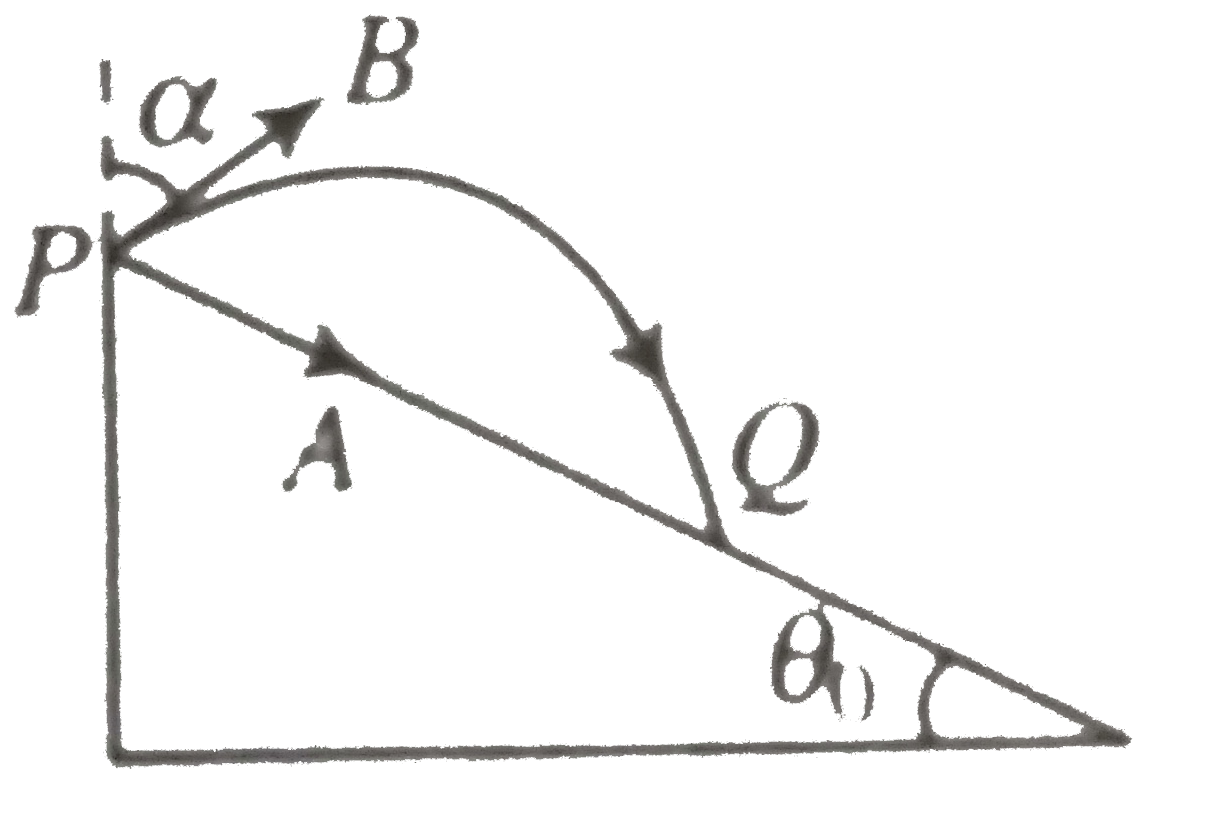
Figure shows that particle A is projected from point P with velocity u along the plane and simultaneously another particle B with velocity v at an angle `alpha` with vertical. The particles collide at point Q on the plane. Then

A

`v sin (alpha - theta_0) = u`

B

`v cos (alpha-theta_0) =u`

C

`v = u`

D

None of these

Text Solution

Verified by Experts

The correct Answer is:
A

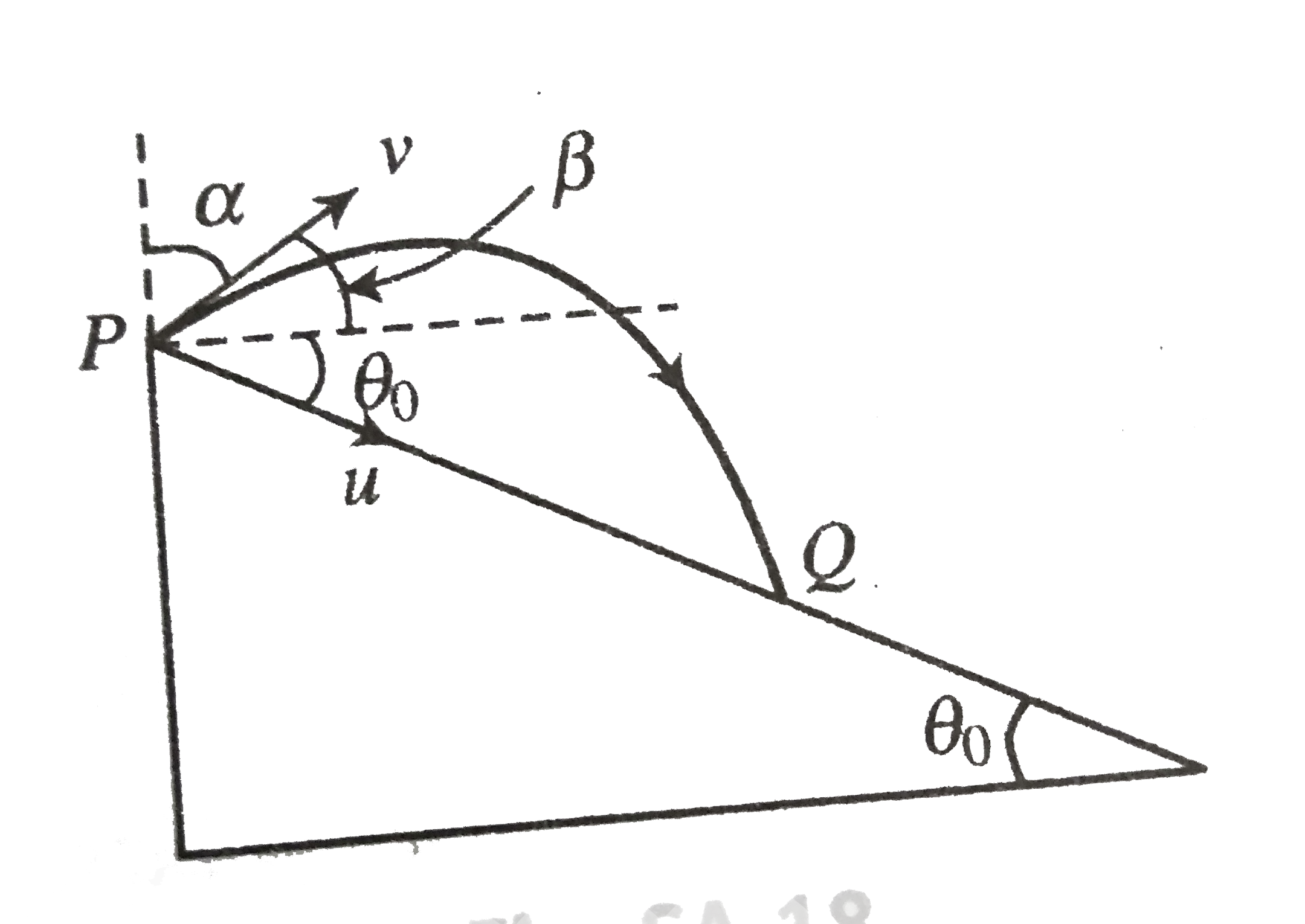
a. If the particles collide at Q,
it means they travel same
displacement along the plane
in same time. So their velocity
components along the plane
should be same.

`v cos (beta+theta_0) = u`
and `beta = 90^@ - alpha`
Solve to get `v sin (alpha-theta_0) =u`.
Promotional Banner

Topper's Solved these Questions

  • MISCELLANEOUS KINEMATICS

    CENGAGE PHYSICS|Exercise Multiple Correct Answer Type|26 Videos
  • MISCELLANEOUS KINEMATICS

    CENGAGE PHYSICS|Exercise Linked Comprehension Type|35 Videos
  • LINEAR AND ANGULAR SIMPLE HARMONIC MOTION

    CENGAGE PHYSICS|Exercise Multiple Correct Answer Type|9 Videos
  • MISCELLANEOUS VOLUME 2

    CENGAGE PHYSICS|Exercise INTEGER_TYPE|10 Videos

Similar Questions

Explore conceptually related problems

A particle is projected from a point P with a velocity v at an angle theta with horizontal. At a certain point Q it moves at right angles to its initial direction. Then

A particle of charge q is projected from point P with velocity v as shown. Choose the correct statement from the following.

A particle is projected from point P with velocity 5sqrt(2)m//s perpendicular to the surface of a hollow right angle cone whose axis is vertical. It collides at Q normally. Find the time of the flight of the particle.

A particle P is projected from a point on the surface of smooth inclined plane (see figure). Simultaneously another particle Q is released on the smooth inclined plane from the same position. P and Q collide after t=4 . The speed of projection of P is

A particle of mass 'm' is projected from ground with velocity u making angle theta with the vertical. The de-Broglie wave length of the particle at the highest point is:

A particle is projected from a point O with a velocity u at an angle alpha (upwards) to the horizontal. At a certain point P it moves at right angles to its initial direction. It follows that:

A particle of mass m is projected form ground with velocity u making angle theta with the vertical. The de Broglie wavelength of the particle at the highest point is

A particle is given velocity v_0 at point A as shown in the figure. Find the speed of particle at point B,C and D

A particle is project d from point A with velocity u at an angle alpha with horizontal. In its parabolic path, at point P the particle is moving at right angles to its initial direction of projection. Its velocity at P is:

A particle is projected from a point A with velocity sqrt(2)u an angle of 45^(@) with horizontal as shown in figure. It strikes the plane BC at right angles. The velocity of the particle at the time of collision is

