Text Solution
Verified by Experts



Topper's Solved these Questions
MAGNETISM AND MATTER
VIKRAM PUBLICATION ( ANDHRA PUBLICATION)|Exercise Long Answer Questions|6 VideosMAGNETISM AND MATTER
VIKRAM PUBLICATION ( ANDHRA PUBLICATION)|Exercise Textual Exercises|27 VideosMAGNETISM AND MATTER
VIKRAM PUBLICATION ( ANDHRA PUBLICATION)|Exercise Very Short Answer Questions|20 VideosELECTROSTATIC POTENTIAL AND CAPACITANCE
VIKRAM PUBLICATION ( ANDHRA PUBLICATION)|Exercise SAQs|4 VideosMOVING CHARGES AND MAGNETISHM
VIKRAM PUBLICATION ( ANDHRA PUBLICATION)|Exercise ADDITIONAL EXERCISES|26 Videos
Similar Questions
Explore conceptually related problems
VIKRAM PUBLICATION ( ANDHRA PUBLICATION)-MAGNETISM AND MATTER-Short Answer Questions
- Derive an expression for the axial field of a solenoid of radius ''a''...
Text Solution
|
- The force between two magnet poles separated by a distance 'd' in air ...
Text Solution
|
- Compare the properties of para, dia and ferromagnetic substances.
Text Solution
|
- Explain the elements of the Earth's magnetic field and draw a sketch s...
Text Solution
|
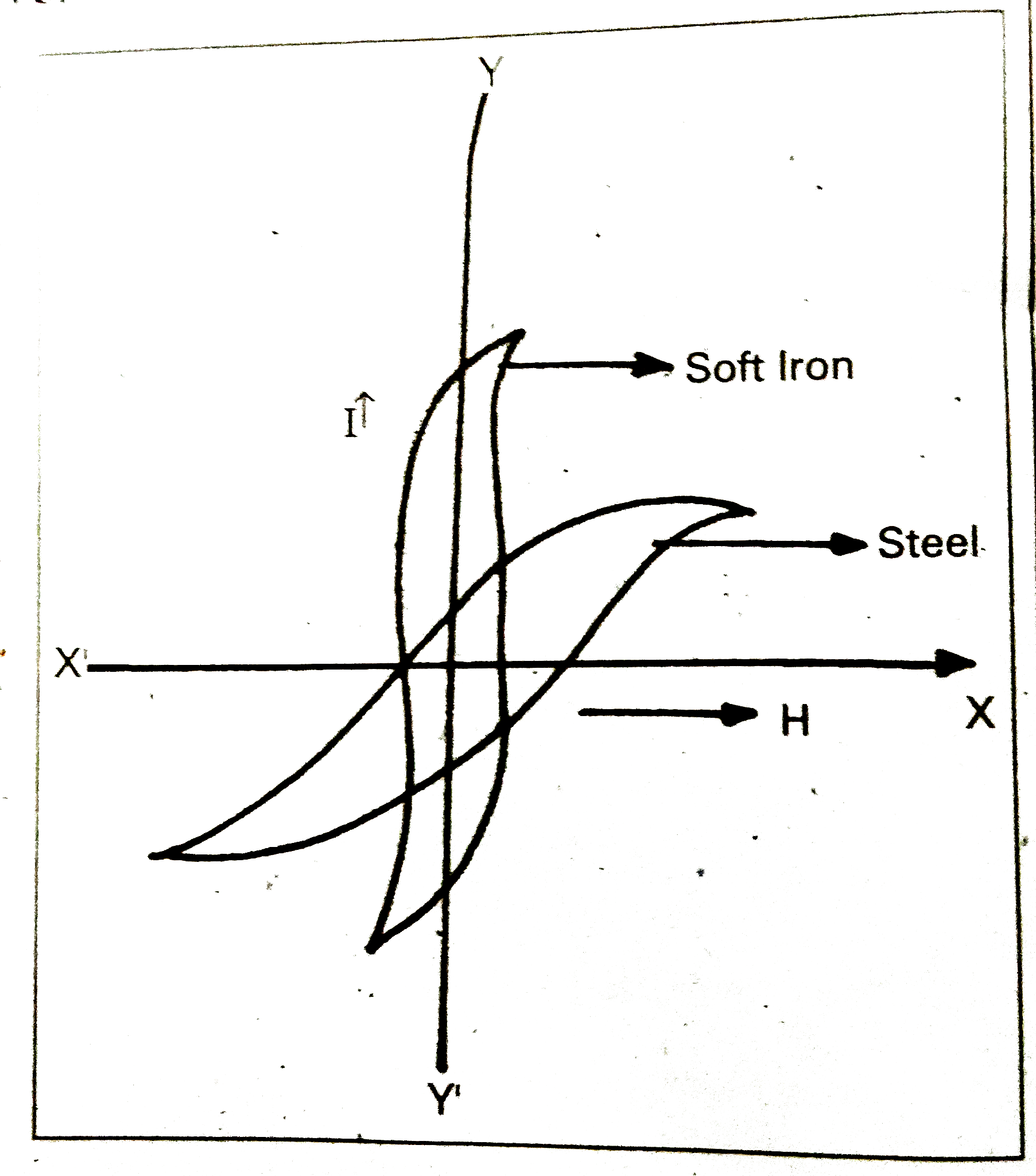
- Define retentivity and coercivity. Draw the hysteresis curve for soft ...
Text Solution
|
- If B is the magnetic field produced at the centre of a circular coil o...
Text Solution
|
- If the number of turns of a solenoid is doubled, keeping the other fac...
Text Solution
|
- Derive an expression for magnetic field induction on the equatorial li...
Text Solution
|
- Prove that a bar magnet and a solenoid produce similar fields.
Text Solution
|
- What are ferromagnetic materials ? Give examples. What happens to a fe...
Text Solution
|