Home
Class 12
PHYSICS
An electron traveling in a uniform elect...

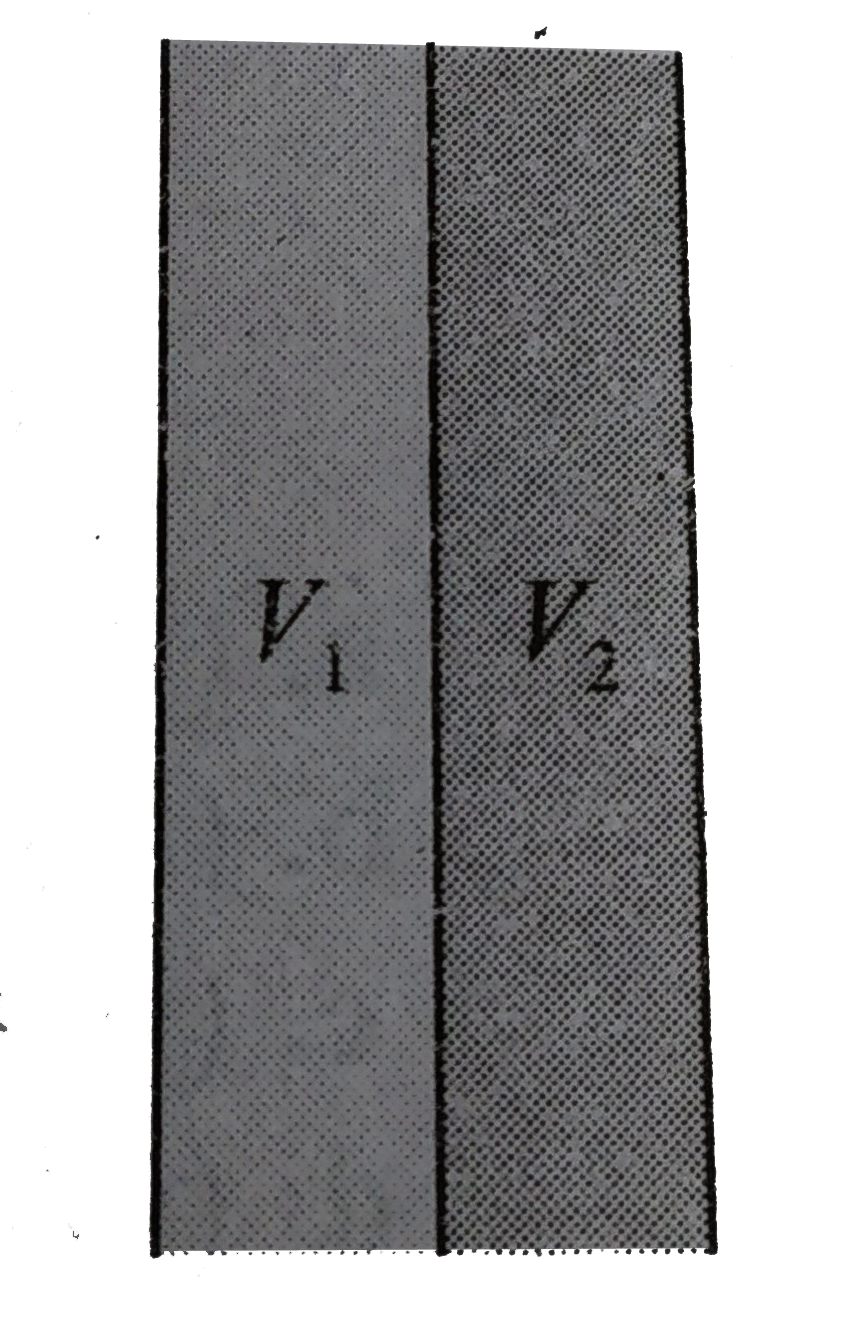
An electron traveling in a uniform electric field passes from a region of potential `V_1` to a region of higher potential `V_2`. Then

A

no change takes place in velocity component parallel to interface of two regions.

B

direction of its motion remains unchanged but speed increases

C

direction of its motion may charge but spped must be decreased

D

decrease in kinetic energy is proportional to `sqrt(V_2-V_1)`.

Text Solution

Verified by Experts

The correct Answer is:
A

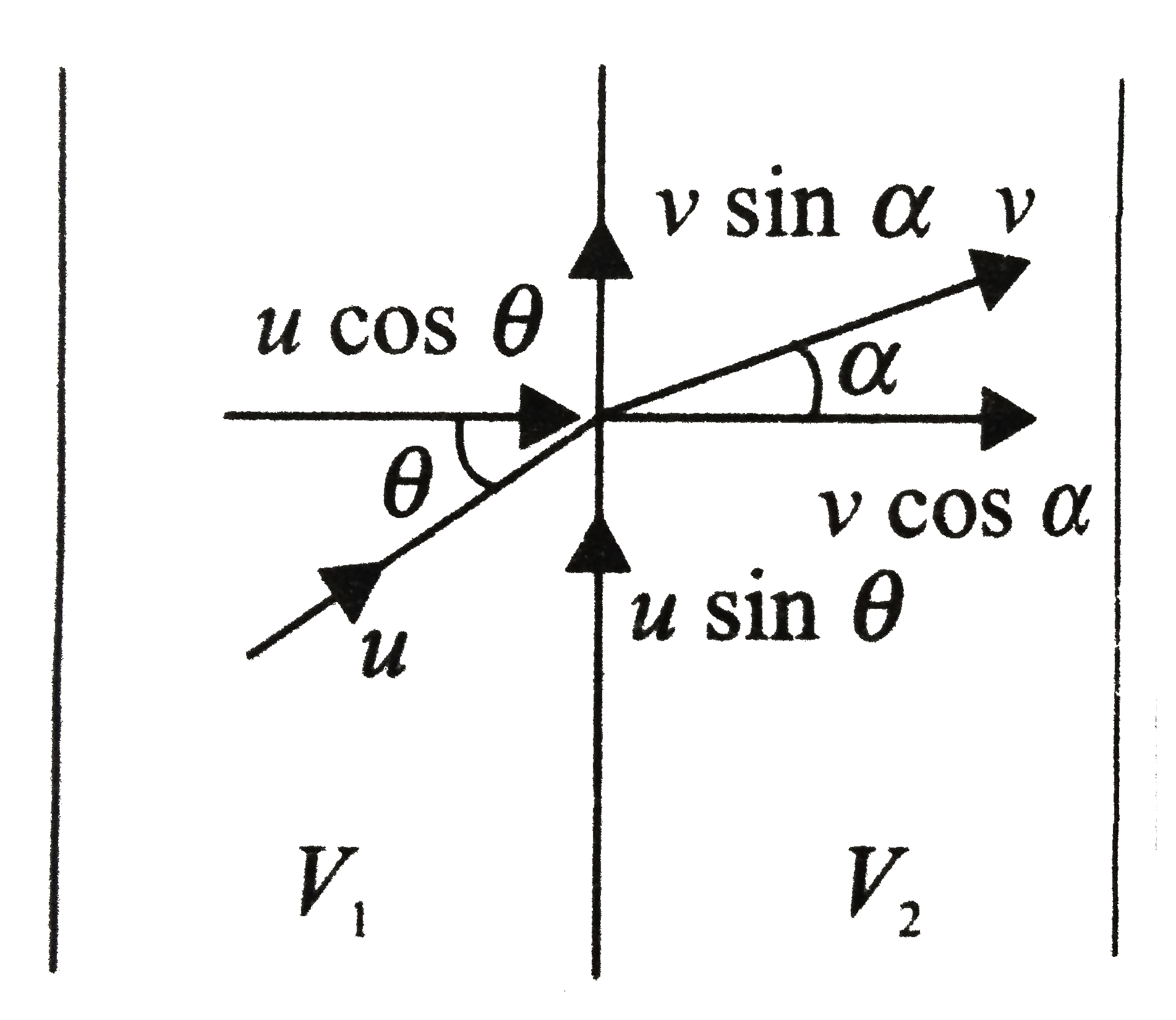
a. As the electron is going from low potential to high potential, its potential energy decreases, which results in increase in `KE`. Hence speed definitely increases. Direction of motion may or may not change depending on the angle at which it enters the other region. If `theta` is zero, them direction of motion remains same.
`vsina=usintheta`, but `v cosagtucostheta`
so, `alttheta, v=u`
Promotional Banner

Topper's Solved these Questions

  • MISCELLANEOUS VOLUME 3

    CENGAGE PHYSICS|Exercise Multiple Correct Answer type|109 Videos
  • MISCELLANEOUS VOLUME 3

    CENGAGE PHYSICS|Exercise Assertion and Reason Type|8 Videos
  • MECHANICAL PROPERTIES OF SOLIDS

    CENGAGE PHYSICS|Exercise Question Bank|4 Videos
  • MISCELLANEOUS VOLUME 5

    CENGAGE PHYSICS|Exercise Integer|12 Videos

Similar Questions

Explore conceptually related problems

Assertion: In parallel combination of electrical appliances, total power consum ption is equal to the sum of the powers of the indivisual appliances. Reason : Electrons move away from a region of lower potential to a region of higher potential.

Free electrons travel to region of higher potential or lower potential.

Do free electrons travel to region of higher potential or lower potential?

Two electrons are moving with the same speed v. One electron enters a region of uniform electric field while the other enters a region of uniform magnetic field,then after sometime if the de-Broglie wavelenths of the two are lambda_(1) and lambda_(2) then :

A graph of the x-component of the electric field as a function of x in a region of space is shown in figure. The y- and z-components of the electric field are zero in this region. If the electric potential is 10 V at the origin, then the potential at x = 2.0 m is

Assertion: A small electric dipole is moved translatonally from higher potential to lower potential in uniform electric field. Work done by electric is positive. Reason: When a positive charge is moved from higher potential to lower potential, work done by electric field positive.

A uniform magnetic field B and a uniform electric field E act in a common region. An electron is entering this region of space. The correct arrangement for it to escape undeviated is

