Home
Class 11
CHEMISTRY
In which of the following triatomic mole...

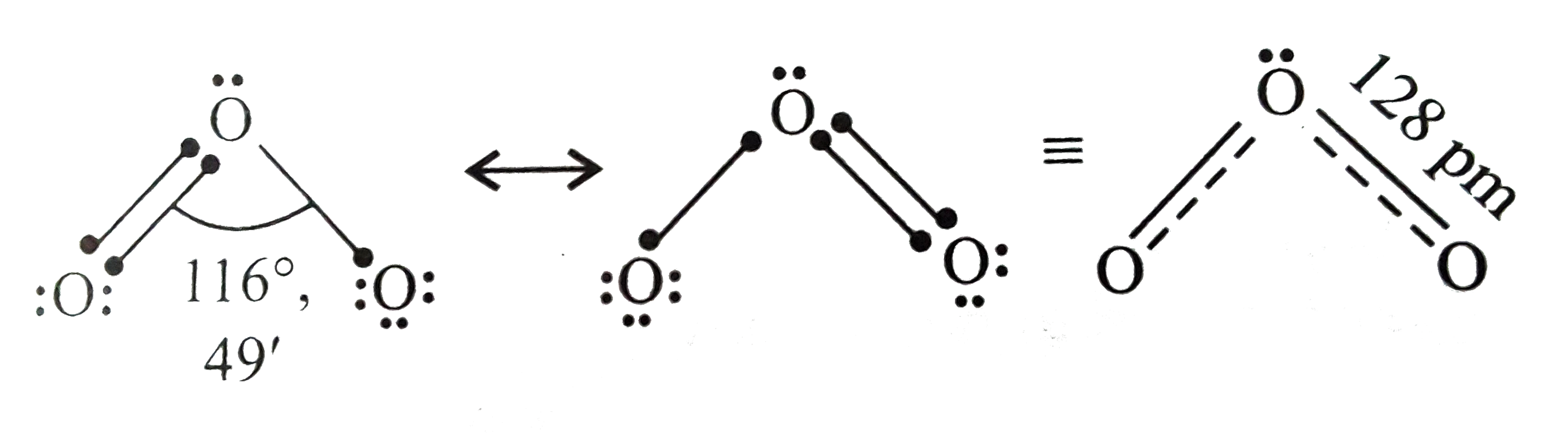
In which of the following triatomic molecules, the observed bond angle is `116^(@), 49'` ?
a. `H_(2)O` b. `OF_(2)` c. `CO_(2)` d. `O_(3)`
II. In which of the following molecules, bond angle is the maximum?
a. `BeBr_(2)` b. `H_(2)O` c. `H_(2)S` d. `CH_(4)`
III. In which of the following molecules, bond angle between two adjacent covalent bonds is smallest?
a. `Be H_(2)` b. `BF_(3)` c. `NH_(3)` d. `C Cl_(4)`
IV. Bond angle `(H-S-H)` in `H_(2)S` is close to
a. `109^(@)` b. `107^(@)` c. `105^(@)` d. `90^(@)`
V. The hybridisation of B in `BF_(3)` is `sp^(2)`. The bond angle in `BF_(4)^(ɵ)` will be
a. `107^(@)` b. `109^(@)` c. `120^(@)` c. `120^(@)` d. `180^(@)`
VI. Which of the following molecules contains a bond angle which is smaller than the bond angle in `CH_(4)`?
a. `SF_(6)` b. `SO_(2)` c. `O_(3)` d. `overset(o+)(N)H_(4)`

Text Solution

Verified by Experts
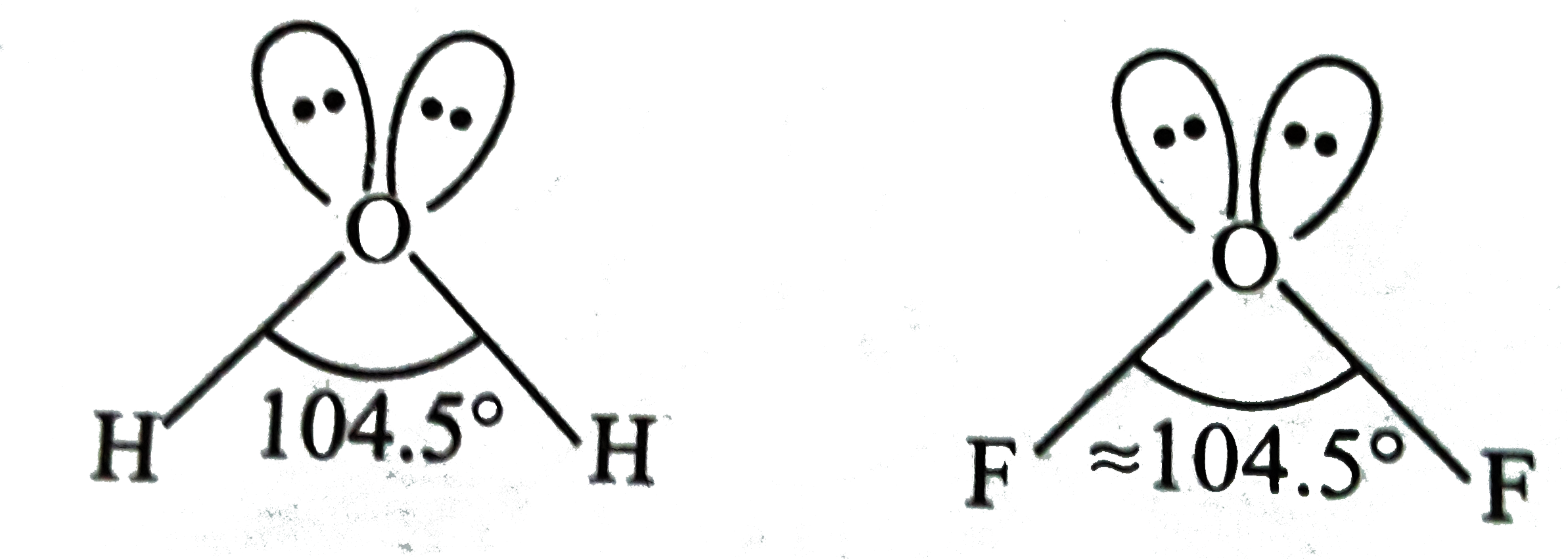
for (a) and (b): `H_(2) underset(..)overset(..)(O)` and `underset(..)overset(..)(O) F_(2)` both are molecules in which O-atom is `sp^(3)` hybridised. Due to `(lp-lp), (lp-bp)` and `(bp-bp)` repulsion, the bond angle is close to `104^(@)`.

c. In `CO_(2), C` is sp hybridised and it is linear molecule with bond angle of `180^(@)`.

d. Only in `O_(3)`, bond angle is close to `116^(@) 49'`, because the central O atom is `sp^(2)` hybridised. Hence the answer is (d).

II (a)
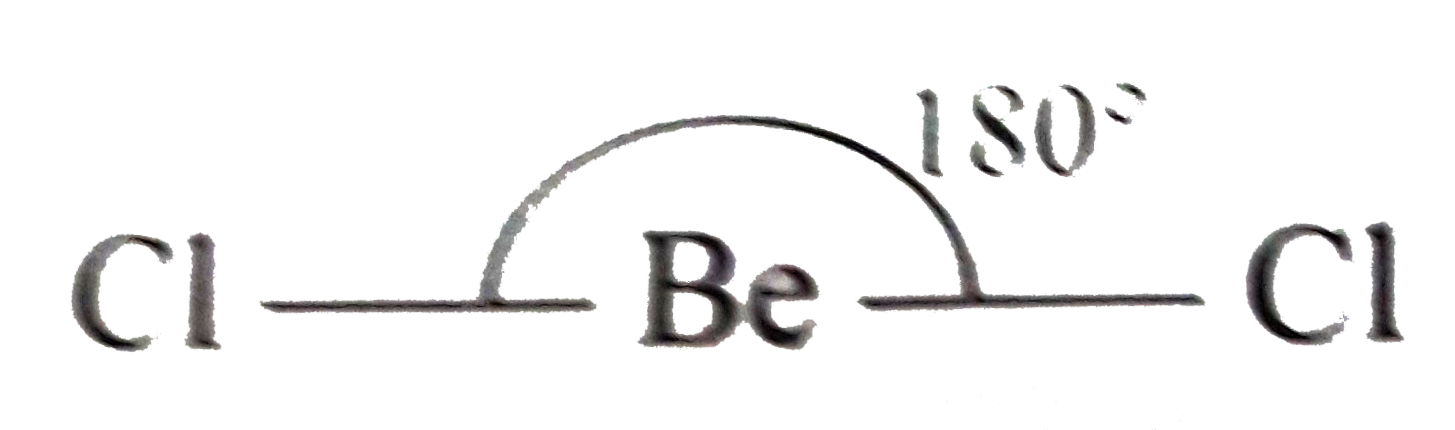
a. In `BeCl_(2), Be` is sp hybridised and it is linear molecule so the bond angle is `=180^(@)`.

b. In `H_(2)overset(..)O:, O` is `sp^(3)` hybridised and due to repulsion between `(lp-lp), (lp-bp)` and `(bp-bp)`, the bond angle is `104.5^(@)`.
c. In `H_(2)overset(..)S:, S` is `sp^(3)` hybridised but according to rule (i), the bond angle is `92.3^(@)`.
d. In `CH_(4), C` is `sp^(3)` hybridised, since there is no long pair of electrons, thus only `(bp-bp)` repulsions. Hence the bond angle is `109^(@) 28'`.
Thus the answer is (a).
III (c)
a. Be `H_(2)` is linear, the bond angle is `180^(@)`.
b. `BF_(3)` is trigonal planar, the bond angle is `120^(@)`.
c. In `overset(..)NH_(3), N` is `sp^(3)` hybridised and due to greater repulsion between `(lp-bp)` and `(bp-bp)` the bond angle is reduced to `107^(@)`.
d. In `C Cl_(4), C` is `sp^(3)` hybridised, the bond angle is `109^(@)28'` as explaines above for `CH_(4)`.
IV (d) : Refer to Section 1.17, Point 3(a).
V (b): In `BF_(4)^(ɵ), B` is `sp^(3)` hybrdised and the bond angle is `109^(@)28'`.
VI (a)
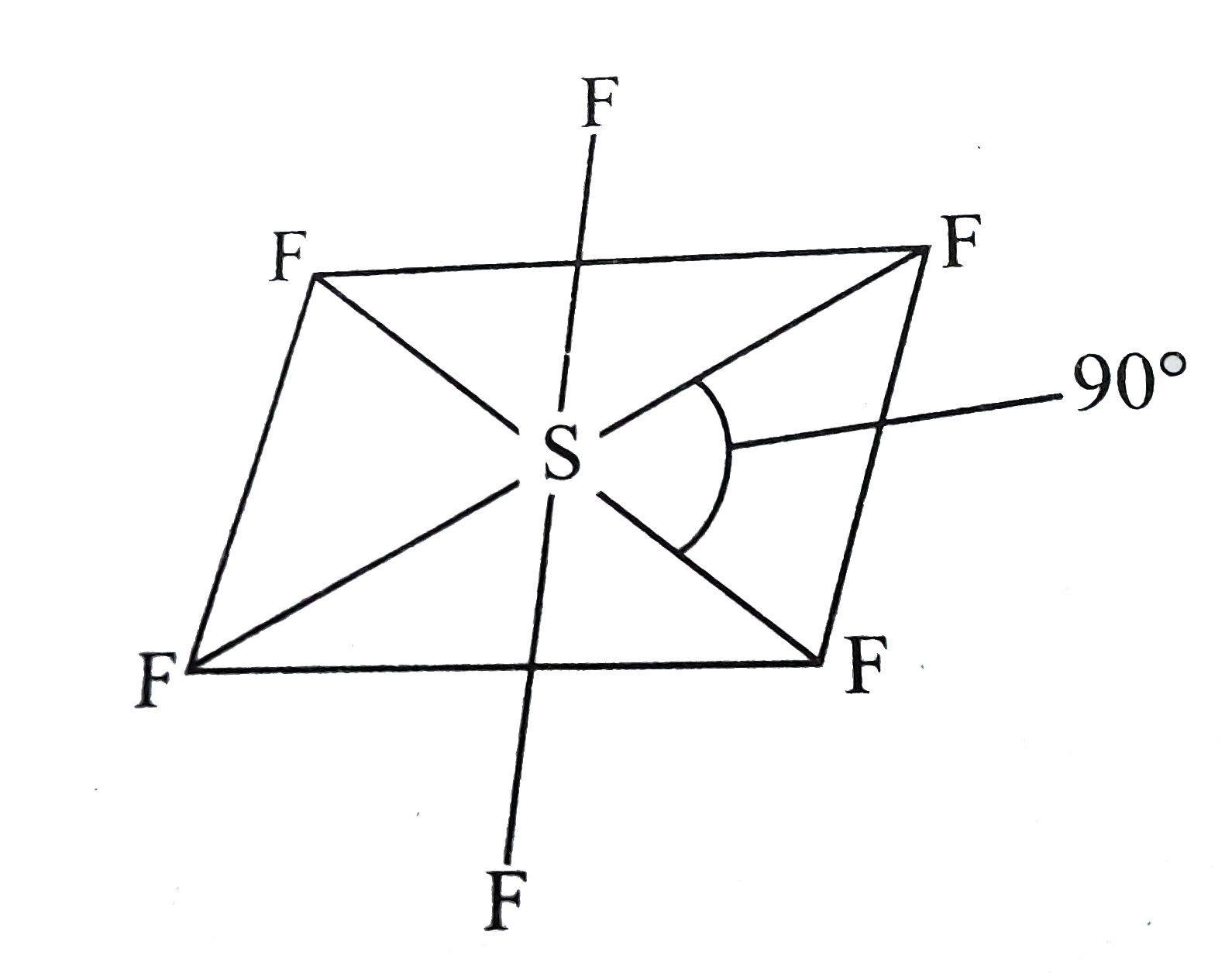
a. In `SF_(6), S` is `sp^(3)d^(2)` hybridised having octahedral shape, each bond angle is `90^(@)`.

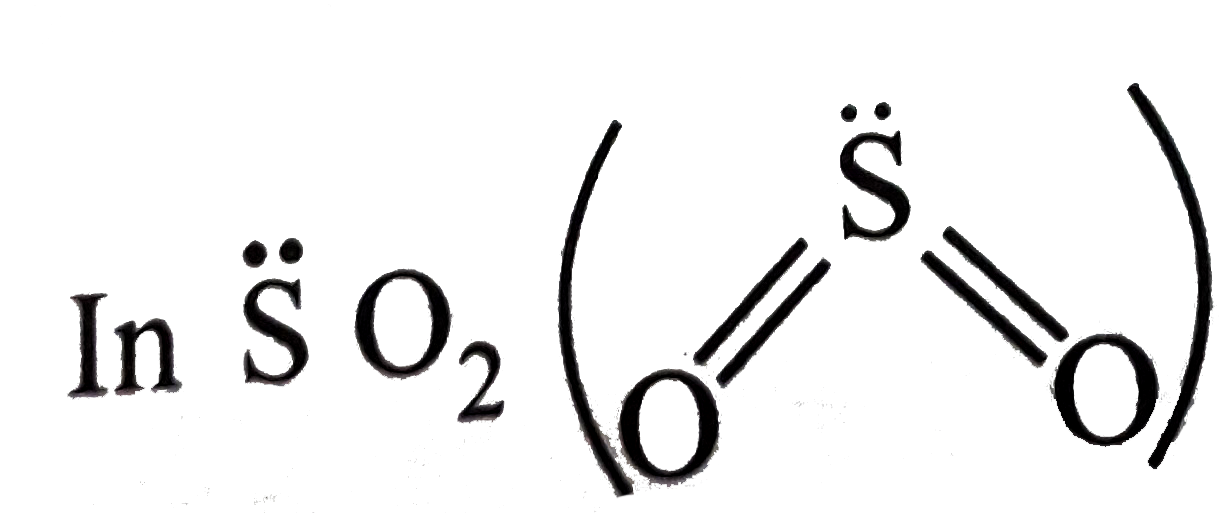
In `overset(..)S O_(2)` , S is `sp^(2)` hydridised but due to greater repulsion between `(lp-bp)` and `(bp-bp)`, the angle is reduced to `118^(@)`.

c. `O_(3)` is `sp^(2)` hybridised and the bond angle is `116^(@)` as explained above in Illustraction 1.54 (I) (d).
d. `overset(o+)NH_(4)` is `sp^(3)` hybridesied, since due to the adsence of lone pair electrons on N atom, thus only `(bp-bp)` repulsions, so bond angle is `109^(@) 28'`.
Hence the answer is (a).
Promotional Banner

Topper's Solved these Questions

  • PERIODIC CLASSIFICATION OF ELEMENTS AND GENERAL INORGANIC CHEMISTRY

    CENGAGE CHEMISTRY|Exercise Solved Examples|34 Videos
  • PERIODIC CLASSIFICATION OF ELEMENTS AND GENERAL INORGANIC CHEMISTRY

    CENGAGE CHEMISTRY|Exercise Ex 1.1|14 Videos
  • P-BLOCK GROUP 14 - CARBON FAMILY

    CENGAGE CHEMISTRY|Exercise Exercises Archives (Subjective)|9 Videos
  • PURIFICATION OF ORGANIC COMPOUNDS AND QUALITATIVE AND QUANTITATIVE ANALYSIS

    CENGAGE CHEMISTRY|Exercise Assertion Reasoning Type|5 Videos

Similar Questions

Explore conceptually related problems

The O-O-H bond angle in H_(2)O_(2) is ? a) 106^(@) b) 109^(@)28' c) 120^(@) d) 101.9^(@)

Why H-S-H bond angle in H_(2)S is smaller than H-O-H bond angle in H_(2)O ?

Why is the H-O-H bond angle in H_(2)O smaller than H-N-H bond angle in NH_(3) ?

The angle between two covalent bonds is maximum in …….. (CH_(4),H_(2)O,CO_(2) )

Which of the following molecules have both covalent and coordinate bonds ? a) O_(3) b) N_(2)O c) NH_(4)^(+) d) H_(2)O

Bond angle in H_(2)O is

The angle between two covalent bonds is maximum for (CH_(4), H_(2)O, CO_(2)) "______" .