Home
Class 11
CHEMISTRY
Write electron dot and line structure fo...

Write electron dot and line structure for
(a) `SeO_(3)^(2-)` ,(b) `Li_(3)PO_(4)` ( c ) `CIO_(2)^(Θ)` (d) `COCI_(2)`
(e) `H_(2)CO`
(f) `C_(2)H_(2)` (g) `HCO_(2)H` .

Text Solution

Verified by Experts
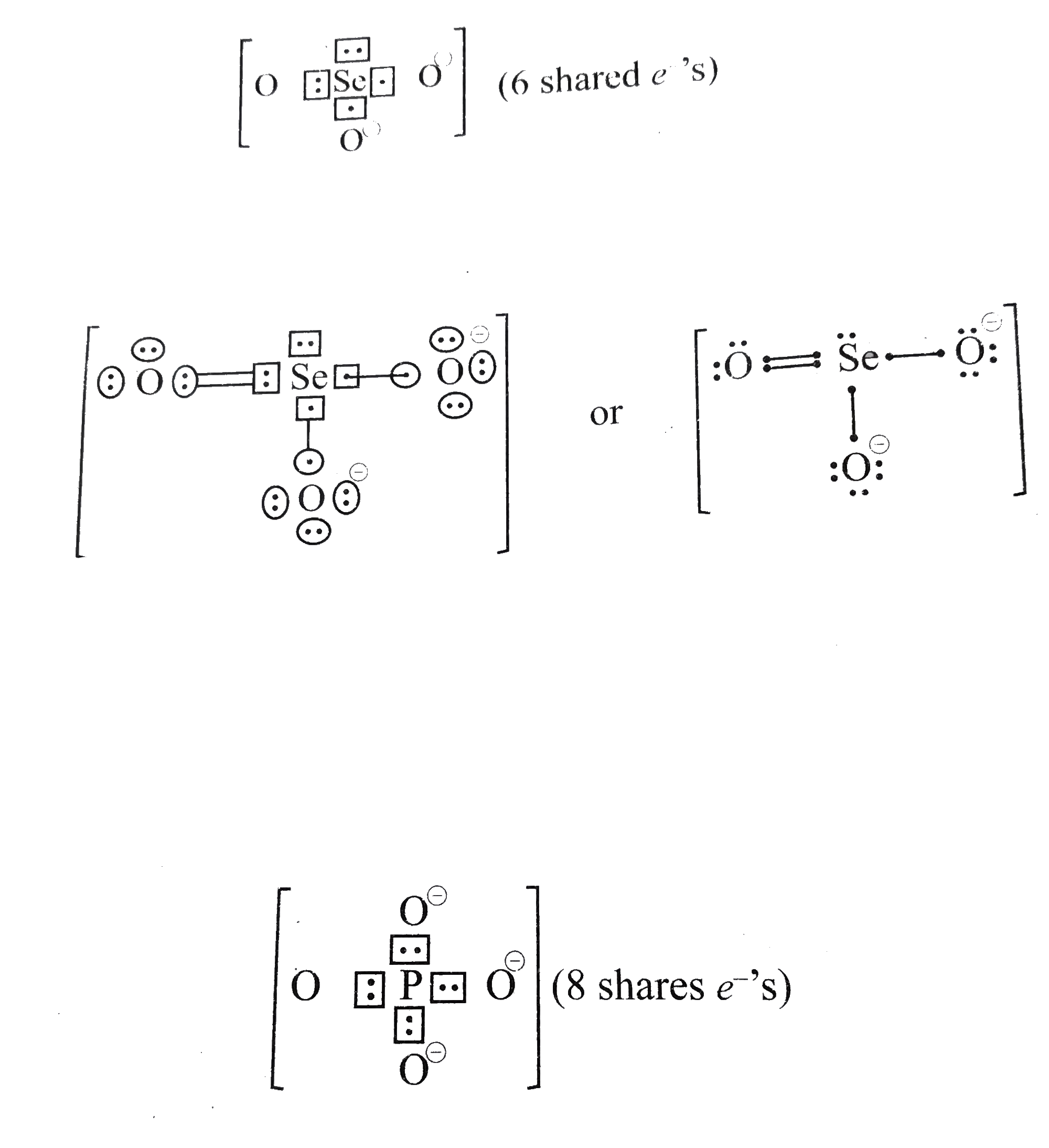
(i) `V` (Total number of valence `e^(-')s`) `=6 +3 xx 6 +2 = 26 e^(-')s`
(ii) `O` (Total number of `e^(-')s` for octet) `= 8 + 3 xx 8 = 32 e^(-')s`
(iii) `S` (Shared `e^(-')s) = ( O-V) = (32 -26) =6 e^(-')s`
(iv) Skeletal structure with 6 shared `e^(-')s`
(v) `U` (unshared `e^(-')s ) = (V -S) = (26 -6) =20 e^(-')s`
(vi) Add 20 unshared `e^(-')s` to complete the Lewis dot structure
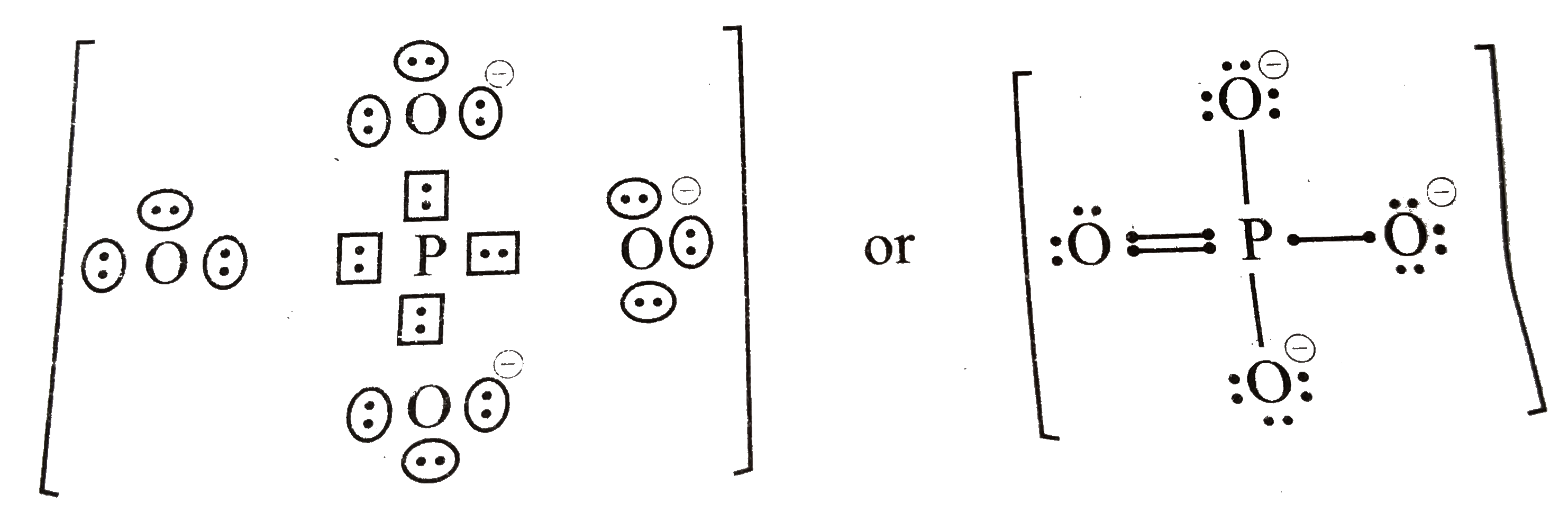
(b) (i) `V =5 + 4 xx 6 + 3 = 32 e^(-')s`
(ii) `O = 8 + 4 xx 8 = 40 e^(-')s`
(iii) `S =(O -V) = (40 -32) = 8 e^(-')s`
(iv) Skeletal structure with 8 shared `e^(-')s`
(v) `U = (V =S) = (32 -8) = 24 e^(-')s`
(vi) Add 24 `e^(-')s` to complete the Lewis dot structure
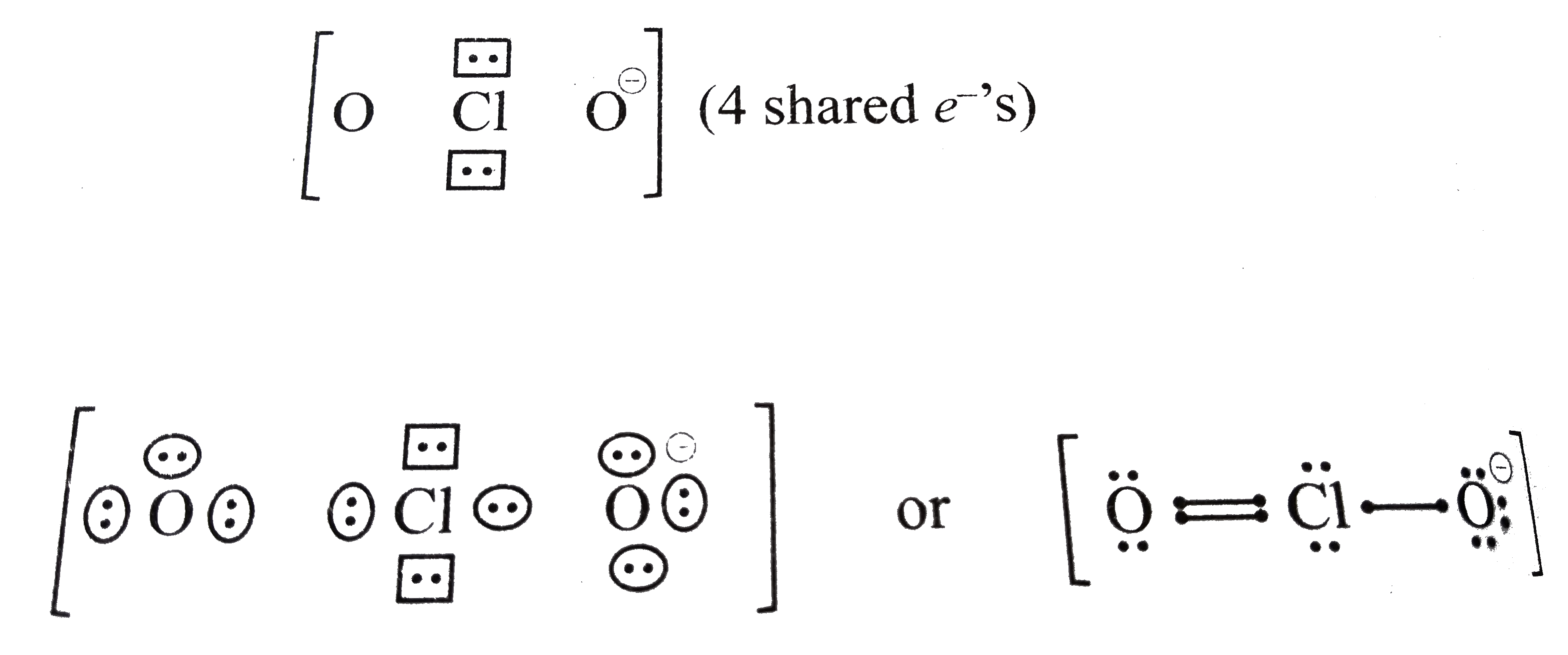
(c ) `CIO_(2)^(Θ)`
(i) `V =7 + 2 xx 6 + 1 = 20 e^(-')s`
(ii) `O =8 + 2 xx 8 = 24 e^(-')s`
(iii) `S = (O -V) = (24 - 20) = 4 e^(-')s`
(iv) Skeletal structure with 4 shared `e^(-')s`
(v) `U = (V -S) = (20 -4) = 16 e^(-')s`
(vi) Add `16e^(-')s` to complete the Lewis dot structure
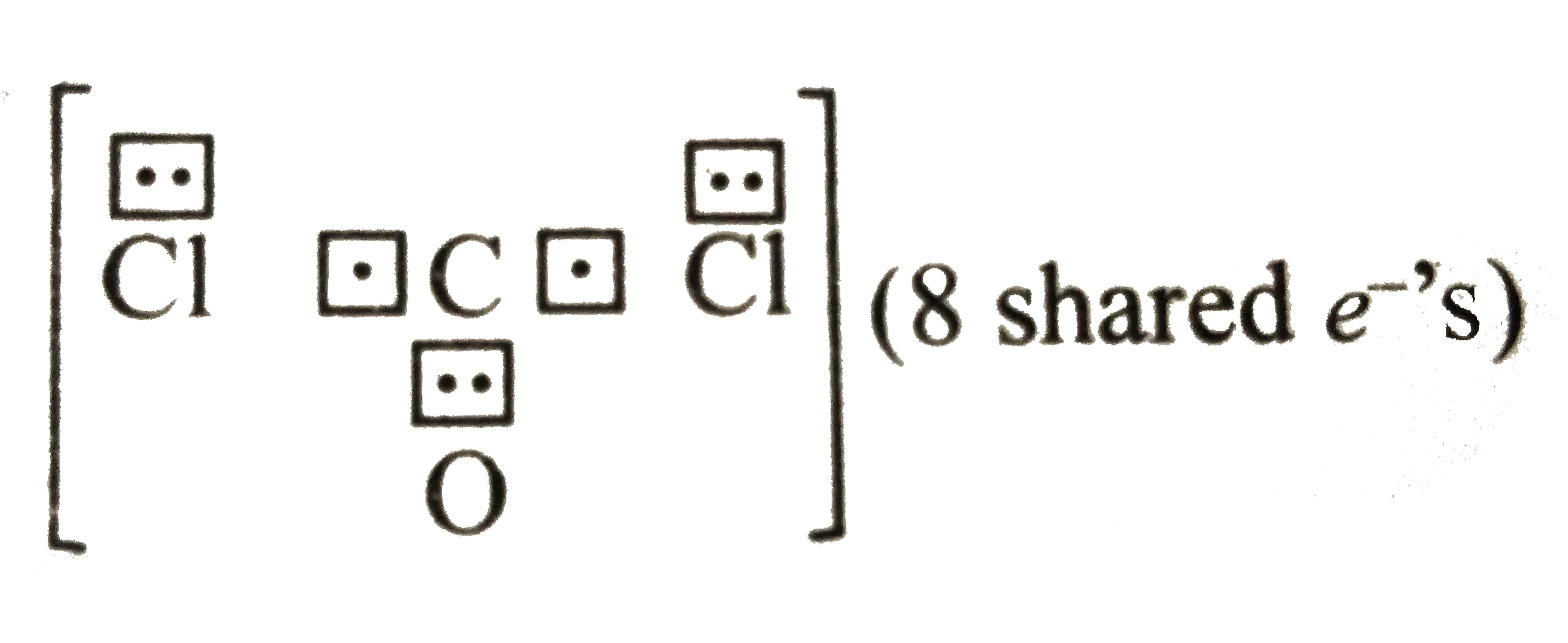
(d) `COCI_(2)`
(i) `V =4 + 6 + 2 xx 7 = 24 e^(-')s`
(ii) `O = 8 + 8 + 2 xx 8 = 32 e^(-')s`
(iii) `S =(O-V) = (32 -24) = 8e^(-')s`
(iv) Skeletal structure with 8 shared `e^(-')s`
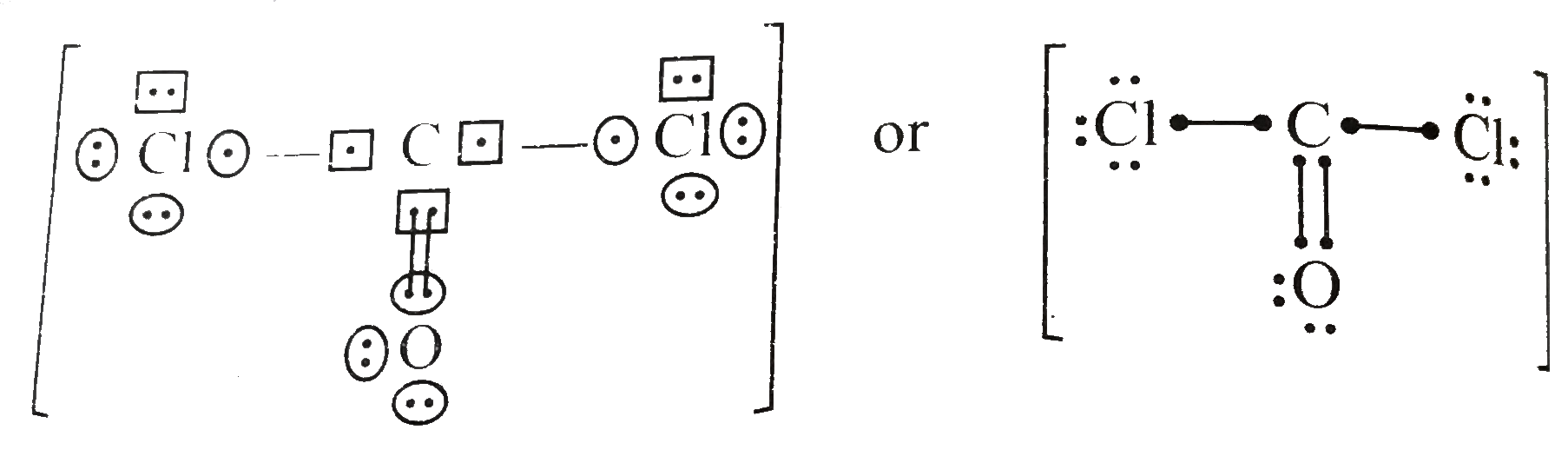
(v) `U = (V -S) = (24 -8) =16e^(-')s`
(vi) Add `16e^(-')s` to complete the Lewis dot structure
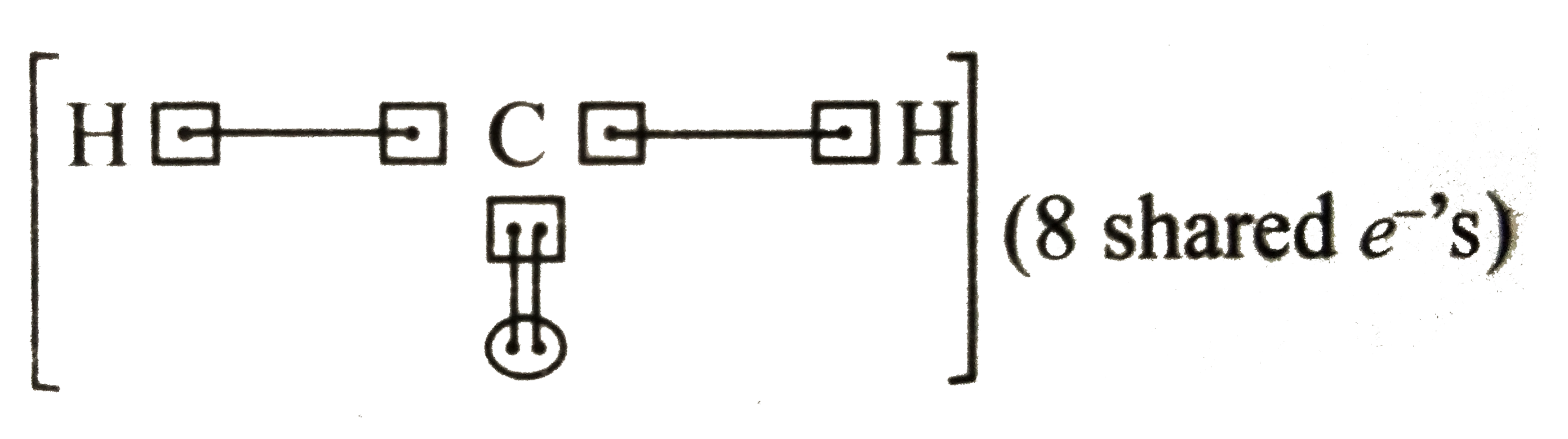
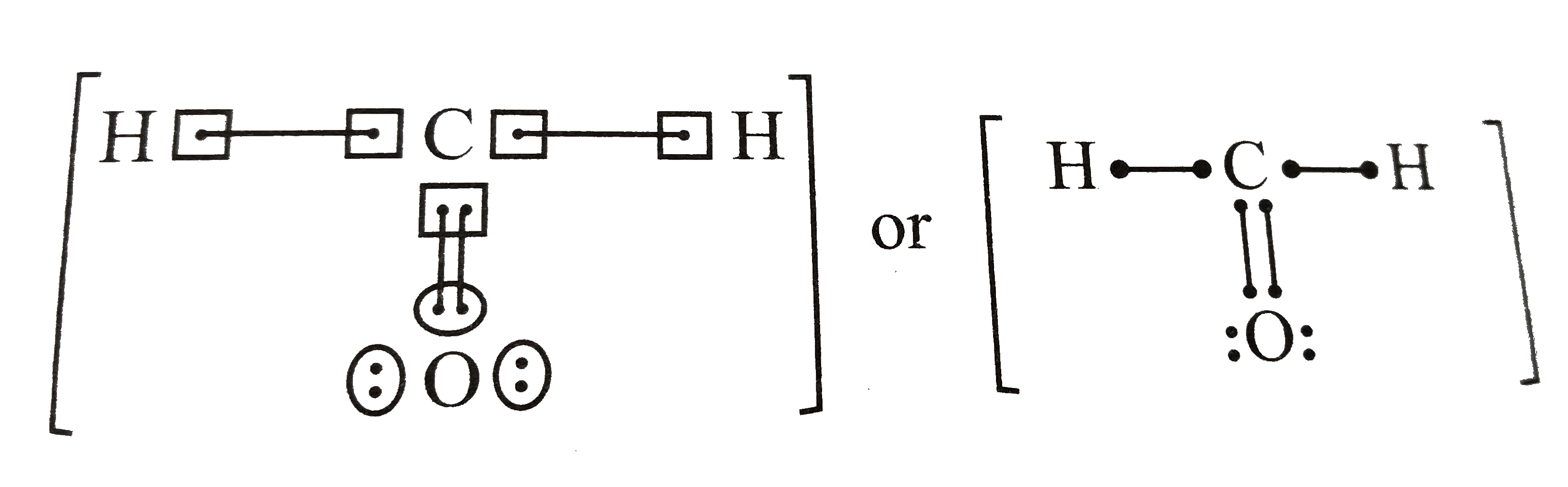
(e) `H_(2)CO`
(i)`V =1 xx 2 + 4 +6 = 12 e^(-')s`
(ii) `O =2 xx 2 + 8 + 8 = 20 e^(-')s`
(iii) `S =(O -V) = (20 -12) = 8 e^(-')s`
(iv) Skeletal structure with 8 shared `e^(-')s`
(v) `U = (V -S) = (12 -8) = 4 e^(-')s`
(vi) Add `4e^(-')s` to complete the Lewis dot structure
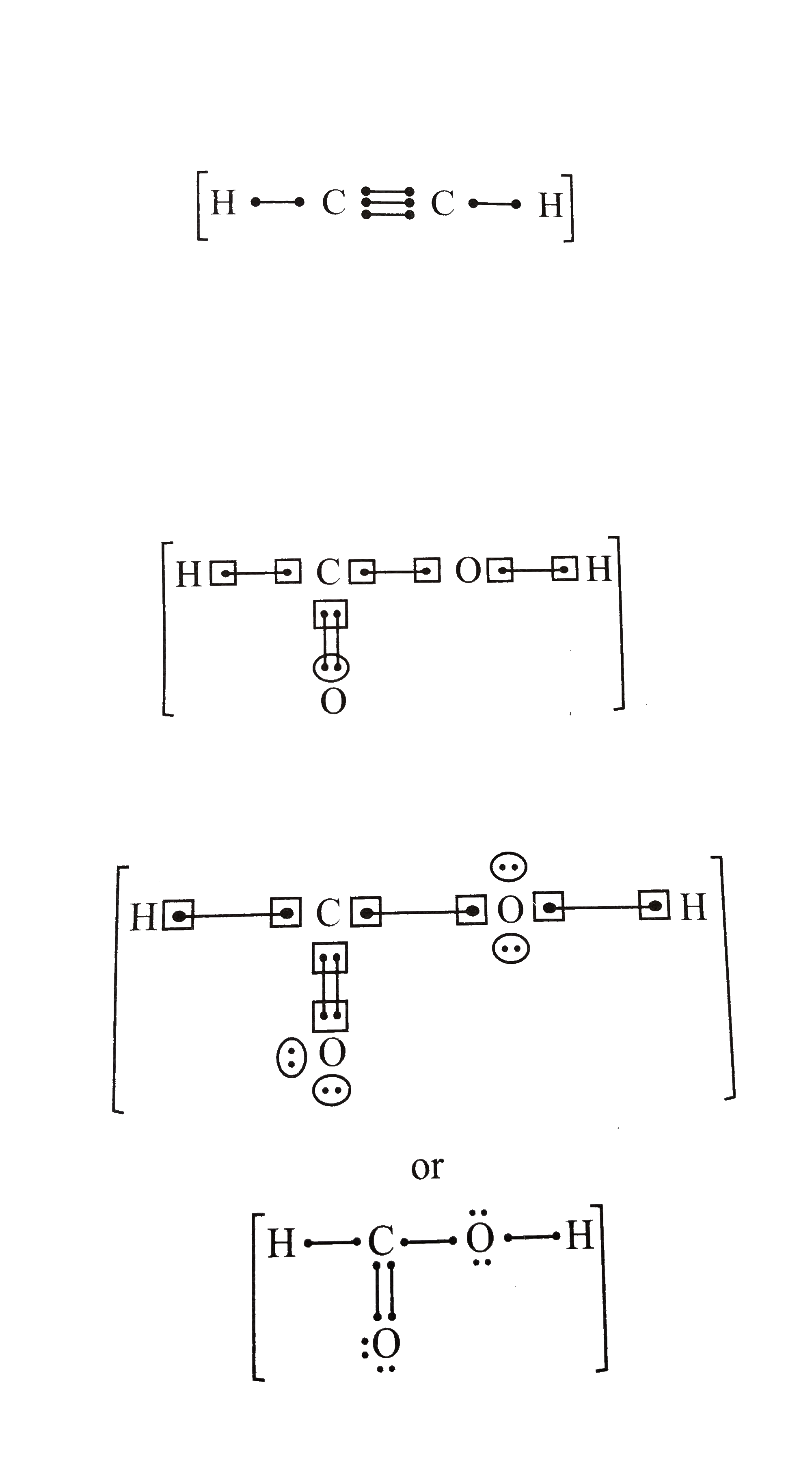
(f) `C_(2)H_(2)`
(i) `V =2 xx 4 + 1 xx 2 = 10 e^(-')s`
(ii) `O =2 xx 8 + 2 xx 2 = 20 e^(-')s`
(iii) `S =(O -V) = (20 - 10) = 10 e^(-')s`
(iv) Skeletal structure with 10 shared `e^(-')s (v) U =(V -S) = (10 - 10) =` Zero
(vi) Hence skeletal structure is the Lewis dot structure
(g) `HCO_(2)H`
(i) `V =1 + 4 +2 xx 6 + 1 = 18 e^(-')s`
(ii) `O =2 + 8 + 2 xx 8 + 2 = 28 e^(-')s`
(iii) `S =(O -V) = (28 - 18) = 10e^(-')s`
(iv) Skeletal structure with 10 shared `e^(-')s`
`U = (V -S) = (18 -10) = 8 e^(-')s`
(vi) Add `8 e^(-')s` to complete the Lewis dot structure


Promotional Banner

Topper's Solved these Questions

  • CHEMICAL BONDING AND MOLECULAR STRUCTURE

    CENGAGE CHEMISTRY|Exercise Ex 2 .2 Subjective (Intermolecular Forces And H-Bonding)|7 Videos
  • CHEMICAL BONDING AND MOLECULAR STRUCTURE

    CENGAGE CHEMISTRY|Exercise Ex 2 .2 Subjective (Molecular Orbital Theory)|4 Videos
  • CHEMICAL BONDING AND MOLECULAR STRUCTURE

    CENGAGE CHEMISTRY|Exercise Archives Subjective|15 Videos
  • ATOMIC STRUCTURE

    CENGAGE CHEMISTRY|Exercise Concept Applicationexercise(4.3)|19 Videos
  • CHEMICAL EQUILIBRIUM

    CENGAGE CHEMISTRY|Exercise Archives (Subjective)|11 Videos

Similar Questions

Explore conceptually related problems

Draw the electron-dot structures for (a). H_(2)S (b). F_(2)

Draw electron dot structures of (i) NH_(3) (ii) PCl_(5) (iii) C_(2)H_(2).

Draw electron dot structures of (i) C_(2)H_(4) (ii) C_(2)H_(5)OH .

(i) State the formula and name the conjugate base of each of the following species : (a) H_(3)O^(+) (b) HSO_(4)^(-) (C ) NH_(4)^(+) (d) HF (e ) CH_(3)COOH (f) CH_(3)NH_(3)^(+) (g) H_(3)PO_(4)(h)H_(2)PO_(4)^(-). (ii) State the formula and name the conjugate acid of each of the following species : (a) OH^(-) (b) HPO_(4)^(2-) (C) H_(2)PO_(4)^(-) (d) CH_(3)NH_(2) (e) CO_(3)^(2-) (f) NH_(3)(g) CH_(3)COO^(-) (h) HS^(-)

Classify the following into electrophilies and nucleophiles: (a) H^(+) , (b) NH_(3) (c) AlCl_(3) , (d) NO_(2)^(+) (e) CN^(-) , (f) H_(2)O (g) ROH , (h) H_(2)O (i) Carbocation.

Write the conjugate bases for the following Brddotonsted acids (a) HF (b) H_(2)SO_(4) (c) HCO_(3)^(Θ)

Number of acids having central atom in +3 oxidation state among the following is (a) HNO_(2) (b) HNO_(3) (c) H_(3)PO_(2) (d) H_(3)PO_(3) (e) H_(3)PO_(4) (f) H_(4)P_(2)O_(5) (g) H_(4)P_(2)O_(7) (h) H_(2)SO_(3) (i) H_(2)S_(2)O_(7) (j) H_(2)S_(2)O_(8) (k) H_(2)SO_(4)

Write the empirical formula of the compounds having the molecular formulae : (i) C_(6)H_(6) , (ii) C_(6)H_(12) , (iii) H_(2)O_(2) , (iv) Na_(2)CO_(3) , (v) B_(2)H_(6) , (vi) N_(2)O_(2) , (vii) H_(3)PO_(4) , (viii) Fe_(2)O_(3) , (ix) C_(2)H_(2) , (x) N_(2)O_(5)

CENGAGE CHEMISTRY-CHEMICAL BONDING AND MOLECULAR STRUCTURE-Solved Examples
  1. In which of the following compounds is the bonding essentially ionic i...

    Text Solution

    |

  2. Pure liquid H(2)SO(4) solidifies below 10.4^(@)C Neither the pure liqu...

    Text Solution

    |

  3. Write electron dot and line structure for (a) SeO(3)^(2-) ,(b) Li(3)...

    Text Solution

    |

  4. By completing the following structures, adding unshared e^(-) pairs wh...

    Text Solution

    |

  5. In each of the following paris select the species having the greater r...

    Text Solution

    |

  6. Distinguish between a polar bond and a polar molecule To which does th...

    Text Solution

    |

  7. The decreasing order of dipole moment of SO(2) gt NH(3) gt AsH(3) gt B...

    Text Solution

    |

  8. The single and multiple bond radii of some elements given in the follo...

    Text Solution

    |

  9. Arrange C-C,C=C and C-=C in order of (i) Decreasing bond energey (...

    Text Solution

    |

  10. The Pt-CI distance is 2.32 A in several crystaline compounds What is...

    Text Solution

    |

  11. The averge (C C) bond energy is 343 kJ mo1^(-1). What do you predict f...

    Text Solution

    |

  12. Compare the shapes of p-orbital and sp-hybrid orbital Which on has a g...

    Text Solution

    |

  13. Complete the following table (b) Which of the sets of hybridised orb...

    Text Solution

    |

  14. What is the number of molecular orbitals obtained by mixing of two ato...

    Text Solution

    |

  15. Compare and contrast the concepts of hybrid orbitals and molecular orb...

    Text Solution

    |

  16. State the bond order and indicate whether the species is paramagnetic ...

    Text Solution

    |

  17. Which properties of element depend on the electronic configuration of ...

    Text Solution

    |

  18. Select from each of the following gropus, the one which has the larges...

    Text Solution

    |

  19. Give the decreasing order of the property mentioned against each of th...

    Text Solution

    |

  20. Answer the following (a) How many sigma, pi non - bonding electrons ...

    Text Solution

    |