A
B
C
D
Text Solution
Verified by Experts
The correct Answer is:



Topper's Solved these Questions
CHEMICAL BONDING AND MOLECULAR STRUCTURE
CENGAGE CHEMISTRY|Exercise Exercises Integer|10 VideosCHEMICAL BONDING AND MOLECULAR STRUCTURE
CENGAGE CHEMISTRY|Exercise Exercises Fill In The Blanks|20 VideosCHEMICAL BONDING AND MOLECULAR STRUCTURE
CENGAGE CHEMISTRY|Exercise Exercises Single Correct (Miscellaneous)|23 VideosATOMIC STRUCTURE
CENGAGE CHEMISTRY|Exercise Concept Applicationexercise(4.3)|19 VideosCHEMICAL EQUILIBRIUM
CENGAGE CHEMISTRY|Exercise Archives (Subjective)|11 Videos
Similar Questions
Explore conceptually related problems
CENGAGE CHEMISTRY-CHEMICAL BONDING AND MOLECULAR STRUCTURE-Exercises Assetion Reasoning
- Assertion Bond angles of NH(3),PH(3),AsH(3) and SbH(3) decrease in ord...
Text Solution
|
- Assertion In case of (CH(3))(3)N geometry is pyramidal but in case of ...
Text Solution
|
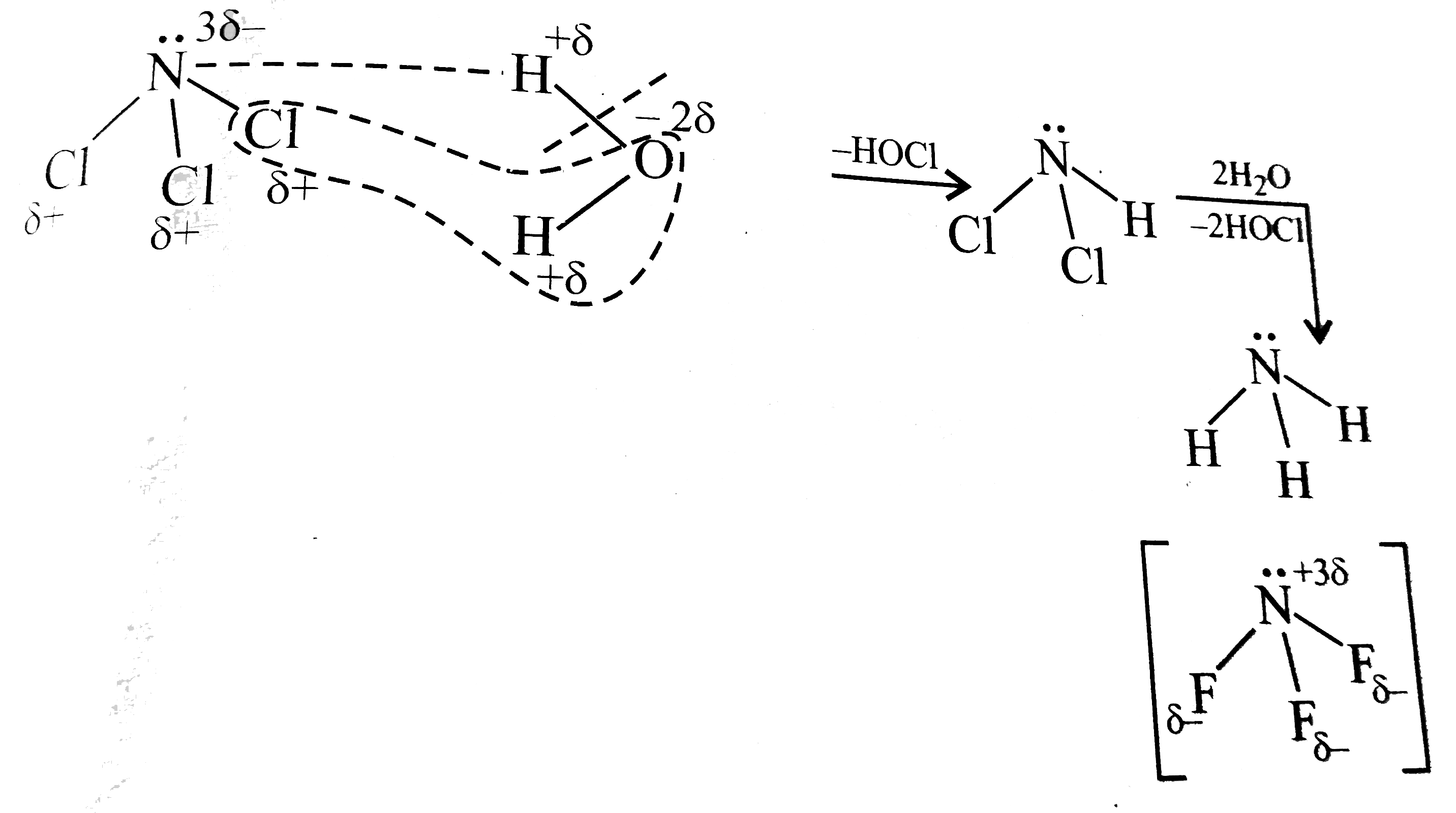
- Assertion NCI(3) reacts with water but NF(3)I s inert towards hydroly...
Text Solution
|
- Assertion LiF is parctically insoluble in water Reasoning LiF has ve...
Text Solution
|
- Assertion O(2) and N(2)^(2-) have same number of electrons and same mo...
Text Solution
|
- Assertion MgCI(2) is more soluble as comared to BeCI(2) Reasoning Be...
Text Solution
|
- Assertion : H(2) molecule is more stable than He-H molecule . Reaso...
Text Solution
|
- Assertion Carbon tetrachloride dose not form a percipitate of AgCI wit...
Text Solution
|
- Assertion Both NO(3)^(Theta) and CO(3)^(2-) ions are triangular planar...
Text Solution
|
- Assertion H(2)O has maximum density at 4^(@)C Hence in water ice will ...
Text Solution
|
- Assertion Boiling point of halogen acids are in the order HF gtHBr gt ...
Text Solution
|
- Assertion Ionic compounds tend to be non-volatile Reasoning Intermol...
Text Solution
|
- Assertion : Water is a good solvent for ionic compounds but poor one...
Text Solution
|
- Assertion : The atoms in a covalent molecule are said to share el...
Text Solution
|
- Assertion (A): Na(2)SO(4) is soluble in water while BaSO(4) is insolub...
Text Solution
|
- Assertion : The dipole moment helps to predict whether a molecule is ...
Text Solution
|
- Assertion BF(3) is a weaker Lewis acid than BCI(3) Reasoning In BF(3...
Text Solution
|
- Bond order for N(2)^(o+) and N(2)^(Theta) are same (i.e2.5) Reasonin...
Text Solution
|
- Assertion Among two cations of similar size the polarising power of ca...
Text Solution
|
- Assertion BF(3) has greater dipole momnet than H(2)S Reasoning Fluor...
Text Solution
|