Home
Class 11
CHEMISTRY
Considering X axis as the internuvlear a...

Considering `X` axis as the internuvlear axis, which out of the following will form a sigma bond
(a) `1s` and `ls` (b) `ls ` and `2p_(x)`
(c ) `2p_(y)` and `2p_(y)` (d) `2p_(x)` and `2p_(y)`
(e) `1s` and `2s` .`

Text Solution

Verified by Experts
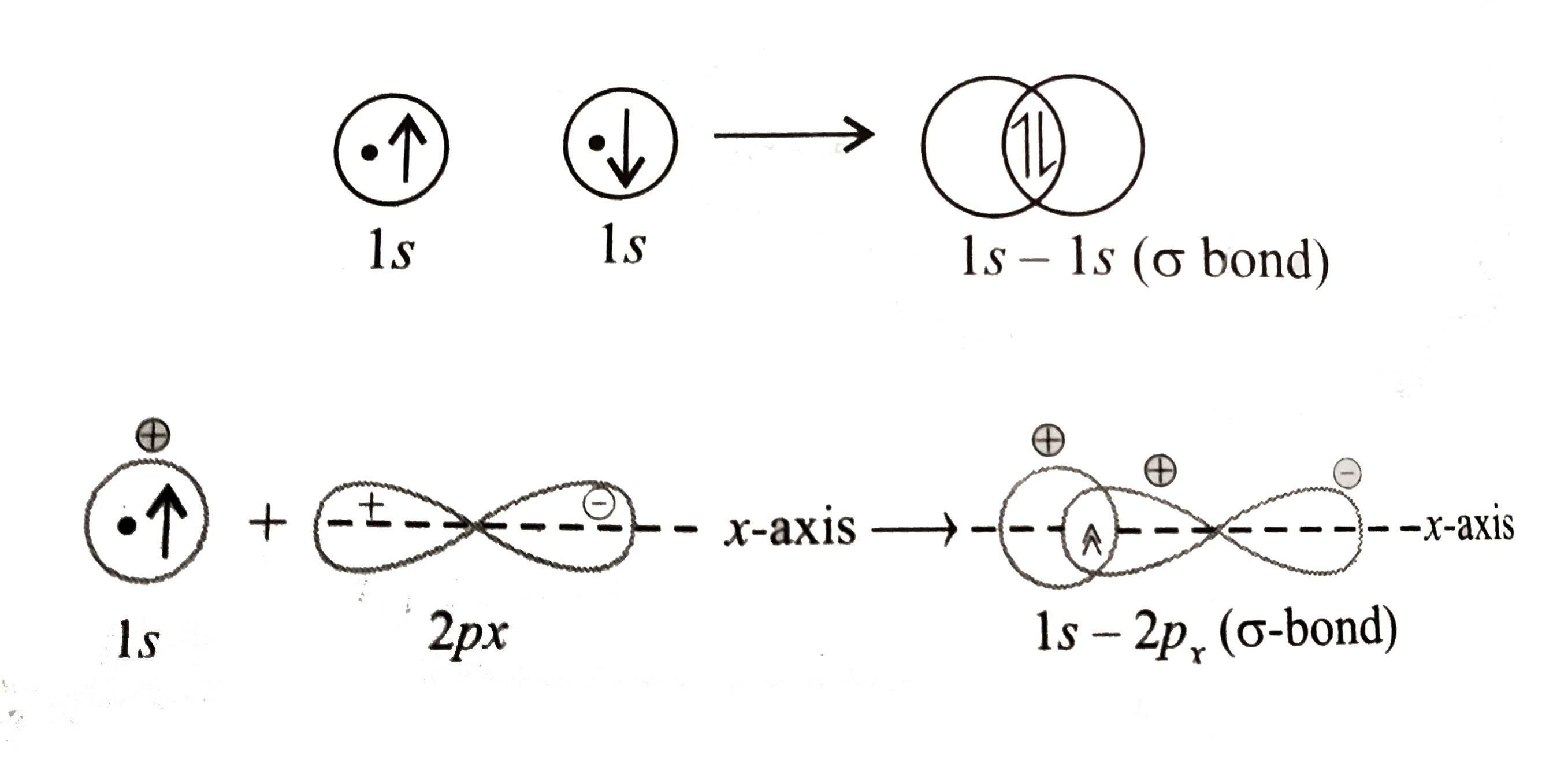
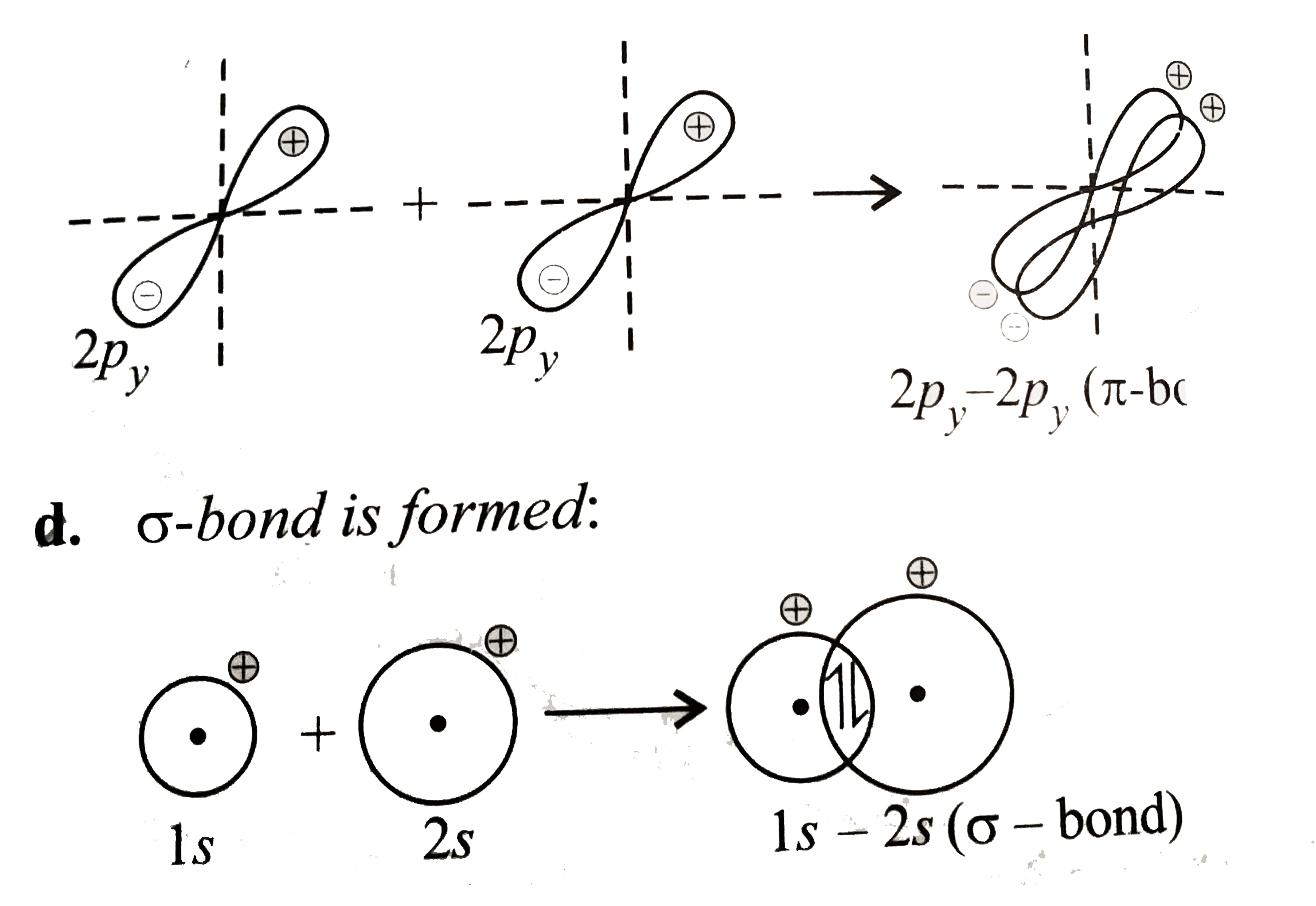
( c) will not form a `sigma` bond because taking x-axis as the internuclear axis, there will be side way (lateral) overlap between the two `2p_(y)` orbitals forming a `pi`-bond as shwn below: In
a. `sigma`-bond is formed:

b. `sigma`-bond is formed:
Promotional Banner

Topper's Solved these Questions

  • APPENDIX - INORGANIC VOLUME 1

    CENGAGE CHEMISTRY|Exercise Exercise very short|70 Videos
  • APPENDIX - INORGANIC VOLUME 1

    CENGAGE CHEMISTRY|Exercise Exercise Short|146 Videos
  • ALKYNES

    CENGAGE CHEMISTRY|Exercise Exercises (Archives - Analytical and Desriptive Type)|4 Videos
  • ATOMIC STRUCTURE

    CENGAGE CHEMISTRY|Exercise Concept Applicationexercise(4.3)|19 Videos

Similar Questions

Explore conceptually related problems

Considering X-axis as the internucler axis, which out of the following atomic orbitals will from a sigma bond ? (a)1sand 1s" " (b) 1s and 2p_(x)" "(c )2p_(y)and2p_(y)" "(d)1s and2s.

Considering z - axis as the internuclear axis, which of the following will not form sigma bond? (a) 2s and 2s (b) 2p_(y) and 2p_(y) (c ) 2s and 2p_(z) (d) 2p_(x) and 2p_(z) (e) 2p_(z) and 2p_(z) .

If z - axis is the internuclear axis, which of the following combinations are not allowed ? (i) 2s and 2s (ii) 1s and 2p_(x) (iii) 2pP_(y) and 2p_(y) (iv) 2p_(x) and 2p_(z) (v) 2p_(z) and 2p_(z) (vi) 2s and 2p_(z) (vii) 2p_(x) and 2p_(y) .

IF molecular axis is X then which of the following overlapping will form pi bond? p_(z)+p_(z),p_(x)+p_(x),p_(x),p_(y),s+p_(z),p_(y)+p_(y)

Which of the following sets of orbitals are degenerate and why ? (i) 1s, 2s and 3s in Mg atom (ii) 2p_x, 2p_y and 2p_z in C atom (iii) 3s, 3p_x and 3d orbitals in H atom.

If the z-axis is the molecular axis, then piMOs are formed by the overlap of (i) p_z and p_z (ii) p_y and p_y (iii) s and p_z (iv) p_x and p_x

Select from the following molecular orbitals which are gerade ungerade (a) sigma(2s) (b) pi^(**)(2p_(x)) (c ) pi ^(**)(2p_(y)) (d) sigma^(**)(1s) (e) pi (2p_(x)) (f) pi (2p_(x)) .