Home
Class 11
CHEMISTRY
(a) Which N of guanidine (I) is more bas...

(a) Which `N` of guanidine `(I)` is more basic and is more likely to be protonated ?
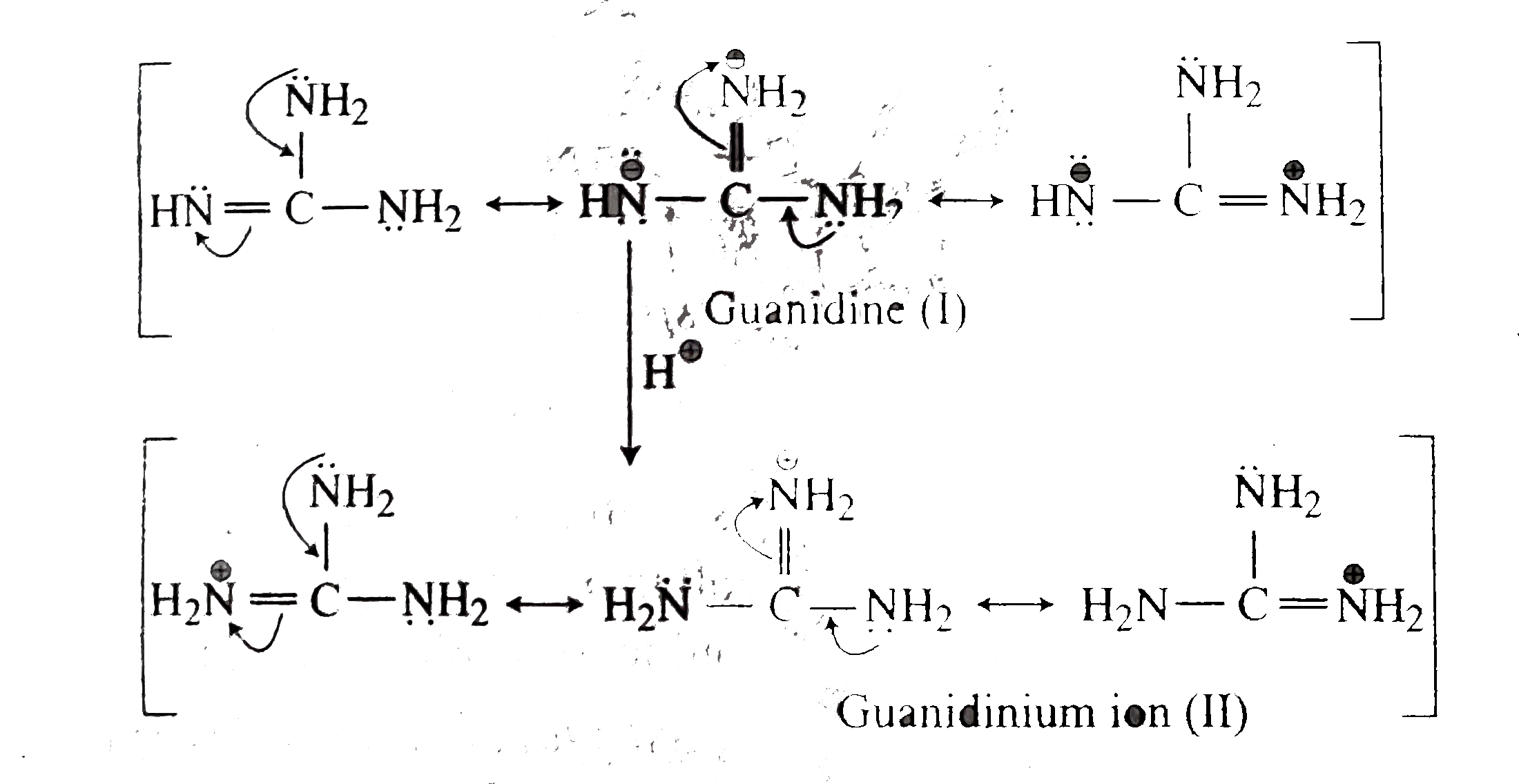
(b) Why guanidine is the strongest organic `N-base` `(K_(b) ~= 1)` ?
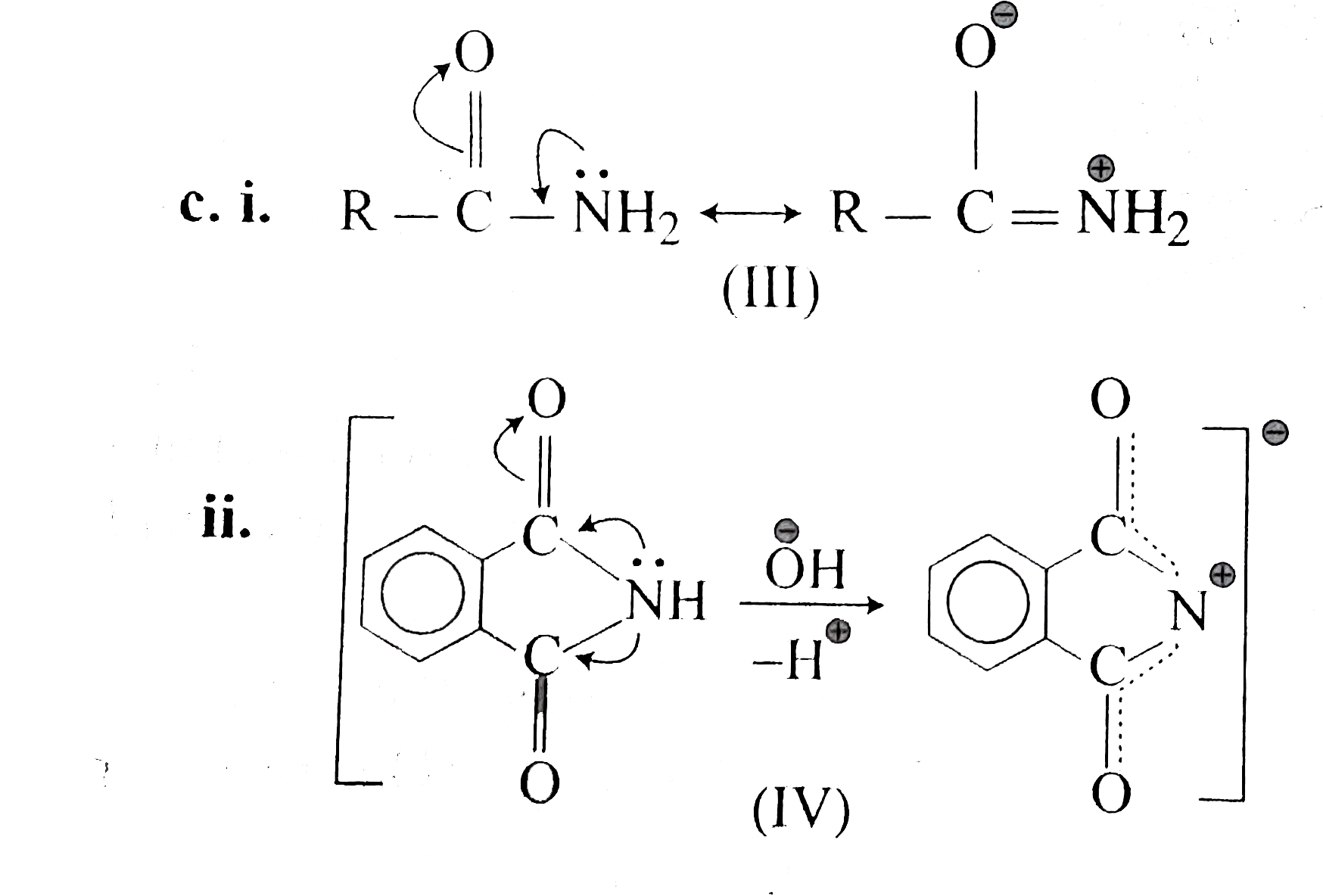
( c) Why amides `(III)` are weakly basic (amphoteric), whereas phthalimide `(IV)` is an acid ?

Text Solution

Verified by Experts
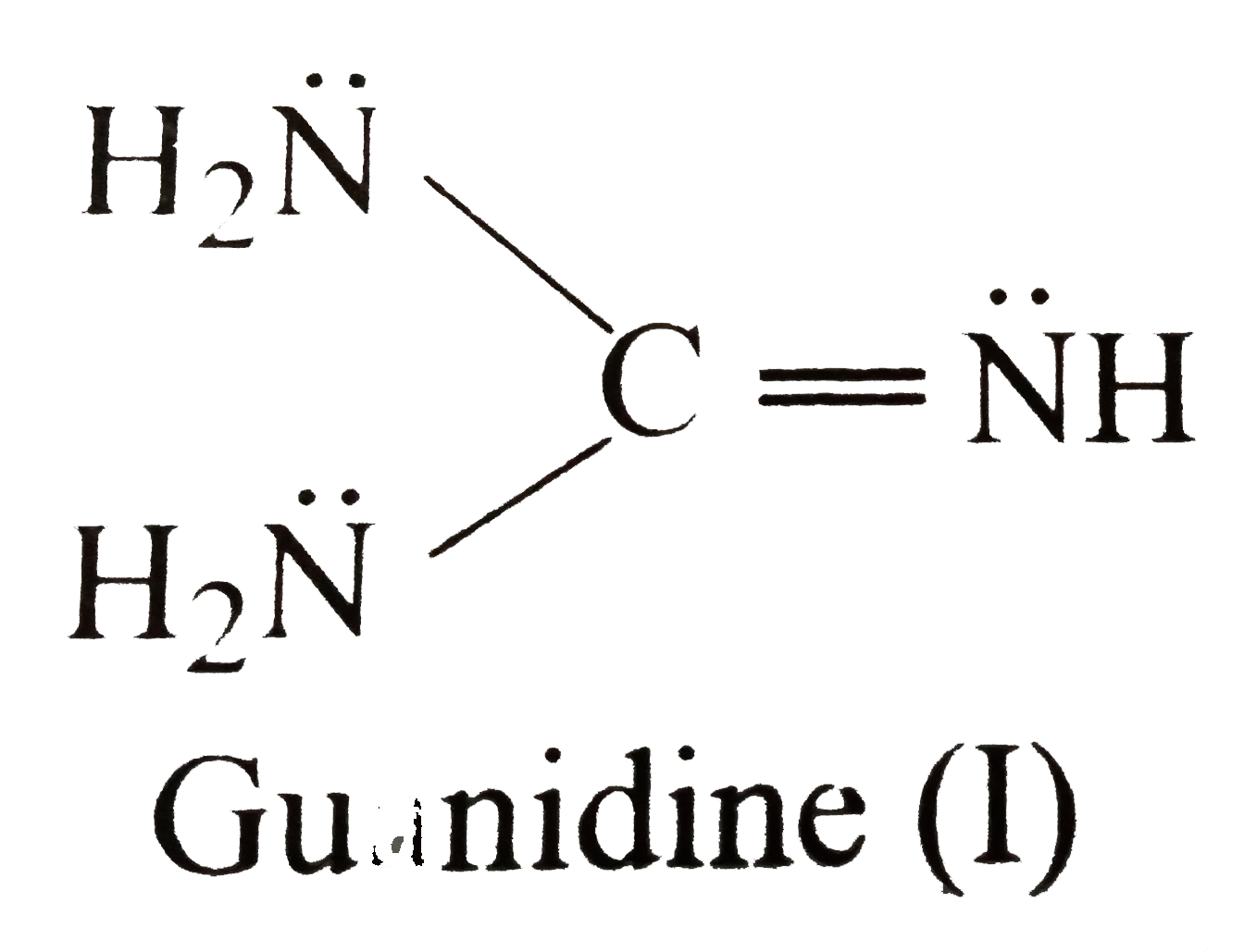
The lesser the `s` character (as in `sp^3 HO^,s`), the stronger is the base. The `N` atom of `NH_2` group is `sp^3` hybrised with less `s` character than `N` of the imino `(= NH)` group. So, `NH_2` group is more basic and is more likely to accept proton from water solvent.

(b) Both guanidine and its conjugate acid, the guanidinium ion, are stabilished by delocalisation as shown below :

Guanidinium cation `(II)` is stabilished by the contribution of three exactly equivalent structures, whereas guanidine `(I)` has the resonating structures involving charge separation. Thus, the conjugate acid is more stable than the base and guanidine is, therefore, strong base.

Due to more resonance hybrid and extensive delocalisation in `(IV)` than `(III)`.
Promotional Banner

Topper's Solved these Questions

  • GENERAL ORGANIC CHEMISTRY

    CENGAGE CHEMISTRY|Exercise Solved Example|18 Videos
  • GENERAL ORGANIC CHEMISTRY

    CENGAGE CHEMISTRY|Exercise Subjective|11 Videos
  • CLASSIFICATION AND NOMENCLATURE OF ORGANIC COMPOUNDS

    CENGAGE CHEMISTRY|Exercise Analytical and Descriptive Type|3 Videos
  • HYDROGEN, WATER AND HYDROGEN PEROXIDE

    CENGAGE CHEMISTRY|Exercise Subjective Archive (Subjective)|3 Videos