Home
Class 11
CHEMISTRY
Which of the following reactions are fea...

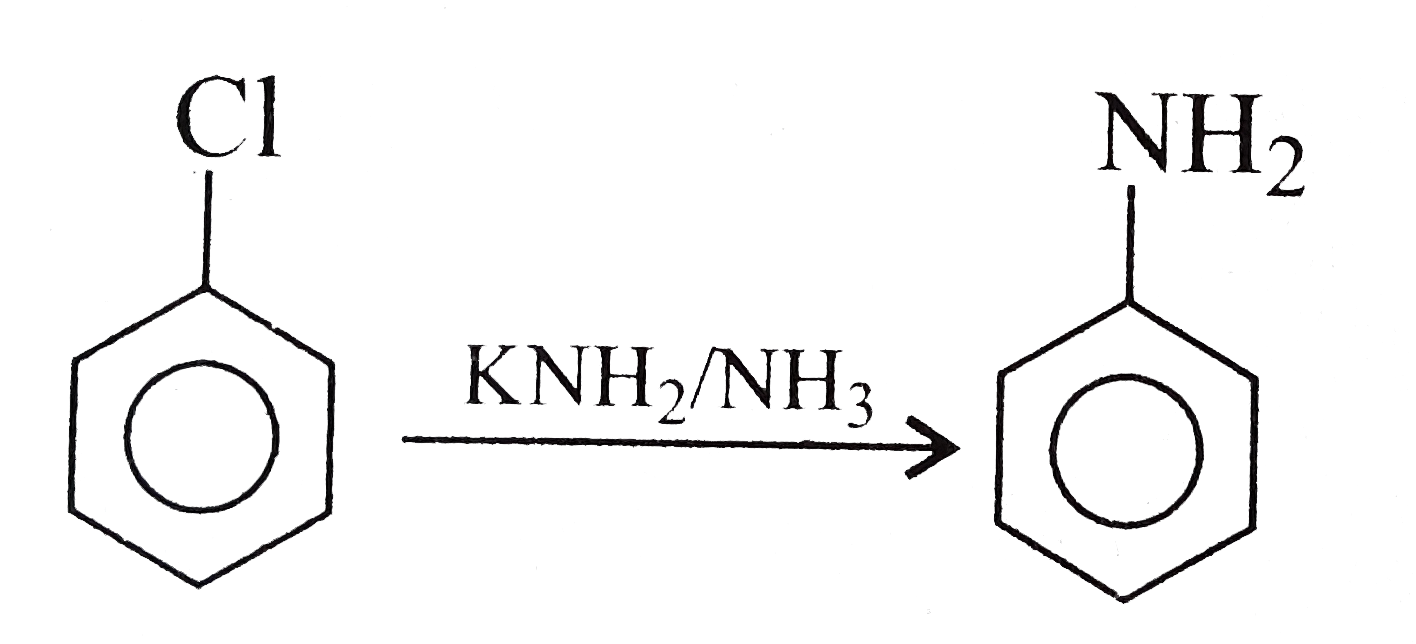
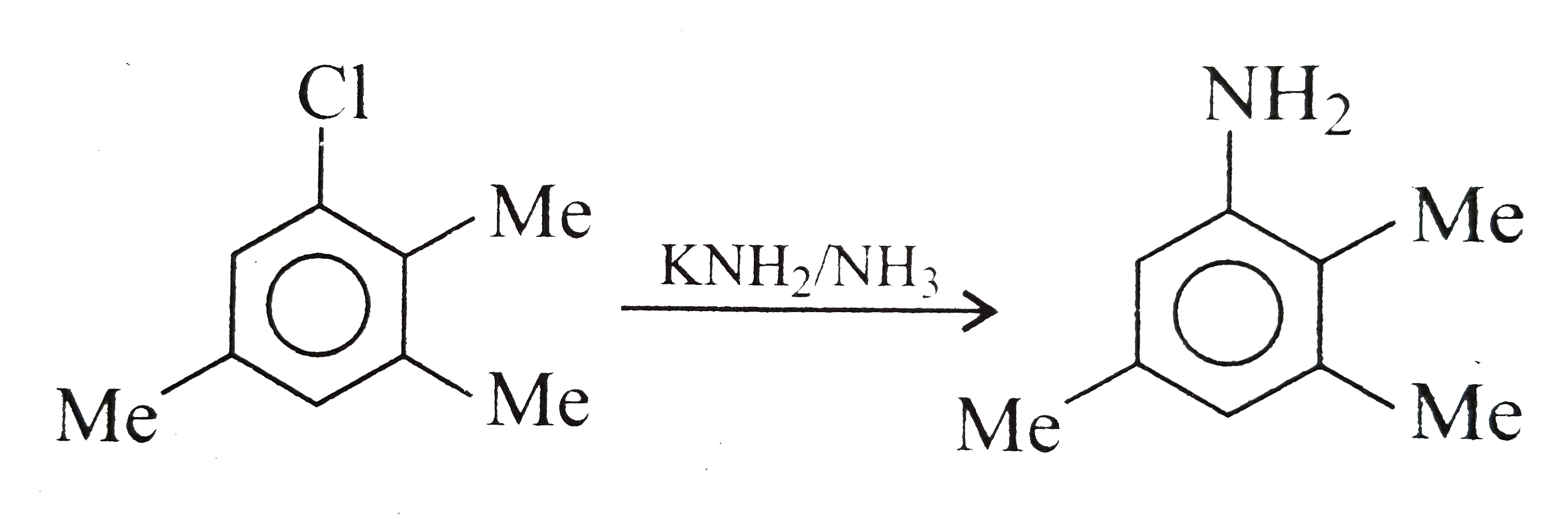
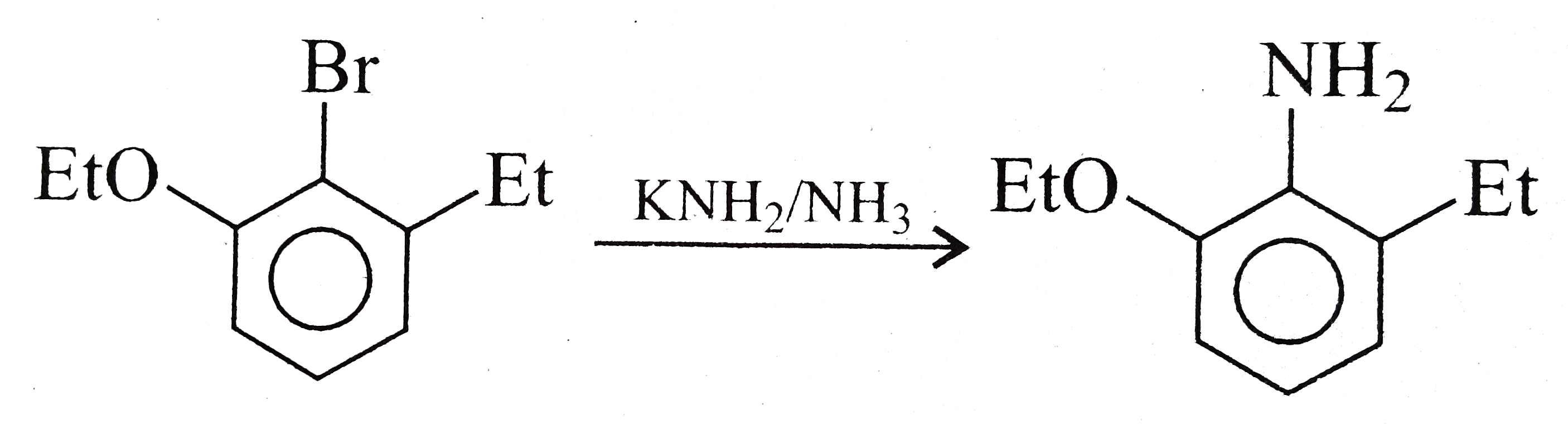
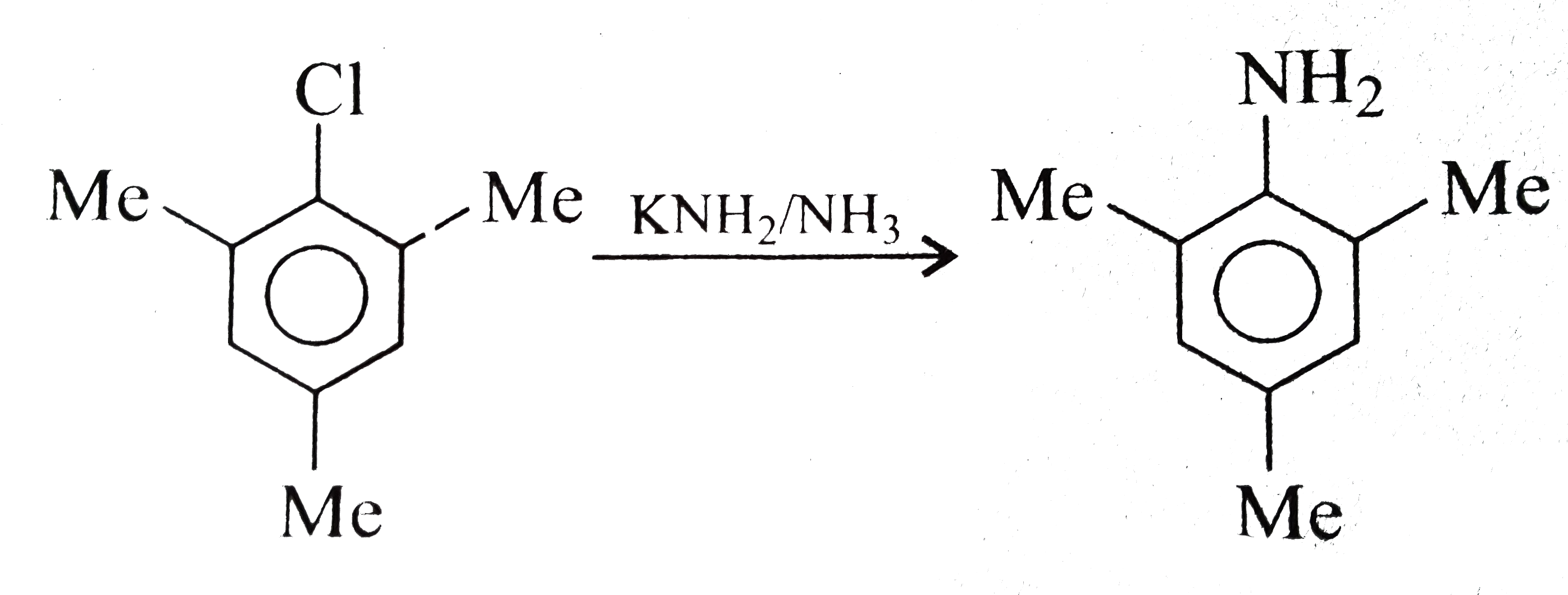
Which of the following reactions are feasible ?

A

B

C

D

Text Solution

AI Generated Solution

The correct Answer is:

To determine the feasibility of the given reactions, we need to analyze each one based on the presence of alpha hydrogens and the nature of the reactants involved. Here’s a step-by-step breakdown of the reactions: ### Step 1: Analyze Reaction A **Reaction:** Chlorobenzene + KNS2 + NH3 1. **Identify the structure:** Chlorobenzene has a chlorine atom attached to a benzene ring. 2. **Check for alpha hydrogens:** Alpha hydrogens are the hydrogens on the carbon adjacent to the carbon bearing the leaving group (in this case, chlorine). Chlorobenzene has no alpha hydrogens since the benzene ring does not have any carbon adjacent to the carbon with chlorine that has hydrogen atoms. 3. **Conclusion:** Since there are no alpha hydrogens, the reaction is not feasible. ### Step 2: Analyze Reaction B **Reaction:** Chlorobenzene + KNS2 + NH3 (with a methyl group) 1. **Identify the structure:** This is a substituted chlorobenzene with a methyl group (C6H5-CH3). 2. **Check for alpha hydrogens:** The methyl group has three alpha hydrogens (the three hydrogens on the carbon adjacent to the carbon with chlorine). 3. **Conclusion:** Since there are alpha hydrogens present, the reaction can proceed, resulting in the substitution of chlorine with the NS2 group. ### Step 3: Analyze Reaction C **Reaction:** Bromobenzene + KNS2 + NH3 (with an ethyl group) 1. **Identify the structure:** Bromobenzene with an ethyl group (C6H5-CH2-CH3). 2. **Check for alpha hydrogens:** The ethyl group has two alpha hydrogens, but the bromobenzene itself does not have any alpha hydrogens. 3. **Conclusion:** Since bromobenzene lacks alpha hydrogens, the reaction is not feasible. ### Step 4: Analyze Reaction D **Reaction:** Chlorobenzene + KNS2 + NH3 (with two methyl groups) 1. **Identify the structure:** This is another chlorobenzene with two methyl groups (C6H5-CH3-CH3). 2. **Check for alpha hydrogens:** The two methyl groups provide six alpha hydrogens. 3. **Conclusion:** Since there are alpha hydrogens present, the reaction can proceed, resulting in the substitution of chlorine with the NS2 group. ### Summary of Feasibility - **Reaction A:** Not feasible (no alpha hydrogens). - **Reaction B:** Feasible (alpha hydrogens present). - **Reaction C:** Not feasible (no alpha hydrogens). - **Reaction D:** Feasible (alpha hydrogens present).

To determine the feasibility of the given reactions, we need to analyze each one based on the presence of alpha hydrogens and the nature of the reactants involved. Here’s a step-by-step breakdown of the reactions: ### Step 1: Analyze Reaction A **Reaction:** Chlorobenzene + KNS2 + NH3 1. **Identify the structure:** Chlorobenzene has a chlorine atom attached to a benzene ring. 2. **Check for alpha hydrogens:** Alpha hydrogens are the hydrogens on the carbon adjacent to the carbon bearing the leaving group (in this case, chlorine). Chlorobenzene has no alpha hydrogens since the benzene ring does not have any carbon adjacent to the carbon with chlorine that has hydrogen atoms. 3. **Conclusion:** Since there are no alpha hydrogens, the reaction is not feasible. ...
Promotional Banner

Topper's Solved these Questions

  • ORGANIC REACTION MECHANISM

    CENGAGE CHEMISTRY|Exercise Single correct|50 Videos
  • ORGANIC REACTION MECHANISM

    CENGAGE CHEMISTRY|Exercise Assertion-Reasoning|12 Videos
  • ORGANIC REACTION MECHANISM

    CENGAGE CHEMISTRY|Exercise Comprehension|36 Videos
  • NCERT BASED EXERCISE

    CENGAGE CHEMISTRY|Exercise Chemical Equilibrium|72 Videos
  • P-BLOCK GROUP 13 - BORON FAMILY

    CENGAGE CHEMISTRY|Exercise Exercise Archives (Subjecive)|9 Videos

Similar Questions

Explore conceptually related problems

Which of the following reactions is/are feasible?

(i) Cu+ 2HCl_(2) +H_(2)(g) [E_(Cu_(2+)//Cu^(@) = ).34V] (ii) Zn + 2HClrightarrow ZNCl+ (2)+ H_(2) ((g)) [E(ZN^(2+)//ZN^(@) = -0.76V] (iii) Ag+ 2HCl rightarrow AgCl+(1)//(2) H_(2) (g) [E(Ag^(+)//Ag)^(@) =+0.80V] Which of the following reaction is feasible ?

Which of the following reaction is feasible?

Which of the following reaction is feasible?

Which of the following reaction is feasible ?

CENGAGE CHEMISTRY-ORGANIC REACTION MECHANISM-Multiple Correct
  1. Which of the following statements are correct ?

    Text Solution

    |

  2. Which of the following reactions represents SN reaction ?

    Text Solution

    |

  3. Which of the following reactions are feasible ?

    Text Solution

    |

  4. Which of the following transformations are feasible ?

    Text Solution

    |

  5. In which of the following reactions, the intermediate species acyl nit...

    Text Solution

    |

  6. Which of the following statements are correct ?

    Text Solution

    |

  7. Which of the following is//are the rate determining step (s) of the gi...

    Text Solution

    |

  8. The products in the given reaction are : .

    Text Solution

    |

  9. Which of the following statements are correct about the addition of HB...

    Text Solution

    |

  10. Which of the following statements are correct ?

    Text Solution

    |

  11. In which of the following reactions, rearrangement is possible ?

    Text Solution

    |

  12. Which of the following is an example of nucleophilic addition to aceta...

    Text Solution

    |

  13. In which of the reactions, there is a migration of alkyl group to carb...

    Text Solution

    |

  14. Which of the following statements are correct ?

    Text Solution

    |

  15. Which of the following statements/reactions are correct ?

    Text Solution

    |

  16. Which of the following statements is//are correct ?

    Text Solution

    |

  17. Consider the following reactions : (I) Me - underset ((A)) -= - Me o...

    Text Solution

    |

  18. Consider the following reactions : Which of the following stateme...

    Text Solution

    |

  19. Consider the following reactions : Which of the following stateme...

    Text Solution

    |

  20. Which of the following statements/reactions are correct ?

    Text Solution

    |
