Home
Class 12
PHYSICS
A stone is projected at an angle 45^@ wi...


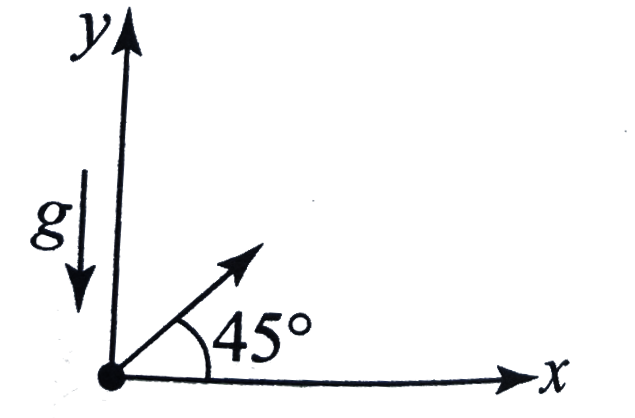
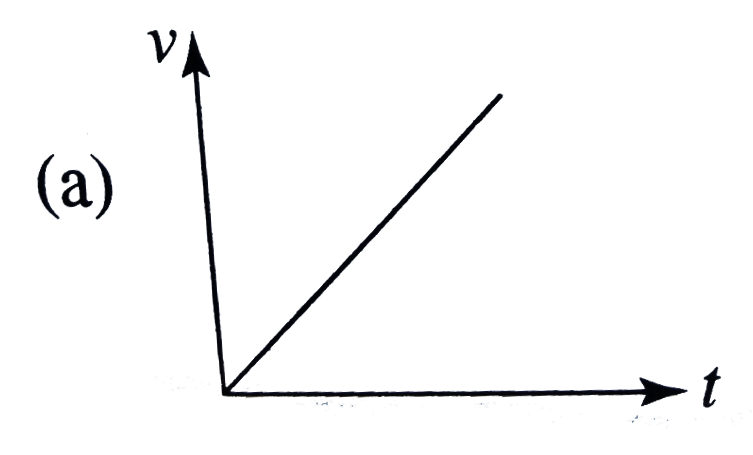
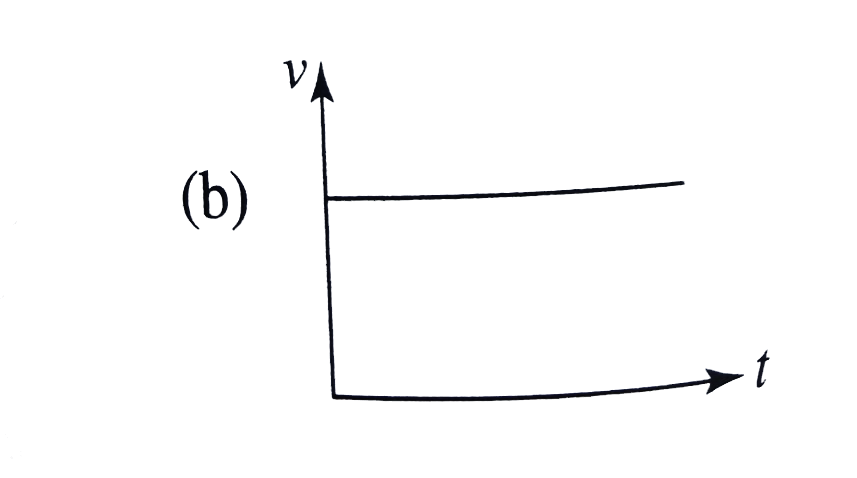
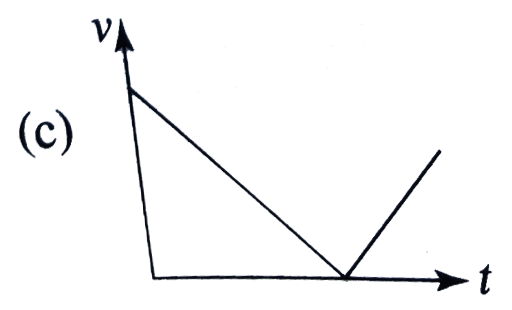
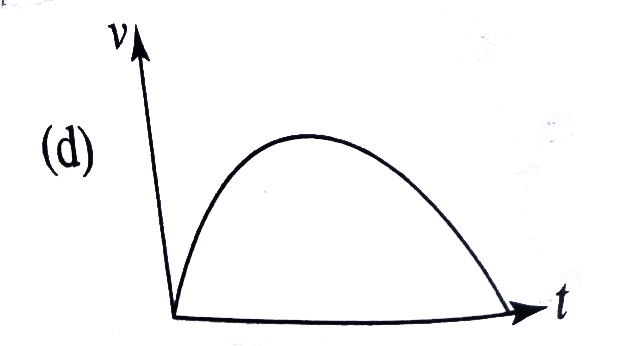
A stone is projected at an angle `45^@` with horizontal above horizontal x-axis as shown in figure (and y-axis is vertical). Four graphs representing the magnitude of horizontal `(v_x)` or magnitude of vertical `(v_y)` component of velocity of stone w.r.t. time t as shown. Then which of the following magnitude of velocity versus time graph best represents `v_x` versus t and `v_y` versus t respectively for the stone.

A

B

C

D

Text Solution

Verified by Experts

The correct Answer is:
B, C


Magnitude of `v_x` remains constant. Magnitude of `v_y` decreases linearly with time to zero and then increases. Therefore the correct graph are
Promotional Banner

Similar Questions

Explore conceptually related problems

A stone is projected at angle 45^(@) with the horizontal (x- axis) as shown in figure. Four graphs representing either the magnitude of horizontal (v_(x)) or magnitude of vertical (v_(y)) component of velocity of stone w.r.t. time t are given below. Determine which of the following magnitude of velocity verseus time graph t, respestively for the stone during its motion.

Variation of velocity v versus time t is ( Given x = Asinomegat)

The velocity- time (v-t) graph shown above illustrates

The following fighures show velocity v versus time t curves. But only some of these can be realized in partice. These are

A projectile is thrown horizontally forma height 'h' a shown in the figure. v_(x): horizontal component of velocity v_(y) : vertical component of velocity x : horizontal position y : vertical position Which of the following graph is/are correct?

In the given velocity (V) versus time (t) graph, accelerated and decelerated motions are respectively represented by line segments

A projectill is projected at an angle (alpha gt 45^(@)) with an initial velocity u. The time t, at which its magnitude of horizontal velocity will equal the magnitude of vertical velocity is :-

A particle is thrown vertically upwards with a velocity v . It returns to the ground in time T. which of the following graphs correctly represents the motion ?

