

Home
Class 11
PHYSICS
Three massless rods are fixed to form a ...

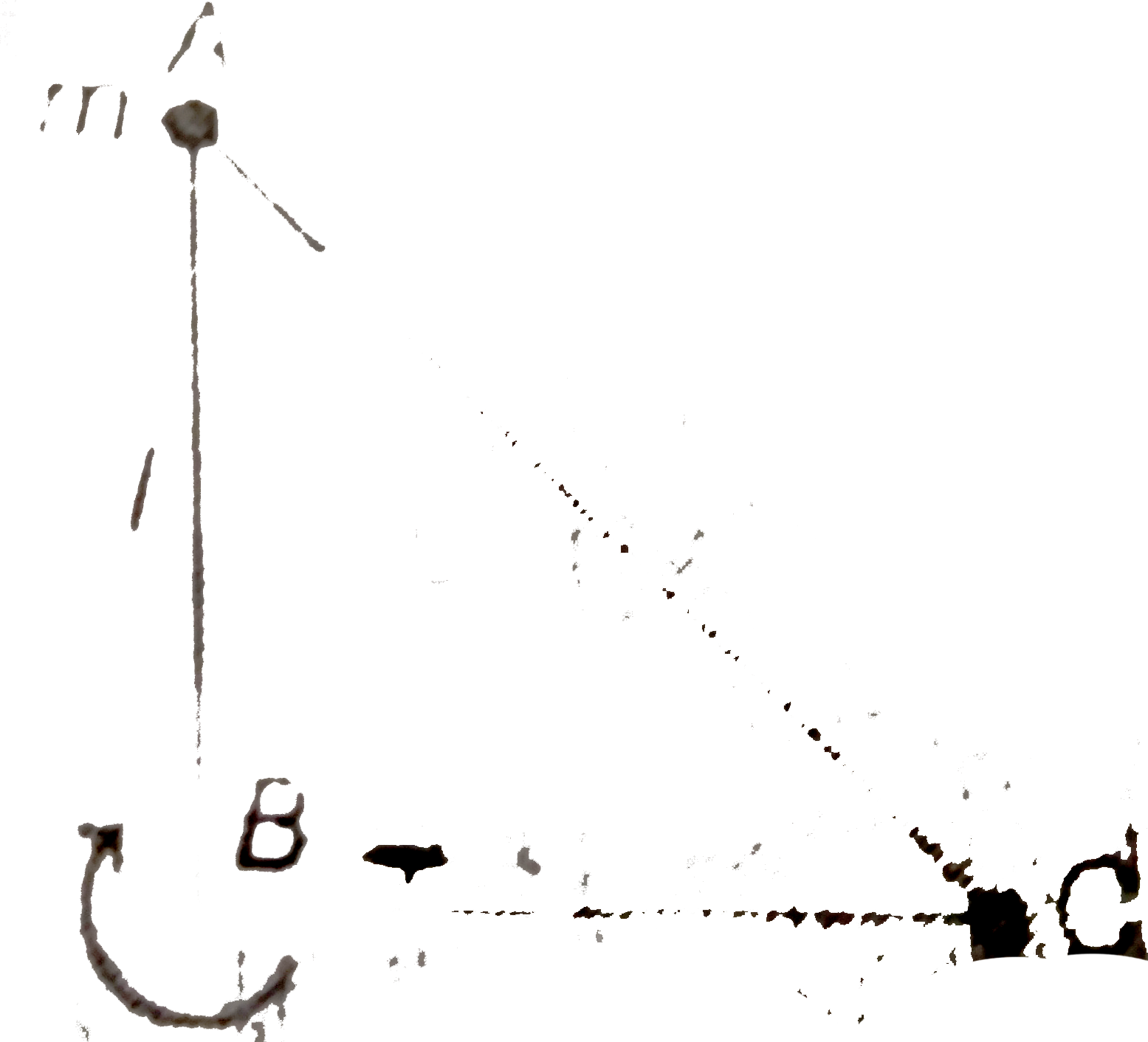
Three massless rods are fixed to form a right angled triangular frame such that AB=BC=1 . Two identical small objects of mass m are fixed at A and C . The frame is hinged about B such that the frame can rotate in vertical plane about an horizontal axis without friction. Initially AB is vertical and BC is horizontal and the system is released from rest.

The maximum shift of centre of mass of two mass system from its initial position is

Promotional Banner

Similar Questions

Explore conceptually related problems

Three massless rods are fixed to form a right angled triangular frame such that AB=BC=1 . Two identical small objects of mass m are fixed at A and C . The frame is hinged about B such that the frame can rotate in vertical plane about an horizontal axis without friction. Initially AB is vertical and BC is horizontal and the system is released from rest. The magnitude of acceleration of mass A when the rod AC becomes horizontal is

Three massless rods are fixed to form a right angled triangular frame such that AB=BC=1 . Two identical small objects of mass m are fixed at A and C . The frame is hinged about B such that the frame can rotate in vertical plane about an horizontal axis without friction. Initially AB is vertical and BC is horizontal and the system is released from rest. The magnitude of acceleration of mass A when the rod AC becomes horizontal is

Three massless rods are fixed to form a right angled triangular frame such that AB=BC=1 . Two identical small objects of mass m are fixed at A and C . The frame is hinged about B such that the frame can rotate in vertical plane about an horizontal axis without friction. Initially AB is vertical and BC is horizontal and the system is released from rest. Tension in the rod AC when it (rod AC) becomes horizontal is

Three massless rods are fixed to form a right angled triangular frame such that AB=BC=1 . Two identical small objects of mass m are fixed at A and C . The frame is hinged about B such that the frame can rotate in vertical plane about an horizontal axis without friction. Initially AB is vertical and BC is horizontal and the system is released from rest. Tension in the rod AC when it (rod AC) becomes horizontal is

A uniform rod of mass m and length L is free to rotate in the vertical plane about a horizontal axis passing through its end. The rod initially in horizontal position is released. The initial angular acceleration of the rod is:

A uniform semicircular wire is hinged at ‘A’ so that it can rotate freely in vertical plane about a horizontal axis through ‘A’. The semicircle is released from rest when its diameter AB is horizontal Find the hinge force at ‘A’ immediately after the wire is released.

A right triangular plate ABC of mas m is free to rotate in the vertical plane about a fixed horizontal axis through A . It is supported by a string such that the side AB is horizontal. The reaction at the support A is : .

Consider the situation shown in the figure. Uniform rod of length L can rotat freely about the hinge A in vertical plane. Pulleys and stringa are light and frictionless. If the rod remains horizontal at rest when the system is released then the mass of the rod is

A uniform rod of mass m and length l can rotate in a vertical plane abota smooth horizontal axis hinged at point H . Find the force exerted by the hinge just after rod is released from rest, from initial horizontal position?