Home
Class 11
PHYSICS
Liquid oxygen at 50 K is heated to 300 K...

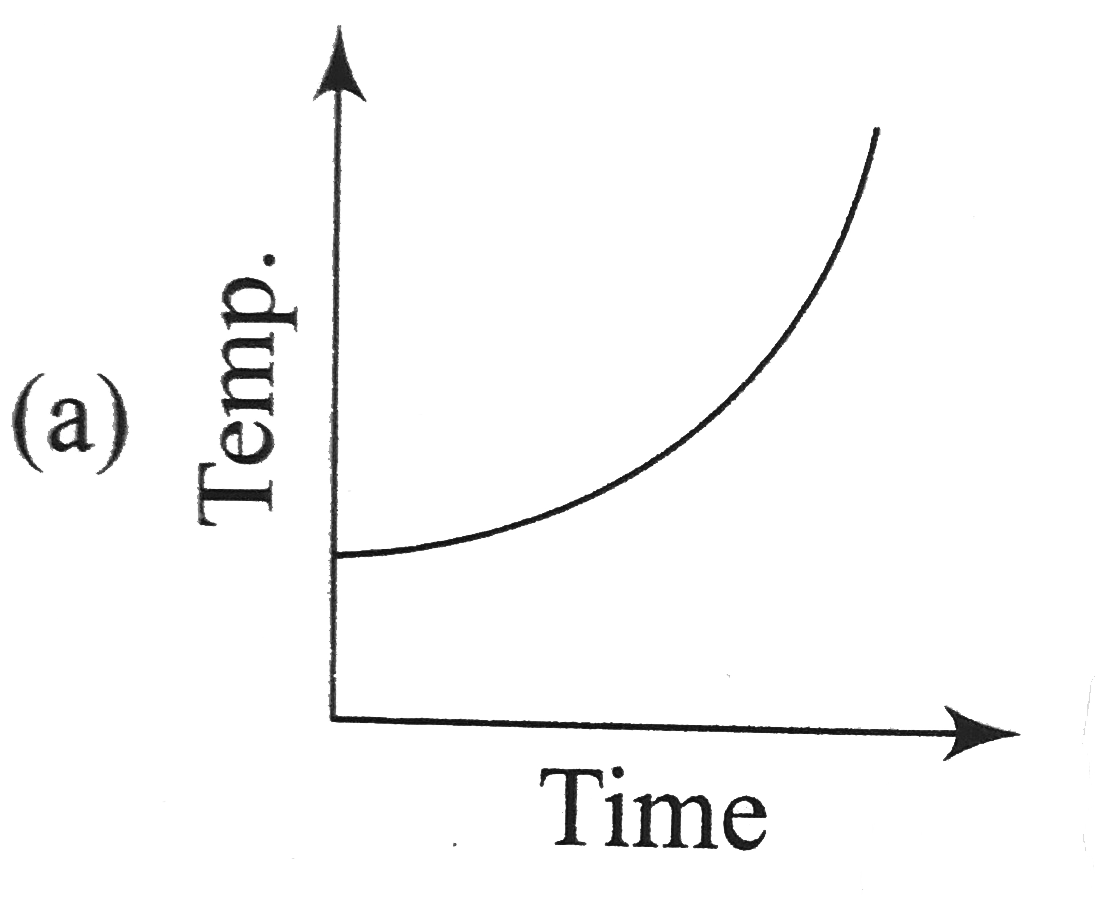
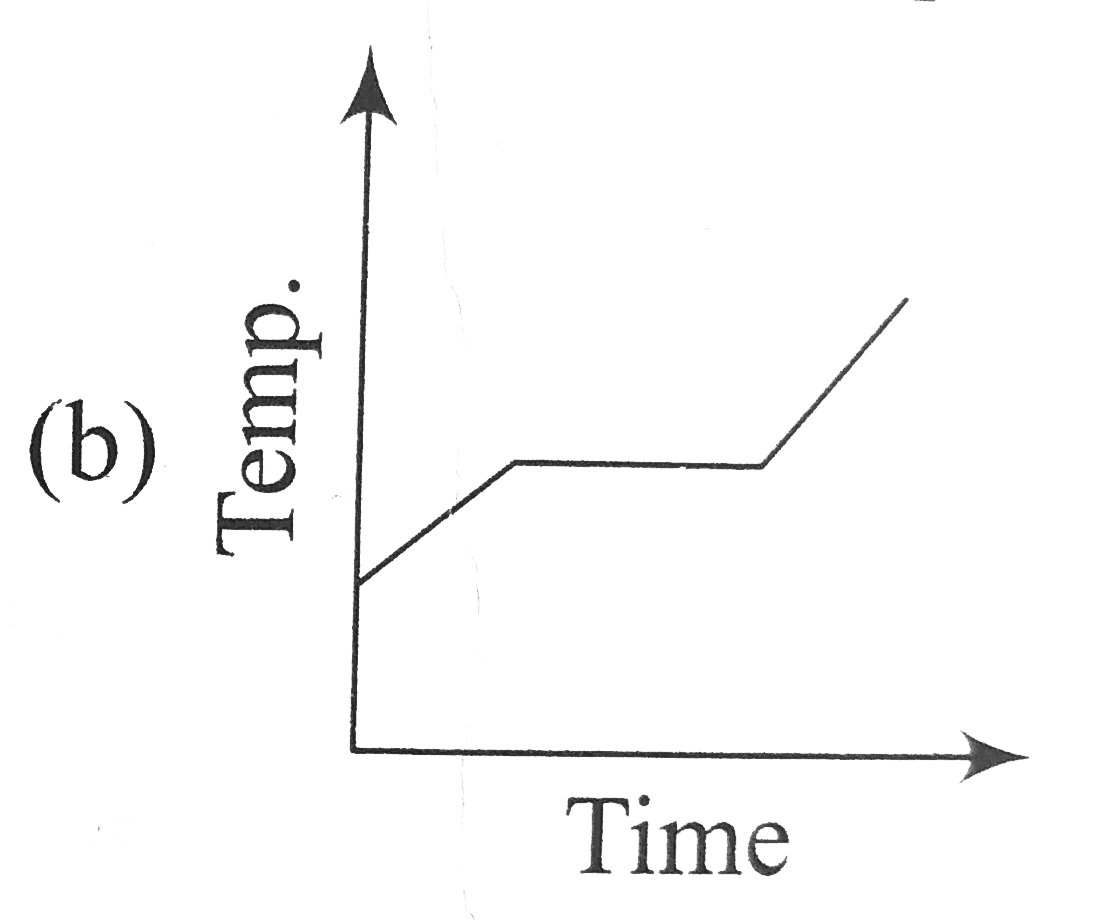
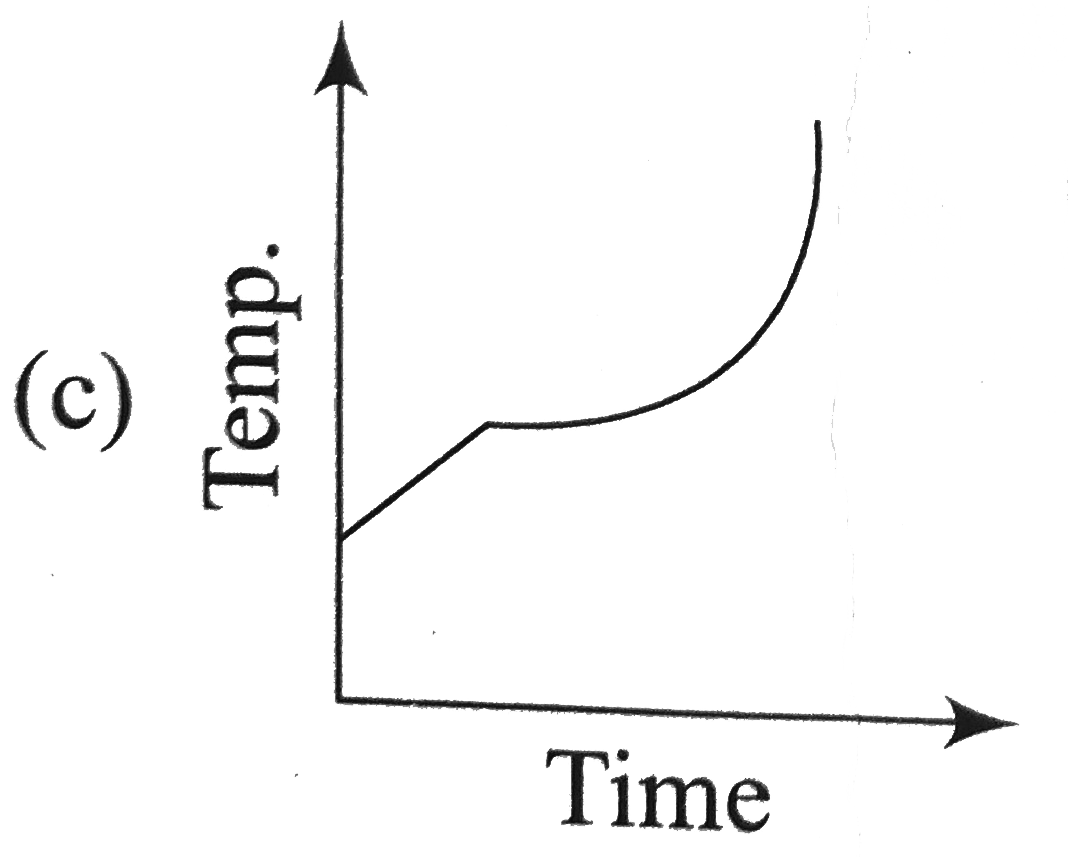
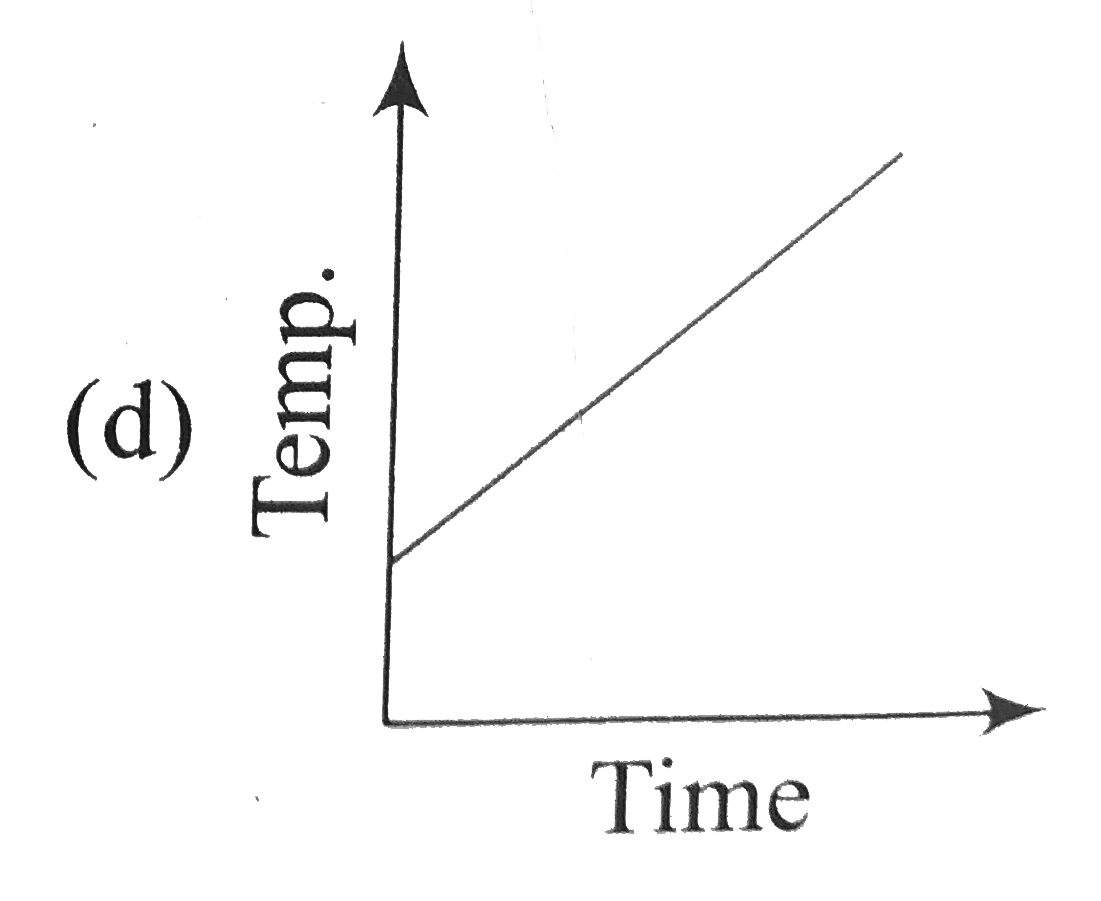
Liquid oxygen at `50 K` is heated to `300 K` at constant pressure of `1 atm`. The rate of heating is constant. Which of the following graphs represents the variation of temperature with time?

A

B

C

D

Text Solution

AI Generated Solution

The correct Answer is:

To solve the problem, we need to analyze the heating process of liquid oxygen as it transitions from a liquid state at 50 K to a gaseous state at 300 K under constant pressure. Here’s a step-by-step breakdown of the process: ### Step 1: Understand the Initial Condition - The liquid oxygen starts at a temperature of 50 K. ### Step 2: Heating the Liquid - As we begin to heat the liquid oxygen, its temperature will rise. The rate of heating is constant, meaning that the temperature will increase linearly with time until it reaches the boiling point of oxygen. ### Step 3: Identify the Boiling Point - The boiling point of oxygen is approximately 90 K. As the temperature approaches this point, the liquid will begin to boil. ### Step 4: Phase Change - During the phase change from liquid to gas (boiling), the temperature remains constant at the boiling point (90 K) until all the liquid has converted to gas. This is because the heat energy added during this phase change is used to overcome the latent heat of vaporization rather than increasing the temperature. ### Step 5: Heating the Gas - Once all the liquid has turned into gas, the temperature of the gaseous oxygen will start to increase again. This increase in temperature will continue until it reaches 300 K. ### Step 6: Graphical Representation - The graph representing the temperature vs. time will show a linear increase in temperature from 50 K to 90 K, followed by a horizontal line (constant temperature) at 90 K during the boiling phase, and finally another linear increase from 90 K to 300 K. ### Conclusion - The correct graph will show an initial linear increase, a plateau at the boiling point, and then another linear increase.

To solve the problem, we need to analyze the heating process of liquid oxygen as it transitions from a liquid state at 50 K to a gaseous state at 300 K under constant pressure. Here’s a step-by-step breakdown of the process: ### Step 1: Understand the Initial Condition - The liquid oxygen starts at a temperature of 50 K. ### Step 2: Heating the Liquid - As we begin to heat the liquid oxygen, its temperature will rise. The rate of heating is constant, meaning that the temperature will increase linearly with time until it reaches the boiling point of oxygen. ...
Promotional Banner

Topper's Solved these Questions

  • THERMAL PROPERTIES OF MATTER

    A2Z|Exercise AIIMS Questions|28 Videos
  • THERMAL PROPERTIES OF MATTER

    A2Z|Exercise Chapter Test|30 Videos
  • THERMAL PROPERTIES OF MATTER

    A2Z|Exercise Assertion Reasoning|21 Videos
  • ROTATIONAL DYNAMICS

    A2Z|Exercise Chapter Test|29 Videos
  • UNIT, DIMENSION AND ERROR ANALYSIS

    A2Z|Exercise Chapter Test|28 Videos

Similar Questions

Explore conceptually related problems

Arrehnius equation is : k=Ae^(-E_(a)//RT) Which of the following graphs represents the variation of rate constant k against temerature T?

Which one of the following graphs represents variation of specific heat capacity of water with temperature?

If heat energy is given to an ideal gas at constant pressure, then select the graph which best represents the variation of VT with temperature (T).

At a constant pressure, of the following graphs that one which represents the variation of the density of an ideal gas with the absolute temperature T, is

Which one of the following given graphs represents the variation of rate constant (k) with temperature (t) for an endothermic reaction ?

Which one of the following given graphs represents the variation of rate constant (k) with temperature (f) for an endothermic reaction ?

One mole of an ideal gas requires 207 J heat to raise the temperature by 10K When heated at constant pressure. If the same gas is heated at constant volume to raise the temperature by 5K, then the heat required is

A2Z-THERMAL PROPERTIES OF MATTER-NEET Questions
  1. A cylindrical metallic rod in thermal contact with two reservation of ...

    Text Solution

    |

  2. The total radiant energy per unit area, normal to the direction of inc...

    Text Solution

    |

  3. If the radius of a star is R and it acts as a black body, what would b...

    Text Solution

    |

  4. Liquid oxygen at 50 K is heated to 300 K at constant pressure of 1 atm...

    Text Solution

    |

  5. A slab of stone of area of 0.36 m^(2) and thickness 0.1 m is exposed o...

    Text Solution

    |

  6. A piece of iron is heated in a flame. It first becomes dull red then b...

    Text Solution

    |

  7. The molar specific heats of an ideal gas at constant pressure and volu...

    Text Solution

    |

  8. Steam at 100^(@)C is passed into 20 g of water at 10^(@)C when water a...

    Text Solution

    |

  9. Certain quantity of water cools from 70^(@)C to 60^(@)C in the first 5...

    Text Solution

    |

  10. On observing light from three different stars P, Q and R, it was found...

    Text Solution

    |

  11. The two ends of a metal rod are maintained at temperature 100^(@)C and...

    Text Solution

    |

  12. The value of coefficient of volume expansion of glycerin is 5 xx 10^(-...

    Text Solution

    |

  13. A black body is at a temperature of 5760 K. The energy of radiation em...

    Text Solution

    |

  14. Coefficient of linear expansion of brass and steel rods are alpha(1) a...

    Text Solution

    |

  15. A piece of ice falls from a height h so that it melts completely. Only...

    Text Solution

    |

  16. Two identical bodies are made of a material for which the heat capacit...

    Text Solution

    |

  17. A body cools from a temperature 3 T to 2 T in 10 minutes. The room tem...

    Text Solution

    |

  18. Two rods A and B of different materials are welded together as shown i...

    Text Solution

    |

  19. A spherical black body with a radius of 12 cm radiates 450 W power at ...

    Text Solution

    |

  20. The energy spectrum f a black body exhibits a maximum around a wavelen...

    Text Solution

    |
