Text Solution
Verified by Experts
 .
.


Topper's Solved these Questions
LAWS OF MOTION
PRADEEP|Exercise Curiosity Question|1 VideosLAWS OF MOTION
PRADEEP|Exercise Short Answer Questions|26 VideosLAWS OF MOTION
PRADEEP|Exercise Very short answer questions|73 VideosKINEMATICS
PRADEEP|Exercise 1 NCERT Comprehension|4 VideosMATHEMATICAL TOOLS
PRADEEP|Exercise Fill in the blanks|5 Videos
Similar Questions
Explore conceptually related problems
PRADEEP-LAWS OF MOTION-Long Answer Questions
- Explain Newton s laws of motion and show that (i) Newton s first law o...
Text Solution
|
- What are three types of inertia ? Given atleast two examples of each.
Text Solution
|
- State and prove the principle of conservation of linear momentum Show ...
Text Solution
|
- State and explain Newton s third law of motion . Show that third law o...
Text Solution
|
- Name a varying mass system Drive the expressions the (i) for the veloc...
Text Solution
|
- Distinguish between static friction limitting friction and kinetic fri...
Text Solution
|
- Discuss the motion of a body in a vertical circle Find expressions for...
Text Solution
|
- There are three forces F(1), F(2) and F(3) acting on a body , all ac...
Text Solution
|
- When body slides down from rest along smooth inclined plane making ang...
Text Solution
|
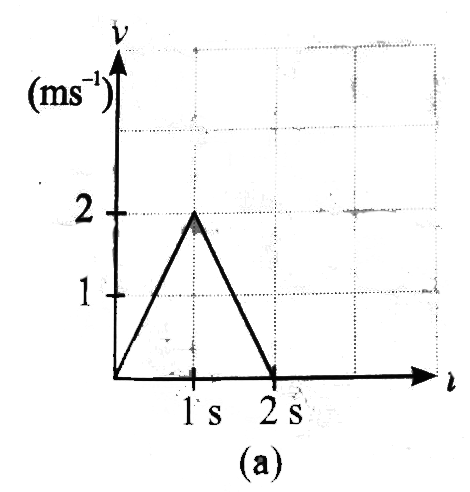
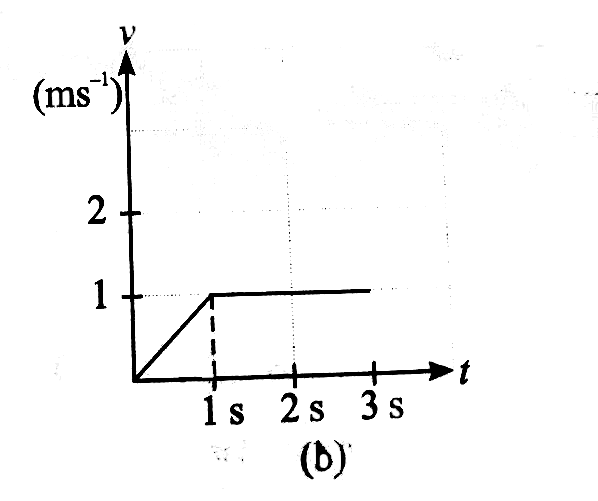
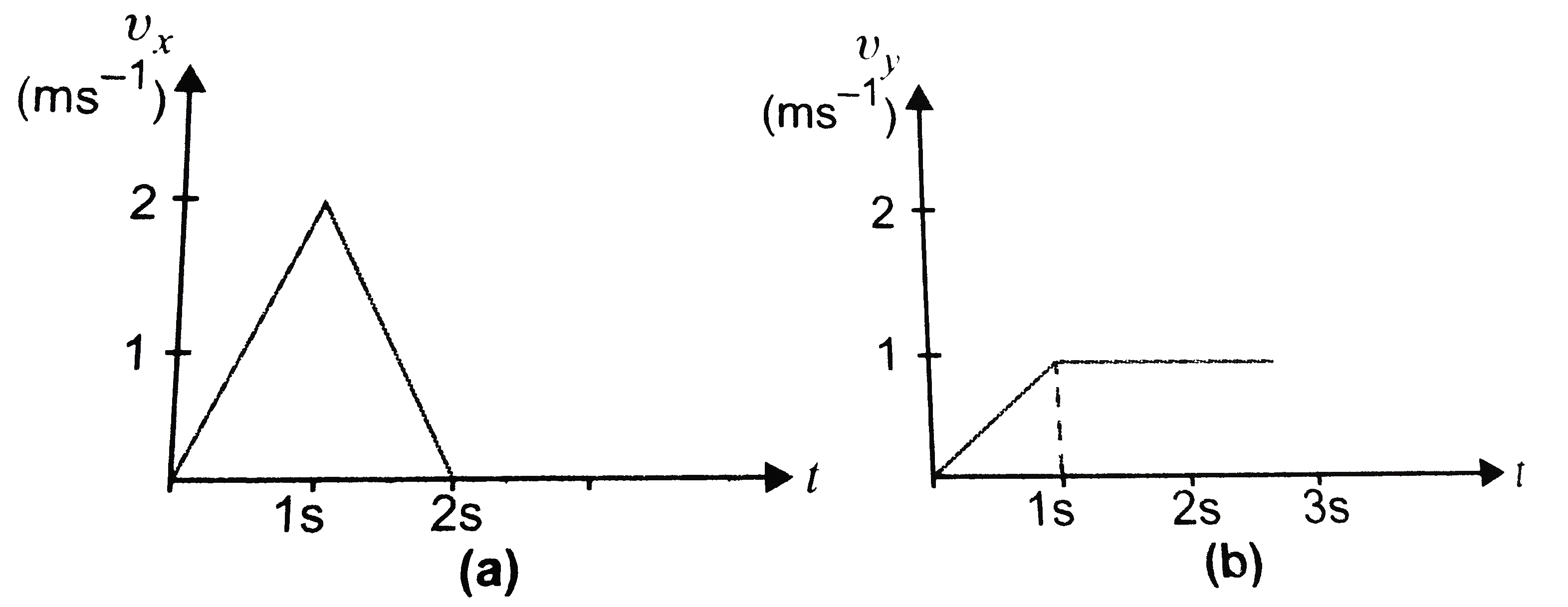
- Figure shows (vx,t) and (vy,t) diagram for a body of unit mass. Find t...
Text Solution
|
- A racing car travels on a track (without banking) ABCDEFA.ABC is a cir...
Text Solution
|
- The displacement vector of a particle of mass m is given by r (t) = ha...
Text Solution
|
- A cricket bowler releases the ball in two different ways (a) giving...
Text Solution
|
- There are four force acting at a point p produced by strings as shown ...
Text Solution
|
- A rectangular box lies on a rough inclined surface . The coefficient o...
Text Solution
|
- A helicopter of mass 2000 kg rises with a vertical acceleration of 15m...
Text Solution
|