Home
Class 11
PHYSICS
One mole of an ideal gas goes from an in...

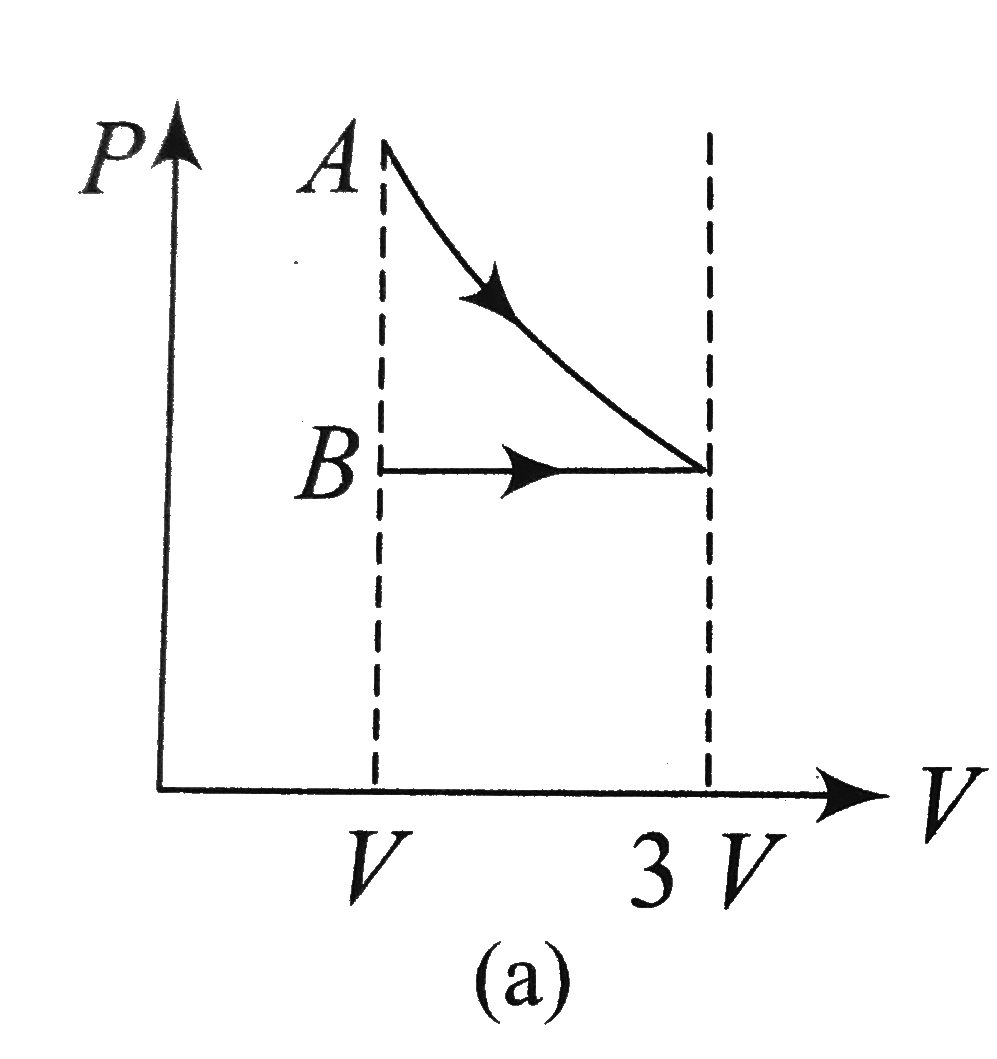
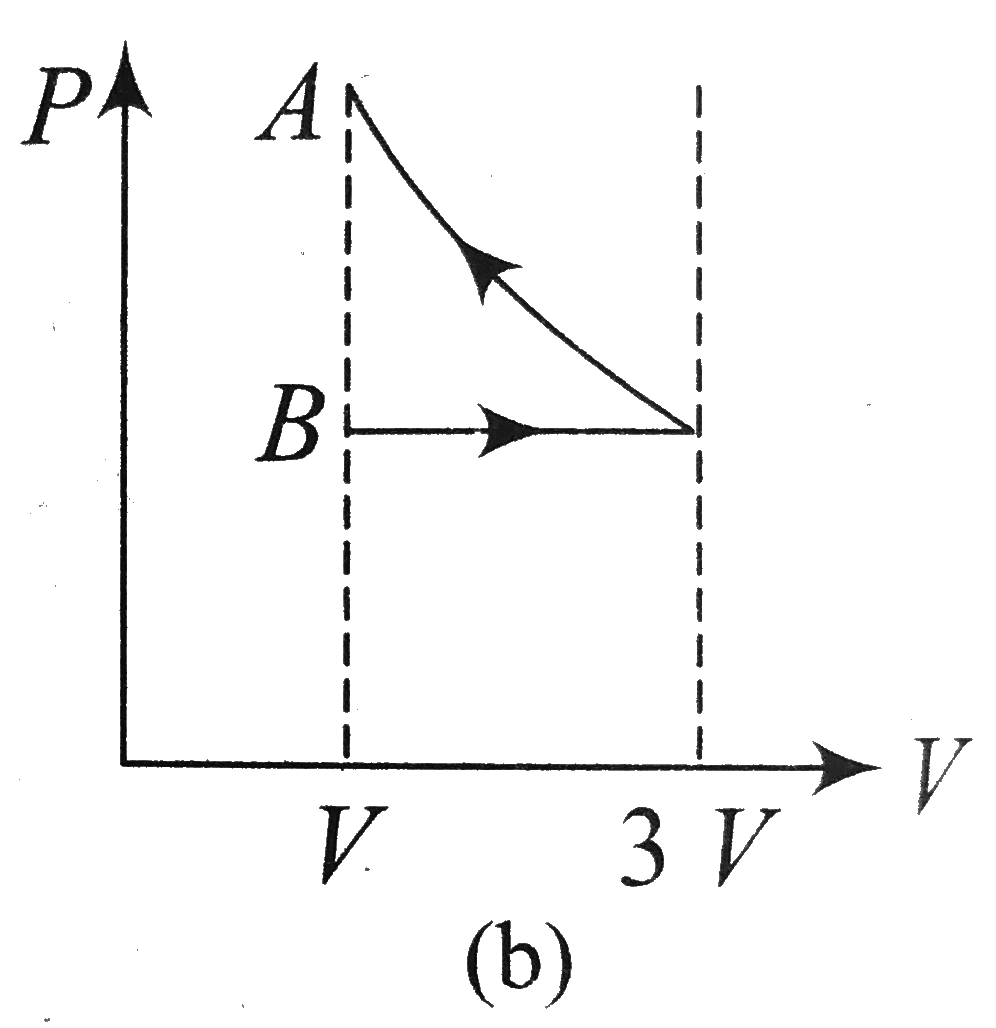
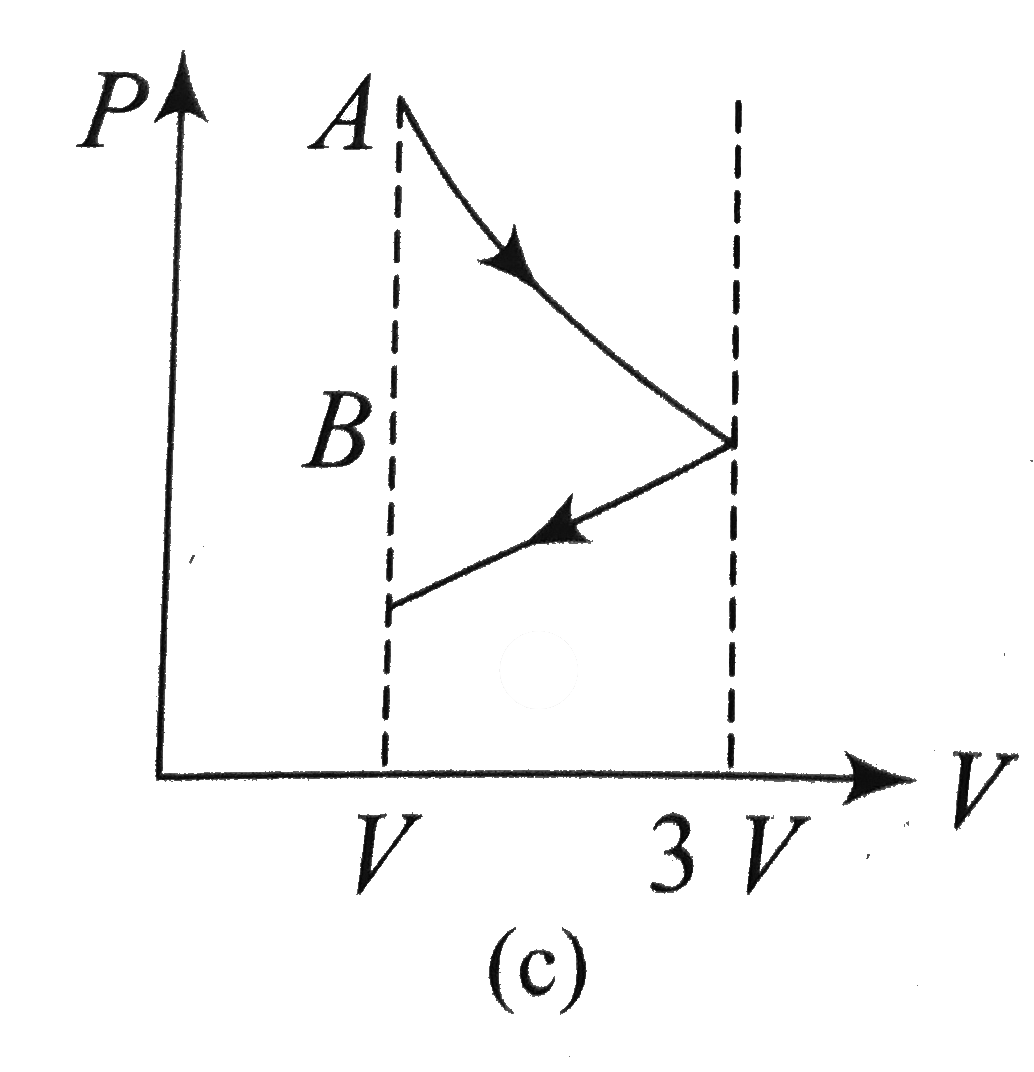
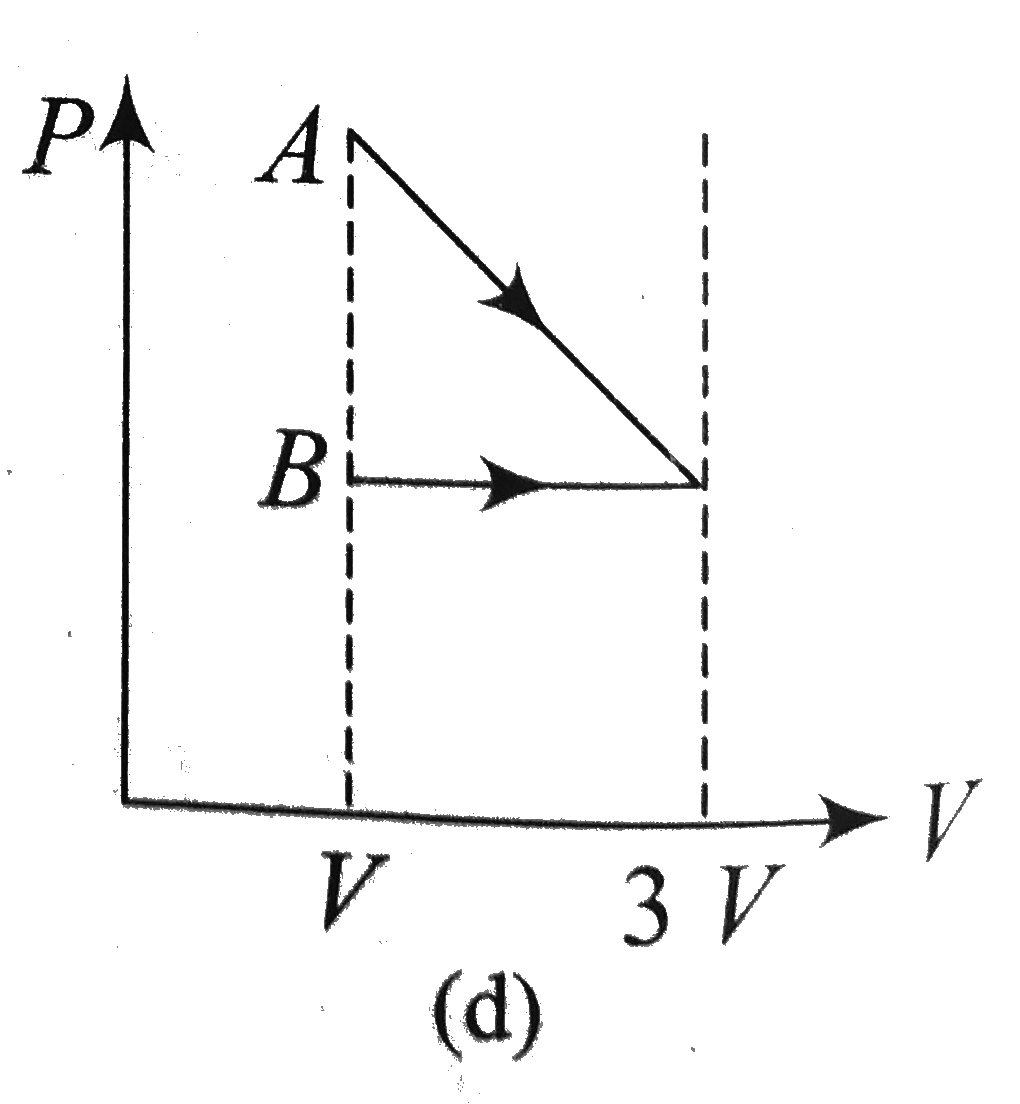
One mole of an ideal gas goes from an initial state A to final state B via two processs : It first undergoes isothermal expansion from volume `V` to `3 V` and then its volume is reduced from `3 V` to `V` at constant pressure. The correct `P-V` diagram representing the two process in (figure)

A

B

C

D

Text Solution

Verified by Experts

The correct Answer is:

A

In the first process there is isothermal expansion from volume `V` to `3V` followed by isobaric compression from `3V` to `V`.
Promotional Banner

Topper's Solved these Questions

  • KINETIC THEORY OF GASES AND THERMODYNAMICS

    A2Z|Exercise AIIMS Questions|27 Videos
  • KINETIC THEORY OF GASES AND THERMODYNAMICS

    A2Z|Exercise Chapter Test|29 Videos
  • KINETIC THEORY OF GASES AND THERMODYNAMICS

    A2Z|Exercise Assertion Reasoning|15 Videos
  • GRAVITATION

    A2Z|Exercise Chapter Test|29 Videos
  • MOCK TEST

    A2Z|Exercise Motion With Constant Acceleration|15 Videos

Similar Questions

Explore conceptually related problems

A gas at initial temperature T undergoes sudden expansion from volume V to 2V. Then -

P - V diagram of an ideal gas is shown. The gas undergoes from initial state A to final state B such that initial and final volumes are same. Select the correct alternative for given process AB.

The initial state of certain gas (P_(i)V_(i)T_(i)) .It undergoes expansion till its volume becomes V_(f) at constant temperature T. The correct plot of P-V diagram for it is

Two moles of an ideal gas have an initial kelvin temperature T_i and absolute pressure P_i the gas undergoes a reversible isothermal compression from an initial volume V_i to a final volume 0.5 V_i How much heat is exchanged with the environment? If heat is exchanged, is it absorbed or released?

n mole a perfect gas undergoes a cyclic process ABCA (see figure) consisting of the following processes. A to B : Isothermal expansion at temperature T so that the volume is doubled from V_1 to V_2 = 2V_1 and pressure changes from P_1 to P_2 B to C : Isobaric compression at pressure P_2 to initial volume V_1 C to A : Isochoric change leading to change of pressure from P_2 to P_1 . Total work done in the complete cycle ABCA is :

If n moles of an ideal gas are expanded is isothermally and reversibly from an initial state in which it has pressure p_(1) and volume V_(1) to the final state of volume V_(2) and pressure P_(2) , then

One mole of a monatomic ideal gas has an initial pressure, volume, and temperature of P_0 , V_0 , and 438 K, respectively. It undergoes an isothermal expansion that triples the volume of the gas. Then, the gas undergoes an isobaric compression back to its original volume. Finally, the gas undergoes an isochoric increase in pressure, so that the final pressure, volume, and temperature are p_0 V_0 and 438 K, respectively. Find the total heat for this three-step process, and state whether it is absorbed by or given off by the gas.

A2Z-KINETIC THEORY OF GASES AND THERMODYNAMICS-NEET Questions
  1. A mass of diatomic gas(gamma=1.4) at a pressure of 2 atomphere is comp...

    Text Solution

    |

  2. A thermodynamic system is taken through the cycle ABCD as shown in the...

    Text Solution

    |

  3. One mole of an ideal gas goes from an initial state A to final state B...

    Text Solution

    |

  4. An ideal gas goes from State A to state B via three different process ...

    Text Solution

    |

  5. A gas is taken through the cycle A rarrB rarr C rarr A, as shown in fi...

    Text Solution

    |

  6. During an adiabatic process, the pressure of a gas is found to be prop...

    Text Solution

    |

  7. In the given (V-T) diagram, what is the relation between pressure P(1)...

    Text Solution

    |

  8. The amount of heat energy required to raise the temperature of 1 g of ...

    Text Solution

    |

  9. A thermodynamic system undergoes cyclic process ABCDA as shown in figu...

    Text Solution

    |

  10. The mean free path of molecules of a gas (radius r) is inversely propo...

    Text Solution

    |

  11. A Carnot engine, having an efficiency of eta=1//10 as heat engine, is ...

    Text Solution

    |

  12. In (figure). shows two path that may be taken by a gas to go from a st...

    Text Solution

    |

  13. One mole of an ideal diatomic gas undergoes a transition from A to B a...

    Text Solution

    |

  14. The ratio of the specific heats (C(P))/(C(upsilon)) = gamma in terms o...

    Text Solution

    |

  15. Two vessel separately contains two ideal gases A and B at the same tem...

    Text Solution

    |

  16. 4.0 g of a gas occupies 22.4 litres at NTP. The specific heat capacity...

    Text Solution

    |

  17. The coefficient of performance of a refrigerator is 5. If the temperat...

    Text Solution

    |

  18. An ideal gas is compressed to half its initial volume by means of seve...

    Text Solution

    |

  19. A refrigerator works between 4^(@)C and 30^(@)C. It is required to rem...

    Text Solution

    |

  20. The molecules of a given mass of a gas have rms velocity of 200 m//s a...

    Text Solution

    |
