Home
Class 11
CHEMISTRY
Find the D.U. and give the possible stru...

Find the `D.U.` and give the possible structures of following compounds `:`
a. `C_(7)H_(7)CL` that gives blcak soot on burning ?
b. `C_(3)H_(6)O`
c. `C_(3)H_(5)N`
d. `CH_(4)O_(3)S`

Text Solution

Verified by Experts
`C_(7)H_(7)CLimplies C_(7)H_(7+1)=C_(7)H_(8)`
`i.` `D.U.=((2n_(C)+2)-n_(H))/(2)=((2xx7+2)-8)/(2)=4^(@)`
`ii` `C:H~~1:1`. It is an aromatic compound containing benzene ring whose `D.U.=4^(@)`. Black soot is given by the aromatic compound.
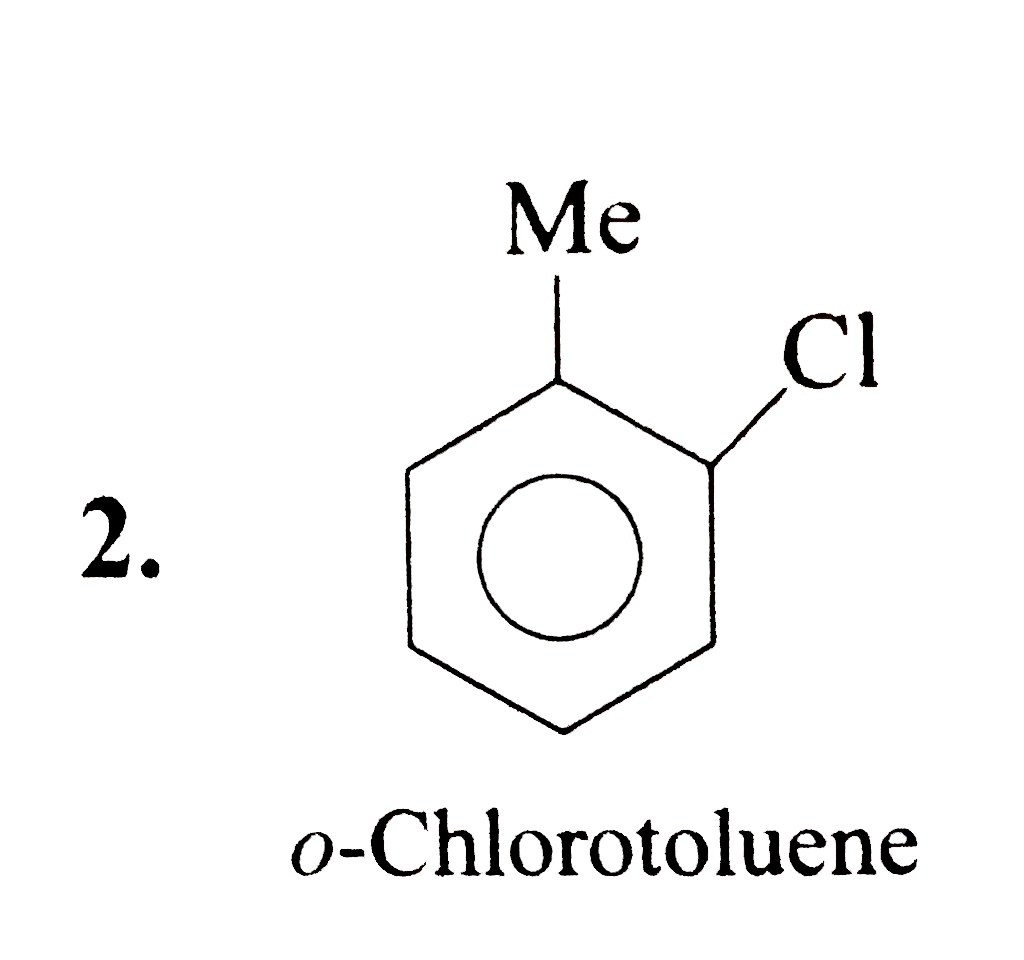
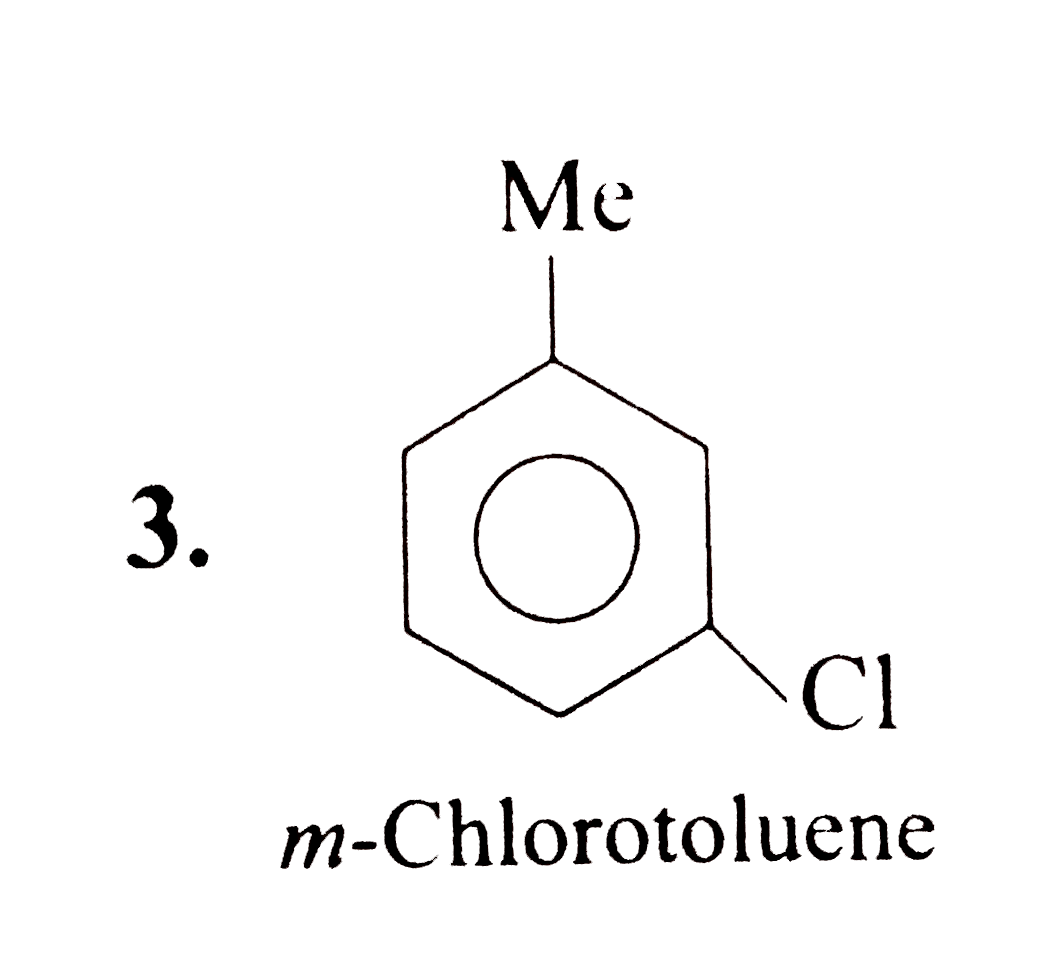
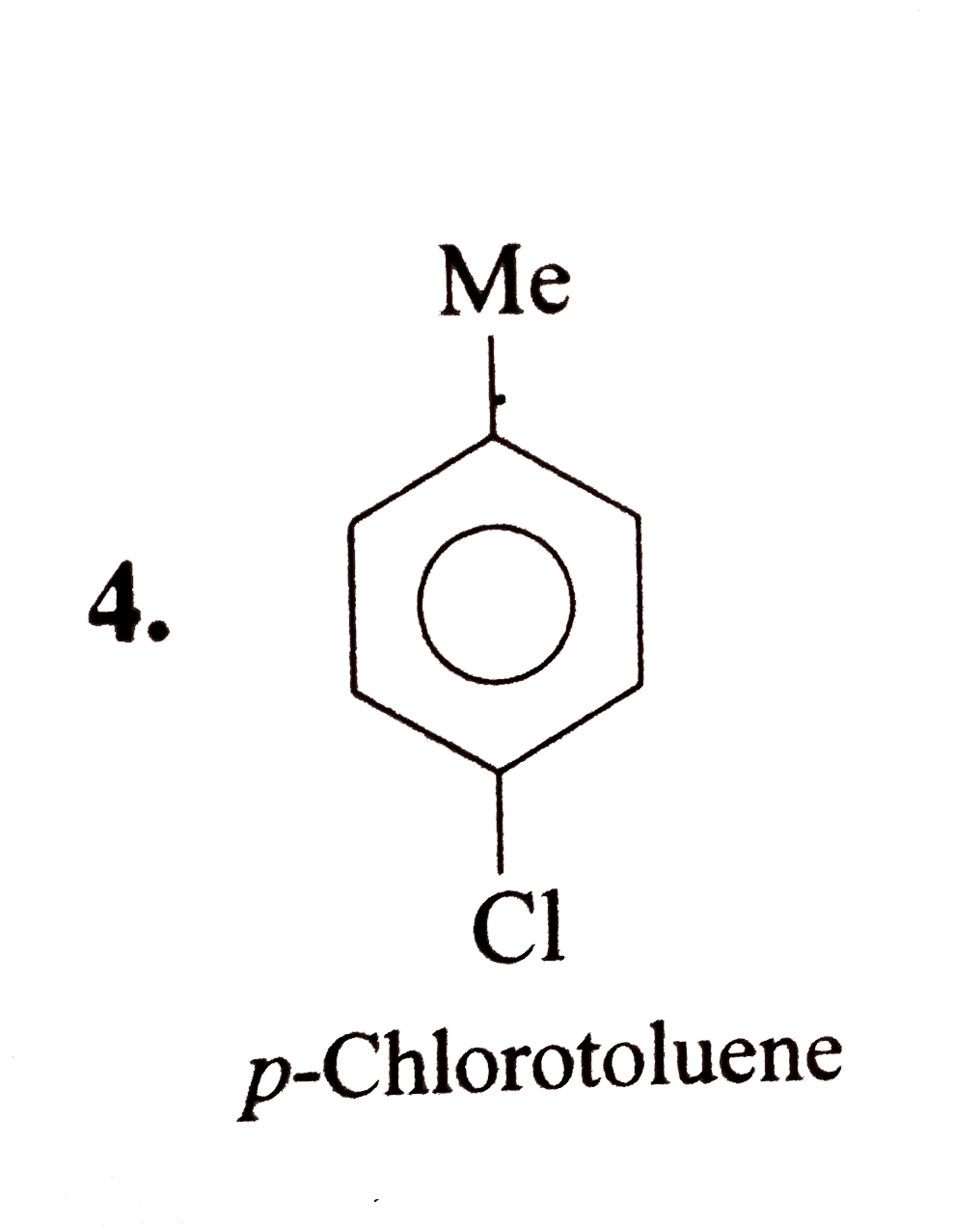
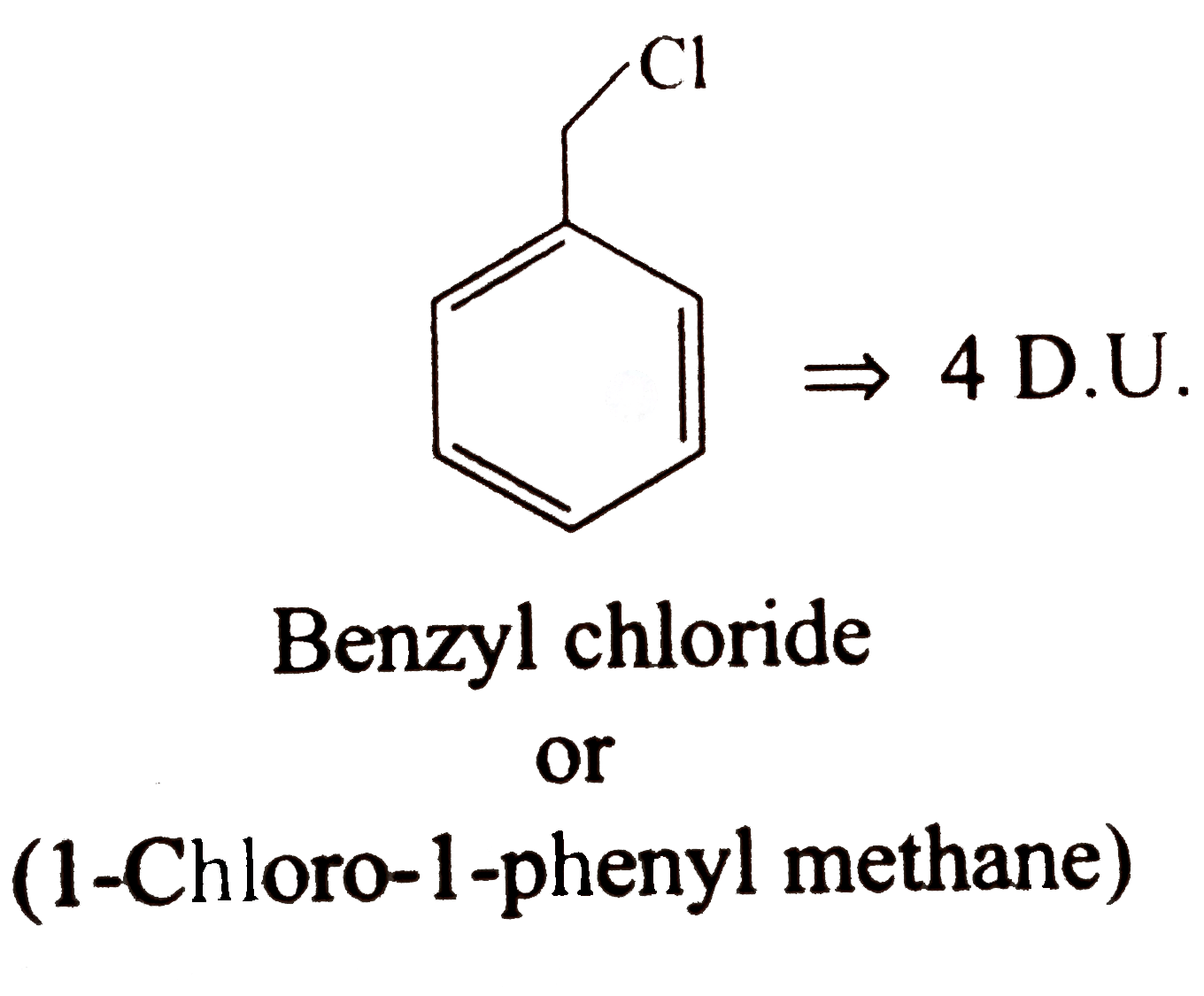
`iii` The compound may be one of those that are given below, having six `C` atoms in the benzene ring, one `C` atom extra, and one `(CI)` group.
Four isomeric structures are possible `:`
`1.`
`2.`
`b.` `C_(3)H_(6)OimpliesC_(3)H_(6)`
`i` `D.U.=((2xx3+2)-6)/(2)=1^(@)`
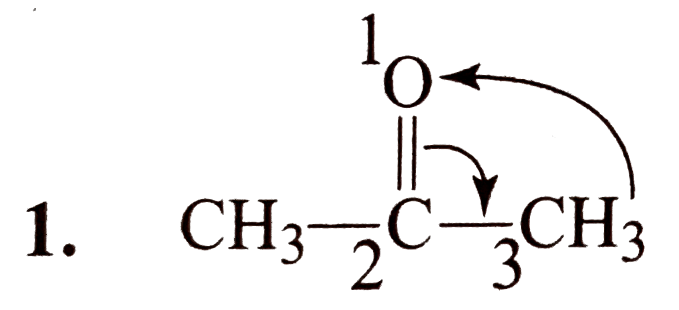
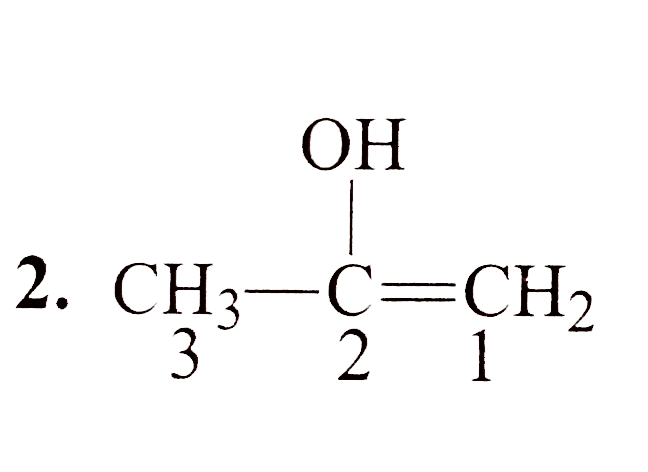
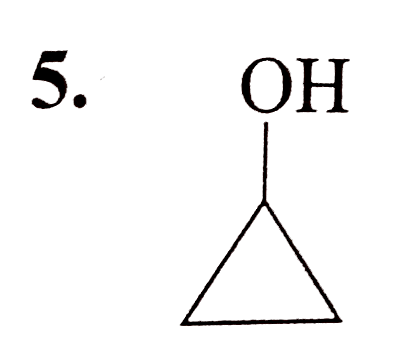
`ii` It may contain a carbonyl group or one `(C=C)`, bond with `(-OH)` group or a ring with `(-OH)` group.
`iii.` The compound may be `:`
`1.`
` 2.` `(` Prop `-1` en`-2-`ol`)`
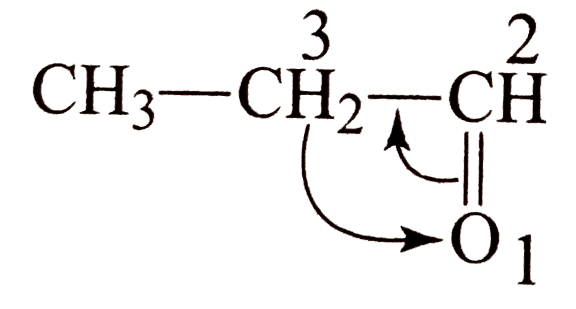
`3.` Functional isomer of ketone is aldehyde
`(` Propanel `)` or `(` Propionaldehyde `)`

Tautomerisation `(1,3-` shift of `sigma-` and `pi-` bond `)`
`4.` `(`Prop `-1-`en`-2-`ol `)`
`5.` `(` Cyclopropan `-1-`ol `)`
Five isomerica structures are possibile.
`C_(3)H_(5)NimpliesC_(3)H_(5-1)=C_(3)H_(4)`
` D.U. =((2xx3+2)-4)/(2)=2^(@)`
It may contain `:`
`i` A cyanide group `(-C-=N)implies2 D.U.` and its functional isomer isocynaide.
The compound may be, `e.g.,`
`{:(1.,CH_(3)-CH_(2)-CH-=N,2.,CH_(3)-CH_(2)-Nunderset(rarr)(=)C),(," Propane nitrile",," Ethyl isocyanide"),(," or",," or"),(," Ethyl cyanide",," Ethyl carbylamine"):}`
`ii` It may contain one `(C-=C)` bond with `(NH_(2))` group .
For example,
1. `underset(1-"Amino prop-1-yne")(H_(3)overset(3)(C )-overset(2)(C )-=overset(1)(C )-NH_(2))`
2. `underset(1-"Amino prop-2-yne")(Hoverset(3)(C )-overset(2)(C )-=overset(1)(CH_(2))-NH_(2))`
`iii` It may contain two `(C=C)` bonds with `(NH_(2))` group or `(= NH)(` imine group).
For example,
1. `underset(1-"Amino prop-1,2-diene")(H_(2)overset(3)(C )=overset(2)(C )=overset(1)(CH)-NH_(2))`
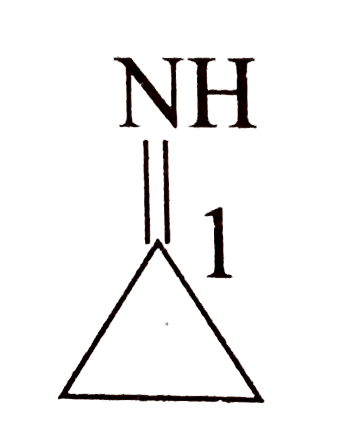
2.
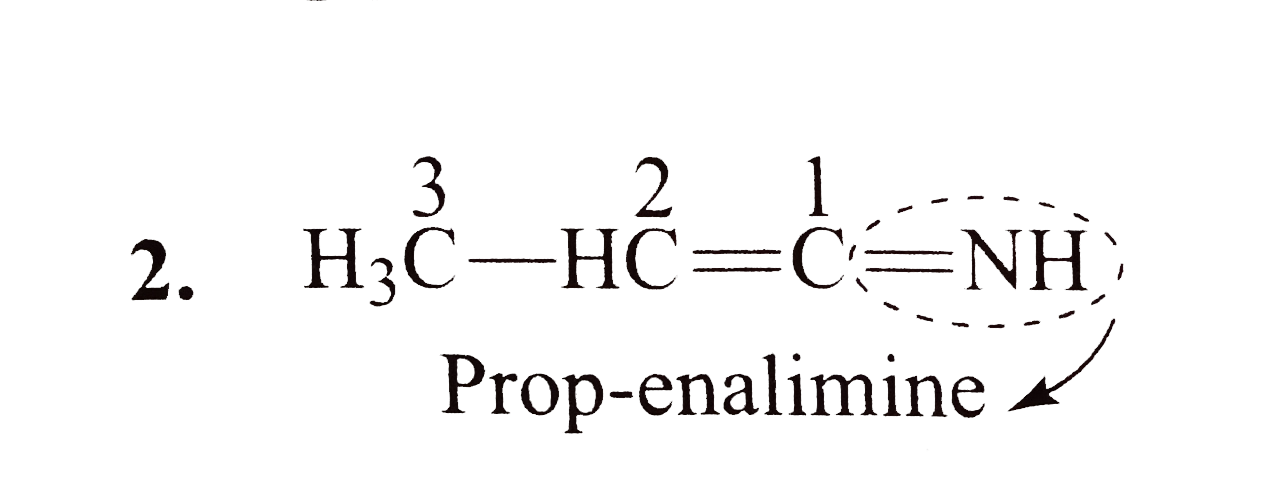
3 `underset("Prop-2-enalimine")(Hoverset(3)(C_(2))=Coverset(2)(H)-overset(1)(CH)=NH)`
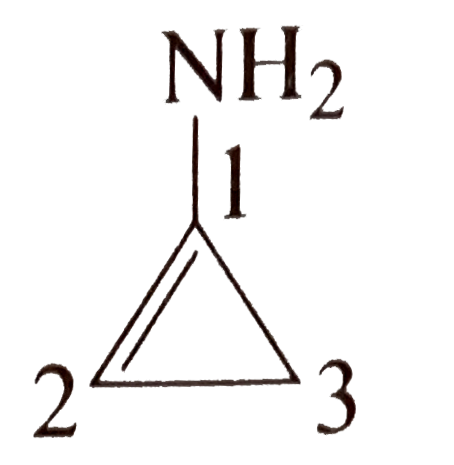
`iv` It may contain one ring one `(C=C)` bond with `(NH_(2))` or `(=NH)` group.
For example.
`1.`

`1-` Amino cycloprop `-1-` ene

`1-` Amino cycloprop `-2-` ene

Cyclopropanlimine
Ten isomerica structures are possible.
`d.` `CH_(4)O_(3)Simplies` Discard `O` and `S` and `-4H` for each` S` atom `implies CH_(4-4)=C`
`D.U. =((2xx1+2)-0)/(2)=2^(@)`
It cannot have `(C=C)` or `(C-=C)` bond or ring because there is only one `C` atom. So, `S` atom with two `(S=O)` groups is possible.
Therefore, only one structure is possible.
`[CH_(3)-overset(O)overset(||)underset(O)underset(||)(S)-OH]D.U.=2`
Methyl sulphonic acid
Promotional Banner

Topper's Solved these Questions

  • ALKENES AND ALKADIENES

    CENGAGE CHEMISTRY|Exercise SOLVED Example|62 Videos
  • ALKENES AND ALKADIENES

    CENGAGE CHEMISTRY|Exercise EXERCISES|29 Videos
  • ALKANES AND CYCLOALKANES

    CENGAGE CHEMISTRY|Exercise Archives|13 Videos
  • ALKYNES

    CENGAGE CHEMISTRY|Exercise Exercises (Archives - Analytical and Desriptive Type)|4 Videos

Similar Questions

Explore conceptually related problems

Find DU of following compound:- (a) C_(6)H_(6)O , (b) C_(6)H_(5)I , ( c) C_(6)H_(6)ClBrO , (d) C_(5)H_(9)N

Draw the possible isomers of the compound with molecular formula C_(3)H_(6)O and also give their electron dot structures.

An organic compound A (C_(7)H_(6)Cl_(2)) on treatment with NaOH solution gives another compound B (C_(7)H_(6)O) . B on oxidation gives and acid C (C_(7)H_(6)O_(2)) which on treatment with a mixture of conc. HNO_(3)" and "H_(2)SO_(4) gives a compound D (C_(7)H_(5)NO_(4)) . B on treatment with conc. NaOH gives a compound E (C_(7)H_(8)O)" and "C_(6)H_(5)COONa . Deduce the structures of [A], [B], [C], [D] and [E].

Compound A (C_(7) H_(7)Cl) react with aq. KOH at room temperature and give compound D(C_(7)H_(8) O) . Another isomer B gives only one mononitration product on treatment with HNO_(3) + H_(2)SO_(4) mixture . Isomer C gives comound E(C_(7)H_(5)O_(2)Cl) on heating with KMnO_(4) solution . E gives 3-chloro-4-nitrobezoic acid as major product . Identify compound D.