
Text Solution
Verified by Experts
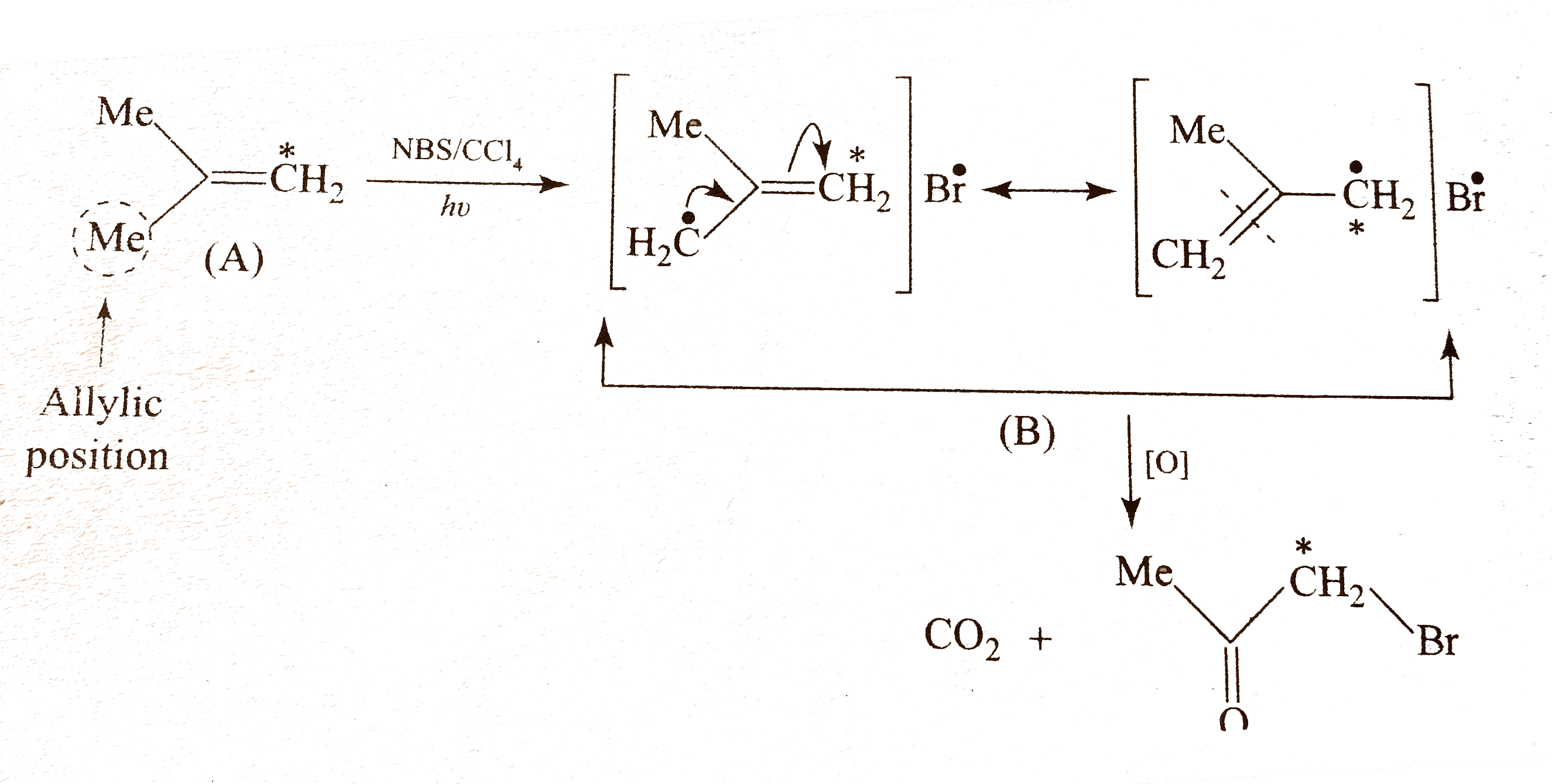



Topper's Solved these Questions
ALKENES AND ALKADIENES
CENGAGE CHEMISTRY|Exercise EXERCISES|29 VideosALKENES AND ALKADIENES
CENGAGE CHEMISTRY|Exercise linked Comprehension Type|38 VideosALKENES AND ALKADIENES
CENGAGE CHEMISTRY|Exercise Single correct Answer|14 VideosALKANES AND CYCLOALKANES
CENGAGE CHEMISTRY|Exercise Archives|13 VideosALKYNES
CENGAGE CHEMISTRY|Exercise Exercises (Archives - Analytical and Desriptive Type)|4 Videos
Similar Questions
Explore conceptually related problems
CENGAGE CHEMISTRY-ALKENES AND ALKADIENES-SOLVED Example
- Write the intermediate step and give the product of the following reac...
Text Solution
|
- Complete the following reactions : a. b. c. d. e.
Text Solution
|
- a. Identigy (B) and (C) and also explain the formation of C^(14)(...
Text Solution
|
- Complete the following reaction :
Text Solution
|
- Identify the products in the following reactions giving their stereois...
Text Solution
|
- Identify (A), (B), and (C) in the following reaction.
Text Solution
|
- What is the numberical value of (B) and (D) and what types of isomers...
Text Solution
|
- Complete the following reaction :
Text Solution
|
- Complete the following reaction :
Text Solution
|
- Identify (A) to (H).
Text Solution
|
- Write the product with its mechanism.
Text Solution
|
- Identify (A) to (D).
Text Solution
|
- Identify (A) to (G).
Text Solution
|
- Bulky t-butyl group is always on the equatorial position because of ...
Text Solution
|
- Which of the following show G.I.? a. b. c. d. e. ...
Text Solution
|
- Give IUPAC name to each to the following using E or Z designations. ...
Text Solution
|
- Give IUPAC names for the following using E and Z designations. a. ...
Text Solution
|
- Give IUPAC name of the following using E//Z and R//S designations. a...
Text Solution
|
- Complete the following reaction. a. b. Alcohols are converted to...
Text Solution
|
- Give the reaction of the following : i. ii. 2-Bromo butane + C(2...
Text Solution
|