Home
Class 10
CHEMISTRY
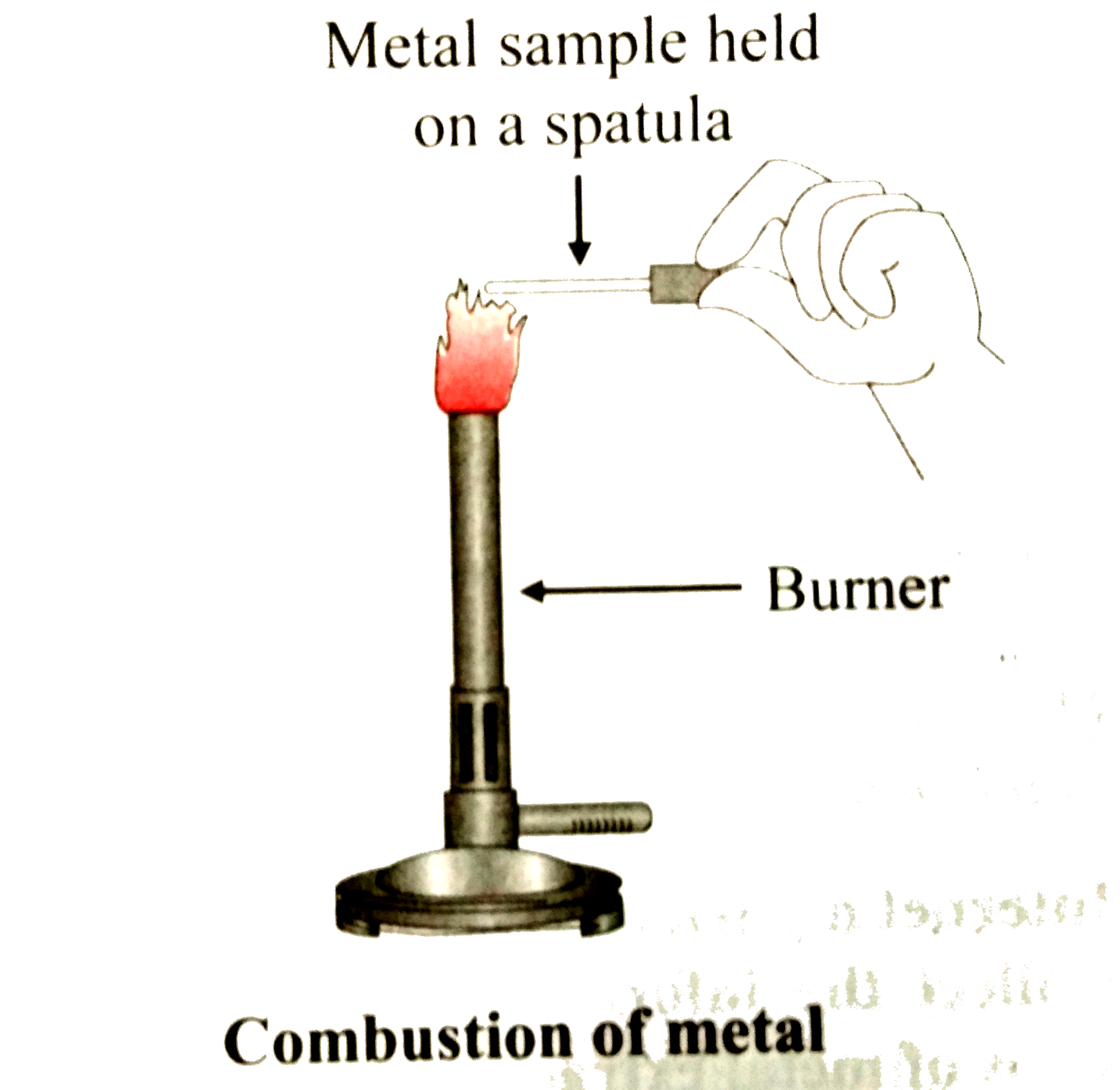
Apparatus: Pairs of tongs or spatula, kn...

Apparatus: Pairs of tongs or spatula, knife, burner, etc.
Chemicals: Samples of aluminium, copper, iron, lead, magnesium, zinc and sodium.
Procedure: Hold the sample of each of the above metals at the top of the flame of a burner with the help of a pair of tongs, or a spatula

How does the surface of a metal appear on catching fire?

Text Solution

Verified by Experts

The surface of a metal appears greyish black due to the formation of metal oxide.
Promotional Banner

Topper's Solved these Questions

  • METALLURGY

    TARGET PUBLICATION|Exercise CHAPTER ASSESSMENT|19 Videos
  • METALLURGY

    TARGET PUBLICATION|Exercise QUESTION BASED ON PARAGRAPH|5 Videos
  • CHEMICAL REACTIONS AND EQUATIONS

    TARGET PUBLICATION|Exercise Give balanced chemical equation|26 Videos
  • PERIODIC CLASSIFICATION OF ELEMENTS

    TARGET PUBLICATION|Exercise Chapter Assessment|9 Videos

Similar Questions

Explore conceptually related problems

Apparatus: Pairs of tongs or spatula, knife, burner, etc. Chemicals: Samples of aluminium, copper, iron, lead, magnesium, zinc and sodium. Procedure: Hold the sample of each of the above metals at the top of the flame of a burner with the help of a pair of tongs, or a spatula Which metal catches fire readily?

Apparatus: Pairs of tongs or spatula, knife, burner, etc. Chemicals: Samples of aluminium, copper, iron, lead, magnesium, zinc and sodium. Procedure: Hold the sample of each of the above metals at the top of the flame of a burner with the help of a pair of tongs, or a spatula What is the colour of the flame while the metal is burning on the flame?

Apparatus: Metal spatula, burner, carbon electrodes, beaker, cell, lamp, press key, electrical wires, etc. Chemicals: Samples of sodium chloride, potassium iodide and barium chloride, water. Procedure: Observe the above samples. Place sample of one of the above salts on the spatula and heat it on the flame of the burner. Repeat the procedure using the other salts. As shown in the figure, assemble an electrolytic cell. Assemble an electrolytic cell by using a beaker and connecting the carbon electrodes to the positive and negative terminal of the cell. Dip the electrodes in solution of any one of the salts. Do you see the lamp glowing? Check this with all the other salts as well.

Apparatus: Bunsen burner, copper gauze, metal plate, etc. Chemicals : Ethanol, acetic acid, naphthalene Procedure: Place one of the above chemicals (3-4 drops or a pinch) on clean copper gauze at room temperature, hold it on a blue flame of the Bunsen burner and observe. Is smoke/soot seen to form due to combustion? Hold the metal plate on the flame when the substance is undergoing combustion. Does any diposit get collected on the plate? Which colour? Repeat the same procedure using other chemicals from the above list.

Apparatus: Big test tube, delivery tube fitted in a rubber cork, knife, candle, etc. Chemicals : Sodium metal, ethanol, magnesium ribbon, etc. Procedure : Take 10 mL ethanol in a big test tube. Cut Sodium metal into 2-3 pieces of a cereal grain size. Put the sodium pieces into the ethanol in the test tube and fix the gas delivery tube to the test tube. Take a burning candle near the outlet of the gas delivery tube and observe. Does magnesium metal react with ethanol?

Apparatus: Big test tube, delivery tube fitted in a rubber cork, knife, candle, etc. Chemicals : Sodium metal, ethanol, magnesium ribbon, etc. Procedure : Take 10 mL ethanol in a big test tube. Cut Sodium metal into 2-3 pieces of a cereal grain size. Put the sodium pieces into the ethanol in the test tube and fix the gas delivery tube to the test tube. Take a burning candle near the outlet of the gas delivery tube and observe. Repeat the above procedure using magnesium ribbon instead of sodium. Do you see gas bubble released from the piece of magnesium ribbon?

TARGET PUBLICATION-METALLURGY-APPLY YOUR KNOWLEDGE
  1. Which method do we use when we want to study many things together and ...

    Text Solution

    |

  2. Apparatus: Pairs of tongs or spatula, knife, burner, etc. Chemicals...

    Text Solution

    |

  3. Apparatus: Pairs of tongs or spatula, knife, burner, etc. Chemicals...

    Text Solution

    |

  4. Apparatus: Pairs of tongs or spatula, knife, burner, etc. Chemicals...

    Text Solution

    |

  5. Apparatus: Beakers. Chemicals: Samples of various metals , water. ...

    Text Solution

    |

  6. Apparatus: Beakers. Chemicals: Samples of various metals , water. ...

    Text Solution

    |

  7. Apparatus: Beakers. Chemicals: Samples of various metals , water. ...

    Text Solution

    |

  8. Test whether the metals gold, silver and copper react with water and t...

    Text Solution

    |

  9. A man went door to door posing as a goldsmith. He promised to bring ba...

    Text Solution

    |

  10. Apparatus: Copper wire, iron nail, beaker or big test tube, etc. Che...

    Text Solution

    |

  11. Apparatus: Copper wire, iron nail, beaker or big test tube, etc. Che...

    Text Solution

    |

  12. Apparatus: Copper wire, iron nail, beaker or big test tube, etc. Che...

    Text Solution

    |

  13. Apparatus: Metal spatula, burner, carbon electrodes, beaker, cell, lam...

    Text Solution

    |

  14. Collect the information about the different steps of metal extraction ...

    Text Solution

    |

  15. Collect Information. Collect information regarding bar and write is ex...

    Text Solution

    |

  16. What is corrosion ?

    Text Solution

    |

  17. Have you seen the following things? Old iron bars of buildings, cop...

    Text Solution

    |

  18. Why do silver articles turn blackish while copper vessels turn greenis...

    Text Solution

    |

  19. Why do pure gold and platinum always glitter?

    Text Solution

    |

  20. Which measures would you suggest to stop the corrosion of metallic art...

    Text Solution

    |
