Home
Class 11
PHYSICS
A spherically symmetric gravitational sy...

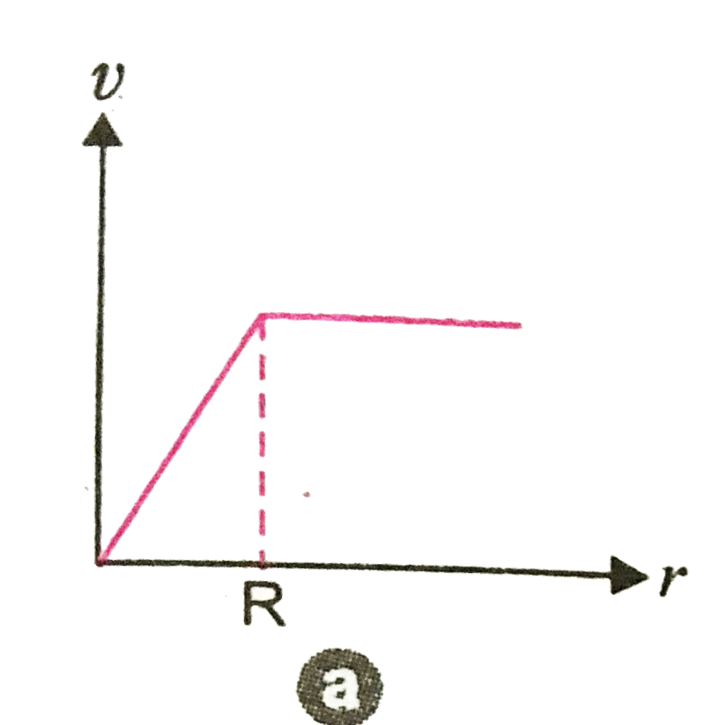
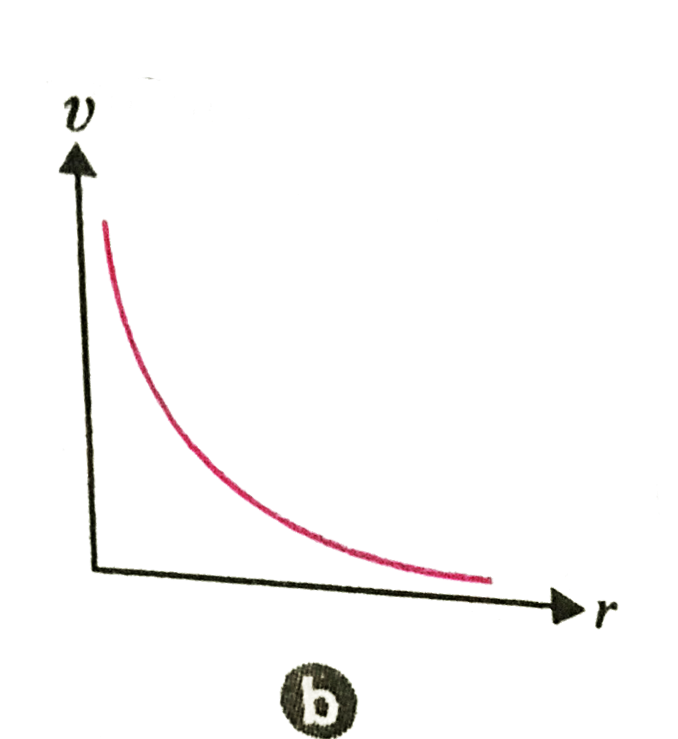
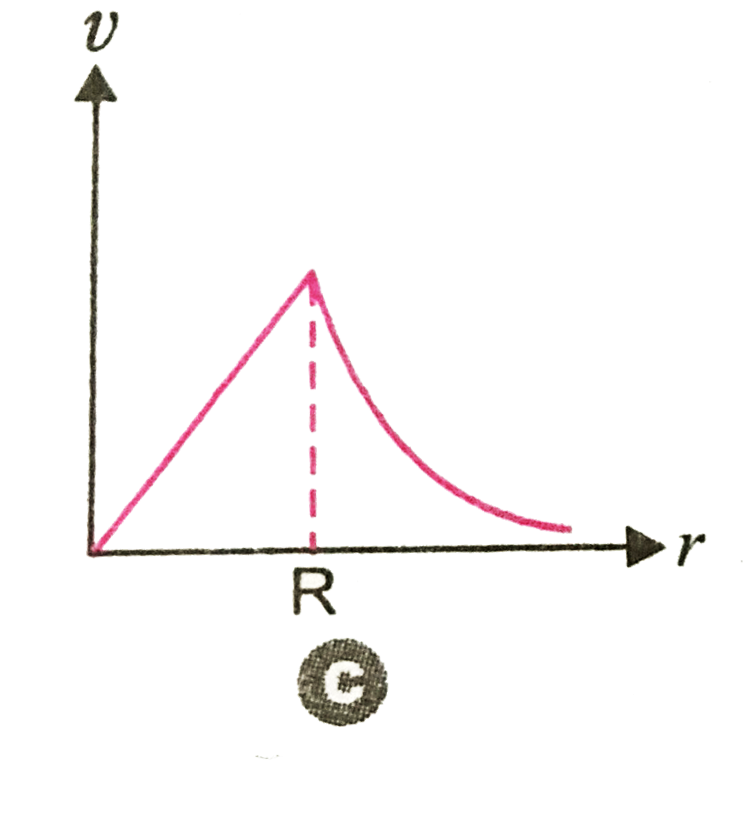
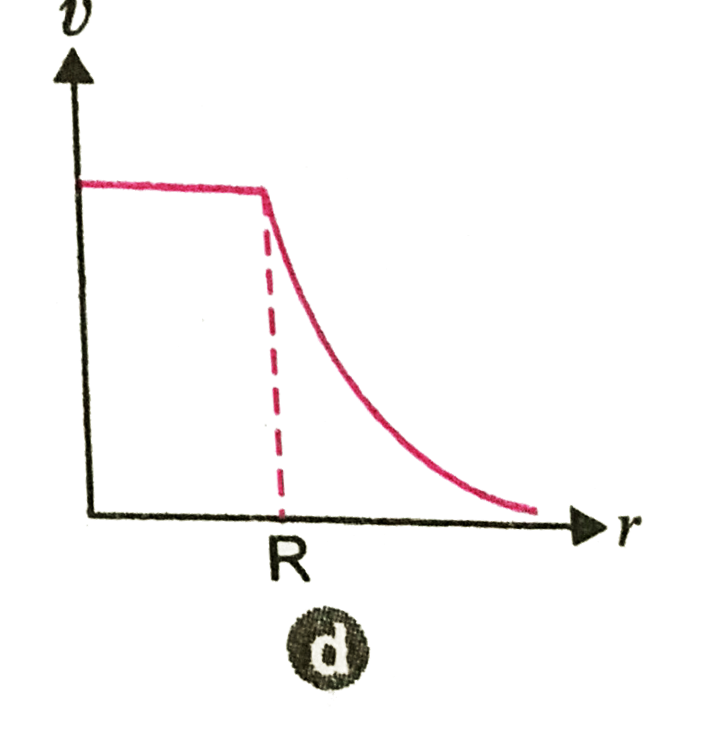
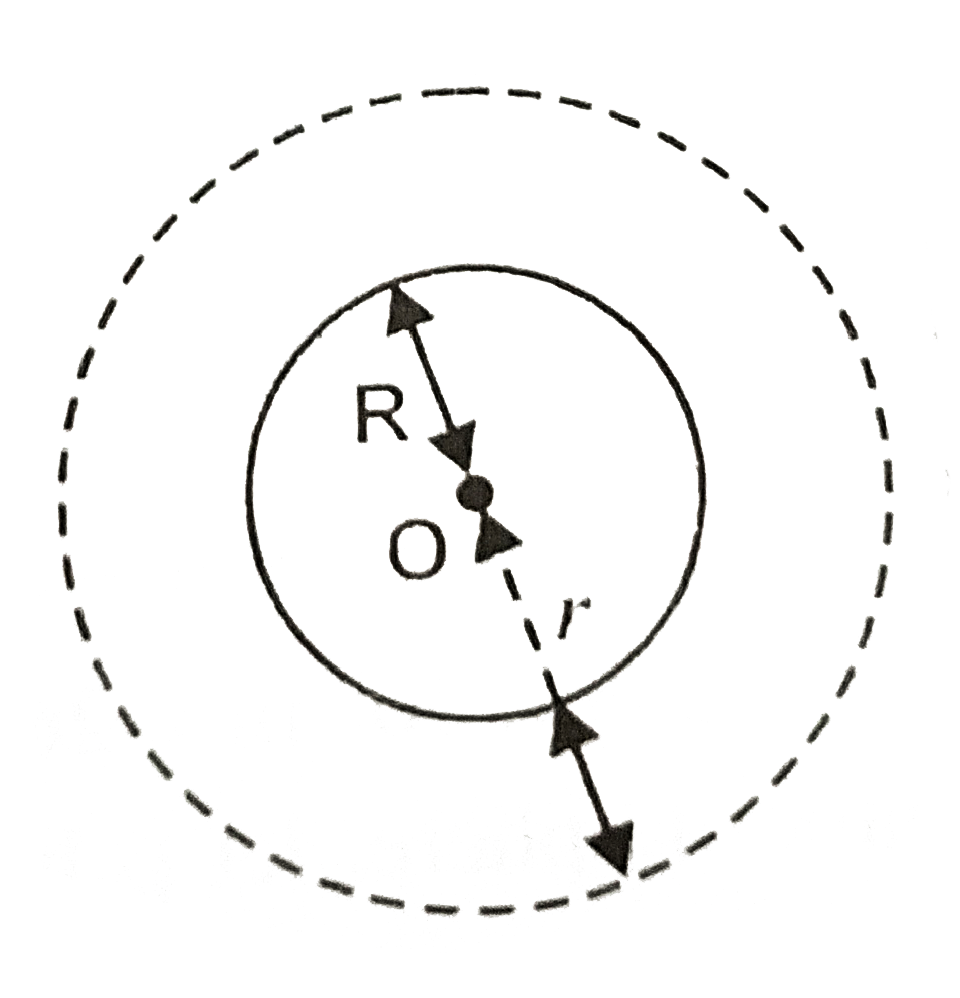
A spherically symmetric gravitational system of particles has a mass density` rho={(rho_0,for, r,lt,R),(0,for,r,gt,R):}` where`rho_0` is a constant. A test mass can undergo circular motion under the influence of the gravitational field of particles. Its speed v as a function of distahce `r(0ltrltOO)` form the centre of the system is represented by

A

B

C

D

Text Solution

Verified by Experts

The correct Answer is:
C

When `r le R`, the force on the test mass `m` at the surface of the sphere `= mg`. Force on the test mas at distance `r` from the centre of sphere is
`F = mg.(r )/(R )`.
Therefore, `mg .(r )/(R ) = (m upsilon^(2))/(r )` or `upsilon sqrt((g)/(R ))`
or `upsilon prop r` for `r le R`
When `r gt R`, the test mass is outside the sphere
Then, `(GM m)/(r^(2)) = (m upsilon^(2))/(r )`
or `upsilon = sqrt((GM)/(r )) = sqrt((g)/(r )) R` or `upsilon prop (1)/(sqrt(r))`
Therefore, the graph shown in option (c ) is correct.
Promotional Banner

Similar Questions

Explore conceptually related problems

Which one of the following plots represents the variation of the gravitational field on a particle with distance r due to a thin spherical shell of raduis R ? ( r is measured from the centre of the spherical shell).

Two particles of equal mass m go around a circle of radius R under the action the of their mutual gravitational attraction . The speed v of each particle is

The density inside a solid sphere of radius a is given by rho=rho_(0)(1-r/a) , where rho_(0) is the density at the surface and r denotes the distance from the centre. Find the gravitational field due to this sphere at a distance 2a from its centre.

Three particles of equal mass M each are moving on a circular path with radius r under their mutual gravitational attraction. The speed of each particle is

A test particle is moving in a circular orbit in the gravitational field produced by a mass density rho(r)=K/r^2 . Identify the correct relation between the radius R of the particle’s orbit and its period T:

