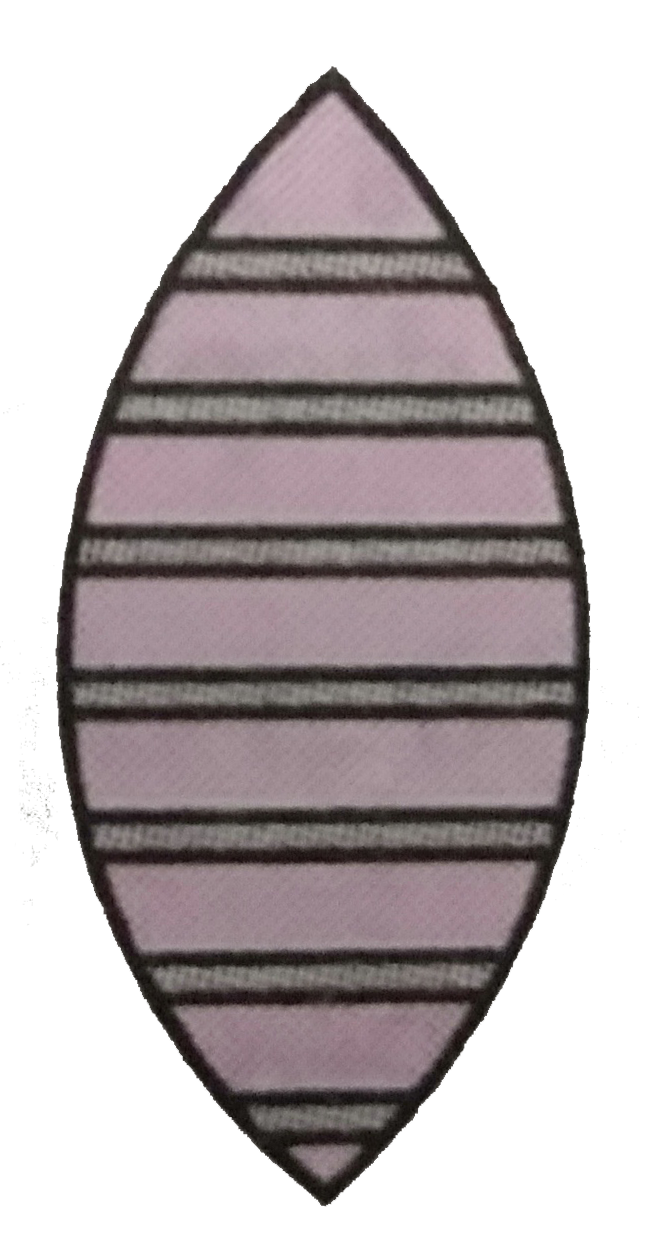
A lens shown in Fig. 6(b).75 is made of two different materials. A point object is placed on the principal axis of the lens. How many images will be obtained ?
Text Solution
Verified by Experts
As the lens is made of two different materials, it has two refractive indices and hence two different focal lengths. Hence two distinct images will be obtained.
Topper's Solved these Questions
OPTICS
PRADEEP|Exercise Very short answer question|5 Videos
OPTICS
PRADEEP|Exercise very short answer questions|1 Videos
A convex lens is made of 3 layers of glass of 3 different materials as in the figure. A point object is placed on its axis. The number of images of the object are
A convex forms a real image of a poinnt object placed on its principal axis. If the upper half of the lens is painted black
A convex lens is made up of three different materials as shown in the figure. For a point object placed on its axis, the number of images formed are
A convex lens form a real image of a point object placed on its principal axis. If the upper half of the lens is painted black, the image will
An object of 10 cm is.placed at a distance of 20 cm from a lens of focal length 25 cm. The object is placed erect on the principal axis of the. lens yet a crooked image was formed. Explain why.
A point object O is placed at a distance of 41 cm from a convex lens of focal length f = 20 cm on its principal axis. A glass slab of thickness 3 cm and refractive index mu = 1.5 is placed between the lens and the object with its faces perpendicular to the principal axis of the lens. Image of the object is formed at point I_(1) . Now the glass slab is tilted by an angle of theta = 1° (as shown in the Figure) and the final image is formed at I_(2) . Calculate the distance between points I_(1) and I_(2) . Consider only paraxial rays for the lens and near normal incidence for the glass slab.