Text Solution
Verified by Experts



Topper's Solved these Questions
REFRACTION OF LIGHT
CHETAN PUBLICATION|Exercise ASSIGNMENT (Attempt the following question)|3 VideosREFRACTION OF LIGHT
CHETAN PUBLICATION|Exercise ASSIGNMENT (Choose and write the correct option)|2 VideosREFRACTION OF LIGHT
CHETAN PUBLICATION|Exercise Paragraph questions|8 VideosMODEL ACTIVITY SHEET
CHETAN PUBLICATION|Exercise SOLVE THE FOLLOWING QUESTIONS : (ANY 1)|9 VideosSOCIAL HEALTH
CHETAN PUBLICATION|Exercise ASSIGNMENT - 9|12 Videos
Similar Questions
Explore conceptually related problems
CHETAN PUBLICATION-REFRACTION OF LIGHT -Activity Activity/Application based Questions
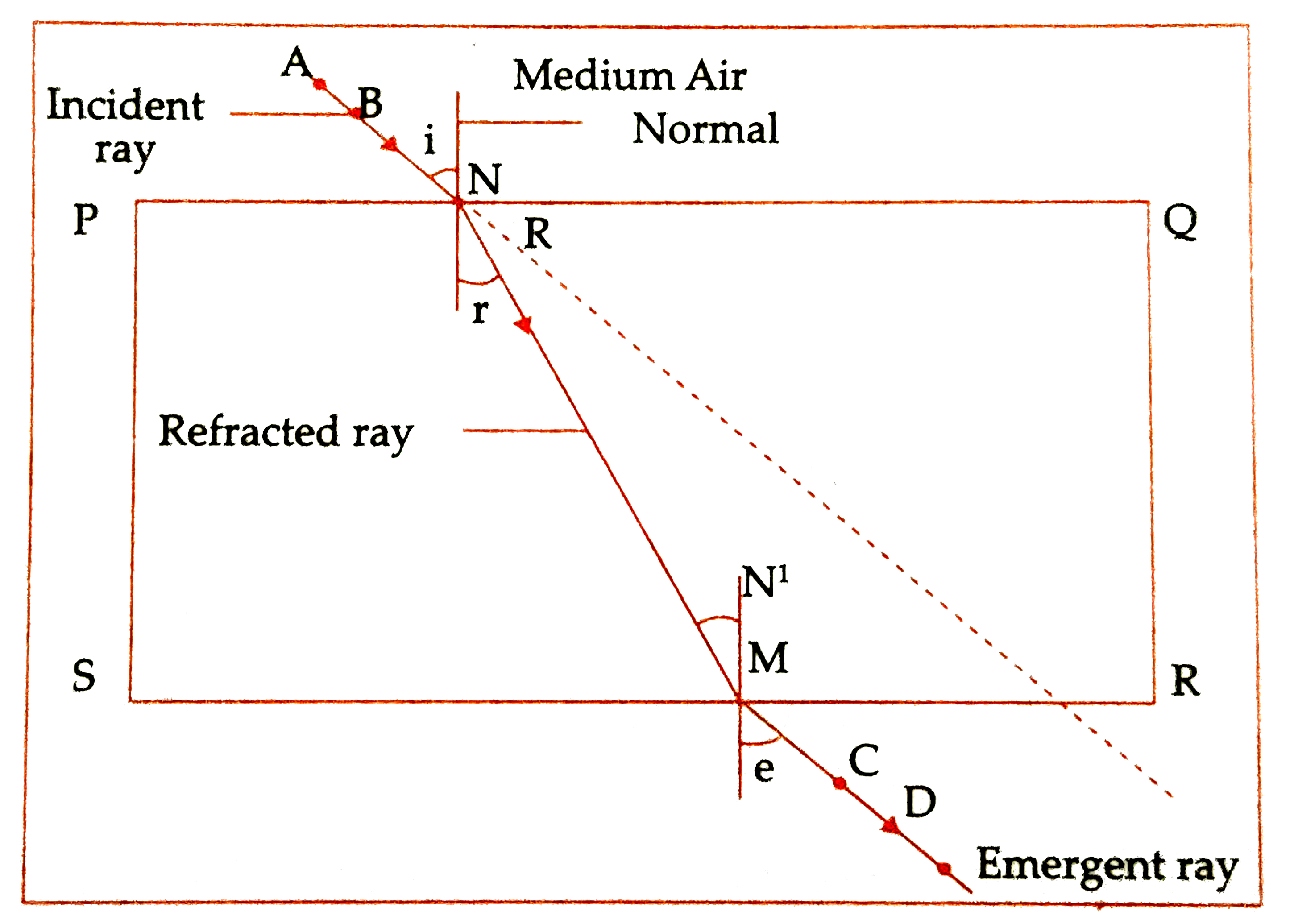
- (i) Keep a glass slab on a blank paper and draw its outline PQRS as sh...
Text Solution
|
- From incident white light how will you obtain white emergent light by ...
Text Solution
|
- You must have seen chandeliers having glass prism. The light from a tu...
Text Solution
|
- Have you seen that objects beyond and above a holi free appear to be s...
Text Solution
|
- Objects beyond and above a holy fire appear to be shaking. Give scient...
Text Solution
|
- (a) Complete the diagram. (b) What is the effect on the velocity of ...
Text Solution
|
- Complete the following diagram: (b) Name the colour that deviat...
Text Solution
|
- What is the angle of incidence called, when angle of refraction is 90^...
Text Solution
|
- State any one phenomenon in nature which is based on total internal re...
Text Solution
|
- Write the two conditions for total internal reflection.
Text Solution
|
- (a) Which phenomenon does the diagram show ? (b) Which law obeyed by...
Text Solution
|
- Answer the following questions from the diagram: (a) How many ti...
Text Solution
|