Home
Class 11
CHEMISTRY
Rate of reaction curve for equilibrium c...

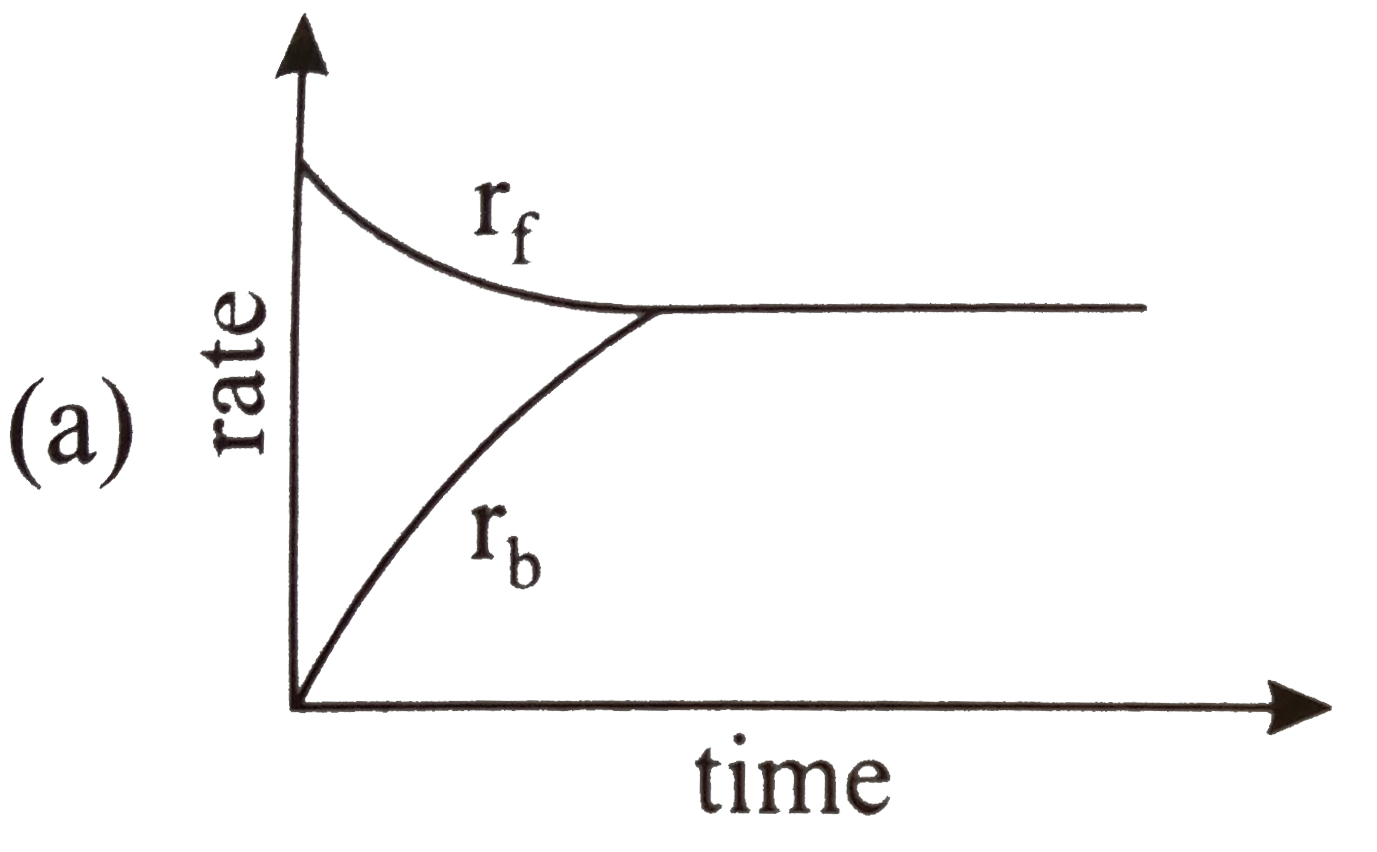
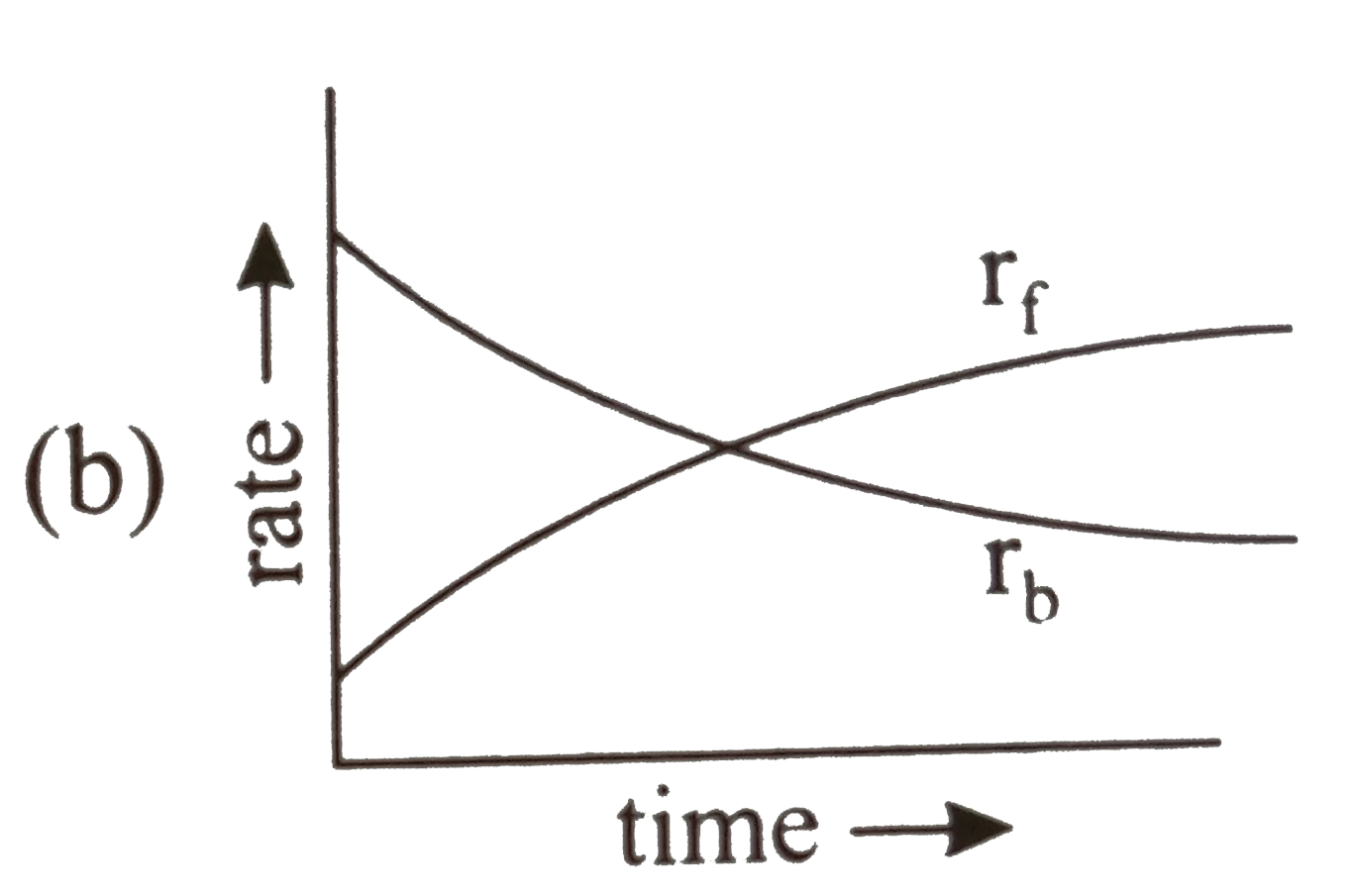
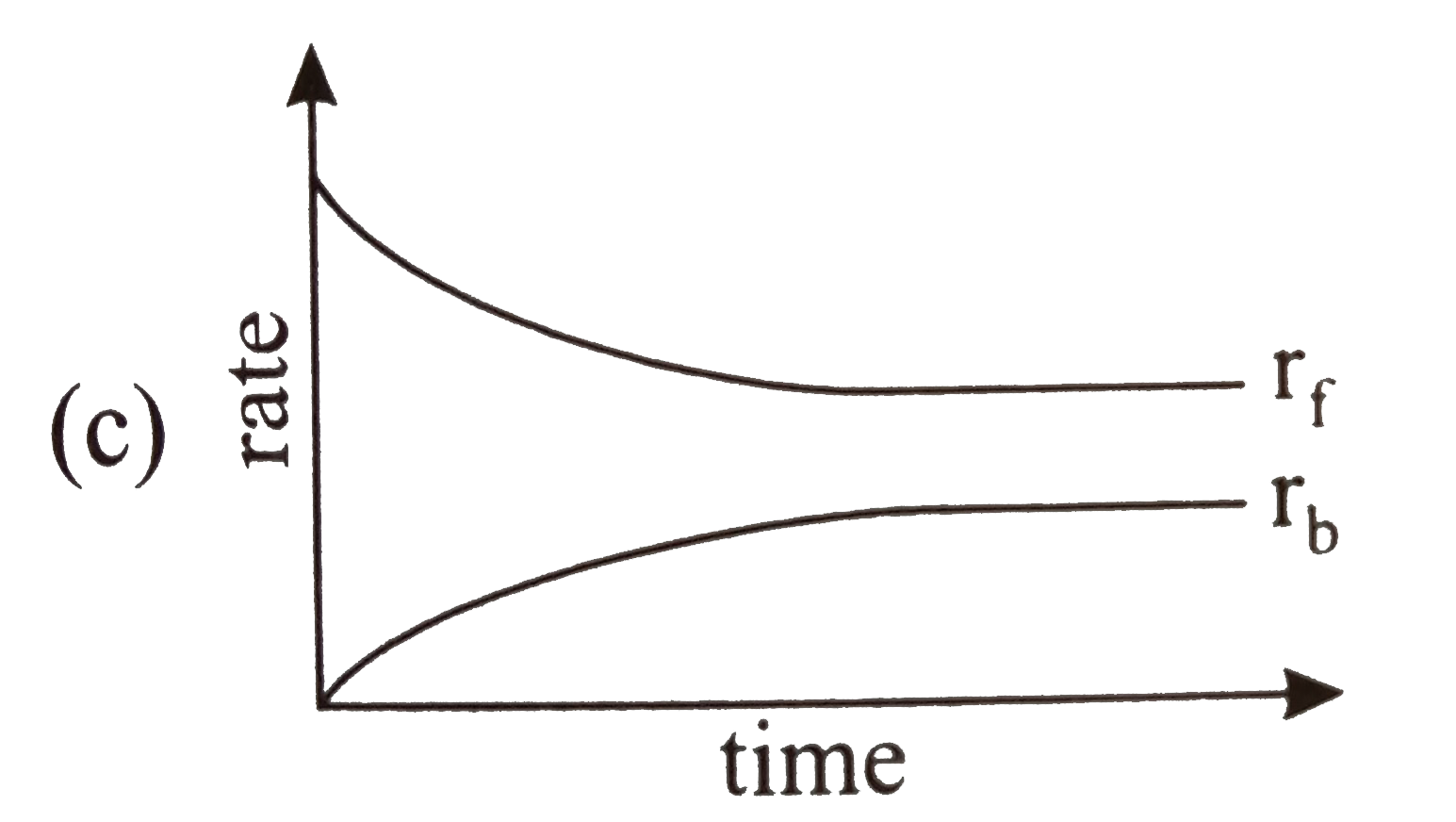
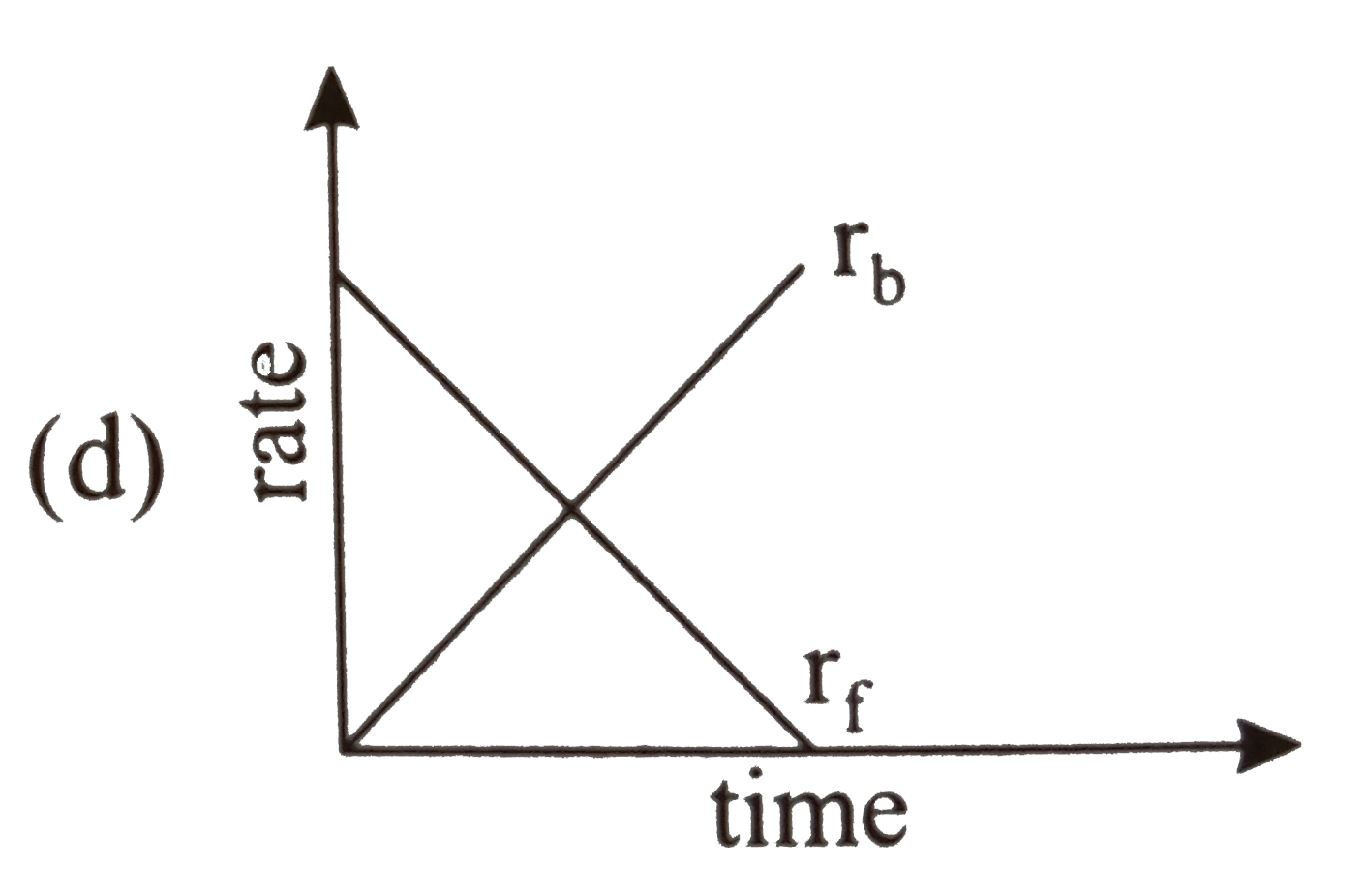
Rate of reaction curve for equilibrium can be like: [`r_(f)` = forward rate, `r_(b)` = backward rate]

A

B

C

D

Text Solution

AI Generated Solution

The correct Answer is:

To solve the question regarding the rate of reaction curve for equilibrium, we can follow these steps: ### Step 1: Understand the Concept of Equilibrium In a chemical reaction at equilibrium, the rate of the forward reaction (`r_f`) is equal to the rate of the backward reaction (`r_b`). This means that the concentration of reactants and products remains constant over time. ### Step 2: Analyze the Rate of Forward and Backward Reactions As the reaction proceeds, initially, the forward reaction rate is high because there are more reactants available. As the reactants are converted into products, the concentration of reactants decreases, which in turn decreases the rate of the forward reaction. Conversely, the rate of the backward reaction starts low and increases as the concentration of products builds up. ### Step 3: Graphical Representation On a graph where the x-axis represents time and the y-axis represents the rate of reaction: - The curve for the forward reaction (`r_f`) starts high and decreases over time. - The curve for the backward reaction (`r_b`) starts low and increases over time. - At equilibrium, these two curves will intersect, indicating that `r_f = r_b`. ### Step 4: Identify the Equilibrium Point The point where the two curves intersect represents the equilibrium state. At this point, the rates of the forward and backward reactions are equal, and the concentrations of reactants and products remain constant. ### Step 5: Conclusion The correct representation of the rate of reaction curve for equilibrium shows that the forward and backward rates will eventually become equal, leading to a stable state where no net change occurs in the concentrations of reactants and products. ### Summary of the Solution 1. Understand that at equilibrium, `r_f = r_b`. 2. Recognize that the forward reaction rate decreases while the backward reaction rate increases until they are equal. 3. Graph the rates over time to visualize the intersection point, which indicates equilibrium.

To solve the question regarding the rate of reaction curve for equilibrium, we can follow these steps: ### Step 1: Understand the Concept of Equilibrium In a chemical reaction at equilibrium, the rate of the forward reaction (`r_f`) is equal to the rate of the backward reaction (`r_b`). This means that the concentration of reactants and products remains constant over time. ### Step 2: Analyze the Rate of Forward and Backward Reactions As the reaction proceeds, initially, the forward reaction rate is high because there are more reactants available. As the reactants are converted into products, the concentration of reactants decreases, which in turn decreases the rate of the forward reaction. Conversely, the rate of the backward reaction starts low and increases as the concentration of products builds up. ...
Promotional Banner

Topper's Solved these Questions

  • CHEMICAL EQUILIBRIUM

    A2Z|Exercise Calculation Of Equilibrium Constant|20 Videos
  • CHEMICAL EQUILIBRIUM

    A2Z|Exercise Application Of Equllibrium Constant (K)|65 Videos
  • CHEMICAL BONDING AND MOLECULAR STRUCTURE

    A2Z|Exercise Section D - Chapter End Test|30 Videos
  • CHEMICAL THERMODYNAMICS

    A2Z|Exercise Section D - Chapter End Test|30 Videos

Similar Questions

Explore conceptually related problems

At equilibrium rate of forward reaction becomes equal to rate of backward reaction.

By increasing the temperature by 10^(@)C , the rate of forward reaction at equilibrium is increased by a factor of 2 . The rate of backward reaction by this increase in temperature

Assertion (A) : The values of equilibrium constant of forward and backward reactions are same. Reason (R ) : Under particular set of conditions, the values of equilibrium constants of forward and backward reactions are reciprocal to each other.

At equilibrium stage, the rate of forward reaction is ……….. To the rate of backward reaction.

Find the value of equilibrium constant if the rate constante for the forward and backward reactions are , 2.38 xx 10^(-4) " and " 8.15 xx 10^(-4) respetively.

At equilibrium for a reaction A harr B . correct representation is { r_f = rate of forward reaction, r_b = rate of backward reaction}

In the reaction A+B hArr C+D , the value of equilibrium constant is 10 . If rate constant of forward reaction is 105 , the rate constant of backward reaction is …………

Equilibrium constant for an equilibrium reaction is 100. Its forward reaction rate constant K_f= 10^(5). Its backward reaction rate constant K_b is

A2Z-CHEMICAL EQUILIBRIUM-Section D - Chapter End Test
  1. Rate of reaction curve for equilibrium can be like: [r(f) = forward ra...

    Text Solution

    |

  2. For the chemical equilibrium, CaCO(3)(s) hArr CaO(s)+CO(2)(g) Delt...

    Text Solution

    |

  3. In which of the following equilibrium, the value of K(p) is less than ...

    Text Solution

    |

  4. At 298 K equilibrium constant K(1) and K(2) of following reaction SO(2...

    Text Solution

    |

  5. If DeltaG^(@) for the reaction given below is 1.7 kJ, the equilibrium ...

    Text Solution

    |

  6. Calculate DeltaG^(Theta) for the conversion of oxygen to ozone, ((3)/(...

    Text Solution

    |

  7. Given reaction is 2X((gas)) + Y((gas))hArr2Z((gas)) + 80 Kcal Which ...

    Text Solution

    |

  8. Consider the reaction HCN((aq))hArrH((aq))^(+) + CN((aq))^(-) . At equ...

    Text Solution

    |

  9. In which of the following equilibrium system the rate of the backward ...

    Text Solution

    |

  10. For which of the following K(p) may be equal to 0.5 atm

    Text Solution

    |

  11. The vapour density of undecomposed N(2)O(4) is 46. When heated, vapour...

    Text Solution

    |

  12. If pressure is applied to the following equilibrium, liquid hArr vapou...

    Text Solution

    |

  13. For the reaction, A+BhArr3C, at 25^(@)C, a 3 litre vessel contains 1, ...

    Text Solution

    |

  14. The equilibrium constant for a reacton N(2)(g)+O(2)(g)=2NO(g) is 4xx...

    Text Solution

    |

  15. In the system A((s))hArr2B((g))+3C((g)), if the concentration of C at ...

    Text Solution

    |

  16. In a reaction at equilibrium, 'x' mole of reactant A decompose to give...

    Text Solution

    |

  17. If CuSO(4).5H(2)O((s))hArrCuSO(4).3H(2)O((s)) + 2H(2)O((l)) K(p) = 1.0...

    Text Solution

    |

  18. In the system, LaCI(3(s)) + H(2)O(g) + heat rarr LaCIO(s) + 2HCI(g) , ...

    Text Solution

    |

  19. The equilibrium constant for the reaction N(2)(g)+O(2)(g) hArr 2NO(g) ...

    Text Solution

    |

  20. For the decomposition reaction: NH(2)COONH(4(s))hArr2NH(3(g))+CO(2(g...

    Text Solution

    |

  21. For a reaction A((g)) + B((g))hArrC((g)) + D((g)) the intial concentra...

    Text Solution

    |
