Home
Class 12
PHYSICS
Figure shows an isosceles triangle wire ...

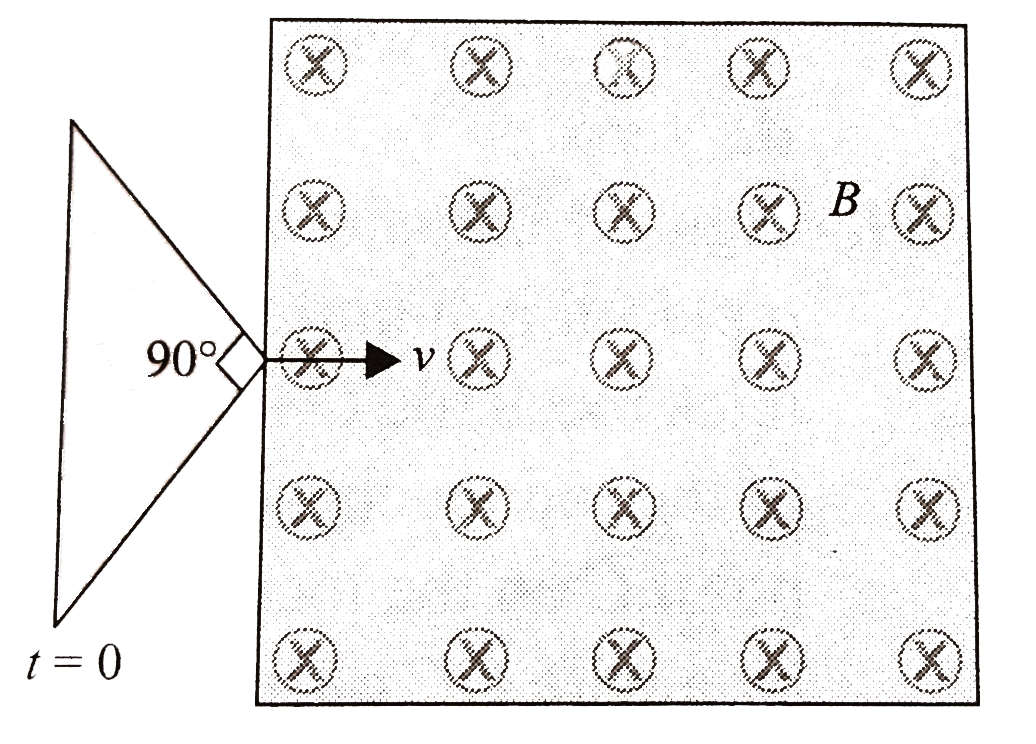
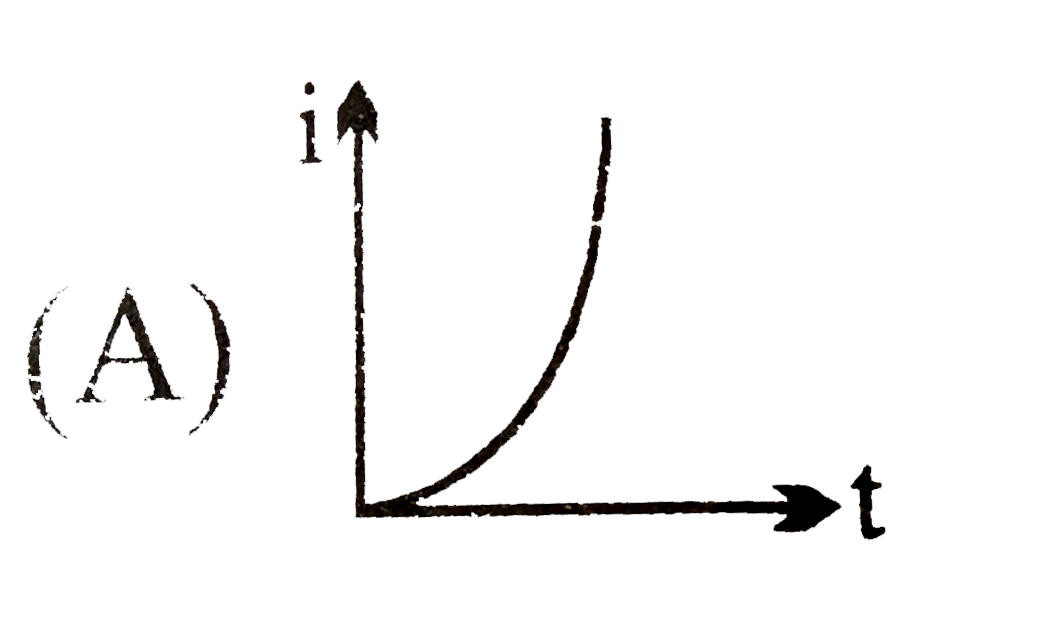
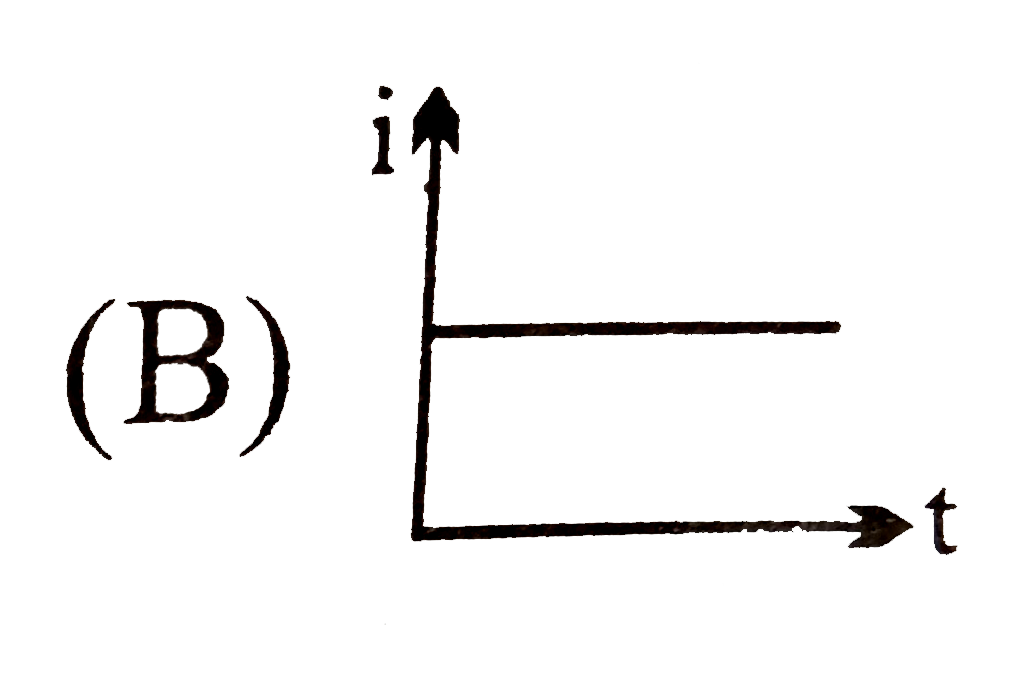
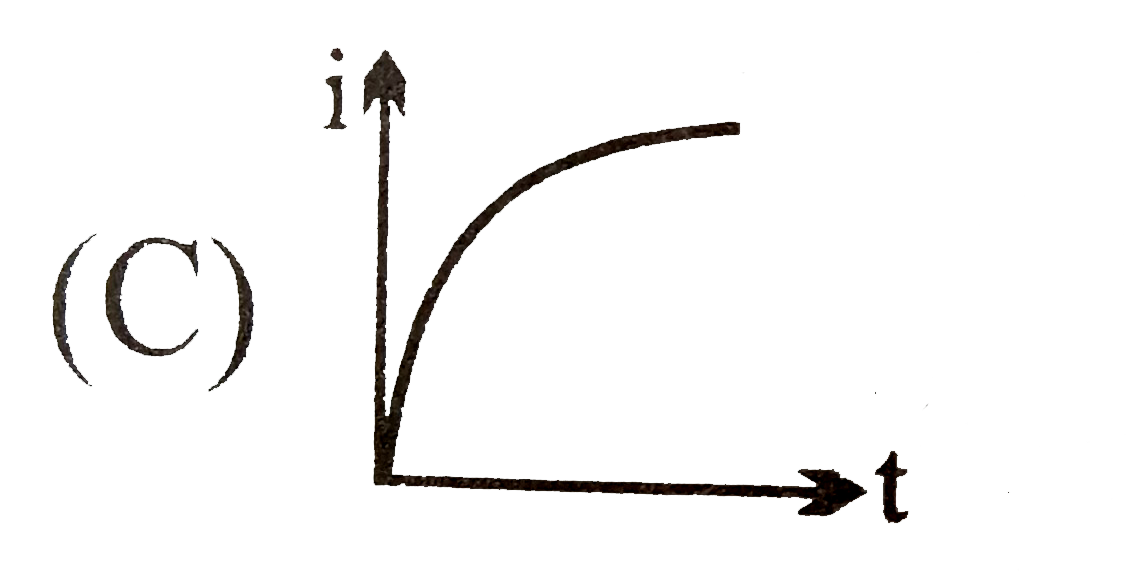
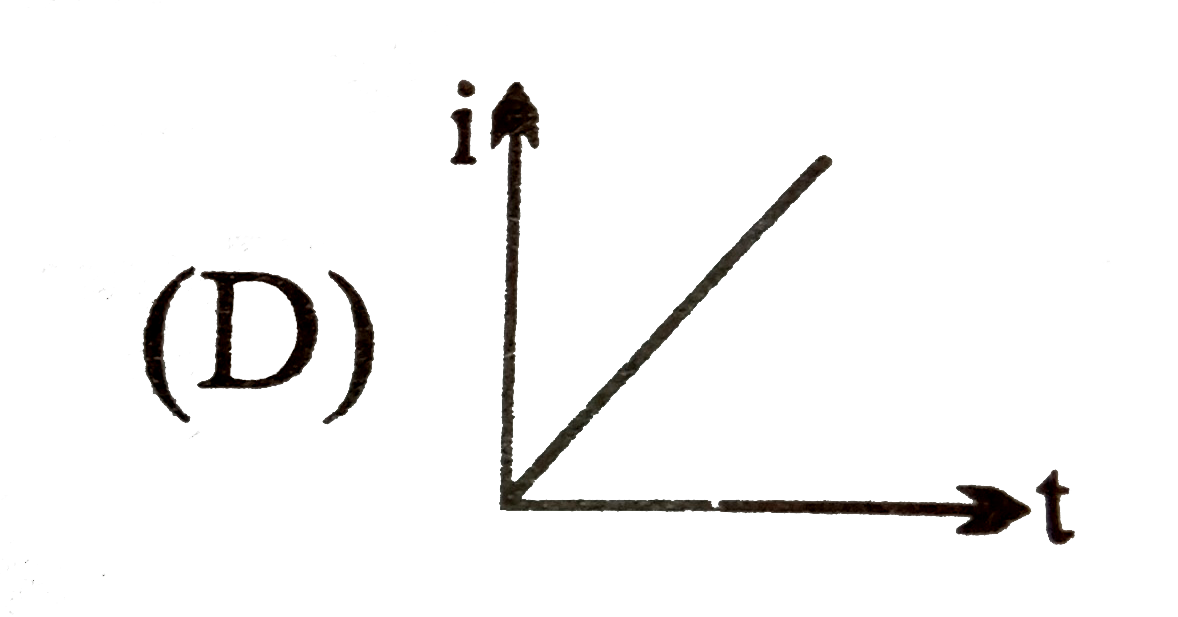
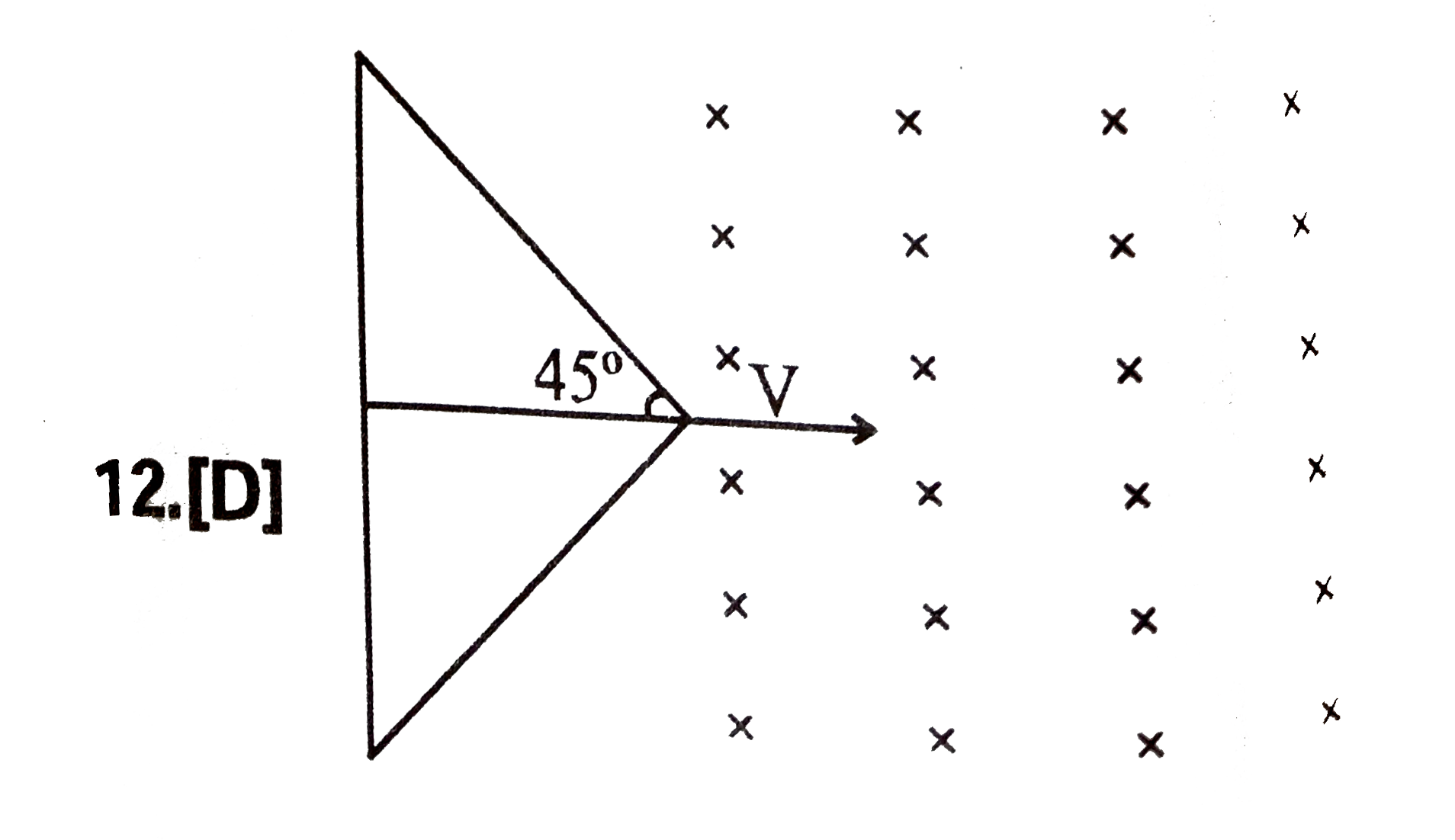
Figure shows an isosceles triangle wire frame with apex angle equal to `(pi)//2`. The frame starts entering into the region of uniform magnetic field B with constant velocity v at t =0. The longest side of the frame is perpendicular to the direction of velocity. If i is the intantaneous current through the frame then choose the alternative showing the correct variation of i with time.

A

B

C

D

Text Solution

Verified by Experts

The correct Answer is:
D


Area inside the field `A=(1/2 V^(2)t^(2))xx2=V^(2)t^(2)`
`phi= BV^(2)t^(2) implies (dphi)/(dt)=BV^(2)2t`
`e=2BV^(2)t implies I prop t`
Promotional Banner

Similar Questions

Explore conceptually related problems

The figure shows a right angled isosceles triangle wire frame. The wire frame starts entering into the region of uniform magnetic field with constant velocity v at t=0 . If I is the instantaneous current through the frame, then choose the corrent graph between I & t.

A square loop of a conducting material of side l and resistance r is dragged through a uniform magnetic field B with uniform velocity v keeping the plane of the loop perpendicular to the direction of the field. What is the current flowing through the loop?

A triangle loop as shown in the figure is started to being pulled out at t=0 from a uniform magnetic field with a constant velocity v .Total resistance of the loop is constant and equals to R .Then the variation of power produced in the loop with time will be:

A conducting square frame of side 'a' and a long straight wire carrying current I are located in the same plane as shown in the figure. The frame moves to the right with a constant velocity 'V' . The emf induced in the frame will be proportional to

An equilateral triangular conducting frame is rotated with angular velocity omega in a uniform magnetic field B as shown. Side of triangle is l . choose the correct options

A square frame with side a and a long straight wire carrying a current i are located in the same plane as m shown in figure. The fram translates to the right with a constant velocity v . Find the emf induced in the frame as a function of distance x .

A rectangular loop of wire in the plane of the paper starts outside a perpendicular uniform magnetic field directed into the paper as shown in the following figure. The loop is pulled with a constant velocity through the magnetic field and out the other side. Which of the following graphs would best represent the variation of the electric current in the wire with time?

A wire KMN moves along the bisector of the angle theta with a constant velocity v in a uniform magnetic field B perpendicular to the plane of the paper and directed inward. Which of the following is correct?

