A
B
C
D
Text Solution
Verified by Experts
The correct Answer is:



Similar Questions
Explore conceptually related problems
Recommended Questions
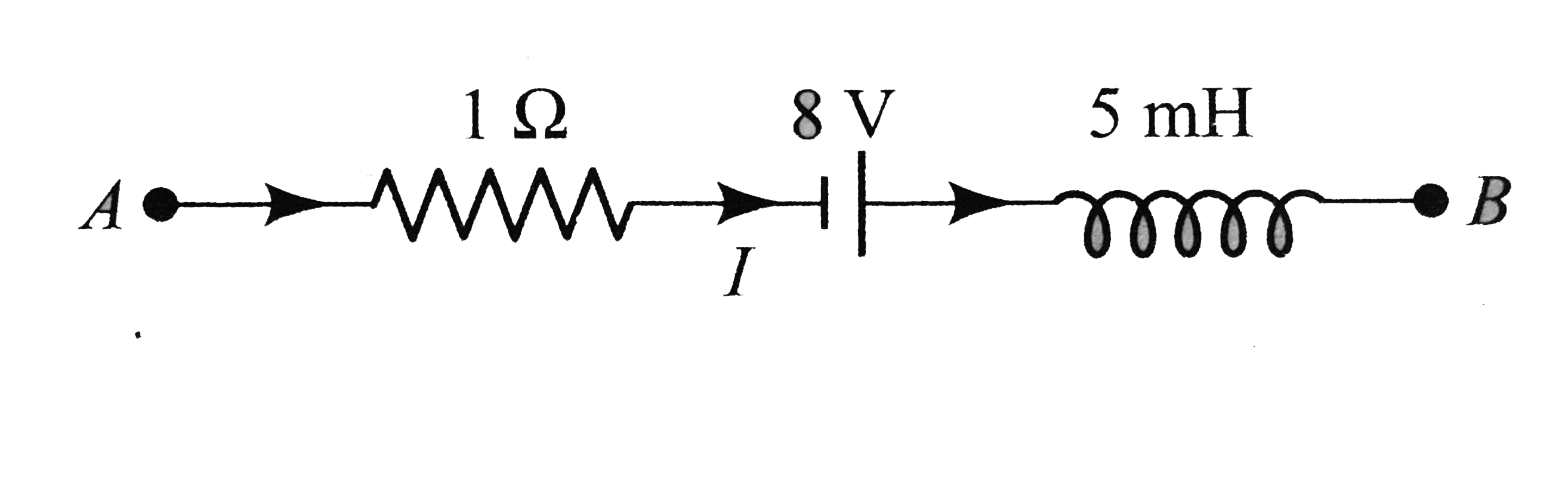
- In the circuit (Fig.) what is potential difference V(B) - V(A) (in V) ...
Text Solution
|
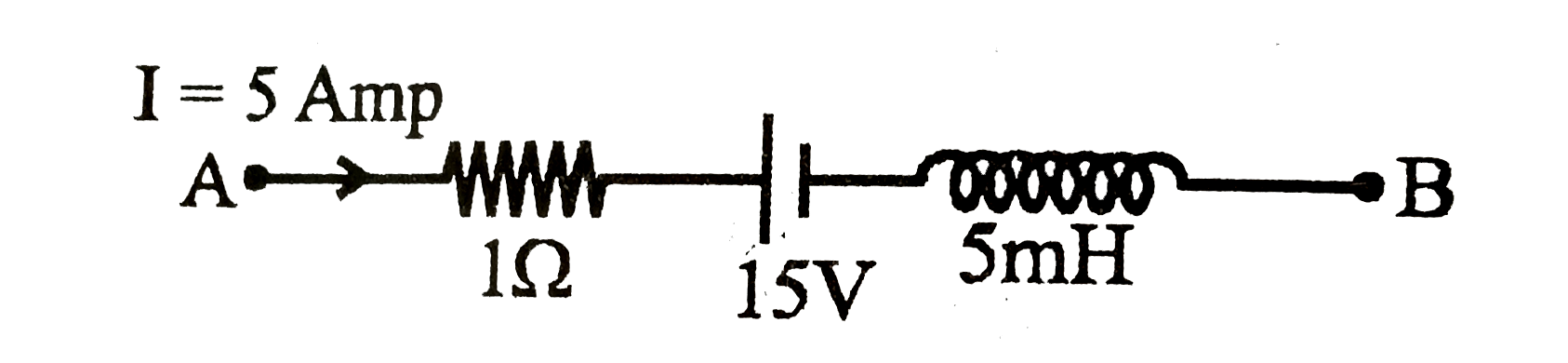
- AB is a part of circuit. Find the potential difference V(A) - V(B) if ...
Text Solution
|
- In the circuit (Fig.) what is potential difference V(B) - V(A) (in V )...
Text Solution
|
- The network shows in Fig is part of a complate circuit. If at a certai...
Text Solution
|
- In the circuit diagram shown, R = 10 omega, L = 5 mH, E = 10 V and i =...
Text Solution
|
- The network shown in the figure is part of a complete circuit. If at a...
Text Solution
|
- In the circuit, shown in fig v(s)=0.2V, v(0)=-10V . Find v(i) and gain...
Text Solution
|
- The network shown in Fig. is a part of a complete circuit.What is the ...
Text Solution
|
- When the current in the portion of the circuit shown in the figure is ...
Text Solution
|