Home
Class 11
PHYSICS
At a distance L = 400m away from the sig...

At a distance L = 400m away from the signal light, brakes are applied to a locomotive moving at a velocity u = 54 km/h. Determine the position of rest of the locomotive relative to the signal light after 1 min. of the application of the brakes if its acceleration a = `-0.3m//s^(2)`.

Text Solution

Verified by Experts

The correct Answer is:
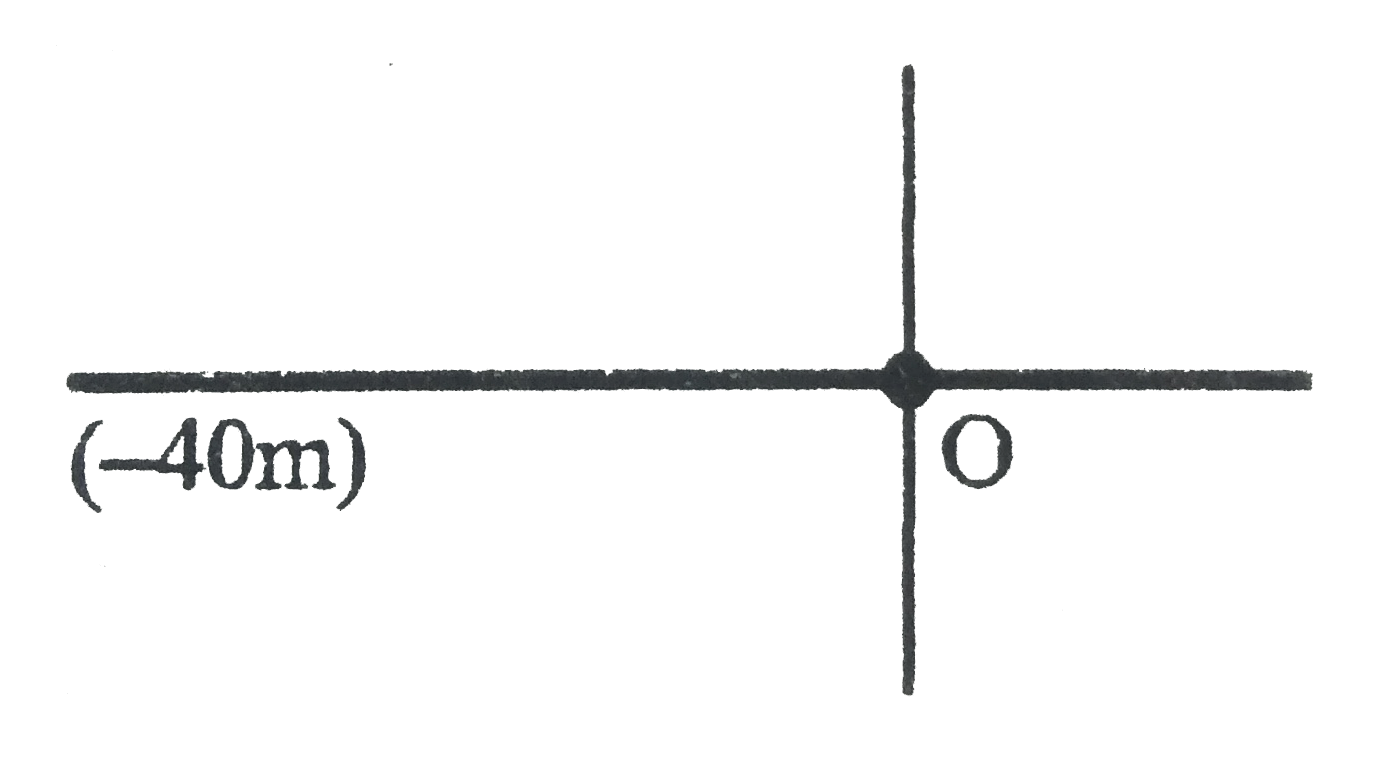
`25 m`

`V = 54km//h`
`V = 15m//s`
time taken to come to rest
`0 - 15 - 0.3t rArr t = (15)/(0.3) rArr t = 50sec`.
`x = x_(0) +ut +(1)/(2)at^(2)`
`rArr x =- 40 +15 xx 50 +(1)/(2) xx (-0.3) xx (50)^(2)`
`x =- 400 +750 - 375 rArr x =- 25m`
Promotional Banner

Similar Questions

Explore conceptually related problems

The brakes applied to a car produce an acceleration of 6 m//s^(2) in the opposite direction to the motion . If the car takes 2 s to stop after the application of brakes , calculate the distance it travels during this time.

A car was moving at a rate of 18 km/h. When thebrakes were applied, it comes to rest in a distance of 100 m. Calculate the reterdation produced by the brakes.

A motor car moving with a uniform speed of 20 m//sec comes to stop on the application of brakes after travelling a distance of 10m Its acceleration is

Brakes are applied to a train travelling at 72 km//h . After passing over 200m , its velocity reduces to 36 km//h . At the same rate of retardation, how much further will it go before it is brought to rest ?

A bus starts movins with uniform acceleration from it position of rest. If moves 48 m in 4s. On applying the brakes, its stops after covering 24m. Find the deceleration of the bus

A moving train is brought to rest within 20 seconds by applying brakes. Find the initial velocity , if the retardation due to brakes is 2 m//s^(2) .

A car moving with a velocity of 40 km/h can be stopped by brakes after travelling at least 5 m. If same car moves at a speed of 80 km/h the minimum stopping distance is

