Home
Class 11
PHYSICS
A particle is moving along x-axis. Initi...

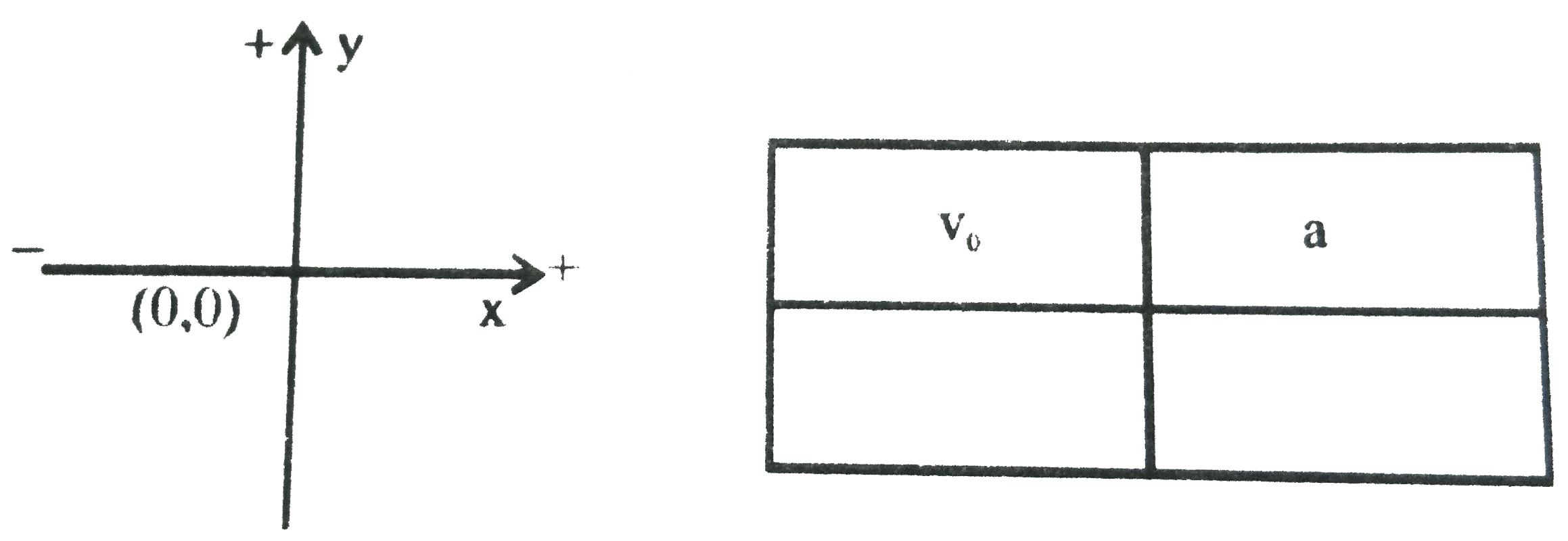
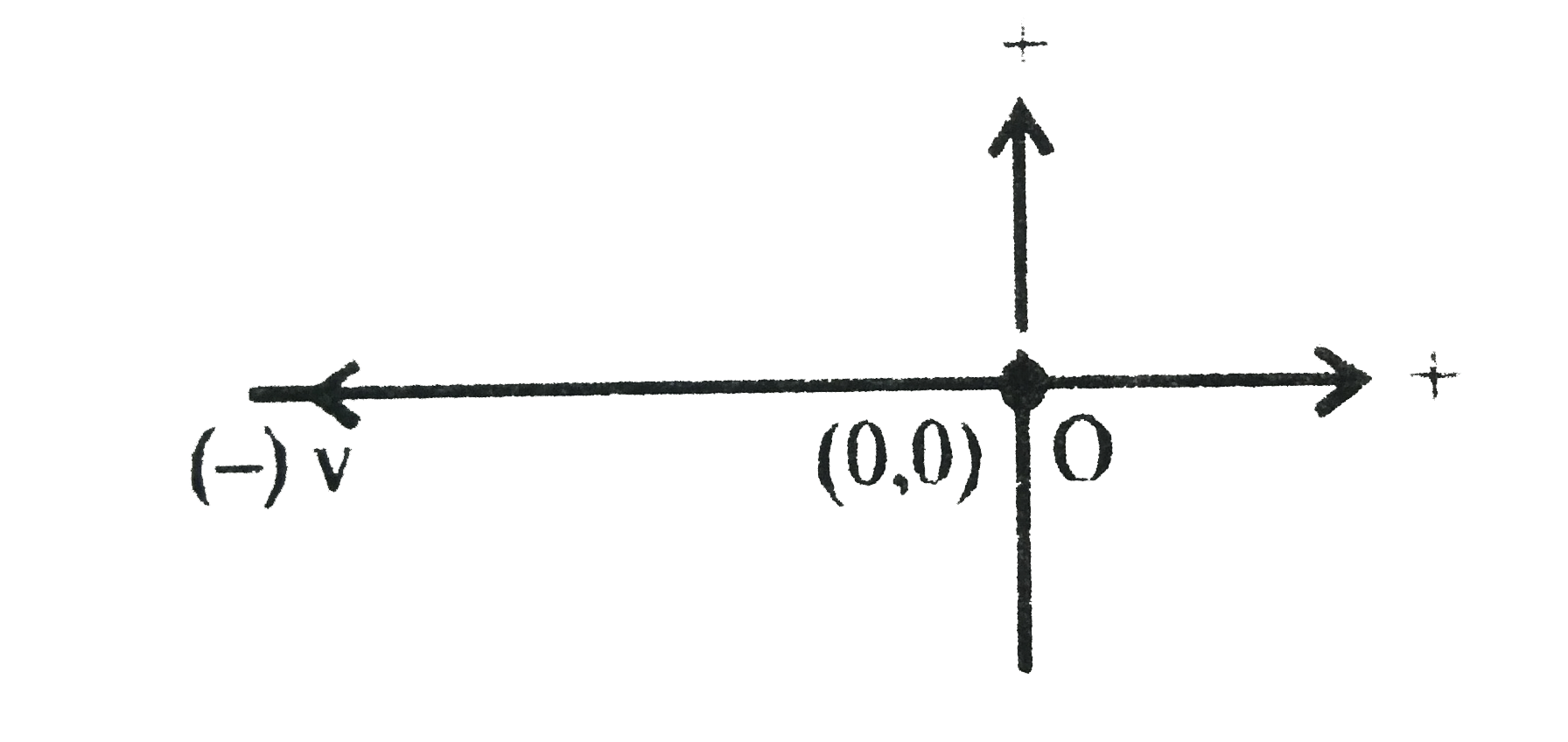
A particle is moving along `x`-axis. Initilaly it is located `5m` left of origin and it moving away from the origin and slowing down. In this corrdinate system, what are the signs of the initial velocity and acceleration.

Text Solution

Verified by Experts

The correct Answer is:
`(##NG_PHY_MEC_V01_C01_E01_074_A01##)`
Beacause particle is slowing down so velocity and acceleration are in opposite direction.

Since particle si slowing down a is opposie to velcoity `(-)` so a `(+)`.
Promotional Banner

Similar Questions

Explore conceptually related problems

A particle is moving along the x-axis and its position-time graph is shown. Determine the sign of acceleration.

A particle is moving parallel to x-axis as shown in the figure. The angular velocity of the particle about the origin is

A particle is moving along a straight line parallel to x-axis with constant velocity. Find angular momentum about the origin in vector form :

A particle moving with uniform acceleration has velocity of 6 ms^(-1) at a distance 5 m from the initial position. After moving another 7 m the velocity becomes 8 ms^(-1) The initial velocity and acceleration of the particle are

The acceleration of a particle moving along x-axis is given by a = 6t. Initially it has a velocity of 4m//s along negative x-direction and it is at the origin. When will it return to the origin (in sec.)?

A particle is moving in the xy-plane with a constant velocity along a line parallel to the X-axis away from the origin. The magnitude of its angular momentum about the origin.

Velocity v of a particle moving along x axis as a function of time is given by v = 2t m//s . Initially the particle is to the right of the origin and 2 m away from it. Find the position (distance from origin) of the particle after first 3 s .

Assertion:- For a particle moving along a straight line, if they velocity and acceleration have same sign, then the particle may be slowing down. Reason:- For a moving particle speeding up and slowing down does not depend upon the angle between velocity and acceleration.

