Home
Class 11
PHYSICS
A ball of mass m moving with velocity v,...

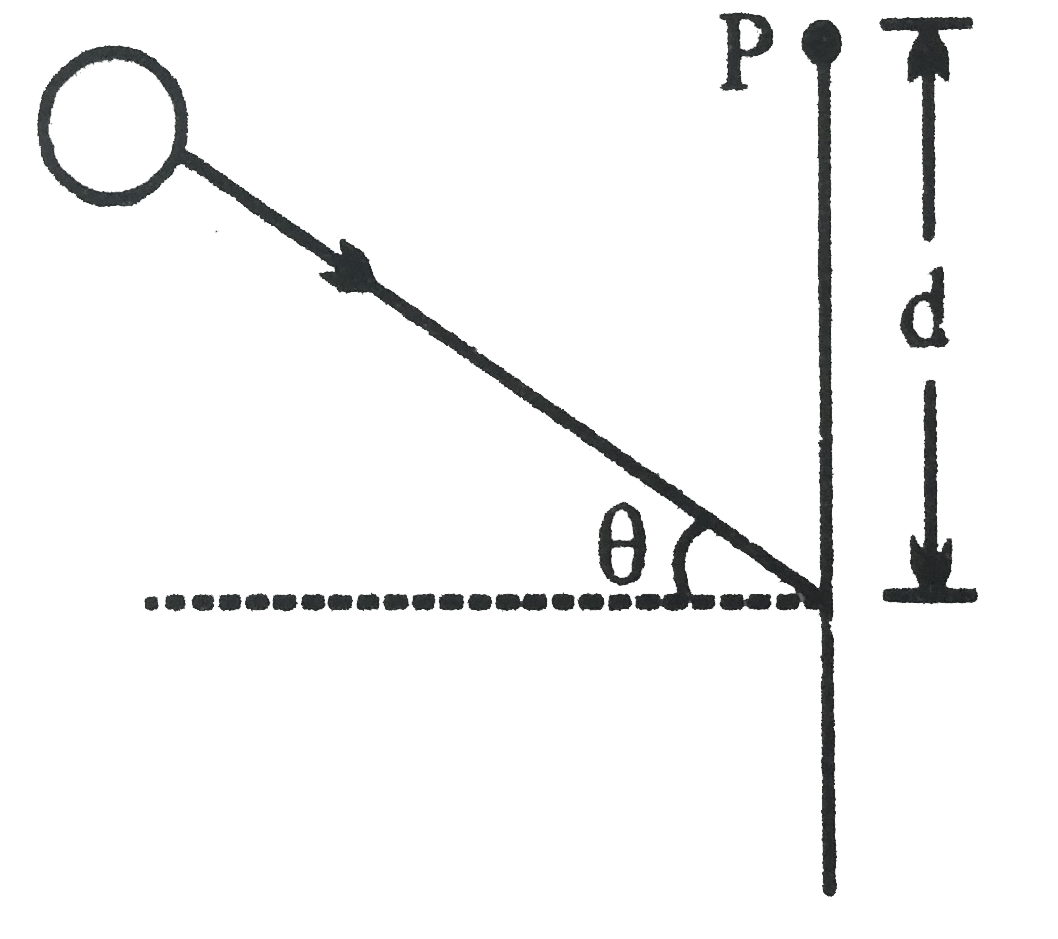
A ball of mass `m` moving with velocity `v`, collide with the wall elastically as shown in the figure. After impact the change in angular momentum about `P` is :
.

A

`2 mvd`

B

`2 mvd cos theta`

C

`2 mvd sin theta`

D

zero

Text Solution

Verified by Experts

The correct Answer is:
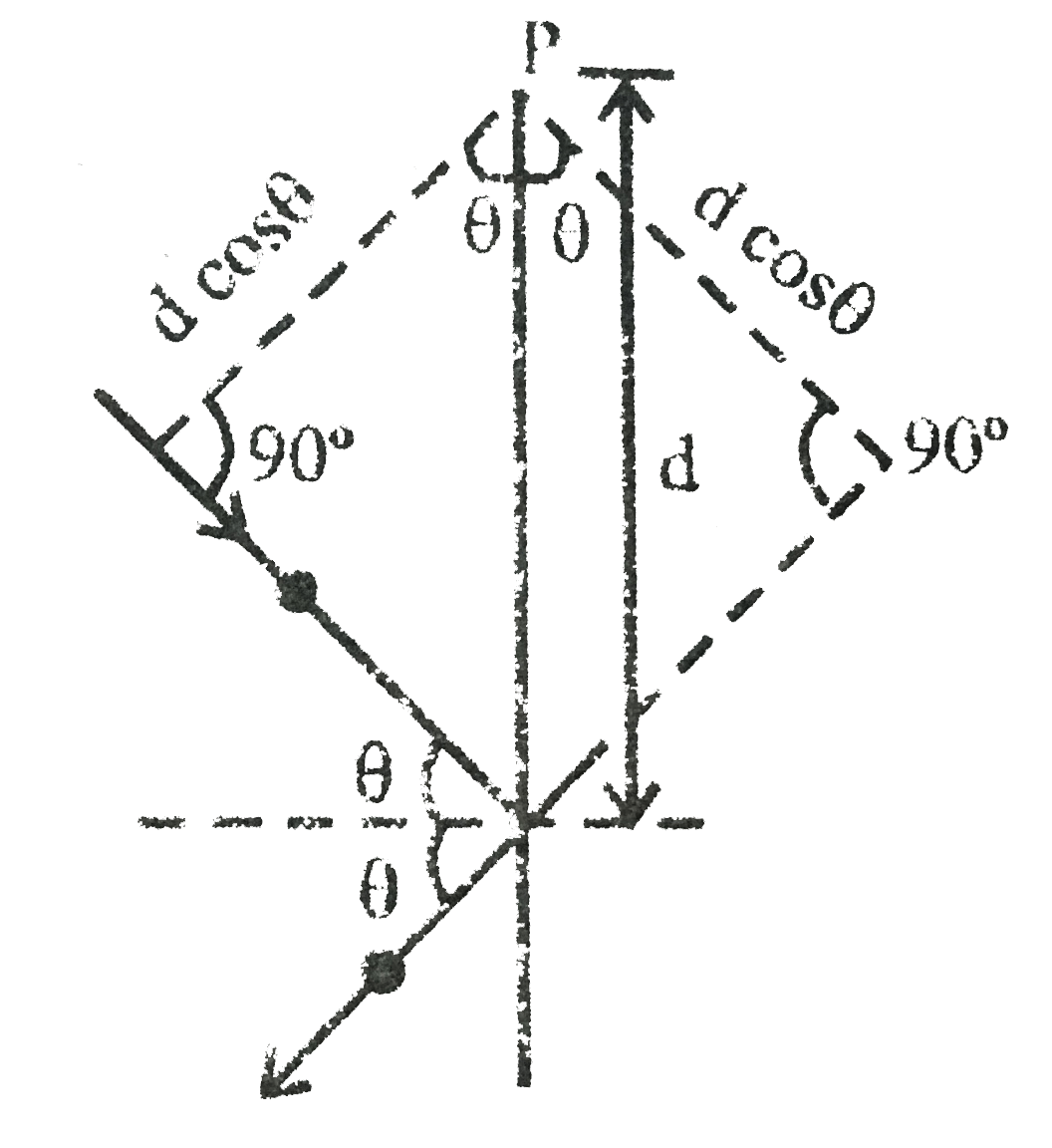
B

`J_(i) = mvdcos theta`
`J_(f) = -mvdcos theta`
`Delta_(j) = -2 mvd cos theta`.
.
Promotional Banner

Similar Questions

Explore conceptually related problems

A ball of mass m moving with velocity v_(0) collides with a wall as shown in Fig. After impact it rebounds with a velocity' (v_(0))//2 The component of impulse acting on the ball along the wall is

A ball of mass m moving with velocity v_0 collides a wall as shown in figure. After impact it rebounds with a velocity 3/4v_0 . The impulse acting on ball during impact is

A stick of length L and mass M lies on a frictionless horizontal surface on which it is free to move in any way. A ball of mass m moving with speed v collides elastically with the stick as shown in the figure. If after the collision the ball comes to rest, then what would be the mass of the ball?

A solid cylinder of mass 'M' and radius 'R' is rotating along its axis with angular velocity omega without friction. A particle of mass 'm' moving with velocity v collides aganist the cylinder and sticks to its rim. After the impact calculate angular velocity of cylinder .

A ball of mass m moving with velocity v collides head on elastically with another identical ball moving with velocity - V. After collision

A particle of mass m is moving with constant velocity v parallel to the x-axis as shown in the figure. Its angular momentum about origin O is

A Stick of length L and mass M lies on a fnctionless horizontal surface on which it is free to move in any way. A ball of mass m moving with speed v collides elastically with the stick as shownin figure-5.115. If after the collision ball comes to rest, then what should be the mass of the ball ?

A ball of mass m moving with velocity v collides elastically with another ball of identical mass coming from the opposite direction with velocity 2v. Their velocities after collisions are-

A molecule of mass m moving with a velocity v makes 5 elastic collisions with a wall of the container per second. The change in its momentum per second will be

