Home
Class 11
PHYSICS
A uniform rod is fixed to a rotating tur...

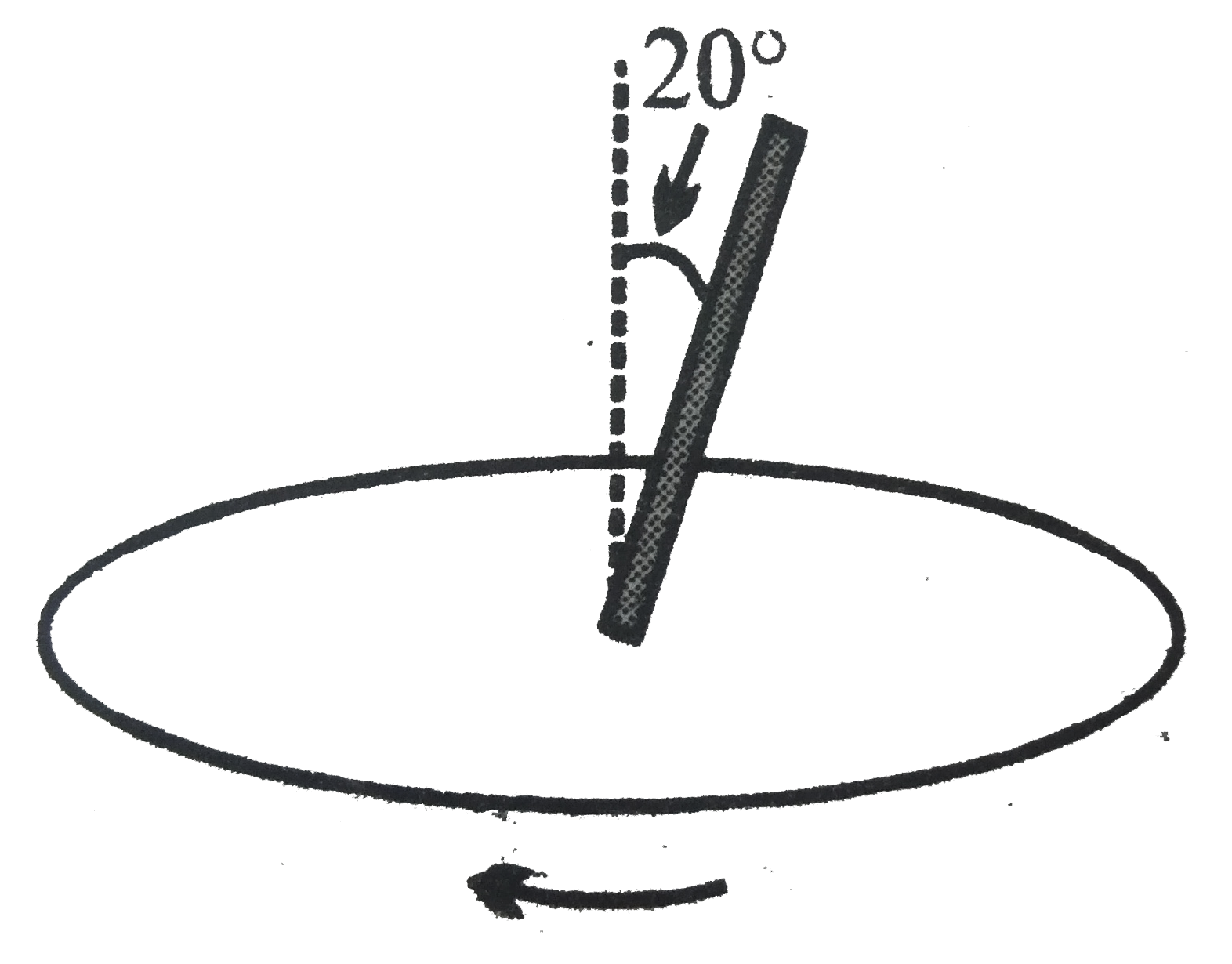
A uniform rod is fixed to a rotating turntable so that its lower end is on the axis of the turntable and it makes an angle of `20 %` to the vertical. (The rod is thus rotating with uniform angular velocity about a vertical axis passing through one end.) If the turntable is rotating clockwise as seen from above.
.
Is there a torque acts on it, and it so in what direction ?

A

yes, vertically

B

yes horizontally

C

yes at `20^@` to the horizonal

D

no

Text Solution

Verified by Experts

The correct Answer is:
B

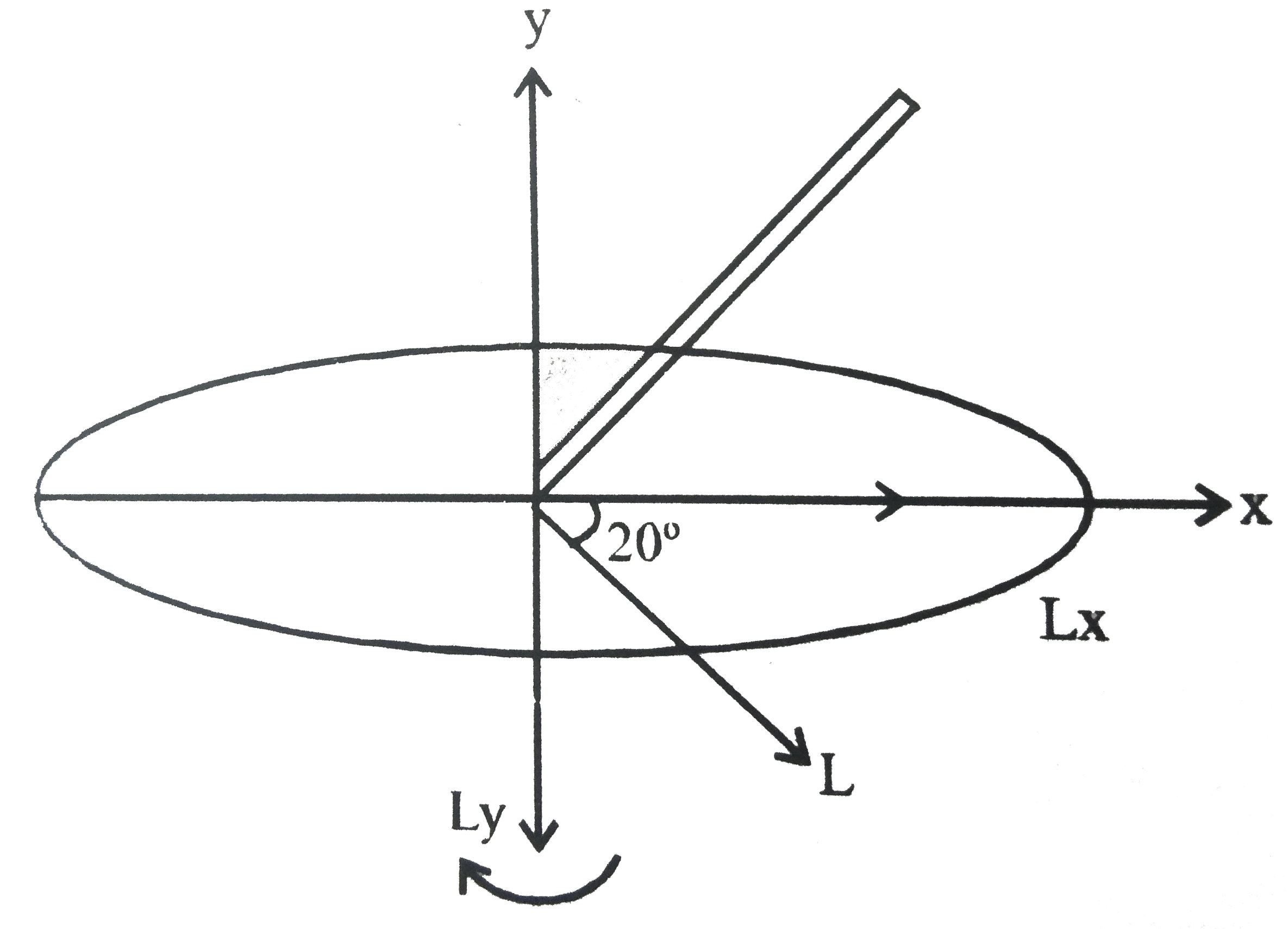
Since due to rotation of rod only `L_(x)` changes therefore torque is acting along `x` axis `tau_(x) = ((dL_(x))/(dt))`
.
Promotional Banner

Similar Questions

Explore conceptually related problems

A uniform rod is fixed to a rotating turntable so that its lower end is on the axis of the turntable and it makes an angle of 20 % to the vertical. (The rod is thus rotating with uniform angular velocity about a vertical axis passing through one end.) If the turntable is rotating clockwise as seen from above. . What is the direction of the rod's angular momentum vector (calculated about its lower end) ?

A rod is rotating with angular velocity omega about axis AB. Find costheta .

A uniform rod of mass m and length l rotates in a horizontal plane with an angular velocity omega about a vertical axis passing through one end. The tension in the rod at a distance x from the axis is

A uniform metal rod is rotated in horizontal plane about a vertical axis passing through its end at uniform rate. The tension in the rod is

The radius of gyration of an uniform rod of length l about an axis passing through one of its ends and perpendicular to its length is.

A thin uniform heavy rod of length l hangs from a horizontal axis passing through one end. The initial angular velocity omega that must be imparted to it to rotate it through 90^(@) is :

A thin rod of mass m and length 2L is made to rotate about an axis passing through its center and perpendicular to it. If its angular velocity changes from O to omega in time t , the torque acting on it is

