Home
Class 11
PHYSICS
A particle starts from the point (0m, 8m...

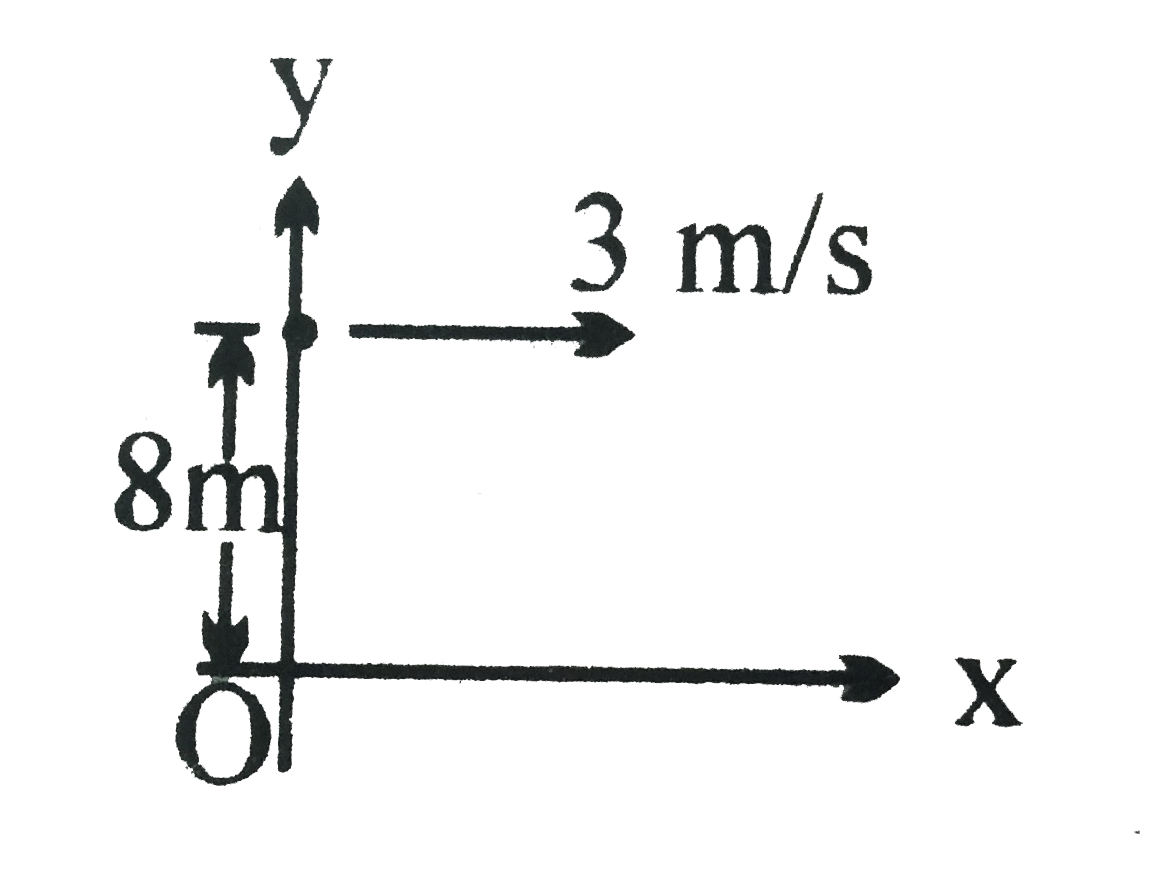
A particle starts from the point `(0m, 8m)` and moves with uniform velocity of `3 hat i m//s`. After `5` seconds, the angular velocity of the particle about the origin will be :
.

A

`(8)/(289) rad//s`

B

`(3)/(8) rad//s`

C

`(24)/(289) rad//s`

D

`(8)/(17) rad//s`

Text Solution

Verified by Experts

The correct Answer is:
C


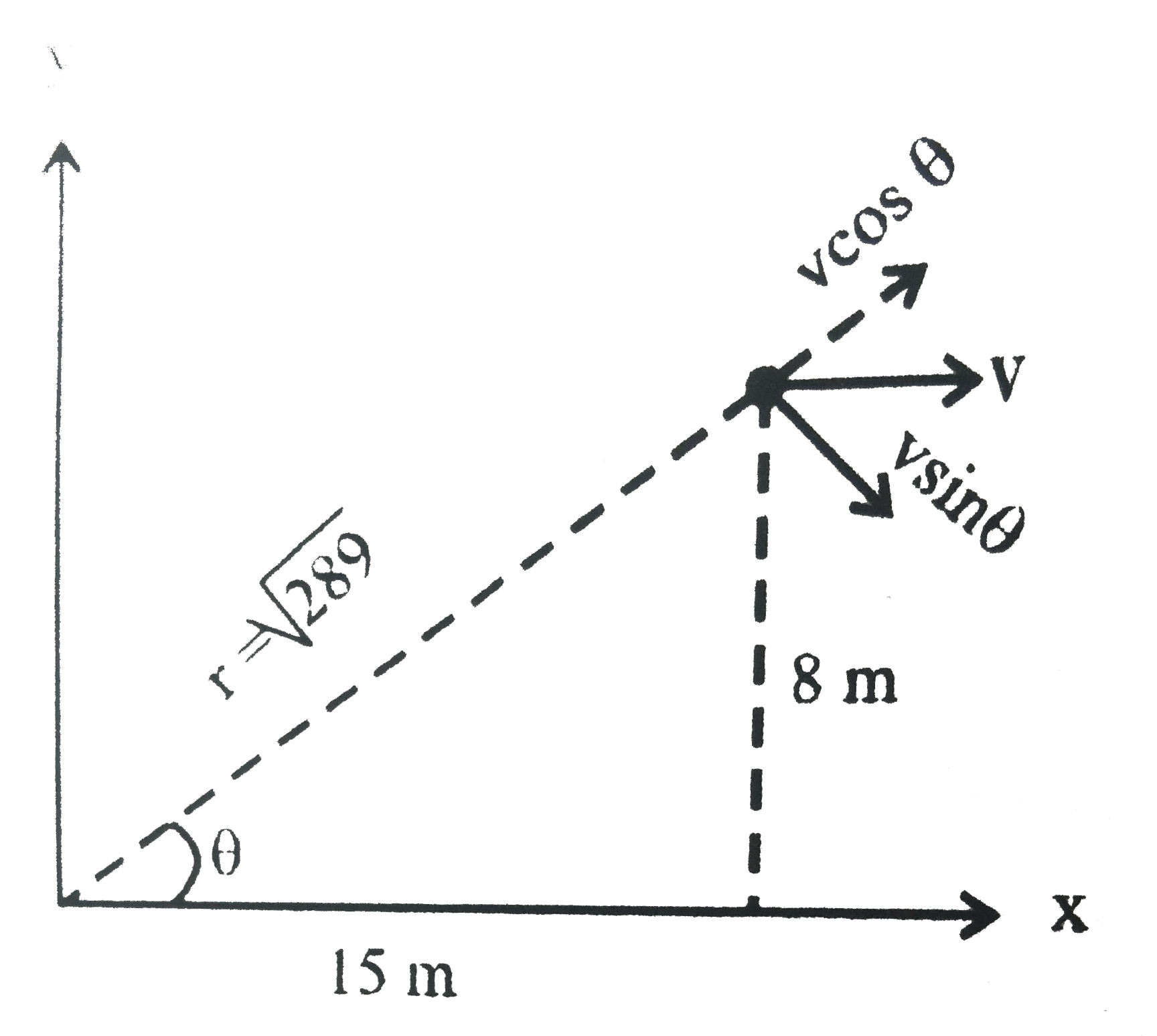
at `t = 5 sec`, `x = 3 xx 5 = 15 m`
`y = 8`
`omega = (v sin theta)/(r) rArr omega = (3)/(sqrt(289))xx (8)/(sqrt(289))`
`omega = (24)/(289) rad//sec`.
Promotional Banner

Similar Questions

Explore conceptually related problems

A particle moves with a uniform velocity of 50 m/s for 20 min. What is the velocity of particle at t = 2 min ?

A particle is moving along a circle of radius 20cm , with a linear velocity of 2m//s. Calculate the angular velocity of the particle.

A particle starting with initial velocity of 30m/sec moves with a uniform acceleration of 9m/sec2. Find :(a) the velocity of the particle after 6 seconds.(b) how far it will go in 9 seconds.(c) its velocity when is has traversed 150m.

A particle starting with initial velocity of 26m/sec moves with a uniform acceleration of 6m/sec2. Find ( i ) the velocity of the particle after 7 seconds.(ii) how far it will go in 6 seconds.(iii) its velocity when is has traversed 100m.

A particle starts moving from the point (1, 2, 3) under velocity 1 hat I +2hat j + 3hatk for two seconds. After that it moves under velocity 1 hat I -2hat j + 3hatk for the next two seconds. What is the coordinate of the final points?

A particle of mass m moves along line PC with velocity v as shown. What is the angular momentum of the particle about P?

A particle of mass m moves along line PC with velocity v as shown. What is the angular momentum of the particle about O ?

A particle is moving with uniform speed 0.5 m//s along a circle of radius 1m then the angular velocity of particle is (in rad s^(-1) )

A particle having mass 2 kg is moving with velcoity (2 hat(i) + 3 hat(j))m//s . Find angular momentum of the particle about origin when it is at (1, 1, 0).

