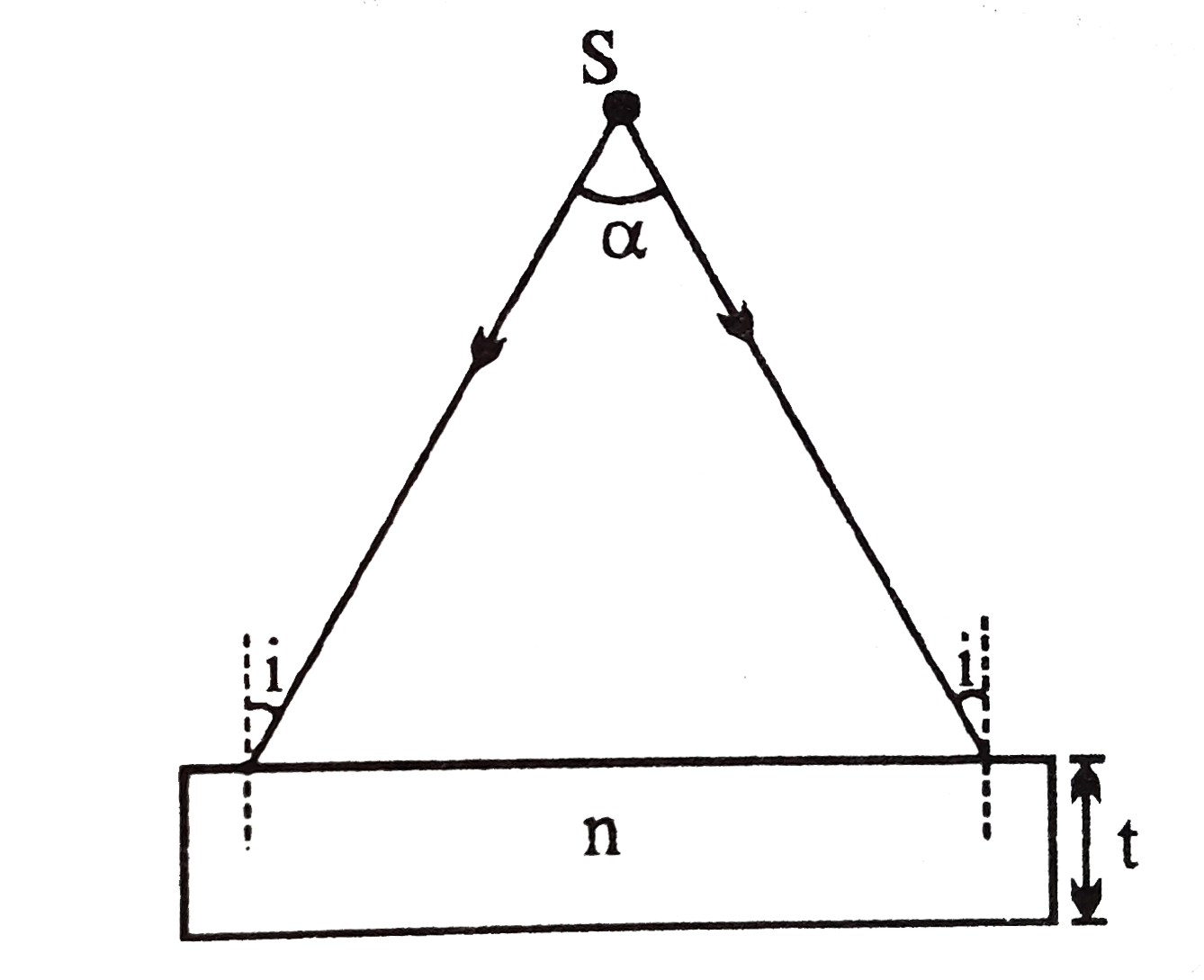
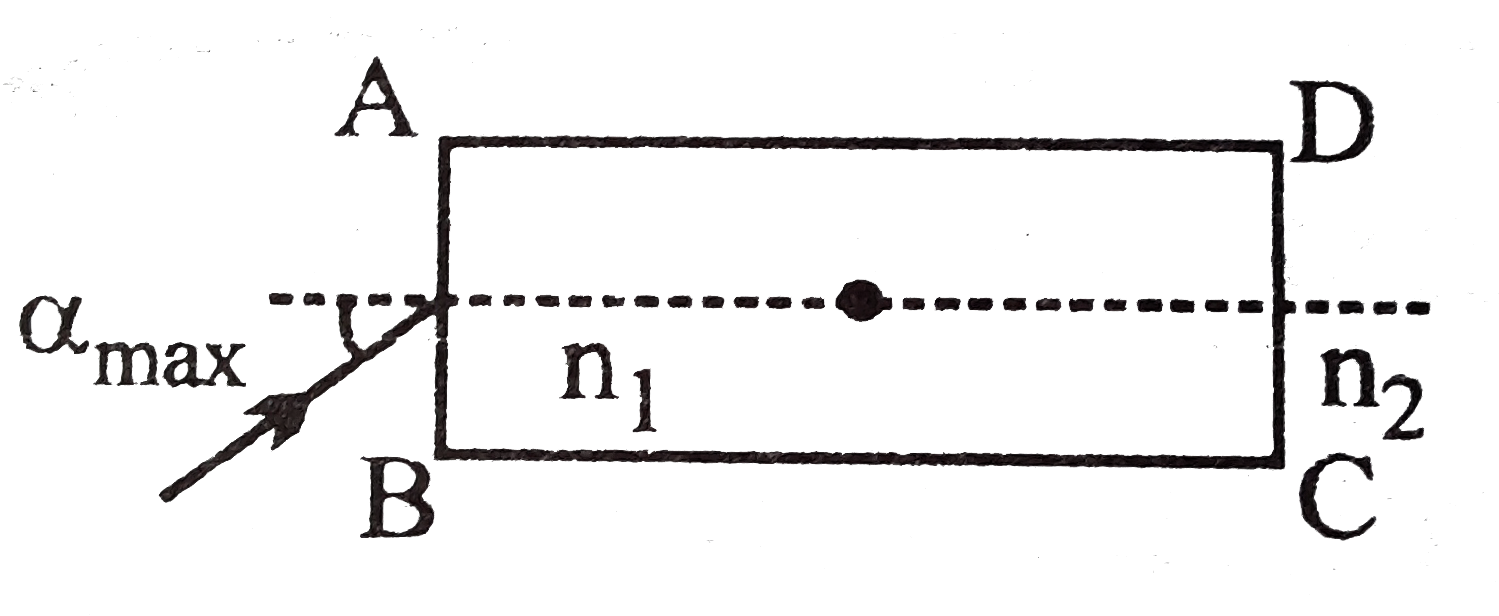
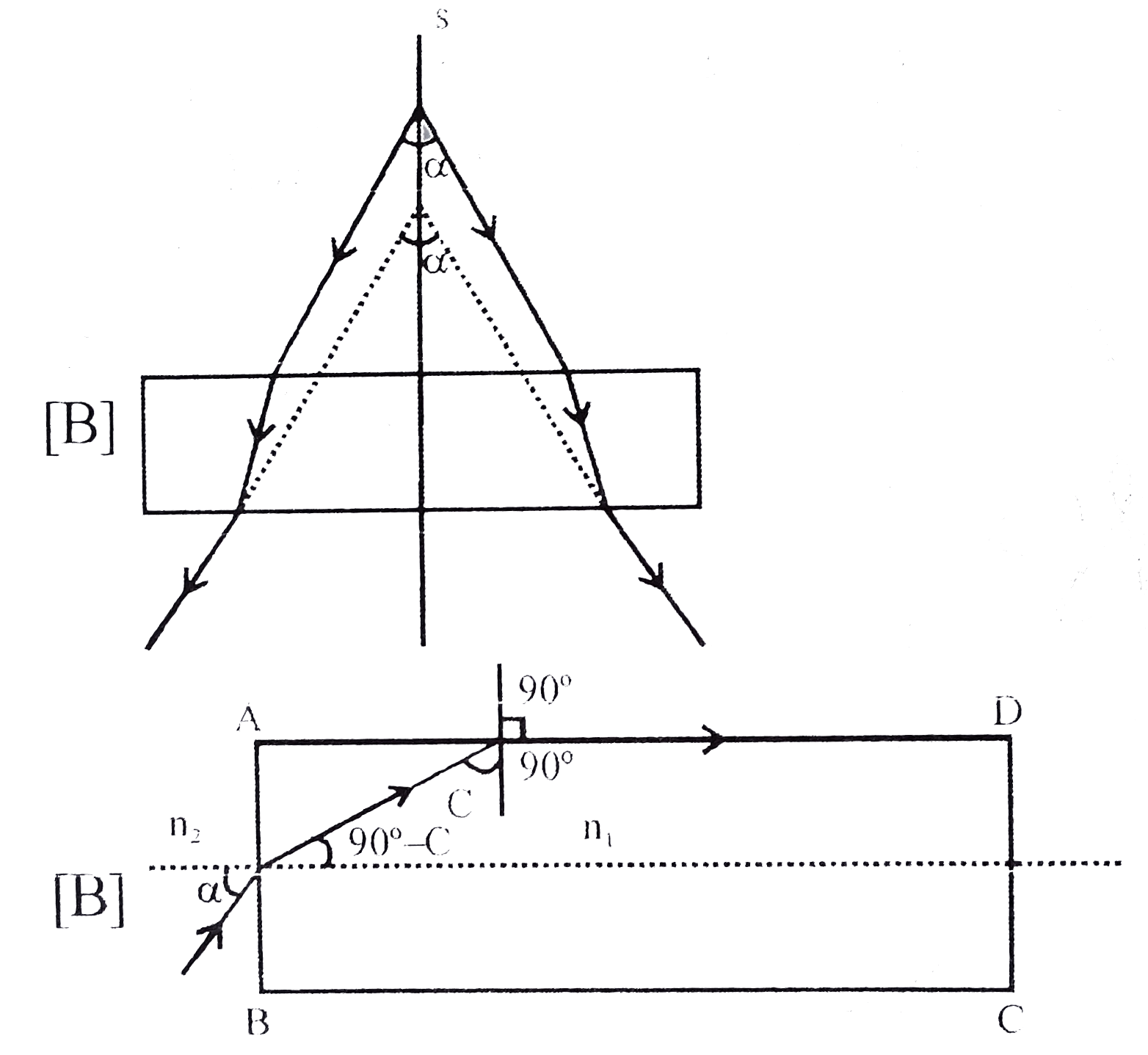
 (A) `"sin"^(-1)[(n_(1))/(n_(2))cos("sin"^(-1)n_(2)/n_(1))]` `(B)sin^(-1)[(n_(1))/(n_(2))cos("sin"^(-1)(1)/n_(2))] (C)sin^(-1)((n_(1))/(n_(2)))(D)sin^(-1)((n_(2))/n_(1))`
 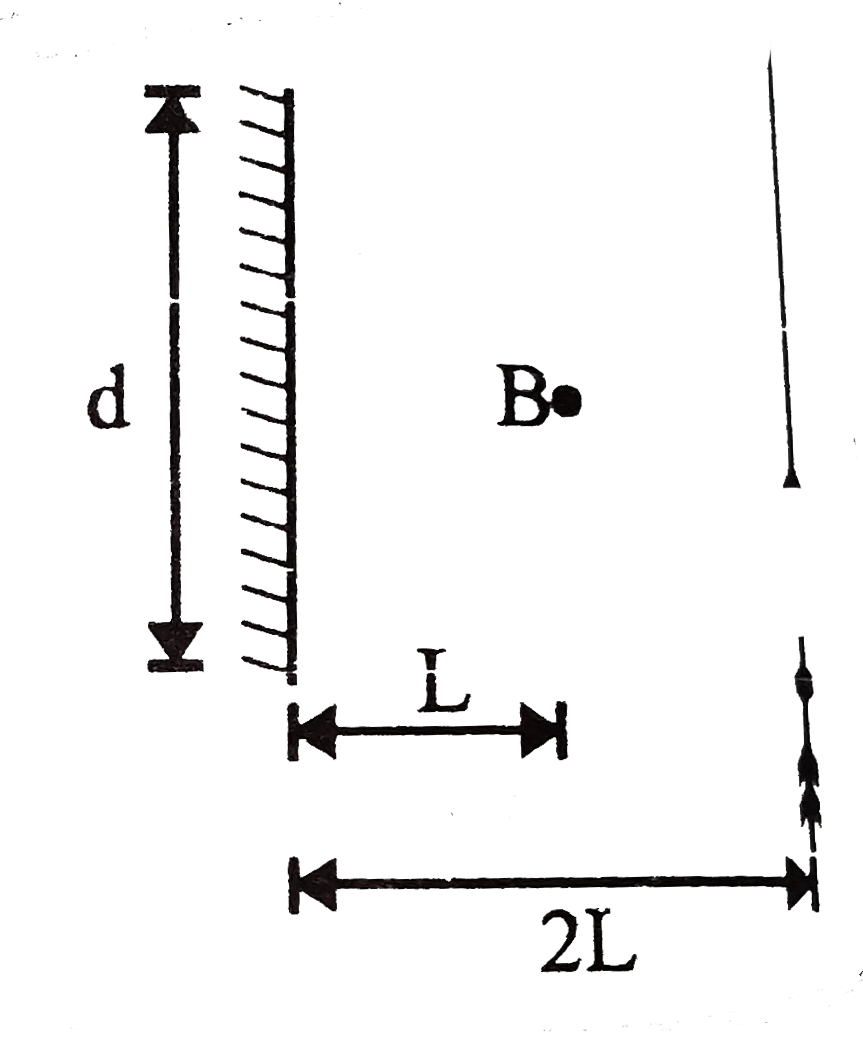 a hollow double concave lens is made of very thin transparents meterial .It can be filled with air or either of two liquids `L_(1)andL_(2)`having refractive indices`n_(1)and n_(2)`respectively`(n_(2)gtn_(!)gt1)` the lens will diverge a parallel beam of light of it is filled with (A)air and placed in air.(B) air and immersed in`L_(1)`(C ),`L_(1)` and immersed in`L_(2)` (D),`L_(2)` ans immersed in `L_(1)`
Text Solution
Verified by Experts
The correct Answer is:



Similar Questions
Explore conceptually related problems
Recommended Questions
- Select the alternatatives. (a) A diverging beam of light form a poin...
Text Solution
|
- A diverging beam of light from a point source S having devergence angl...
Text Solution
|
- A diverging beam of light from a point source S having divergence ang...
Text Solution
|
- Select the alternatatives. (a) A diverging beam of light form a poin...
Text Solution
|
- A ray of light falls on a glass slab at an incident angle of 45^(@) an...
Text Solution
|
- एक बिंदु स्रोत S जिसके लिए अपसारी कोण alpha है, से प्राप्त एक अपसारी क...
Text Solution
|
- A diverging beam of rays from a point source S , making a divergent an...
Text Solution
|
- For refraction of light through a glass slab the angle of emergence is...
Text Solution
|
- प्रकाश की किरण t मोटाई की काँच-प्लेट के पृष्ठ पर आपतित होती है | यदि आ...
Text Solution
|