Home
Class 12
PHYSICS
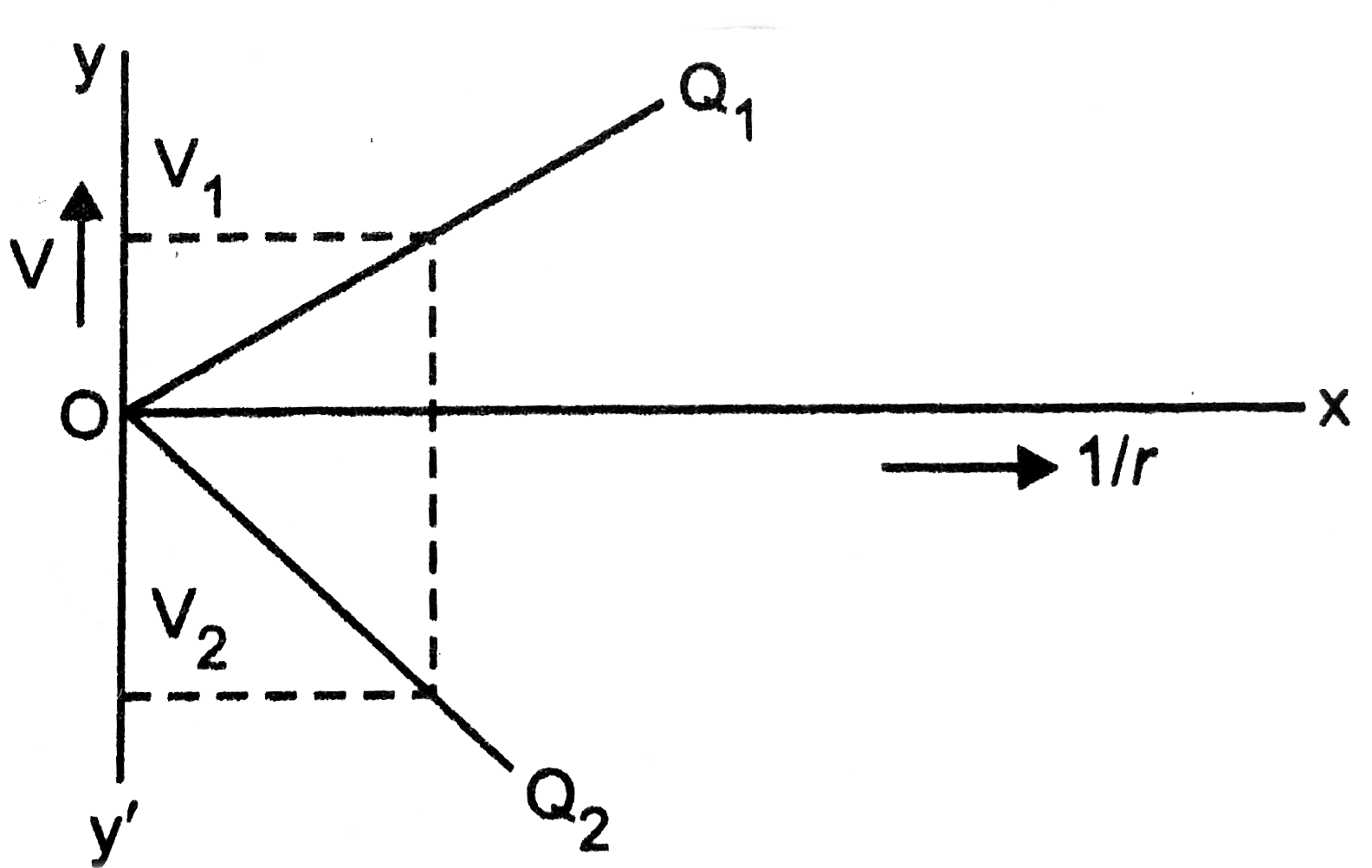
Fig.1 shows the variation of electric po...

Fig.1 shows the variation of electric potential V with `1//r`, where r is the distance from the two charges `Q_(1) and Q_(2)`. Determine

(i) signs of two charges `Q_(1) and Q_(2)`
(ii) Which of the two charges has a larger magnitude ? Justify.

Text Solution

Verified by Experts

Electric potential due to a point charge Q at a point distance r from the charge is `V = (Q)/(4pi in_(0) r)`
V is `+` only when Q is `+`. Therefore from fig. `Q_(1)` is `+ Q_(2)` is negative . For a given value of r, we find from Fig that `V_(2) gt V_(1)`
`Q_(2) gt Q_(1)`
Promotional Banner

Similar Questions

Explore conceptually related problems

The given figure gives electric line of force due to two charges q_(1) and q_(2) . What are the signs of the two charges ?

Two point charges Q_1 and Q_2 lie along a line at a distance from each other. Figure 3.7 shows the potential variation along the line of charges. At which of the points 1, 2, and 3 is the electric field zero ? What are the singns of the charges Q_1 and Q_2 and which of the two charges is greater in magnitude ? .

Two point charges, Q_1 and Q_2 are positioned at a certain distance from each other. Tho curves in the figure represent the distri bution of the potential along the straight line connecting the two charges. At which points (1, 2, and /or 3) is the electric field strength zero? What are tho signes of the charges Q_1 and Q_2 and which of the two is greater in magnitude?

Potential energy of a system of charges q_(1) and q_(2) which are separated by a distance r is ?

Two metallic s pheres of radii R_(1) and R_(2) are connected b y a thin wire. If +q_(1)~ and +q_(2) are the charges on the two s pheres then

Find out potential energy of the two point charge system having charges q_(1) and q_(2) separated by distance r.

Two conducting spheres of radii r_(1) and r_(2) having charges Q_(1) and Q_(2) respectively are connected to each other. There is

The electrostatic force between two point charges q_(1) and q_(2) at separation r is given by F= k. (q_(1)q_(2))/(r^(2)) . The constant k
